
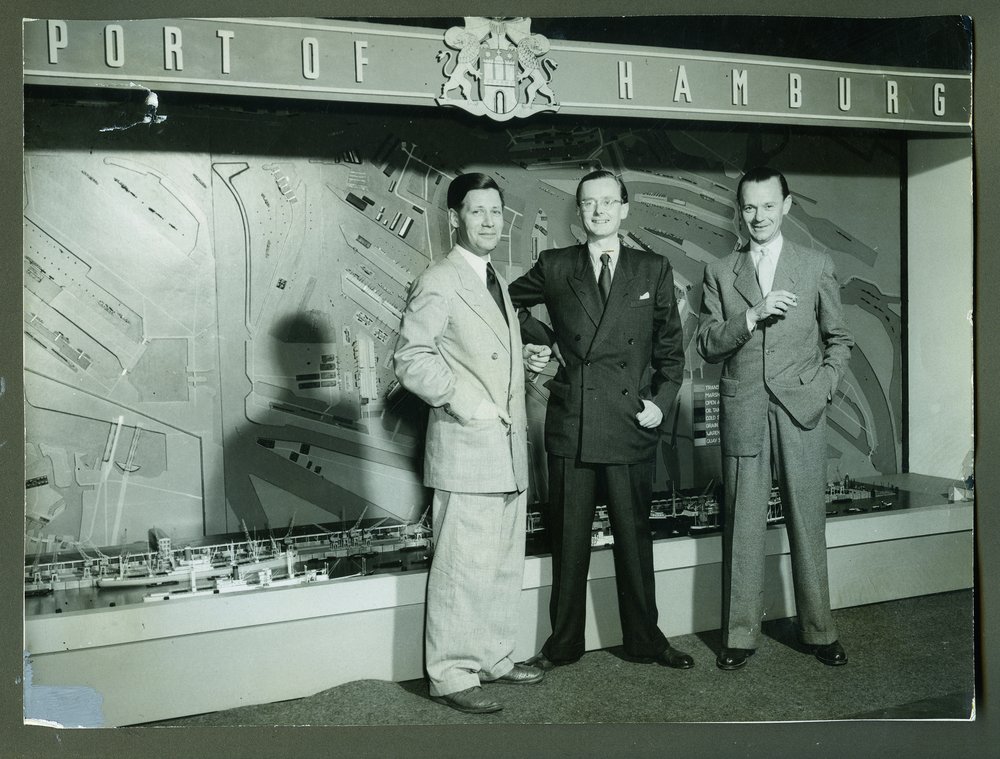
Black and white photo of Helmut Schmidt, Karl Schiller and Ernst Plate

Far beyond departmental and national borders

Ladies and Gentlemen,

as Hamburg's Senator of the Interior, the young Helmut Schmidt made a name for himself with his self-confident demeanour and his crisis management during the great storm surge of 1962. The future German Chancellor's stellar career seemed to be predetermined. The young economics graduate was already preoccupied with major global political issues in the early 1950s. In today's Schmidtletter, you can find out how he travelled through northern Germany as an honorary political "travelling preacher" and was promoted to head of office at the age of 33 by his academic teacher Karl Schiller, whom he ultimately succeeded 20 years later as "super minister" for finance and economics in the Federal Cabinet.

I hope you enjoy reading it
Your Federal Chancellor Helmut Schmidt Foundation


Helmut Schmidt's role as police senator during the Hamburg storm surge and later as interior senator during the Spiegel affair is widely known; it brought the state politician great attention beyond the city limits of Hamburg for the first time. However, hardly anyone knows about his first posts in the Hamburg administration since the early 1950s. Research in the Helmut Schmidt Archive has uncovered some fascinating material.

Almost 70 years ago, in February 1952, Helmut Schmidt took over as head of the Hamburg Transport Authority at the age of 33. After completing his degree in economics at the University of Hamburg in 1949, Schmidt had previously started in the Hamburg administration as a personal assistant to the Senator for Economics Karl Schiller (SPD). He then took over the economic policy department in the authority in the spring of 1951. After moving to the post of Head of Office in 1952, he entered the German Bundestag for the SPD just one year later. From 1961 to 1965, he was to work in Hamburg once again - in the role of police and interior senator for the Free and Hanseatic City.

A look at the documents shows that Schmidt understood "transport policy" to mean far more than just developing the infrastructure of his home city. As head of the economic policy department of his authority, he had already dealt intensively with problems of harbour development and shipbuilding, and also campaigned for this at federal level and vis-à-vis the British Allies. Schmidt was aware of the outstanding importance of the port for Hamburg and represented his city at an international trade fair in Chicago in 1950, together with Schiller and the Chairman of the Executive Board of Hamburger Hafen- und Lagerhausgesellschaft (HHLA) Ernst Plate. The visit served the purpose of international networking, which the Hamburg delegation utilised intensively.

The photo from Chicago shows an extremely self-confident Schmidt next to his superior, who was not only one of Schmidt's academic teachers. The two would later become ministerial colleagues in Bonn in Willy Brandt's first cabinet (1969 to 1972). Schmidt replaced Schiller as "super minister" for finance and economics in 1972.

Far-reaching concepts

After taking office in February 1952, Schmidt set about designing a comprehensive compilation on transport policy, the "Wegweiser durch die Verkehrswirtschaft und ihre Ordnung", which was published in 1954. In it, he brought together a large number of experts from the fields of infrastructure, federal railways, road construction, the harbour and construction industry, aviation, postal and forwarding services, industry and trade. Schmidt himself was responsible for editing, and his political estate contains handwritten notes on review copies sent out and reviews published. At almost 600 pages, including an appendix with maps and statistics, the volume was also intended to provide interested laypersons with good access to the complex topic - an objective that seems ambitious, at least from today's perspective. However, this approach is only logical in view of the fact that throughout his time as a politician, it was always important to Schmidt to explain even difficult political issues to people. This is evidenced by the vast number of texts he wrote for various purposes since the end of the war, including numerous newspaper articles. In a text from April 1953, for example, Schmidt personally campaigned in favour of the up-and-coming Hamburg airport in Fuhlsbüttel.

Even more important is another point that characterised Schmidt's far-reaching thinking even in these early political years: he thought about the future of infrastructure planning on a European scale from the very beginning. He intensively studied the transport routes to and from Hamburg as far as south-eastern Europe, sought dialogue with experts from business, transport and politics and often combined these discussions with extensive travel. Schmidt recognised that Hamburg had lost significant parts of its economic "hinterland" as a result of the division of Germany and the erection of an "Iron Curtain". For him, it was therefore necessary to regulate the relationship between aviation, rail transport, inland shipping and the motorway network. Just a few years after the end of the Second World War, he saw "destructive competition" at work here, which was making things particularly difficult for the economy of the young Federal Republic of Germany.

Thinking in broad contexts

There is another aspect worth noting when looking at the documents. In the early 1950s, Schmidt was not only concerned with the economy and infrastructure policy in the city state. From his student days onwards, he pursued a number of major topics, which he also dealt with in countless lectures, especially in northern Germany: Schmidt described his activities during this time to his biographer Hartmut Soell in 1999 as an "honourable political travelling preacher". He spoke at election rallies, in local SPD associations and to young socialists, in women's working groups and at meetings of the Public Services, Transport and Traffic Union (ÖTV), IG-Metall and the German Trade Union Confederation (DGB). His topics: general economic policy, wage and price policy, the European Schuman Plan to regulate coal and steel production, investment control and tax policy, the global economy and socialism and much more.

This broad range of topics enabled him to delve deeper into political processes and recognise important connections. During his first term in the German Bundestag (1953-1957), he was already a member of the Committees on Transport and Economics, European Security and Defence, and his parliamentary group also appointed him to the Administrative Board of the Post Office. During his time as head of office in Hamburg, he had also worked on the drafting committee of the SPD's 1952 "Action Programme", the party's first detailed policy programme after the end of the Second World War. He retained this interdisciplinary view (not only) of various policy areas into old age.
Helmut Schmidt's role as police senator during the Hamburg storm surge and later as interior senator during the Spiegel affair is widely known; it brought the state politician great attention beyond the city limits of Hamburg for the first time. However, hardly anyone knows about his first posts in the Hamburg administration since the early 1950s. Research in the Helmut Schmidt Archive has uncovered some fascinating material.

Almost 70 years ago, in February 1952, Helmut Schmidt took over as head of the Hamburg Transport Authority at the age of 33. After completing his degree in economics at the University of Hamburg in 1949, Schmidt had previously started in the Hamburg administration as a personal assistant to the Senator for Economics Karl Schiller (SPD). He then took over the economic policy department in the authority in the spring of 1951. After moving to the post of Head of Office in 1952, he entered the German Bundestag for the SPD just one year later. From 1961 to 1965, he was to work once again in Hamburg - in the role of police and interior senator for the Free and Hanseatic City.

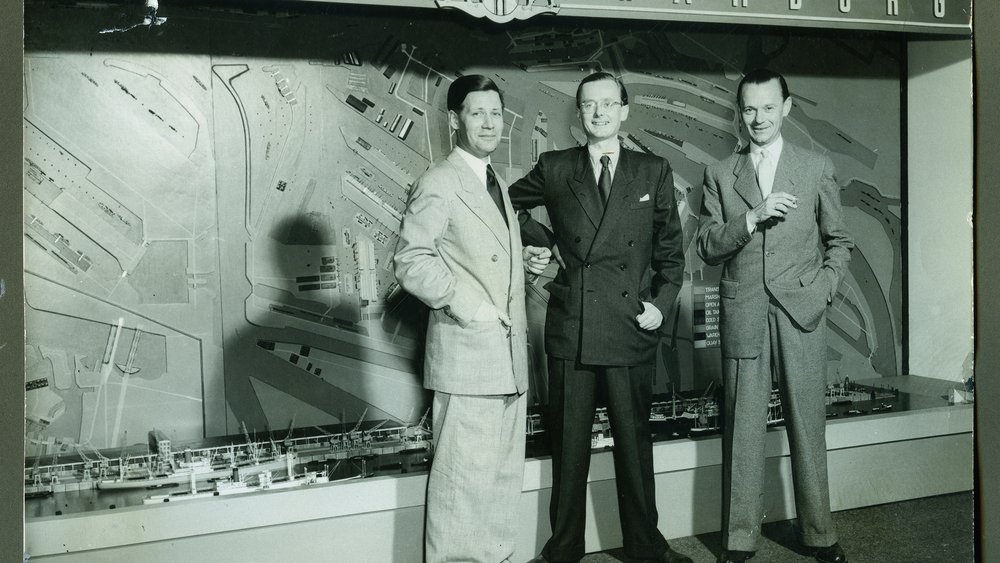
A look at the documents shows that Schmidt understood "transport policy" to mean far more than just developing the infrastructure of his home city. As head of the economic policy department of his authority, he had already dealt intensively with problems of harbour development and shipbuilding, and had also campaigned for this at federal level and vis-à-vis the British Allies. Schmidt was aware of the outstanding importance of the port for Hamburg and represented his city at an international trade fair in Chicago in 1950, together with Schiller and the Chairman of the Executive Board of Hamburger Hafen- und Lagerhausgesellschaft (HHLA) Ernst Plate. The visit served the purpose of international networking, which the Hamburg delegation utilised intensively.

The photo from Chicago shows an extremely self-confident Schmidt next to his superior, who was not only one of Schmidt's academic teachers. The two would later become ministerial colleagues in Bonn in Willy Brandt's first cabinet (1969 to 1972). Schmidt replaced Schiller as "super minister" for finance and economics in 1972.

Far-reaching concepts

After taking office in February 1952, Schmidt set about designing a comprehensive compilation on transport policy, the "Wegweiser durch die Verkehrswirtschaft und ihre Ordnung", which was published in 1954. In it, he brought together a large number of experts from the fields of infrastructure, federal railways, road construction, the harbour and construction industry, aviation, postal and forwarding services, industry and trade. Schmidt himself was responsible for editing, and his political estate contains handwritten notes on review copies sent out and reviews published. At almost 600 pages, including an appendix with maps and statistics, the volume was also intended to provide interested laypersons with good access to the complex topic - an objective that seems ambitious, at least from today's perspective. However, this approach is only logical in view of the fact that throughout his time as a politician, it was always important to Schmidt to explain even difficult political issues to people. This is evidenced by the vast number of texts he wrote for various purposes since the end of the war, including numerous newspaper articles. In a text from April 1953, for example, Schmidt personally campaigned in favour of the up-and-coming Hamburg airport in Fuhlsbüttel.

Even more important is another point that characterised Schmidt's far-reaching thinking even in these early political years: he thought about the future of infrastructure planning on a European scale from the very beginning. He intensively studied the transport routes to and from Hamburg as far as south-eastern Europe, sought dialogue with experts from business, transport and politics and often combined these discussions with extensive travel. Schmidt recognised that Hamburg had lost significant parts of its economic "hinterland" as a result of the division of Germany and the erection of an "Iron Curtain". For him, it was therefore necessary to regulate the relationship between aviation, rail transport, inland shipping and the motorway network. Just a few years after the end of the Second World War, he saw "destructive competition" at work here, which was making things particularly difficult for the economy of the young Federal Republic of Germany.

Thinking in broad contexts

There is another aspect worth noting when looking at the documents. In the early 1950s, Schmidt was not only concerned with the economy and infrastructure policy in the city state. From his student days onwards, he pursued a number of major topics, which he also dealt with in countless lectures, especially in northern Germany: Schmidt described his activities during this time to his biographer Hartmut Soell in 1999 as an "honourable political travelling preacher". He spoke at election rallies, in local SPD associations and to young socialists, in women's working groups and at meetings of the Public Services, Transport and Traffic Union (ÖTV), IG-Metall and the German Trade Union Confederation (DGB). His topics: general economic policy, wage and price policy, the European Schuman Plan to regulate coal and steel production, investment control and tax policy, the global economy and socialism and much more.

This broad range of topics enabled him to delve deeper into political processes and recognise important connections. During his first term in the German Bundestag (1953-1957), he was already a member of the Committees on Transport and Economics, European Security and Defence, and his parliamentary group also appointed him to the Administrative Board of the Post Office. During his time as head of office in Hamburg, he had also worked on the drafting committee of the SPD's 1952 "Action Programme", the party's first detailed policy programme after the end of the Second World War. He retained this interdisciplinary view (not only) of various policy areas into old age.

He retained this interdisciplinary view (not only) of various policy areas into old age.

Photo of staff member

Author

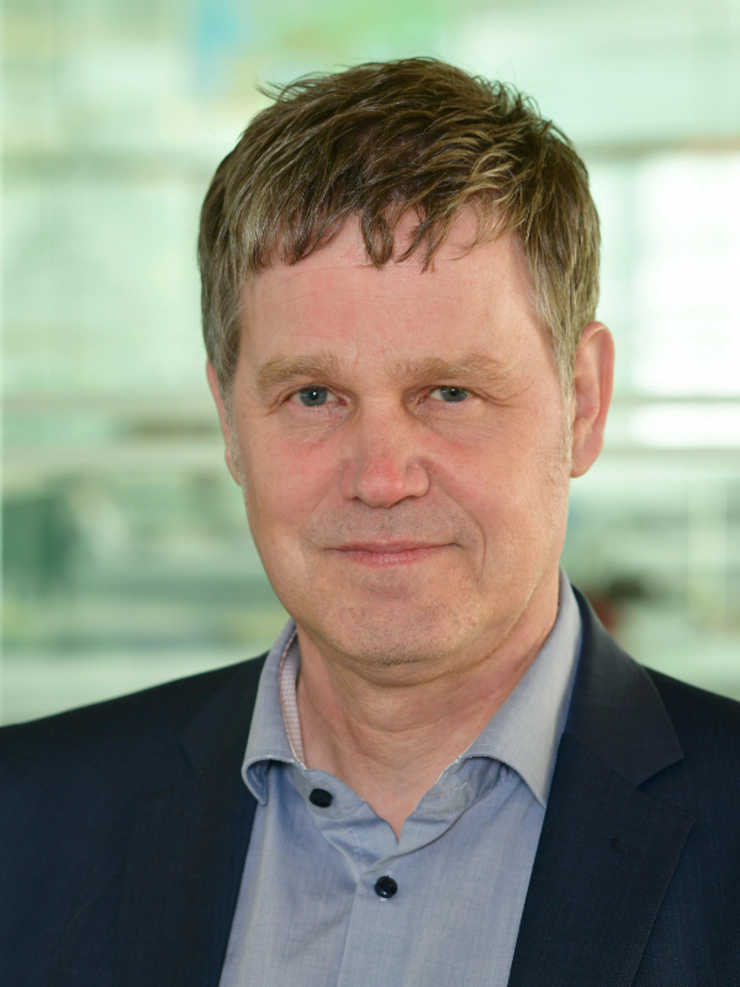
Dr. Magnus KochHead of Exhibitions and History

Magnus combines in-depth expertise on the life and political career of Helmut Schmidt with public history formats centered on the foundation’s exhibition projects. Central to this work is always the question of how history and the present are interconnected.


He studied history in Göttingen and earned his doctorate at the University of Erfurt on the everyday history of World War II. Since 2005, he has worked both independently and as a staff member and exhibition curator for institutions including the German Historical Museum in Berlin, the Foundation Memorial to the Murdered Jews of Europe, the Hamburg Institute for Social Research, and the University of Vienna.