
In the "German Autumn", the "crisis chancellor" did not act alone
12. Mar 2022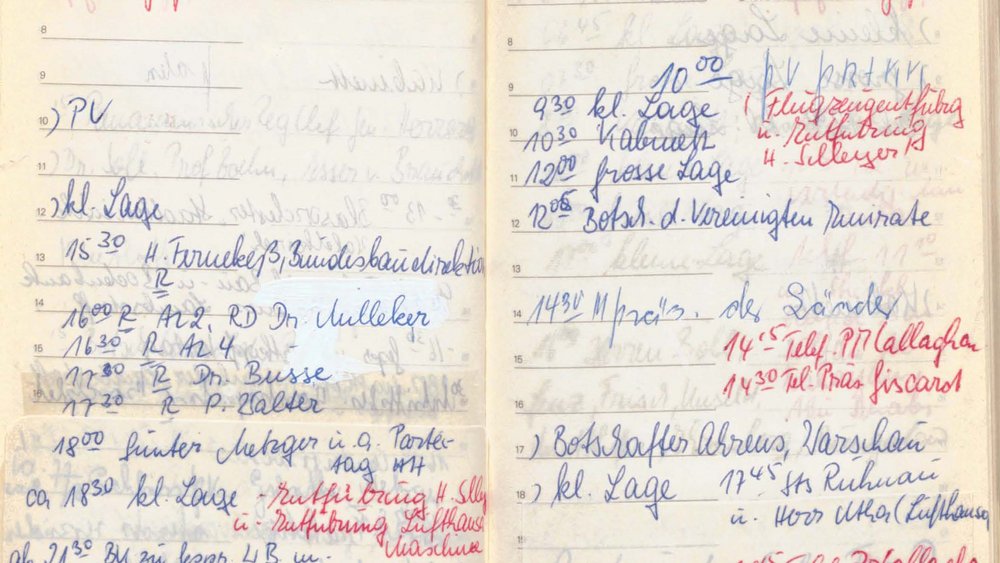
For historians, such calendars are like treasure chests, as they reveal much more about their owners than just their appointments. And so Schmidt's service calendar from 1977, the year of the "German Autumn", also has a special place in the permanent exhibition of the Federal Chancellor Helmut Schmidt Foundation in Hamburg. The terror of the "Red Army Faction" (RAF), the kidnapping of Hanns Martin Schleyer, the liberation of the Lufthansa aircraft "Landshut" in Mogadishu - the key events of the "German Autumn" are reflected here. However, the calendar not only provides information about the course of events and the actions of the Bonn government during these weeks, the document also allows a closer look at the person and politician Helmut Schmidt, his way of working and his approach in decision-making situations. It becomes clear: A "crisis chancellor" acting on his own or even a "doer" is not to be found there.
Monday, 5 September: Schleyer kidnapping in Cologne
"Kidnapping of Schleyer in Cologne" is noted by Schmidt's staff on Monday, 5 September 1977 - these four words in red lettering introduce the coming weeks full of difficult decisions in Helmut Schmidt's official diary. Blue and black lettering dominated the calendar year until then, red was rarely seen. The use of the other pen also shows the special significance of this event. The government is not completely surprised by the crime: the security authorities have been on alert since the murders of Attorney General Siegfried Buback and Jürgen Ponto, CEO of Dresdner Bank, by the RAF just a few months earlier. Security level 1 applies to the employer president Hanns Martin Schleyer. Nevertheless, nobody knows what will happen next. The authorities hope to be able to arrest the RAF members of the so-called second generation before anyone else is harmed. Despite these efforts, on 5 September, shortly after 5 p.m., the motorcade that was to take Schleyer back to his official residence in Cologne was ambushed. His drivers and bodyguards die in the violent and armed attack, Schleyer himself is kidnapped. A few hours later, it is confirmed that the attack was indeed carried out by the RAF: a letter of confession signed by the RAF is found.
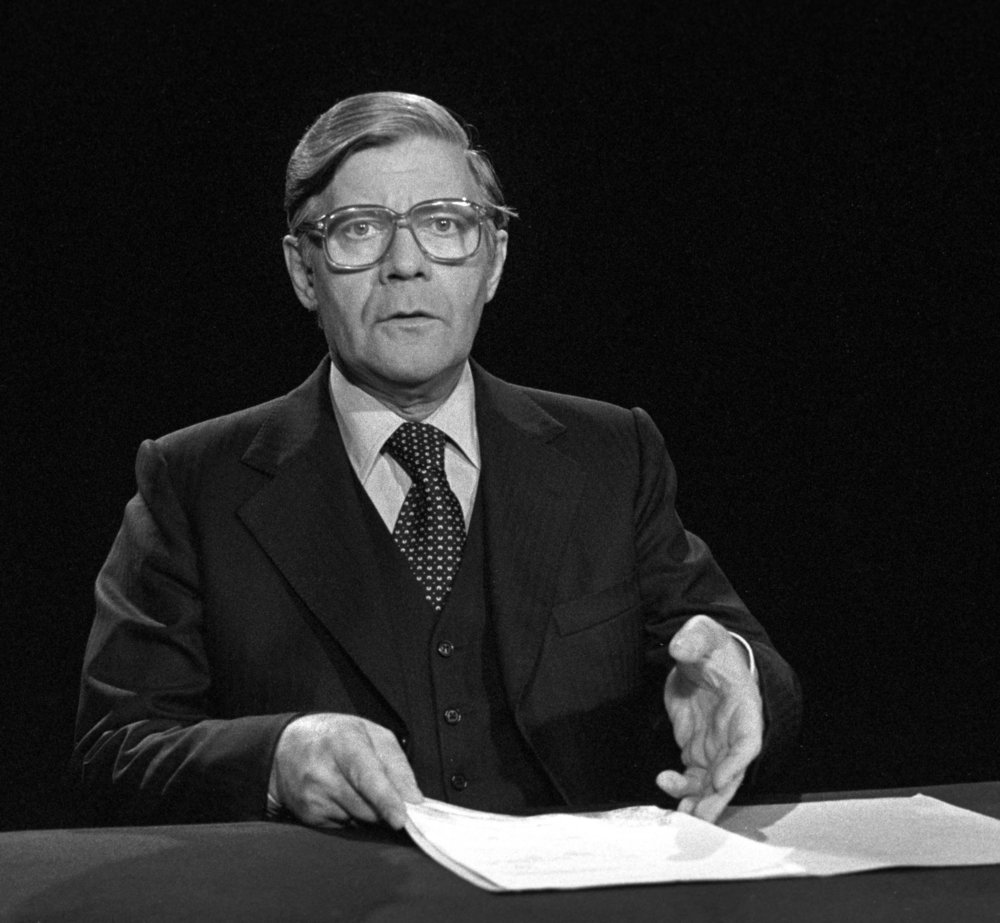
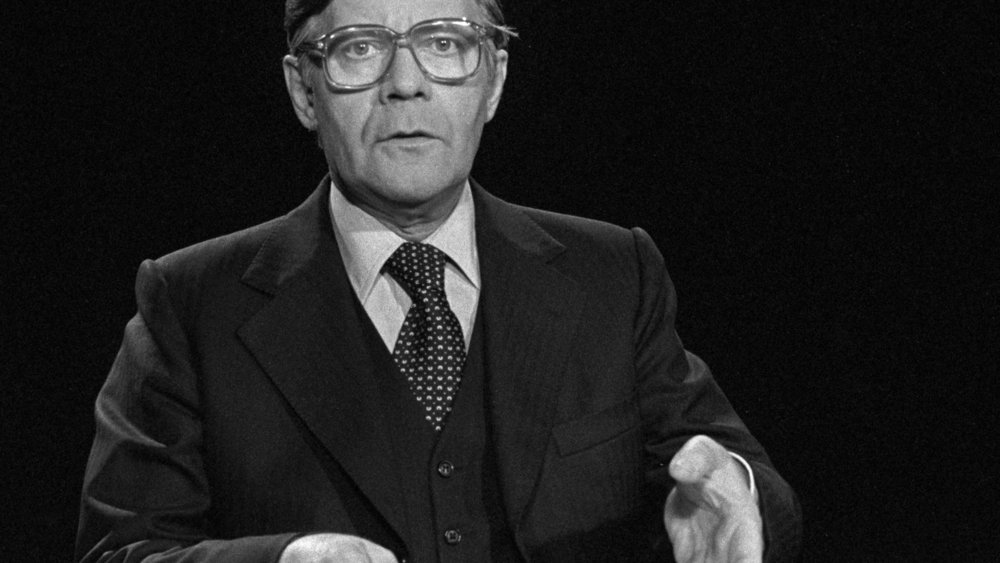
Helmut Schmidt reacts immediately. His scheduled appointments are now cancelled. Instead: "21:35 ARD studio television statement". That evening, the Chancellor gives a televised speech and addresses clear words to the kidnappers: "The will of the whole people stands against terrorism".
Below this is another entry: a meeting is scheduled for midnight with Justice Minister Hans-Jochen Vogel, Interior Minister Werner Maihofer, the head of the Federal Chancellery Manfred Schüler and State Secretary Klaus Bölling. Together with other important confidants, they will be part of the so-called "Kleine Lage" ("small crisis team" of the federal government) over the next few weeks. Its members will often meet several times a day over the next few weeks to discuss events.
Tuesday, 6 September: 19:45 Telephone call with Mrs Schleyer
The calendar pages are marked "So Pause" until 4 September 1977. The parliamentary summer recess is not a work-free period for Schmidt, but for a few days at least there are no appointments in the official diary. The Chancellor is travelling to Canada, the USA and Iceland, visiting the Worpswede artists' colony - without yet knowing how urgently he will need every last reserve of energy in the coming weeks.
The German government's crisis management mode is already in full swing on 6 September. There appear to have been extensive changes to the dates, as the original entries on the calendar page are covered with large white stickers. Various meetings are taking place throughout the day in the Chancellor's bungalow. There are also "brief talks on the sidelines" with Willy Brandt and Helmut Kohl, as the calendar states.
In the meantime, specific demands of the RAF have become known: Schleyer is to be exchanged for eleven imprisoned terrorists*, including RAF founding members Andreas Baader and Gudrun Ensslin. This came as no surprise to the Chancellor and the government: two years earlier, imprisoned RAF members had already been released following the kidnapping of CDU politician Peter Lorenz. Schmidt considered this procedure a mistake at the time and did not want to repeat it. Under no circumstances should the constitutional state allow itself to be blackmailed. He will stick to this position.
Later that day: "19:45 telephone call with Mrs Schleyer". Schmidt speaks to the kidnapped man's family for the first time before the crisis teams meet. At 21:00, the "Kleine Lage" meets, followed by a brief discussion with Federal President Walter Scheel, before the "Große Lage" begins at 23:30. It includes the party and parliamentary group chairmen of all Bundestag parties, the Chancellor's advisory staff and the Minister Presidents of the four federal states in which RAF prisoners are being held. Party affiliation now only plays a subordinate role. Schmidt consults extensively. The committee jointly takes the view that the terror group's demands should not be met and that Schleyer should be found and freed alive. Extensive measures are set in motion, including a contact ban between the imprisoned RAF members. There is still no legal basis for this: the "Contact Blocking Act" is not passed by the Bundestag until 29 September.
Tuesday, 13 September: 18:03-18:18 Telephone call with President Giscard
Diaries are not diaries. Nevertheless, pressure, tension and maximum concentration can be sensed when looking at the closely written lines. The pages are still often extensively pasted over. You can tell that these are not normal working days - even for a chancellor. One appointment follows another on 8 September, the last one at 2:50 in the morning. Other sources report what happens in the crisis team that evening: Schmidt asks for "exotic proposals" to combat the terrorists. All drastic ideas, such as reprisals against close relatives of the RAF members, are quickly rejected. The search for Hanns Martin Schleyer was to continue with all available means. The government plays for time, contact persons are named and signs of life from Schleyer are repeatedly demanded. As a pretence, negotiations began with the countries to which the imprisoned RAF members wanted to be flown. In the meantime, the whole of Germany was discussing the case. Schmidt repeatedly spoke to the kidnapped man's family, his wife and sons. They press for an exchange. The pressure on Schmidt and the government increases.
In addition to the crisis teams, Schmidt's "cloverleaf", his close circle of personal advisors, came together. Hans-Jürgen Wischnewski was among them. He eventually flies to Algeria for sham negotiations to make the terrorists believe that their demands are actually being met.
Schmidt also spoke to his European counterparts during these days: several talks with the French President and friend Valéry Giscard d'Estaing and the British Prime Minister James Callaghan are noted.
Sunday, 16 October: 16:00 Mr Böll, Mr Lenz, Mr Frisch and Mr Unseld
It is difficult to judge whether a kind of "crisis routine" is developing during these many weeks of Schleyer's ongoing hostage-taking. No two days are the same. At the end of September, however, the intervals between briefings became longer. Schmidt again attends a number of meetings that are not directly related to government business: He makes a "flying visit" to the Jenfelder Schützenfest on 24 September, visits the Hamburg State Opera and an exhibition at the Ernst Barlach Haus. Art and music have always helped Schmidt through difficult times, as has philosophy. It is important to him not to be seen as a theory-less pragmatist. This is another reason why he does not miss an appointment with well-known left-liberal intellectuals in the middle of the "German Autumn", even though the situation becomes drastically worse on 13 October: a Palestinian terrorist commando hijacks the Lufthansa plane "Landshut" on its way from Mallorca to Germany. Suddenly, the number of hostages increases dramatically. Despite this, the Chancellor receives four writers and two ministers for talks in Bonn on 16 October: "4 p.m. Messrs Böll, Lenz, Frisch, Unseld, Matthöfer, Ehrenberg, Bungalow". Schmidt later wrote in his memoirs that the authors could perhaps understand the terrorists better than the politicians in parliament. He therefore also asks the ministers Herbert Ehrenberg and Hans Matthöfer to join him.
Schmidt takes five hours for the interview. The Swiss writer Max Frisch notes in retrospect that Schmidt repeatedly leaves the meeting to consult with the crisis team. It is not known whether the Chancellor received the answers he had hoped for from his guests.
On 18 October, fully aware of the risks of the operation, Schmidt has the hijacked plane, which has since reached the Somali capital Mogadishu, freed by Border Guard Group 9 (GSG 9), a special unit of the Federal Border Guard (since 2005 Federal Police). A meeting with the President of Somalia and the country's ambassador in Bonn is noted in the diary. The rescue operation succeeds without the hostages being injured. An overwhelming success for Schmidt. However, this meant the death sentence for Hanns Martin Schleyer. The RAF members imprisoned in Stuttgart-Stammheim then collectively commit suicide, with only the terrorist Irmgard Möller surviving. Schleyer is shot dead by his kidnappers.
Tuesday, 25 October: 10:30 a.m. Funeral service for Dr Schleyer in Sttgt.
The funeral service for Hanns Martin Schleyer takes place on 25 October 1977 in the Sankt Eberhard Church in Stuttgart. For Schmidt, it is one of the last major events in connection with the acts of terrorism by the RAF, and certainly the most emotional. Pictures show the Chancellor standing between Schleyer's widow and her eldest son, deeply moved. Schmidt would never be able to forgive Waltrude Schleyer, but many years later he was reconciled with Hanns-Eberhard Schleyer: in 2012 he awarded Schmidt the "Hanns Martin Schleyer Prize" for "services to the consolidation and promotion of the foundations of a liberal community". For Schmidt, the "German Autumn" remains more than just an episode that ends with the burial of the victims or the later arrest of RAF members. The events and the decisions he made stayed with him for the rest of his life.
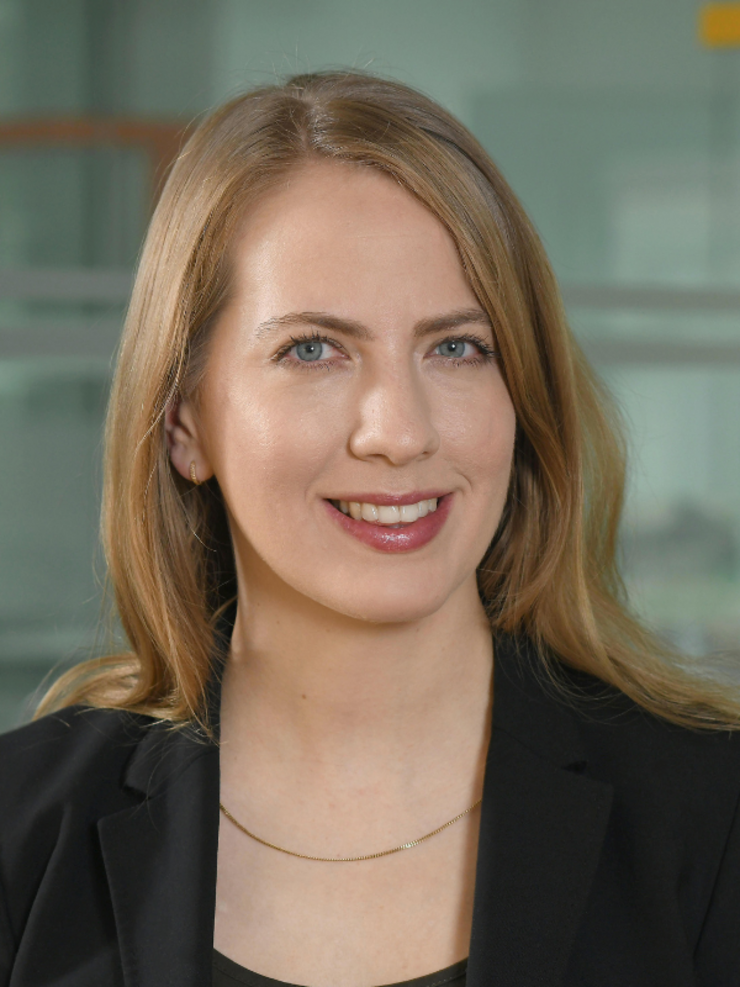
Merle Strunk, M.A., is a historian specialising in knowledge transfer in museums. She has been involved in exhibition and publication projects in various institutions, including the Museum der Arbeit. As a history mediator at the Bundeskanzler-Helmut-Schmidt-Stiftung, she works on building bridges between historical events and the present. She also works on questions of visual and public history.
More