
It was a record: Across Eastern Europe in an Opel
05. Jun 2021
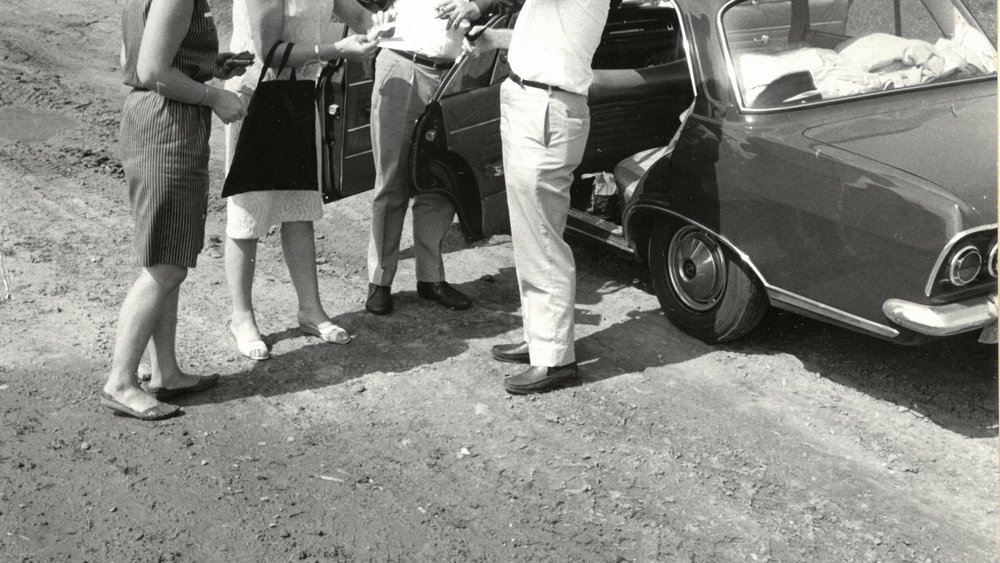
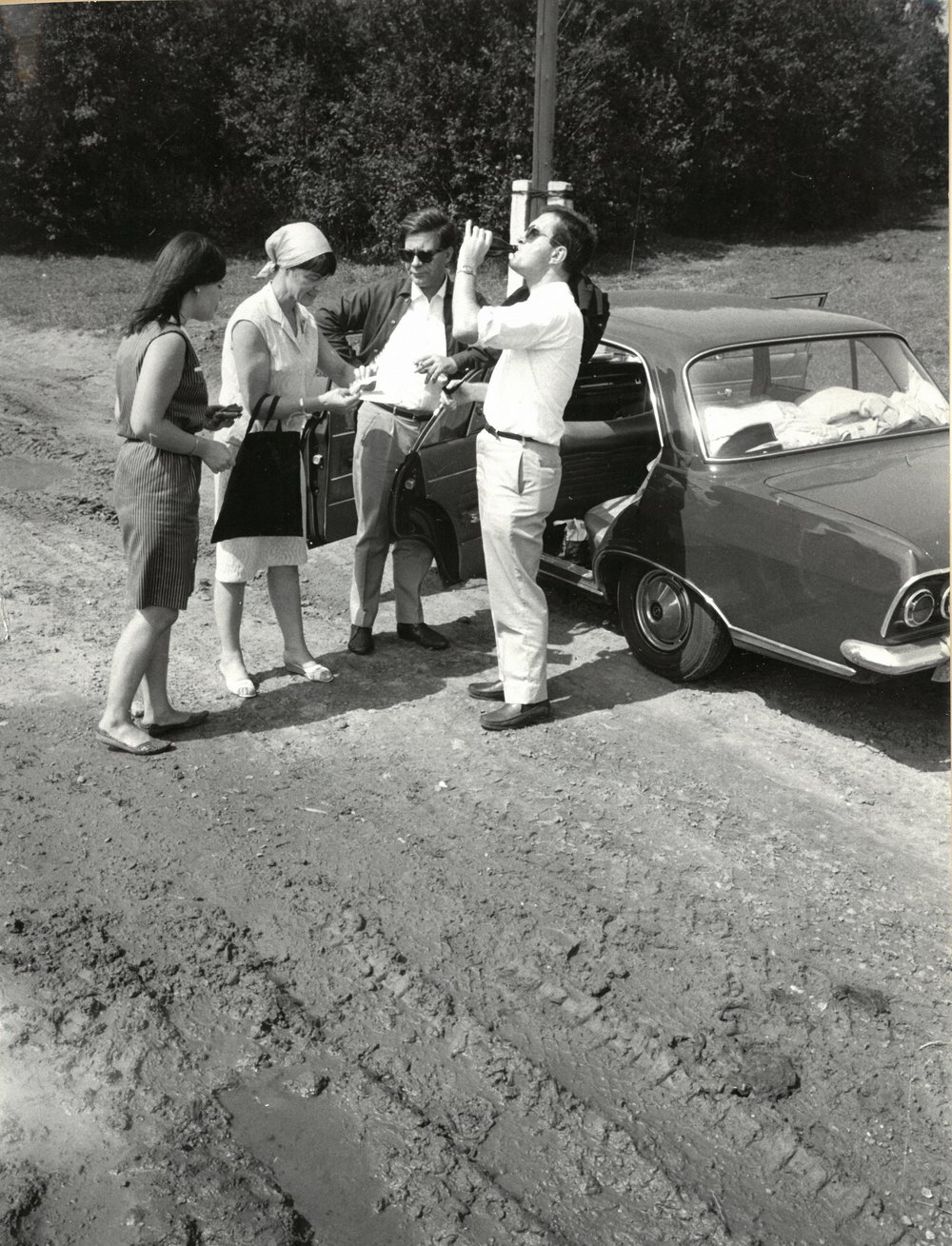
A record-breaking Opel, five travellers, four countries and 5,000 kilometres - 55 years ago, Helmut and Hannelore "Loki" Schmidt, together with their daughter Susanne, the photographer Sven Simon and Wolfgang Schulz, the SPD parliamentary group's public relations officer, drove through Eastern Europe for four weeks in their private car. When asked what the motive for this unusual journey was, Schmidt replied succinctly: "Tourist and political curiosity!"
Decision at the Dortmund party conference
For some time, the SPD party executive had been discussing a new Ostpolitik, which was to aim for a rapprochement with the socialist countries. This position was also held by Helmut Schmidt, who was already a member of the leadership team at the time and was being discussed as the successor to Fritz Erler, chairman of the parliamentary group. This was probably one of the reasons why he was given the presentation on foreign and security policy at the party conference in Dortmund in June. Schmidt pleaded for a dialogue with the Eastern European neighbours under the motto "Reducing fear of Germany". While the majority agreed with his ideas on Eastern policy, he made a name for himself as the new "defence expert".
With the approval of the party leadership, Schmidt concretised his idea of a trip to Eastern Europe in the following weeks: On 13 July, he drove his Opel Rekord from Hamburg via Nuremberg to Prague, Wroclaw, Warsaw, Minsk, Smolensk, Moscow, Novgorod, Leningrad and Helsinki. From there he returned to Germany by ship on 8 August. He travelled to the most important socialist countries with the aim of sounding out the plan for a more active Ostpolitik in discussions with local representatives and getting to know the people behind the "Iron Curtain".
No interest in the reunification of Germany
With the support of the Berlin Senate Chancellery, Schmidt's staff obtained the necessary visas and hotel reservations. However, it proved difficult to arrange appointments with official dialogue partners. The GDR had asked its allies not to establish diplomatic relations with West Germany. In addition, the up-and-coming Hamburg was largely unknown in Eastern Europe anyway.
There was also pressure from the SPD: just a few weeks before his departure, Erhard Eckert, head of the Social Democratic Press Service, warned of "a prominent group of three" from the CDU/CSU parliamentary group leadership who wanted to discuss "high-ranking personalities in CSSR politics". Under these circumstances, he suggested adjusting the status of Schmidt's dialogue partners once again.
During his four weeks in Eastern Europe, Helmut Schmidt met more than 20 political representatives and representatives of socialism. He held his first talks in Prague, where he spoke with Otto Klicka, Deputy Foreign Minister, and František Kriegel, Chairman of the Foreign Affairs Committee, among others. The desire to establish diplomatic relations was clear, Schmidt notes as a result of the talks. The best experience for him, however, was a chance encounter. A group of construction workers made room for the Schmidts at their table in a crowded pub and soon they were talking openly about the wages of West German construction workers and what a Volkswagen cost.
On 20 July, the small group of travellers crossed the border into Poland. Entering the country was extremely tedious and their luggage was scrupulously checked. The atmosphere of the few political talks was polite but cool. While Polish representatives showed little willingness to talk to Schmidt, there was an affront afterwards: a note written by the Polish side contained falsified statements. Schmidt was accused of having shown no interest in further talks. Schmidt firmly rejected the accusation and suspected that the intrigue was intended to prevent further meetings.
In addition to the political appointments, there was plenty of time for the country and its people. The five travellers were particularly surprised by the expensive catalogues from West German mail order companies on sale in Poland. The reason for this was that people used them to find out about the latest Western technology and fashion. "For some young people, we live in a big paradise where everyone has chewing gum, blue jeans and transistor portable radios," Schmidt summarised the bizarre situation in his travel report.
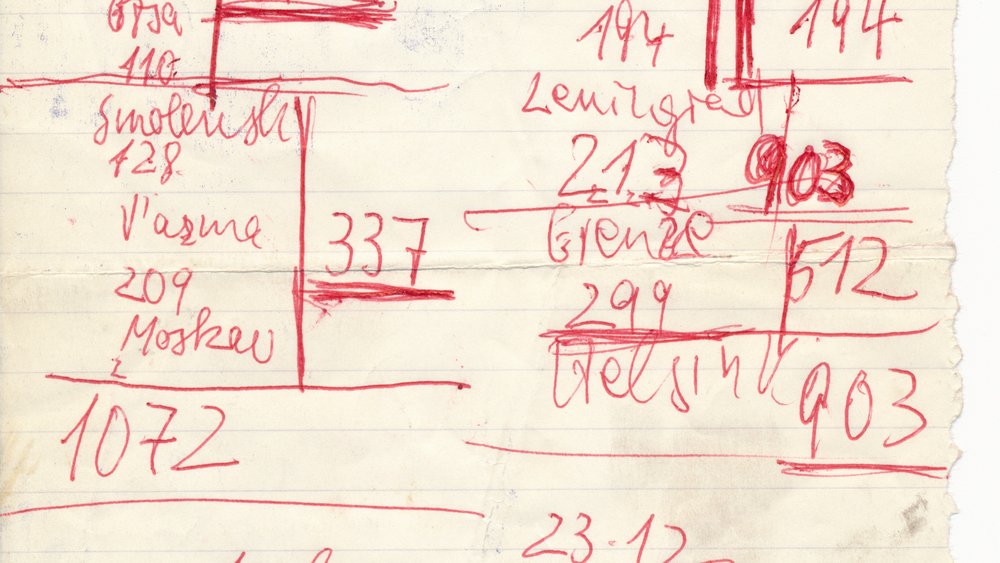
After four days, they travelled on to Moscow. They crossed the border at Brest and struggled with the red tape. On entering the country, they had to note on a map exactly where the route was to take them - deviations were forbidden. Schmidt's notes show that, as a foresighted and thrifty person, he calculated the kilometres and the petrol required by hand. What he hadn't considered, according to Schmidt, was that the necessary fuel was only available at two petrol stations in Moscow. One was sold out and the other was 20 kilometres outside the city centre. The search for petrol turned into an adventure, Schmidt summarised.
When they finally arrived in Moscow, they didn't know whether anyone would speak to Schmidt. After several days, he was at least able to talk to Deputy Foreign Minister Vladimir Semyonovich Semyonov and "Pravda" editor-in-chief Mikhail Vasilyevich Simyanin. Schmidt now learnt first-hand that the leadership of the Soviet Union had no interest in the reunification of Germany, but that they could imagine economic cooperation with the Federal Republic. It was nevertheless a great success for the Social Democrat, who had fought as a Wehrmacht officer on the Eastern Front between Smolensk and Moscow in 1941/42 and remembered the country as a theatre of war. Schmidt was now able to contribute to the democratic relationship between the two countries.
A companion of the "New Ostpolitik"
With the knowledge they had gathered, the Schmidts and their companions travelled via Leningrad to Helsinki and finally back to Hamburg. Helmut Schmidt made important contacts and gained insights that he incorporated into political considerations throughout his life. On his return, he immediately informed the party executive that the impressions he had gained were in line with the ideas from the party conference and at the same time passed on his recommendations. Helmut Schmidt's commitment and insights had a significant influence on the "New Ostpolitik", which was just beginning to blossom.
Author
Franziska heads the correspondence project at the Helmut Schmidt-Archiv, where she combines archival description and cataloguing of the impressive collection of letters with issues relating to long-term archiving and historical and political education.
She studied German Studies, European History and History at Otto von Guericke University Magdeburg and the University of Hamburg. She has been with the Bundeskanzler-Helmut-Schmidt-Stiftung since 2017, where she previously oversaw the “60 Years of the Storm Surge” project.
More