
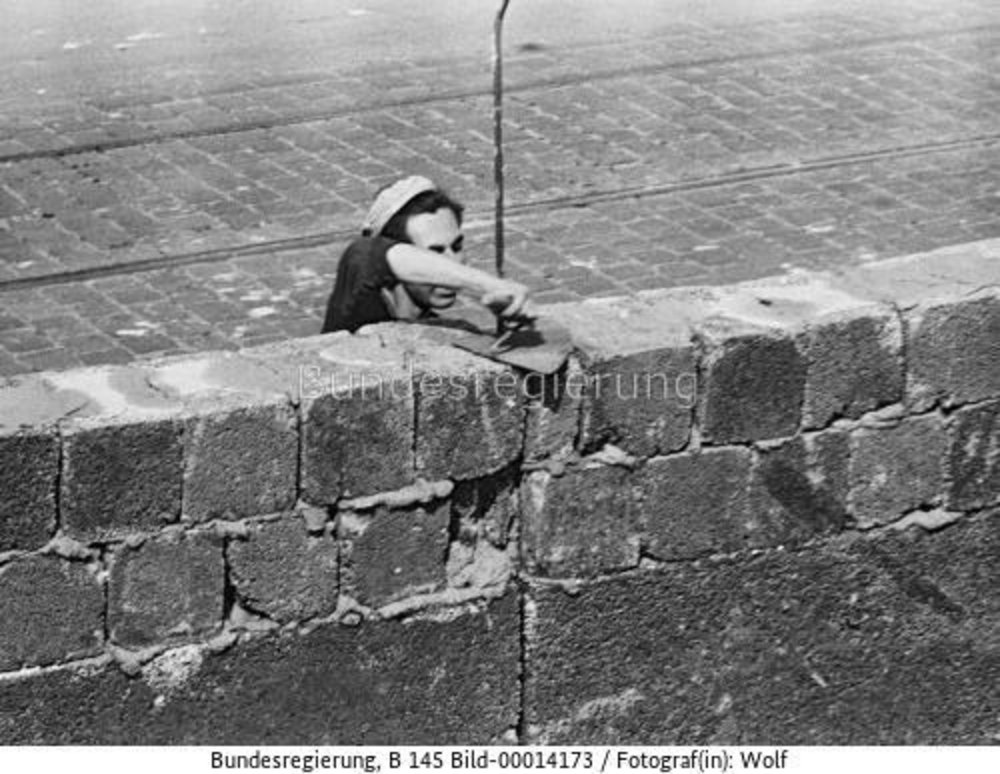
Silent witnesses to the biggest lie in post-war history
21. Aug 2021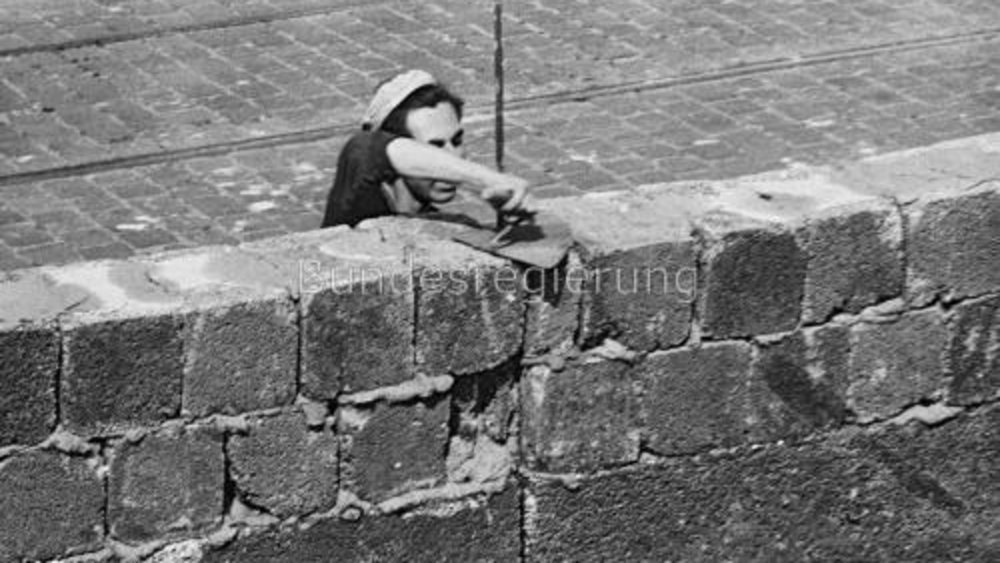
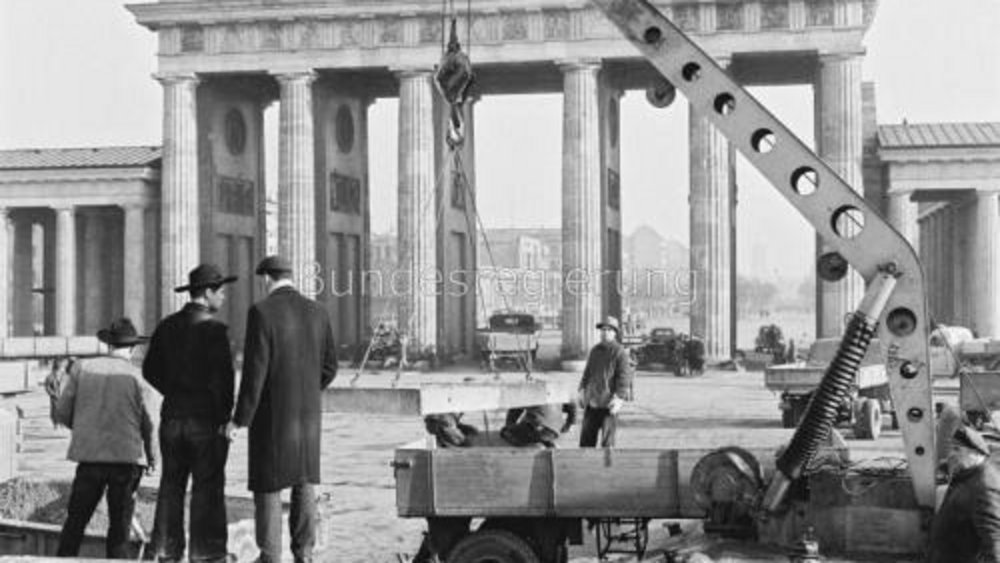
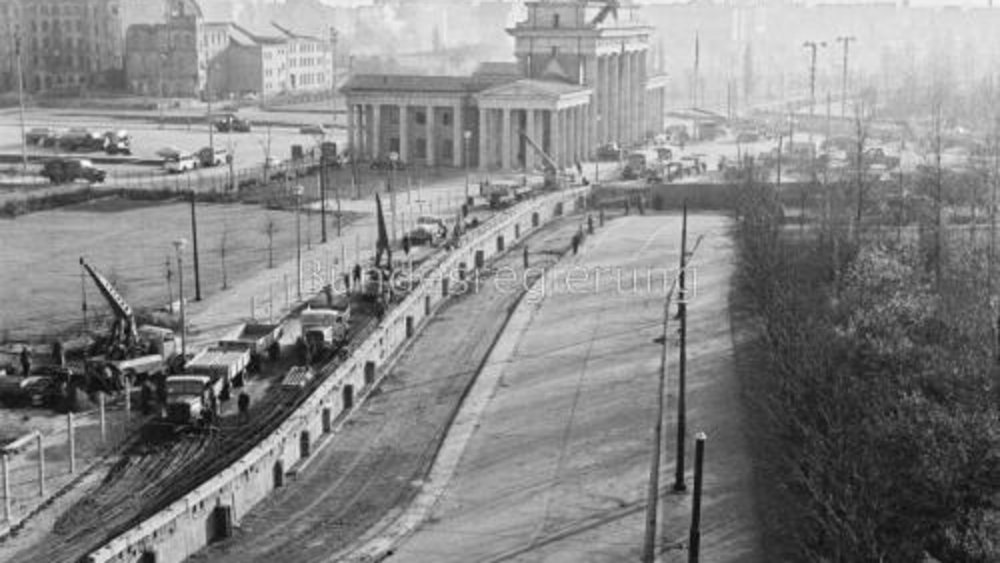
A five-kilogram fragment of grey concrete with the remains of a graffito stands on the shelf in the entrance area of the Schmidt Archive in Hamburg-Langenhorn. An anthracite-coloured frame with a fine linen cover protects the relic; it is inscribed in large white letters: DIE MAUER. It was a gift from the Bild editorial team to Helmut Schmidt on the 20th anniversary of the fall of the Berlin Wall on 9 November 1989. In addition to this copy, there are two other pieces of the Wall in the Schmidts' private home. To this day, they are silent witnesses to the biggest lie in German post-war history: "Nobody intends to build a wall!" said GDR state and party leader Walter Ulbricht at a press conference on 15 June 1961 - two months later, on 13 August, construction of the "Berlin Wall" began.
From the "Berlin question" to the "Berlin Wall"
After the GDR leadership had the border to West Germany secured by restricted zones in 1952, thousands of people fled to the West via Berlin. Ulbricht, however, was no longer willing to accept the continuing flow of refugees and urged the Soviet head of state and party leader Nikita Khrushchev to seal off the "last loophole" in November 1960. It was not until the summer of 1961 - the Western Allies had once again rejected the Soviet demand to withdraw their troops from the western sector - that Khrushchev agreed to Ulbricht's proposal. While the Soviet leadership publicly announced the plans on 5 August, triggering panic and further streams of refugees among East Germans, everything necessary for the so-called "Operation Chinese Wall" had long been prepared by this time. The People's Police was increased in numbers and new border defences were set up. Thousands of Soviet soldiers were mobilised throughout the GDR, preparations were made to cut all direct transport links between East and West Berlin and building materials were procured. On the night of 13 August, the time had come: units of the People's Police, the National People's Army and the so-called Betriebskampfgruppen suddenly sealed off the border in Berlin and began to erect a wall. The Western powers allowed this monstrous thing to happen. And even though Willy Brandt protested, they made it clear that they were not prepared to risk a war despite the serious nature of the Wall's construction.
The second birth of the GDR
Ulbricht's action, the closing of the border, was seen as the second birth of the GDR and would not have succeeded without massive Soviet support. The "Berlin Wall" became a worldwide symbol of the political division of Germany and Europe, but the most painful consequences were for the people, especially those in the GDR. They no longer had a "loophole" to the West. And anyone who wanted to flee had to expect to be shot. Helmut Schmidt condemned the construction of the Wall as "an inhumane testimony to a completely misguided political regime." And yet his Germany policy was always one of reaching out. Time and again, Schmidt endeavoured to stabilise relations between the two parts of Germany. During his time as Chancellor and afterwards, he regularly held personal talks with the head of state of the GDR, Erich Honecker. His memorable visit to Güstrow in December 1981 was an important political signal - especially for the citizens of the GDR. After the end of his time as Chancellor, Schmidt continued his efforts and decided in 1984 that his portrait of the Chancellor should be painted by Bernhard Heisig - a renowned GDR painter. This triggered a cultural-political discussion, brought movement into relations between the two German states and gave rise to the Stasi's "Operation Mütze" (Operation Cap) to monitor the art project. When, 28 years later - as hoped for but just as unexpected as its construction - the Wall actually fell, Helmut Schmidt watched the news on television in Hamburg. He was deeply moved, Schmidt remembers, because no shots were fired and everything remained peaceful. Like the vast majority of people in the East and West, he felt that the completion of German unification on 3 October 1990 was a great stroke of luck.

Franziska heads the correspondence project at the Helmut Schmidt-Archiv, where she combines archival description and cataloguing of the impressive collection of letters with issues relating to long-term archiving and historical and political education.
She studied German Studies, European History and History at Otto von Guericke University Magdeburg and the University of Hamburg. She has been with the Bundeskanzler-Helmut-Schmidt-Stiftung since 2017, where she previously oversaw the “60 Years of the Storm Surge” project.
More