
"To bring about the changes the world needs, I have to talk"
22. Oct 2022"If you don't speak, you won't be heard," Helmut Schmidt once said. He was wrong. Because who is allowed to speak at all and who is listened to is a question of privilege. And all over the world, authoritarian regimes are silencing the very people who raise their voices. Journalists and human rights activists are defamed, threatened, obstructed in their work or killed. Fundamental rights such as freedom of assembly and freedom of expression, which were enshrined unanimously by the UN General Assembly in the Universal Declaration of Human Rights in 1948, are under threat. The situation of media professionals has deteriorated worldwide.
Fortunately, there are courageous people who are standing up to these threats. One of them is the Turkish human rights activist Hatice Cengiz. Her fiancé, the journalist Jamal Khashoggi, was murdered in the Saudi Arabian consulate in Istanbul on 2 October 2018. The US intelligence agency CIA came to the conclusion that Crown Prince Mohammed bin Salman (MBS) personally ordered the murder. However, no one has yet been brought to justice. In April 2022, Turkey transferred the trial to Saudi Arabia, effectively ending the proceedings. Since the murder, Hatice Cengiz has dedicated her life to the fight for press freedom, human rights and justice. For this reason, she will give the Helmut Schmidt Lecture 2022 on 10 November under the title "Speaking up!".
We could always learn from her commitment. The year 2022 has given us a particularly topical reason to do so. Since Russia's invasion of Ukraine, governments in Europe and the USA have been endeavouring to secure their energy supply without Russian imports. Politicians such as US President Joe Biden, French President Emmanuel Macron and German Chancellor Olaf Scholz have taken this opportunity to meet again with MBS, who was politically isolated following the murder of Jamal Khashoggi.
In its coalition agreement, the German government announced that it would shape Germany's foreign policy based on values. It states: In the "systemic competition with authoritarian-ruled states", human rights form the compass. This threatens to take a back seat in the face of energy interests. However, values and interests are not mutually exclusive, as attacks on human rights are one of the main causes of wars and instability worldwide, which also affect German security interests. So now is the time to listen to those who raise their voices - like Hatice Cengiz.
Author: Hatice Cengiz
"Speaking up" is a necessity - in times when political elites offer us inadequate rights, it is important that we raise our voices and strive for justice. And it is a duty - in times when communication technologies are part of our lives and make it so much easier to raise our voices to defend our rights, even to defend those who cannot speak up or do not know how.
Life has led me first and foremost to tell others about what I have experienced, not what I have read. Four years ago, we all heard the news of the murder of a world-famous journalist. Readers and listeners were confronted with this news in different ways. Without wanting to, I became part of this story myself. When I later realised that I was both the first and the last witness to the events, my testimony became a victim's testimony and ultimately I became an advocate for justice, which placed the burden on me to make his voice mine.
While I waited outside the consulate, the media slowly flocked to the scene. Soon, representatives from all local and international media agencies were present and the news made a huge impact. It was at this moment that I realised the importance the media would have in exposing the murder and portraying the events. Both the role of the media and the implications of what I said were obvious from day one. Since that day, the media have not let go of the incident.
I can remember my first interview as if it were only yesterday. I was in great shock at the time. I found it difficult to speak out personally. I had to pull myself together to be able to explain everything that had happened. In the end, it was a normal human act, despite all the chaos, suffering and pain. The right to defend oneself is a natural human right. If a person is unable to defend themselves because they are absent, another person must speak up to defend them and demand their rights.
A few months ago, a reporter at the White House interviewed the US President's spokesperson, quoting a tweet I published. Unfortunately, as is customary with politicians, the spokesperson gave a diplomatic answer. Nevertheless, this moment meant a lot to me because it epitomises what it means to speak out.
Looking back, I had no idea that a journey that began with an interview would turn me into the human rights defender I am today. I am determined to stand up for my rights in a cause where I am undoubtedly in the right. To bring about the change the world needs, I need to speak, to speak. I need to bring up not only my own experiences, but also other painful events that are happening around the world. Sadly, I have learnt from my own experience how important this is.
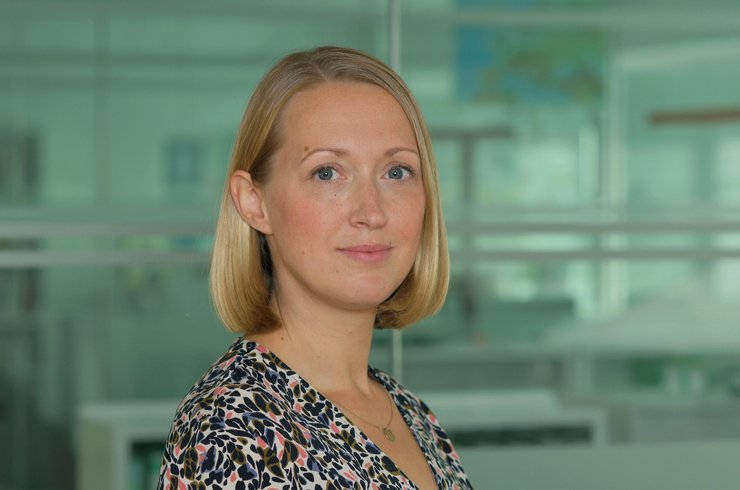
Author
Dr Julia Strasheim is Head of International Affairs at the Berlin Police Headquarters. Until May 2024, she was Deputy Managing Director of our foundation and held the position of Programme Director for Europe and International Politics at the Bundeskanzler-Helmut-Schmidt-Stiftung. She is also an associate researcher at the German Institute for Global and Area Studies (GIGA) and regularly lectures in the field of peace and conflict research. Her work focuses on peacebuilding, peace negotiations and the transformation of post-war societies in Europe and Asia.
More