Liberal democracies formulate two fundamental rights and values for their citizens that distinguish them from autocratic regimes: The protection of minorities from arbitrariness by a majority and the possibility of a peaceful transition of power. People who are persecuted in autocracies for political reasons in particular make us, who live in democratic constitutional states, realise that these legal rights are by no means a matter of course or a given. They require our active defence and protection against their internal and external enemies.
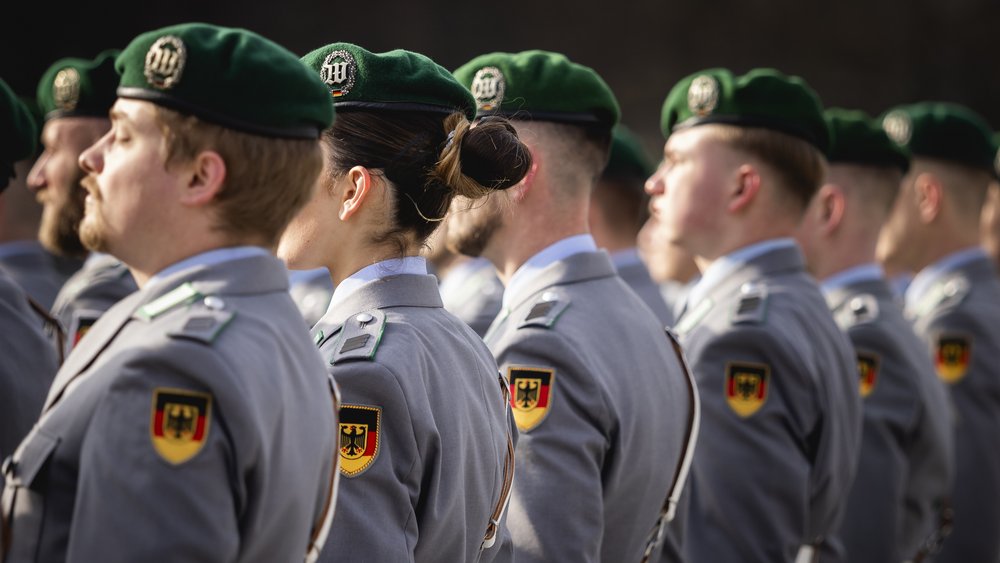
The defensive democracy required for this is a task for society as a whole. The Bundeswehr has been responsible for military protection since 1955. During the Cold War, this consisted at times of up to 500,000 soldiers - the majority of whom were conscripts who provided national defence. Closely linked to the conscript army were the concepts of the "parliamentary army" and the soldier as a responsible "citizen in uniform". The Social Democrats in particular had a strong historical awareness of how a professional army as a "state within a state" could threaten the basic liberal order. As his party's defence expert, Helmut Schmidt repeatedly pointed out the immense importance of compulsory military service as an institutional bridge between society and the army.
Downsizing the Bundeswehr and suspending compulsory military service
Schmidt was correspondingly critical of the decision by the CDU/CSU/FDP-led federal government in 2011 to suspend compulsory military service. The background to this was a change in security policy challenges, a lack of justice for the armed forces and, above all, a massive need to make structural savings in the defence budget. After the end of the Cold War and as part of the so-called "peace dividend", the Bundeswehr had been steadily downsized; the focus of its tasks shifted from national defence to "out-of-area" missions outside the NATO alliance area and was to be carried out by a more professionally structured professional army.
Need for increased defence efforts
Since Russia's invasion of Ukraine in 2022 at the latest, and also as a result of Russia's constant hybrid warfare against EU countries, there has been a growing awareness of the need for increased defence efforts, both nationally and within the framework of NATO and the EU. A central component of this is an increase in the armed forces from the current 186,000 to an initial 260,000 soldiers by 2035 and, in the long term, an increase in the number of deployable reserve personnel. Since its foundation, the Bundeswehr has had difficulty - apart from a few short periods - in recruiting sufficient personnel, particularly non-commissioned officers, sergeants and officers. This problem has been significantly exacerbated by the suspension of compulsory military service as well as demographic and economic factors, and it is doubtful whether the recently enacted Military Service Act will solve these problems.
New regulation favours voluntary service
The regulation passed by the Bundestag on 5 December 2025 focuses primarily on voluntary service. Since the beginning of the year, all 18-year-old men and women have successively received a questionnaire designed to determine their motivation and suitability for service in the armed forces. Men have to answer the questionnaire, women can. Since this year, all men born on or after 1 January 2008 are once again required to complete a military draft.
If there are not enough men and women for the Bundeswehr, the Federal Government reserves the right to take further steps to achieve the required troop numbers for the stated targets, including through mandatory measures. At the same time, it is questionable how quickly and to what extent the Bundeswehr will even be able to prepare the corresponding personnel, structural and administrative resources as well as the necessary infrastructure for these numbers.
Protests against the new military service
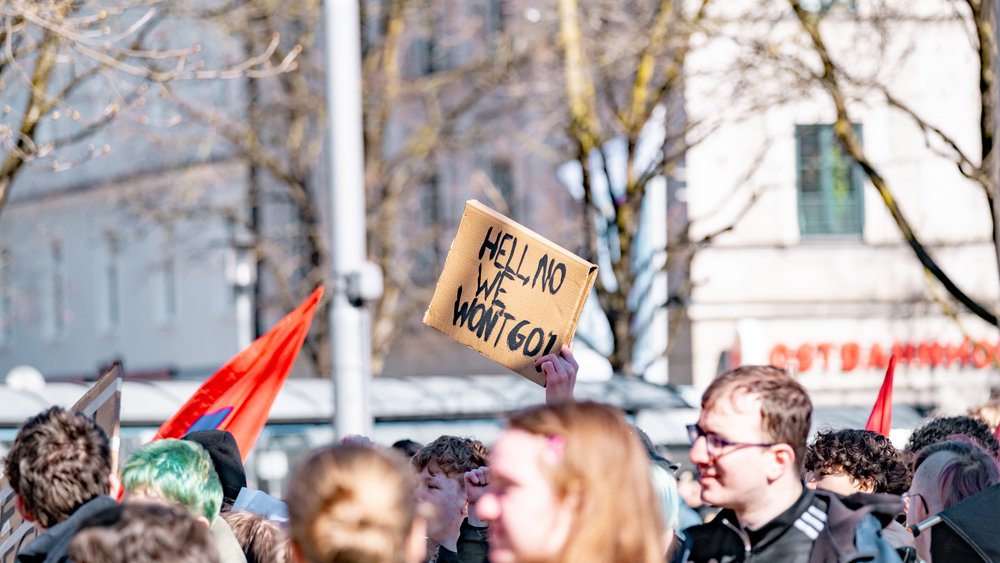
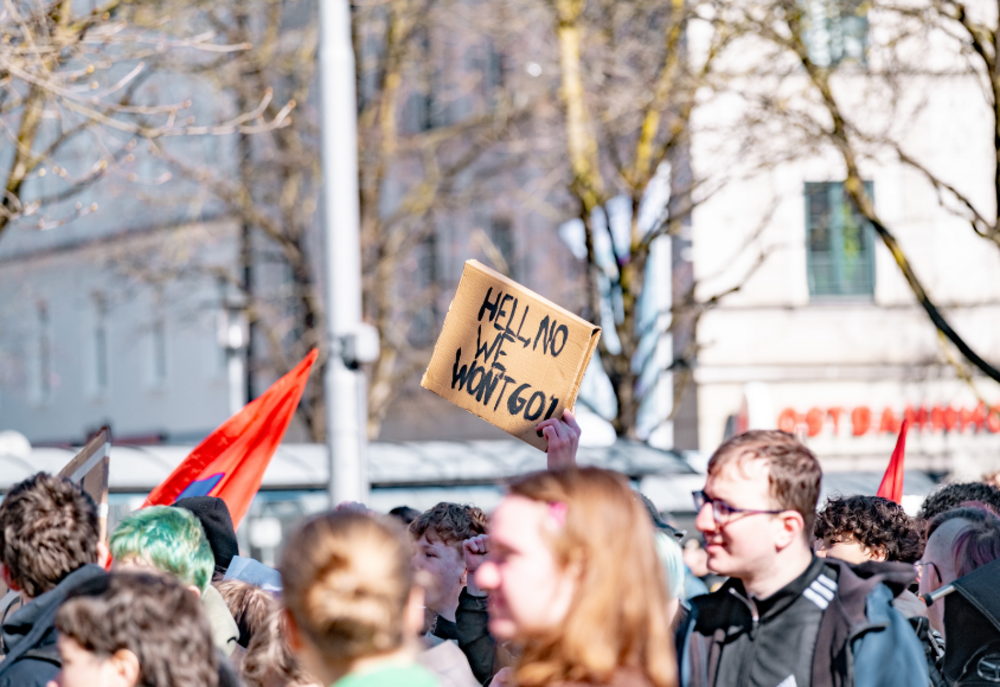
There is opposition to such plans, particularly among some of the young people affected by them, such as the "school strike against compulsory military service", which saw hundreds of schoolchildren take to the streets in Hamburg alone in February. They criticise the new regulations for various reasons: Young people are already marginalised due to their relatively small numbers and their interests are underrepresented in society. Above all, however, they are calling for a greater say in issues that affect them so directly and thus also for structural participation formats in order to fulfil the state's democratic aspirations.
Many questions remain unanswered: To what extent was and is participation and co-determination guaranteed in the new Military Service Act (and in future legislative proposals)? What service can or must a state demand from its citizens in order to protect itself from its enemies? How fairly is the burden distributed between the generations? And what would be the conditions under which a majority of young people would agree to (compulsory) military service?
We would like to discuss these and other questions with you in a new event in our "Kaffee und Klartext" format. On Sunday 12 April at 3:30 pm, we will provide space for discussions and questions on the topic. We look forward to controversial discussions between the generations!