One global crisis follows the next at breakneck speed. Once again, international cooperation is being put to the test, challenging globalisation and international trade in particular: First it was Trump's trade war that disrupted global supply chains, then it was the corona pandemic, now it's dried-up rivers and tanks.
Accordingly, the global economic order is currently undergoing a fundamental change. International trade is being reorganised and there is often even talk of the end of globalisation as we have known it since the 1990s. At the centre of these developments is a globally ambitious China – and the systemic competition that has broken out between the United States of America and the People's Republic of China.
The project of the century
Ten years ago, in September 2013, Chinese President Xi Jinping announced a momentous plan with his “Project of the Century”: the New Silk Road project (translated from Chinese as “One Belt, One Road” or in the often-used English term “Belt and Road Initiative”, BRI for short).
With this gigantic project, the then newly minted head of state planned to intensify regional and global trade networks, in particular through numerous infrastructure initiatives. By 2021, agreements had been signed with 140 countries and 32 international organisations in Africa, Asia, Europe, North America, the Pacific and Latin America in connection with the New Silk Road. In 2020 alone, China invested around USD 22.5 billion in countries along the New Silk Road.
Even though the New Silk Road now seems to have been absorbed into other strategies and its contours are thus becoming blurred, it still clearly reflects China's ambitions. According to estimates, the entire project now encompasses almost two thirds of the world's population and more than half of the global economy.
At the same time, the initial enthusiasm of many co-operating countries has now evaporated, as China is often the main beneficiary of the individual projects. The vast majority of logistics contracts are awarded to Chinese companies, many countries have run up massive debts to China and reports of environmental pollution and human rights violations are becoming increasingly frequent.
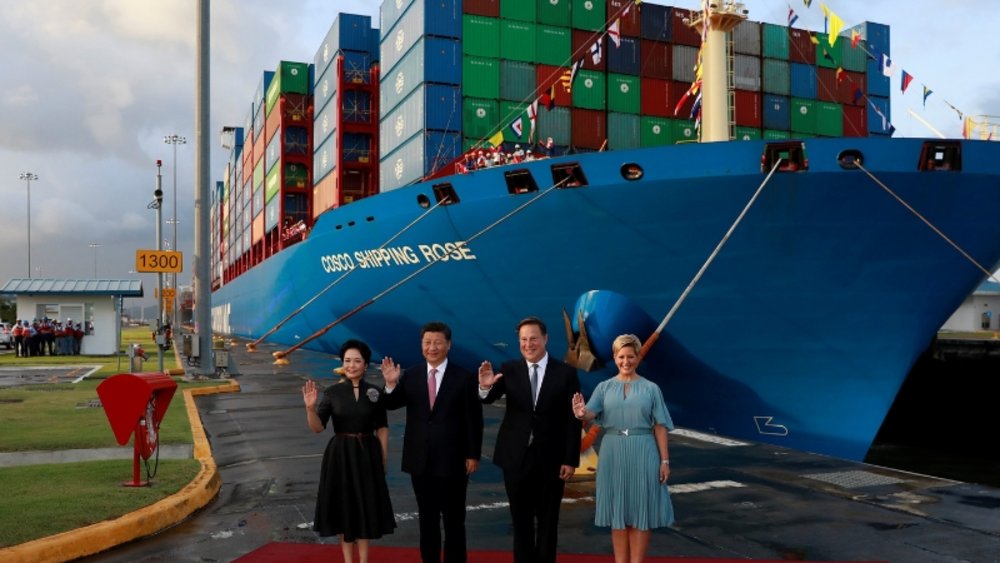
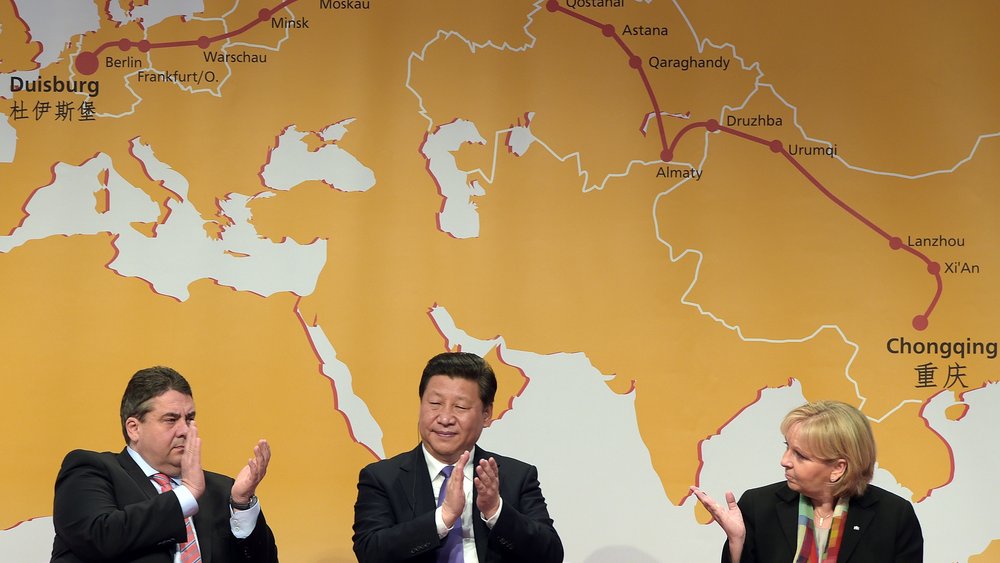
In the European Union, only Italy had become a partner of the New Silk Road – but announced its withdrawal from the project a few weeks ago. However, there are initiatives below the national level. The Chinese shipping company Cosco has been the majority owner of the Greek Mediterranean port in Piraeus since 2016 and has developed it into a central hub for maritime trade in the following years. With the investment in the Tollerort container terminal, Hamburg could now become another important port in the maritime arm of the Chinese infrastructure project. As Europe's largest inland port, Duisburg is the end of the Iron Silk Road, a railway line that connects China with Europe.
Economic integration
China owes its own rise to the existing system of international trade. Joining the World Trade Organisation (WTO) in 2001 allowed the country to integrate into the global trade of the now 164-member multilateral organisation.
At the time, economic dependencies were still considered progressive economic integration. Prior to the 2007/2008 financial crisis, the USA had not declared systemic competition with either China or Russia. Neither country was perceived as a serious rival. On the contrary, all three major powers participated – sometimes more, sometimes less – in the multilateral trade policy of the WTO and the global trade organised by it.
Nevertheless, the liberal trade policy implemented worldwide in the 1990s was characterised by difficult circumstances from the outset. Contrary to the then widespread liberal notion of a hierarchy-free, economically interconnected world (“end of history”, Francis Fukuyama), unequally distributed economic dependencies became entrenched and intensified. And these asymmetrical dependencies only functioned as long as the international division of labour and international cooperation were the guiding premises of foreign policy.
The political instrumentalisation of economic dependencies
Today, however, we find ourselves in a new situation that is unique: as in the Cold War, international relations are dominated by a systemic conflict, but unlike then, the competitors are strongly economically intertwined and economically interdependent both with each other and with the rest of the world.
It is precisely this economic dependency that is now being used as a political weapon. Political scientists Abraham Newman and Henry Farrell call this new strategy “weaponised economic interdependence” – the instrumentalisation of economic dependencies as a weapon. In order to achieve political goals, governments utilise the economic dependencies created by international trade to gain strategic advantages over their rivals. This means that co-operation in multilateral trade policy is no longer possible.
Xi Jinping’s New Silk Road of 2013 is an example par excellence of this kind of instrumentalisation of economic instruments to assert foreign policy interests. The enormous Chinese investments in countless infrastructure projects along the New Silk Road are intended to serve international trade even in times of growing protectionism, but also to secure China’s influence in the countries involved. The same applies to the USA’s “Built Back Better World” plan and the EU’s “Global Gateway” strategy – both responses to the “Belt and Road Initiative”.
China’s New Silk Road and its strong strategic, security policy dimension have made a significant contribution to changing the global economic order and the assessment of international business. Geo-economic strategies that combine business with security policy are becoming increasingly widespread. Although this is still happening without a conclusive standardised definition, the G7 and its member states are currently reassessing international trade policy cooperation under the heading of “economic security”. Even if free trade continues to be strongly emphasised, states are increasingly engaging in shaping and intervening economic policy from a strategic and security policy perspective. This is certainly not the end of globalisation – but a transformation has begun.