Even during the first Trump administration, there were calls for the European Union (EU) to finally become "capable of global politics"[1], strive for strategic autonomy and "learn the language of power"[2]. In the course of the "double turning point" - Russia's war of aggression against Ukraine and Donald Trump's second presidency - this debate has gained momentum. For example, an independent Europe is being discussed as an independent pole of world politics[3] and as a "future military superpower"[4]. The question behind this is: Is the EU capable of asserting itself as an independent actor under the changed conditions of international policy-making and global power shifts, or do structural dependencies and its own failings limit such a role in the long term?
Vassal or independent player?
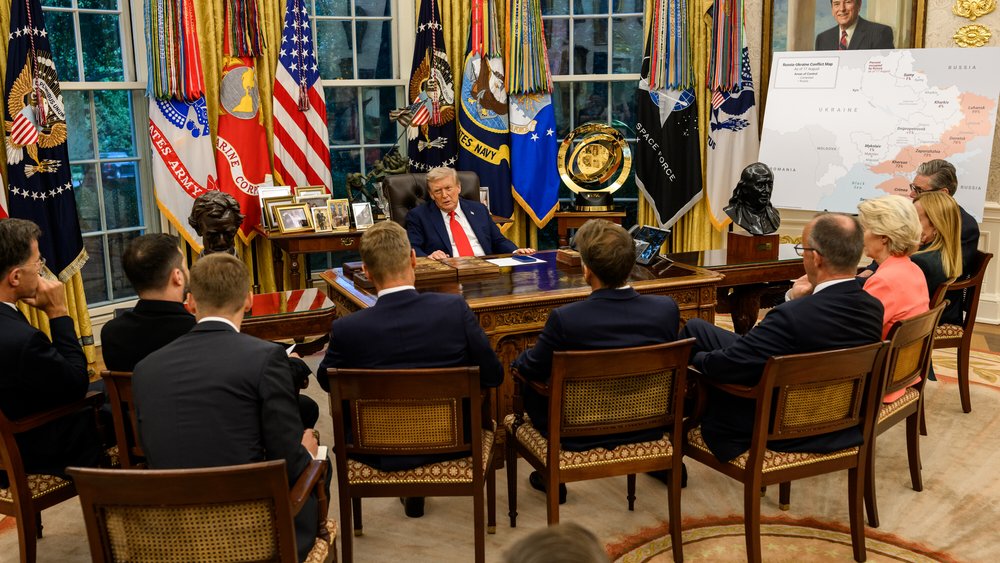
Within twelve months, the second Trump administration has exposed the shortcomings of the EU's largely intergovernmental foreign policy and the limitations of "European power"[5]. When he took office, the Western community was cancelled, as was the liberal, rules-based international order that had previously been pursued. The former allies appear to have been assigned the status of vassals. The security partnership that has evolved over time is constantly being called into question and linked to economic conditions and ideological allegiance. The US strategy documents published at the end of 2025 - National Security Strategy and National Defence Strategy - are openly directed against the EU, international law, multilateralism and central forms of global governance[6]. Washington claims hegemony in the "western hemisphere", combined with limited sovereignty for the other states. The fact that these are not empty words was demonstrated with massive threats against Panama, Greenland and Canada as well as against Venezuela and Iran with ruthless violence, violations of international law and open threats of war crimes[7].
In April 2025, the Trump administration initiated a global tariff conflict, which also imposed punitive tariffs of 30 per cent on the EU. The bilateral trade dispute ended (provisionally) in August 2025 with Europe largely accepting US conditions[8]. In addition to a unilateral tariff of 15 per cent and extensive European investment commitments, these also include a considerable deepening of energy policy (predominantly fossil fuels), technological and defence industry dependencies on the USA - with limited reliability and predictability at the same time, as the war against Iran has clearly demonstrated[9].
Self-marginalisation instead of strategic autonomy?
Helmut Schmidt once called for the further development of the EU and a common ability to act in terms of foreign and security policy. Only in this way could it assert itself as an independent player in future world politics. Otherwise, there is a risk of "self-inflicted marginalisation" in the international system[10]. If the agreements of August 2025 are implemented and the EU pursues a strategy of appeasement, flattery, concessions and selective cooperation with the Trump administration for another three years - despite the clearest contradictions to its own values, goals and interests[11] - Europe is likely to come closer to marginalisation. In addition to insufficient hard power and deepening economic and technological dependence, there would also be a massive loss of soft power. The perception of the EU as an independent player in international politics is already eroding. Credibility is a resource that is difficult to build up and depends to a large extent on the consistency between formulated values and goals on the one hand and actual action on the other. Nathalie Tocci has rightly pointed out that the EU's leading involvement in the drafting of the first nuclear agreement with Iran was largely due to its non-participation in the 2003 war against Iraq[12].
Strategic autonomy needs more than words
Although the Europeans' strategy to date has failed and the relationship between Trump and European leaders appears to have been permanently damaged[13], the moves towards autonomy are hesitant and lack the necessary (harsh) consequences. Strategic autonomy requires economic strength and competitiveness as well as technological sovereignty. It also requires social resilience and sufficient, independent security and defence capabilities. The development of the latter requires time and serious negotiations with the USA in order to limit security risks. Maintaining NATO and the associated security partnership, capabilities, resources and bases is clearly also in Washington's interests. Strong global partnerships and the development of its own resources, capacities and capabilities can strengthen Europe's position and effectiveness in this regard. However, strategic autonomy begins with autonomy of thought and independent action, both of which require courage and determination.
[1] European Commission: Juncker at Munich Security Conference: "We must become capable of global politics", press release of 19 February 2018, germany.representation.ec.europa.eu/news/juncker-bei-munchner-sicherheitskonferenz-wir-mussen-weltpolitikfahig-werden-2018-02-19_de
[2] European Commission: Europe speech, Dr Ursula von der Leyen, President-elect of the European Commission, Allianz Forum, Berlin, ec.europa.eu/commission/presscorner/detail/de/speech_19_6248
[3] European Commission: A stronger Europe in the world, commission.europa.eu/strategy-and-policy/priorities-2019-2024/story-von-der-leyen-commission/stronger-europe-world_en
[4] Euractiv: EXCLUSIVE: Von der Leyen: EU to become a "major military power", euractiv.de/news/exklusiv-von-der-leyen-eu-soll-militaerische-grossmacht-werden/
[5] Marc Saxer: The USA is strategically overstretched, Cicero, www.cicero.de/aussenpolitik/krieg-im-iran-usa-strategisch-ueberdehnt
[6] Der Spiegel: EU foreign policy chief - "The US wants to divide Europe", www.spiegel.de/politik/eu-topdiplomatin-kaja-kallas-die-usa-wollen-europa-spalten-a-eeebad4c-e968-4768-8fb9-5bbb192536fc
[7] Just Security: Over 100 International Law Experts Warn: U.S. Strikes on Iran Violate UN Charter and May Be War Crimes, www.justsecurity.org/135423/professors-letter-international-law-iran-war/
[8] European Commission: Joint Statement on a United States-European Union framework on an agreement on reciprocal, fair and balanced trade, 21 August 2025, policy.trade.ec.europa.eu/news/joint-statement-united-states-european-union-framework-agreement-reciprocal-fair-and-balanced-trade-2025-08-21_en
[9] Nathalie Tocci: Iran is a turning point for Europe's liberation - from Donald Trump, The Guardian, www.theguardian.com/commentisfree/2026/apr/09/iran-is-a-turning-point-for-europes-liberation-from-donald-trump
[10] Helmut Schmidt: "Germany in and with Europe", speech to the SPD federal party conference in Berlin, 4 December 2011, www.spd.de/aktuelles/detail/news/deutschland-in-und-mit-europa/11/11/2015
[11] dejure.org: EU Treaty, Article 21, dejure.org/gesetze/EUV/21.html
[12] Nathalie Tocci: Iran is a turning point for Europe's liberation - from Donald Trump, The Guardian, www.theguardian.com/commentisfree/2026/apr/09/iran-is-a-turning-point-for-europes-liberation-from-donald-trump
[13] Marc Pierine: Europe Doesn't Like War-for Good Reasons, Carnegie Europe, carnegieendowment.org/europe/posts/2026/04/europe-doesnt-like-warfor-good-reasons