How the image of the “soldier as a citizen in uniform” was formed
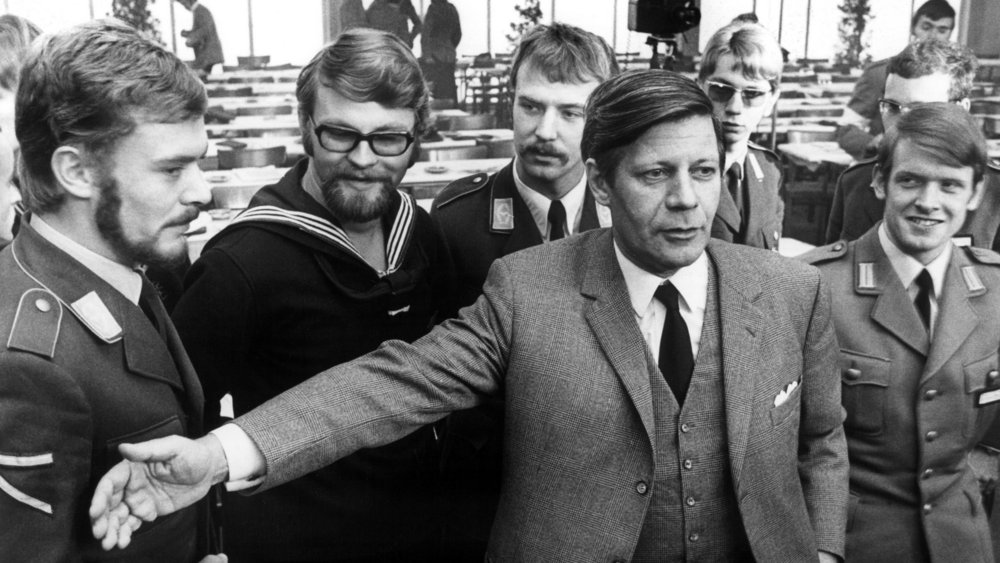
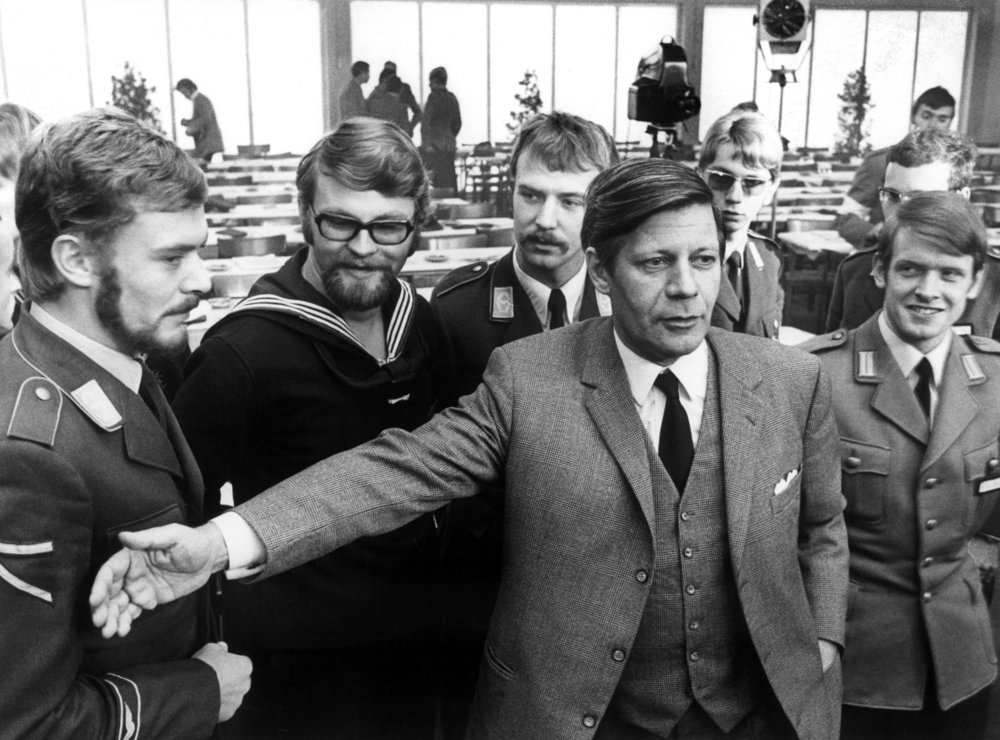
“All soldiers in the Bundeswehr are citizens in uniform. That doesn't just mean that basic rights also apply to them. Rather, they are particularly committed to these values. [...] The citizen in uniform is a principle of Innere Führung.” These sentences from the current homepage of the Federal Ministry of Defence have formulated the claim and ideal of the Bundeswehr since its foundation. Helmut Schmidt advocated these ideas back in the 1950s as a defence expert for his SPD parliamentary group in the Bundestag. He saw the soldiers of the still young Federal Republic as responsible and critical citizens - a memorable change from the historical role models, the model of the soldiers of the First and Second World Wars!
As a soldier, Schmidt had experienced what blind obedience to a criminal regime could do. He was conscripted into the Wehrmacht in 1937 and was taken prisoner of war by the British in 1945 as a first lieutenant in the Luftwaffe. In between, he also served on the front lines in the Soviet Union and, shortly before the end of the war, in the West. Decades later, Schmidt recalled his ambivalent feelings: on the one hand, owing obedience to his country and serving it, on the other hand, feeling deep doubts about the meaning and character of this war. In the prisoner-of-war camp, he came to the realisation that a post-war Germany had to be democratic. At the time, hardly anyone could have imagined that the West German state would have an army again just ten years later.
The new start proved to be difficult: shortly after the end of the war in 1945, deep rifts emerged within the former “anti-Hitler coalition” (the USA, Great Britain, France and the Soviet Union). The “Cold War” with its systemic opposition of capitalism and communism also created two military blocs - the Bundeswehr, which was established in 1955, became part of NATO. This army “inherited” its personnel from the Wehrmacht, and from the very beginning, influential former generals managed to establish false historical images of the war, which the Wehrmacht had largely waged in a criminal manner, with the “legend of the clean Wehrmacht”. At the same time, the founding fathers of the Bundeswehr ventured a visionary alternative to their historical predecessors with the concept of “Innere Führung”. The objective was an army guided by democratic values in a constitutional state.
As a passionate advocate of parliamentary democracy, it was clear to Helmut Schmidt that democratic principles had to apply in all spheres of society, including the economy and the military. As Federal Minister of Defence (1969-1972), he brought this conviction to life at various levels: he advocated a comprehensive education for soldiers: not only combat, strategy and military technology, but also civic education and education in critical thinking were soon on the curriculum - including at the Bundeswehr universities in Hamburg and Munich, which Schmidt had founded. He was interested in the opinions of his soldiers, had them questioned on a wide variety of topics and looked for pragmatic solutions to problems of all kinds - especially in the face of massive recruitment problems.
But “Innere Führung” meant much more to Schmidt: as a parliamentary army, the Bundeswehr had to submit to the primacy of politics under all circumstances. This meant, for example, that the final decision on the deployment of the army should always lie with politicians, not the military. Schmidt did not allow conservative generals who did not want to comply with these and other objectives of “Innere Führung”, and who demanded a “reform of the head and limbs, of the Bundeswehr and society”, particularly in view of the influence of the 1968 movement on the Bundeswehr, and he sent important representatives of this position into early retirement.
Nevertheless, the claim and reality of “Innere Führung” in the Bundeswehr were not always in a tension-free relationship. This applies, for example, to its understanding of tradition, which until the 1970s invoked the “eternal virtues” of the German soldier and also demanded “gratitude and reverence for the achievements and suffering of the past”.
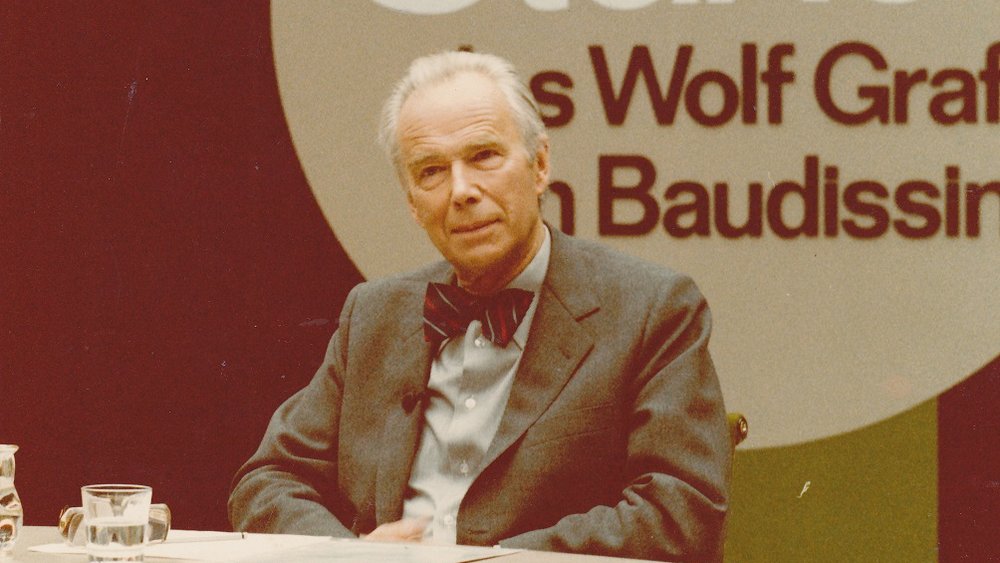
Wolf Graf Baudissin is still regarded as the father of “Innere Führung” today, as is Schmidt, a former Wehrmacht officer - the two have had a close relationship since the 1960s. Baudissin was the founding director of theInstitute for Peace Research and Security Policy (IFSH). Together with the IFSH, the Federal Chancellor Helmut Schmidt Foundation will be hosting an event on the history, present and future of the concept of “Innere Führung” on 27 October. The keynote speech will be given by Dr Eva Högl, Parliamentary Commissioner for the Armed Forces.