
International peace missions: How much democracy is still in it?
23. Oct 2021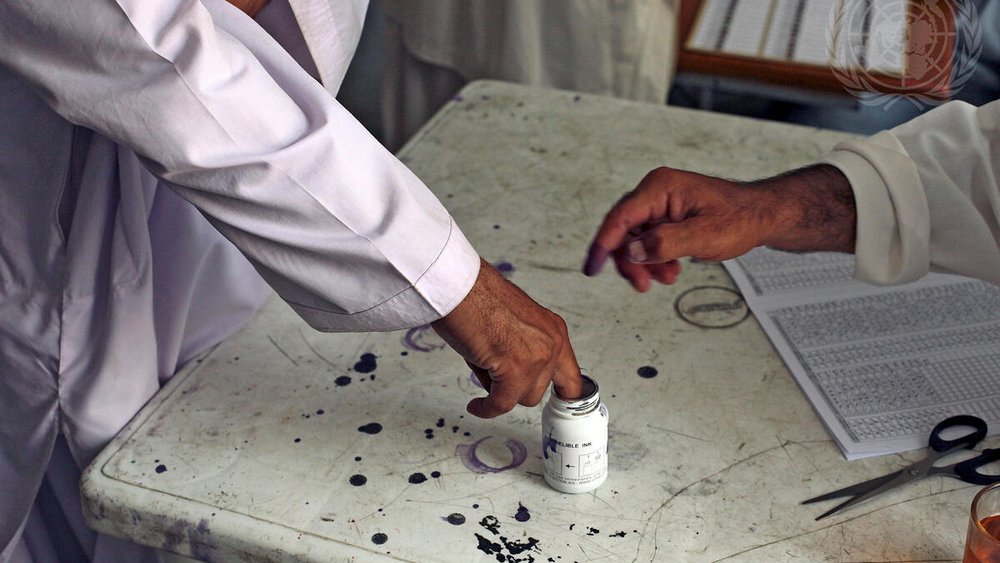
Monitoring elections, strengthening civil society, establishing independent courts, enabling freedom of the press: When it comes to the question of how violent conflicts can best be resolved, international peacekeeping missions have long focussed on the principle of "peace through democracy promotion". This is changing - and not just since the failure of this policy in Afghanistan. For years now, peacebuilding has increasingly focussed on combating terrorism, stability and security. Is the road to peace still paved with democracy?
Anyone who has ever opened a textbook on international relations has probably stumbled across the sea of abbreviations that are usually used to shorten the names of UN peacekeeping missions: UNTAC, UNMIK, or UNMIBH for the missions in Cambodia, Kosovo or Bosnia are just a few examples.
Peace researchers like to tell the following anecdote about UNMIK, the United Nations Mission in Kosovo established in 1999: How exactly UN missions come about and what tasks they take on is usually decided by international experts. The people affected by the war rarely have a say in shaping "their" peace. It is therefore hardly surprising that during the UNMIK mission it quickly became apparent that the English pronunciation of the name ("anmik") means "enemy" in the Kosovo Albanian dialect - a particularly embarrassing mishap that had not been considered in advance.
The idea: from the weapon to the ballot box
Maintaining and restoring peace is one of the UN's most important goals. UN missions not only take on military tasks, but have also long relied on the idea that strengthening democracy is the best recipe against new violence.
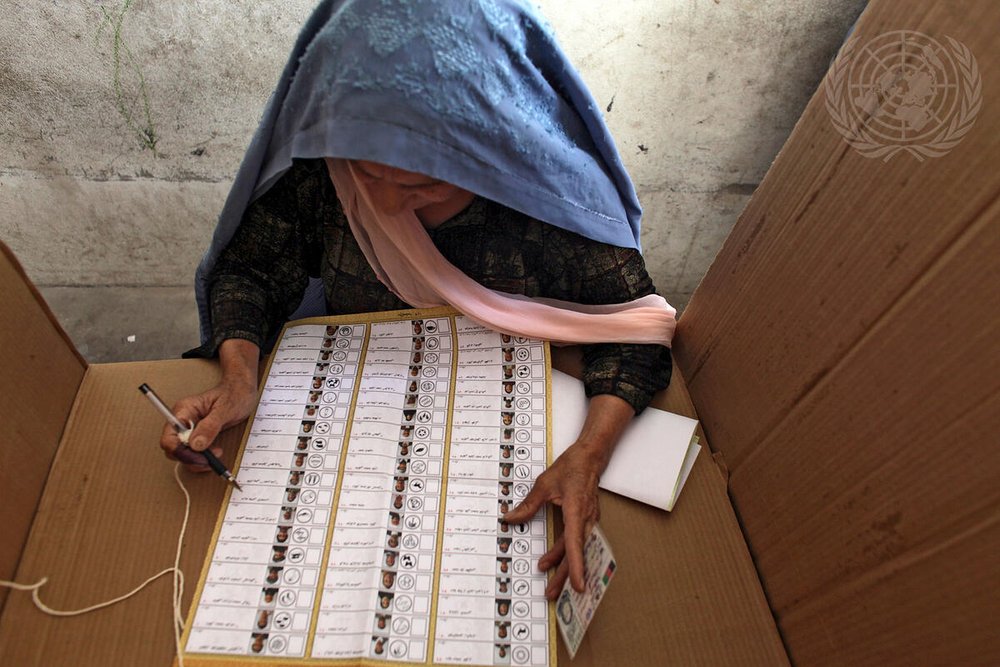
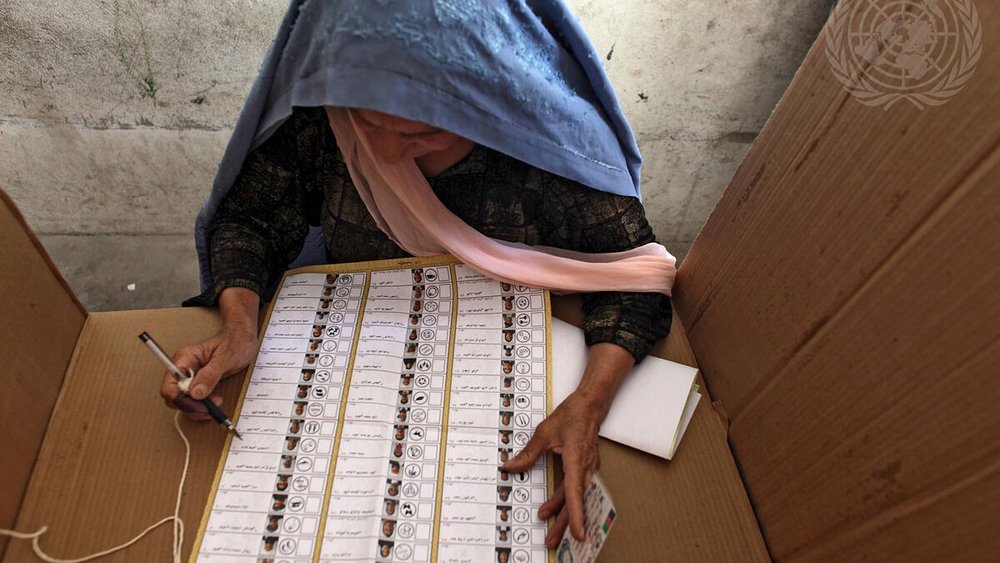
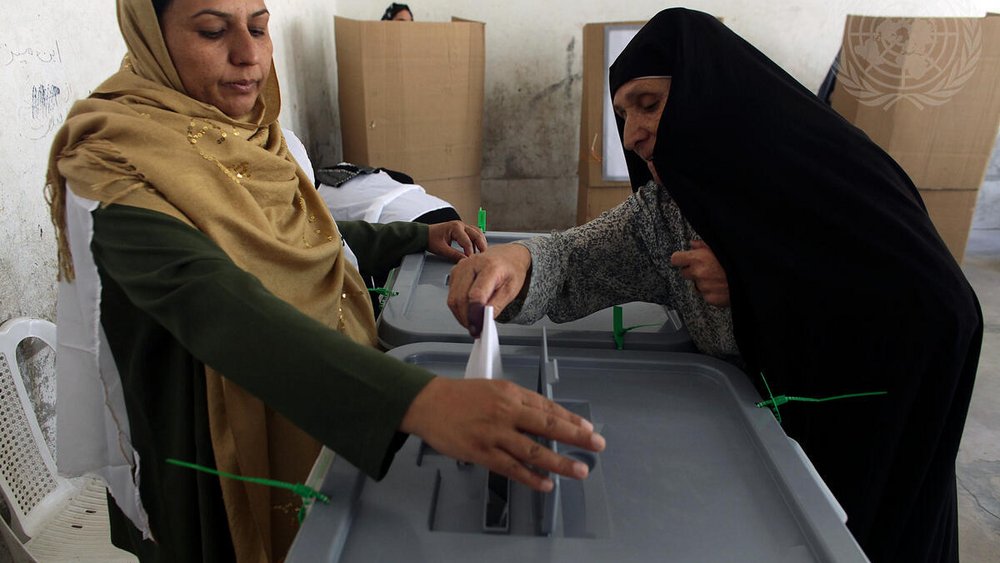
The hope was that formerly violent conflicts would be resolved non-violently within the framework of democratic processes: Conflicting parties should no longer fight each other with weapons, but at the ballot box. To this end, the UN has sent election observers to Afghanistan in the past, founded its own radio station in Cambodia ("Radio UNTAC") and taken on government tasks in Kosovo.
The reality: disappointed expectations
However, the "peace through democracy" approach is in crisis. There are many reasons for this.
One reason is the deep disappointment with the ambitious interventions of the 1990s and early 2000s, such as in Afghanistan. Peace and democracy remained a distant prospect there. This also has to do with the behaviour of the international community itself, which did not always play by its own rules. For example, the UN supported the participation of unelected warlords in the constituent assembly in Afghanistan (Daase et al. 2021). In Bosnia, the Office of the High Representative - who as an international envoy oversaw the implementation of the peace agreement - had such great powers over the heads of the population that the system has been described as a "parody of democracy" (Chandler 2000).
Further reasons for the crisis are the realisation that democracy based on the Western model cannot simply be exported and that democratisation is generally not always the best way to achieve peace. While established democracies such as Germany resolve conflicts through elections, elections in post-war societies can trigger new violence.
In Nigeria, for example, there was great fear of violence in the run-up to the 2015 elections. To promote a peaceful election, drinks manufacturer Coca-Cola even launched a special version of its "Share a Coke" campaign. The advert featured two Coke bottles with the traditional red and white label altered to show the words "Broom" and "Umbrella" - the symbols of the two major parties in Nigeria. The bottles clinked together to signal peaceful coexistence and national unity.
The players: The crisis of democracy in Europe and the USA
Speaking of Coke and politics: Julius Nyerere, Tanzania's first president, is said to have once said: "Democracy is not a bottle of Coca-Cola that can be imported" (Kabogo 2020). Another reason why democracy is no longer at the centre of international peace operations is that its most prominent export countries are facing their own crises of democracy.
In the EU, autocratisation in member states such as Hungary or Poland has the potential to undermine the Union's credibility in promoting democracy worldwide.
In the US, the Trump administration not only cut its grants to UN peacekeeping missions, but also its budget for global democracy support, which fell by 32 per cent from 2017 to 2018 (Lawson and Epstein 2019). Since Trump took office, the Republican Party's attacks on democracy, such as its efforts to tighten voting rights, have damaged the USA's global reputation.
The effects: A shift towards stabilisation
The consequences of these changes are reflected, among other things, in the names of UN peacekeeping missions, where "stabilisation" is the new buzzword. A new way of responding to violent conflicts has emerged. While peacebuilding has long seen democracy as a prerequisite for stability, 'stabilisation' is based on the idea that democracy can only be a consequence of it (Belloni 2020). In this context, the international community has scaled back its transformation goals. Radio stations in conflict countries are no longer at the top of the list of priorities, but rather, for example, the training of state security forces in the fight against terrorism.
However, this approach can prove counterproductive and even exacerbate conflicts.
Training state security forces in conflict countries with weapons so that they can better fight terrorist groups is not a form of sustainable peacebuilding that combats the actual causes of wars - such as social inequality.
Weapons training also does not solve the problems that make armies really ineffective in the fight against armed groups, such as corruption.
And devaluing democracy and human rights in international peacekeeping missions also harbours the risk of achieving the exact opposite of peace. Because when security forces use violence against the civilian population on the ground - as in Mali - trust in the state is further destroyed and the recruitment of armed groups is made easier.
The future: where to go with peacebuilding?
The withdrawal of the international community from Afghanistan is a significant turning point for peace missions, which will have to be rethought in the coming years. In the long term, international engagement must be based on a more holistic approach. This does not mean a return to democracy promotion under prefabricated Western templates. Populations in conflict countries have very good ideas themselves on how peace can be achieved. Their expertise must be included more in the design of peace missions.
A good way forward could be to follow Thomas Carothers' (2020) call for the dissolution of old borders: If democratic crises in established democracies are a defining feature of our time, Carothers writes, this could create opportunities for a new kind of democracy promotion. Established democracies (such as Germany or the USA) and post-conflict societies could tackle common problems simultaneously and learn from each other without relying on the usual one-sided support of the Global South by the Global North to increase the legitimacy of international peace operations.
Sources:
- Belloni, Roberto (2020): Stabilisation operations and their relationship to liberal peacebuilding missions. In: Richmond, Oliver/Visoka, Gëzim (eds.), The Palgrave Encyclopedia of Peace and Conflict Studies. London: Palgrave Macmillan.
- Carothers, Thomas (2020): Rejuvenating democracy promotion. In: Journal of Democracy 31(1), pp. 114-123.
- Chandler, David (2000): Bosnia: Faking Democracy After Dayton. London: Pluto Press.
- Daase, Christopher/ Debiel, Tobias/Schetter, Conrad/Schröder, Ursula (2021): After the Failure in Afghanistan: Lessons for the New Federal Government. www.friedensgutachten.de/user/pages/02.2021/04.themenseite-afghanistan/02.sonderstellungnahme/Sonderstellungnahme%20Afghanistan.pdf
- Kabogo, Grace (2020): Tanzania Faces Huge Challenges to Peace and Unity. Deutsche Welle, www.dw.com/en/opinion-tanzania-faces-huge-challenges-to-peace-and-unity/a-55438978
- Lawson, Marian and Susan Epstein (2019): Democracy Promotion: An Objective of U.S.
Foreign Assistance. Congressional Research Service, sgp.fas.org/crs/row/R44858.pdf

Dr Julia Strasheim is Head of International Affairs at the Berlin Police Headquarters. Until May 2024, she was Deputy Managing Director of our foundation and held the position of Programme Director for Europe and International Politics at the Bundeskanzler-Helmut-Schmidt-Stiftung. She is also an associate researcher at the German Institute for Global and Area Studies (GIGA) and regularly lectures in the field of peace and conflict research. Her work focuses on peacebuilding, peace negotiations and the transformation of post-war societies in Europe and Asia.
More