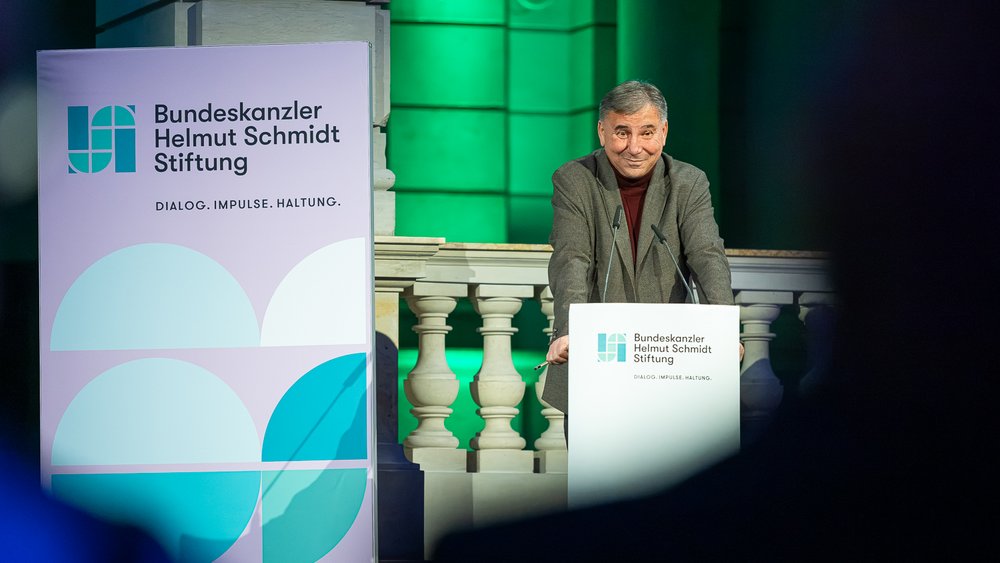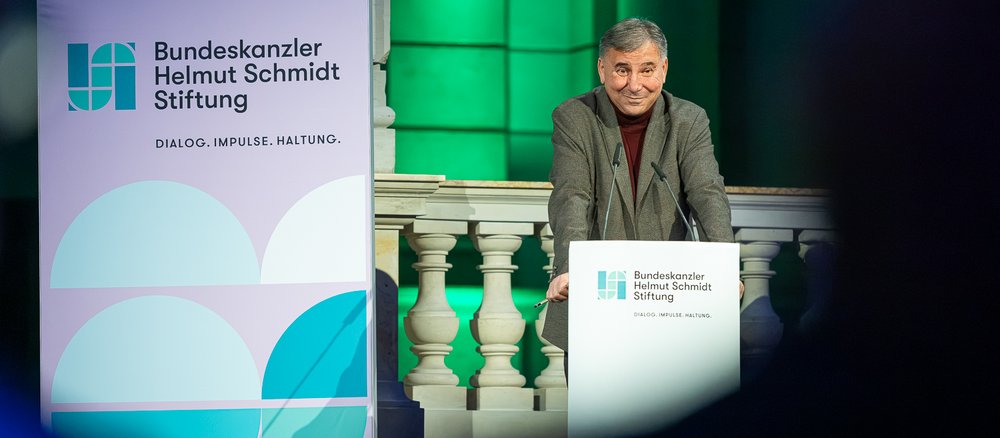
In light of Russia’s war of aggression against Ukraine, the need for resilient energy and raw materials supply chains, migration policy and other crises with global implications, Germany and the European Union are reliant on cooperation with international partners – given the scale of the challenges, going it alone is not an option. But how can we cooperate when US President Donald Trump and the world’s autocrats are increasingly calling into question multilateralism, the commitment to international criminal justice and shared norms, whilst actors worldwide are predicting the end of the liberal order? When ‘hard power’ is seen as the be-all and end-all? How can Europe hold its own in this world without losing sight of – or indeed compromising – its own principles? These questions were at the heart of the 2026 Helmut Schmidt Lecture, delivered by Ivan Krastev on 16 November in Berlin, who summed up the topic as follows: “How to talk about principles in a world where cynicism and realism are the order of the day?”
Insight into the realities of realpolitik
The political scientist, Chair of the Centre for Liberal Strategies in Sofia and permanent member of the Institute for Human Sciences in Vienna, presented in his lecture a perspective on how the balance between one’s own principles and the realities of realpolitik in the world might work.
As is so often the case, recognition is the first step towards improvement: in Krastev’s view, it would be foolish not to acknowledge the fact that the international system has changed. For the tools of yesterday can no longer be used to act successfully today. Rather, one should face up to this reality and develop new tools – and in doing so, it is perfectly acceptable to experiment and make mistakes.
Giving the future a chance
Promises of progress no longer hold water in the face of the prevailing polycrisis, or indeed appear in many cases to have been broken. The future is increasingly perceived as something threatening. This gives rise to a growing sense of being under pressure to act, of having no time left for democratic debate and the weighing up of political options; if something is to be done – as Krastev describes this widespread sentiment – then it must happen today, because by tomorrow it may already be too late or overtaken by events. It is not only political scientists who recognise the corrosive effect this development has on democracy; autocrats are well aware of it too. For democracy is often characterised by protracted processes, or to quote Helmut Schmidt: ‘A snail’s pace is the normal pace of any democracy.’ This may be regrettable and exhausting, but it serves the ‘balance of power’, both within society and at the international level. Democracy is based on exchanging arguments and discussing possible solutions. In this way, compromise and dialogue can be put into practice. However, when politics (supposedly) becomes a struggle for survival and political pressure effectively increases in times of crisis, the democratic balancing of interests can appear to be a capitulation, whilst the complexity of cooperation within the European Union and with its global partners continues to grow.
In his Helmut Schmidt Lecture, Ivan Krastev reminded us that this is not the first time we have found ourselves in a period of crisis. Nations have frequently faced comparable challenges in the past, and on many occasions these have been successfully overcome. The fact that the Universal Declaration of Human Rights was adopted so widely by the United Nations in 1948 (in a significantly less liberal world) is, according to our lecturer, because – in the wake of the Second World War – the future was not seen as simply ‘tomorrow’, but as a different world. Such a forward-looking moral horizon, he argued, provides firmer grounding in turbulent times and can bring people together. The 1970s were also marked by crises: the collapse of the Bretton Woods monetary system, the oil price crises of 1973–74 and 1979–80, terrorist threats to the liberal democratic order, rampant inflation and rising unemployment figures posed challenges to Helmut Schmidt and other heads of state and government, and led to new formats for dialogue such as the world economic summits now known as the G7 meetings.
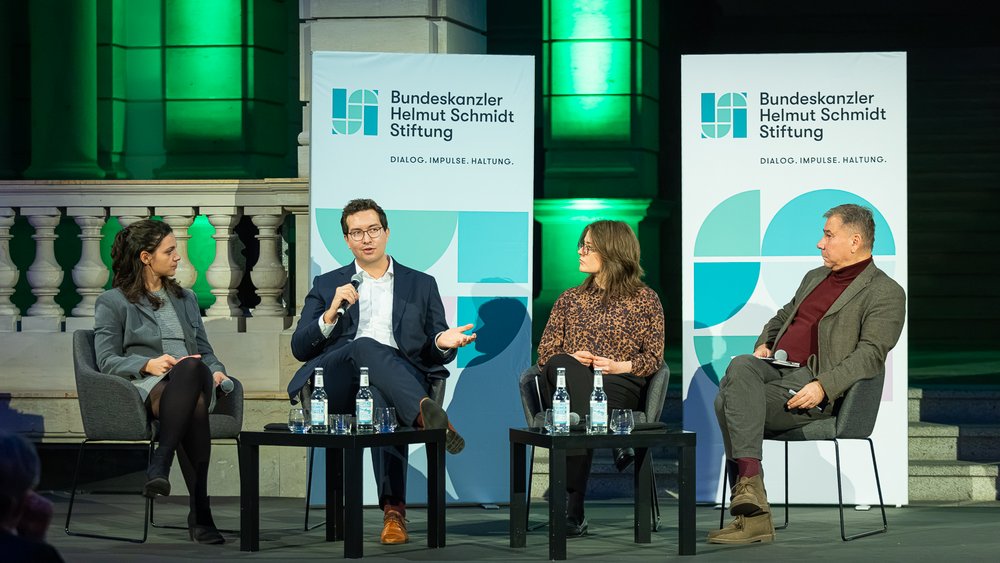
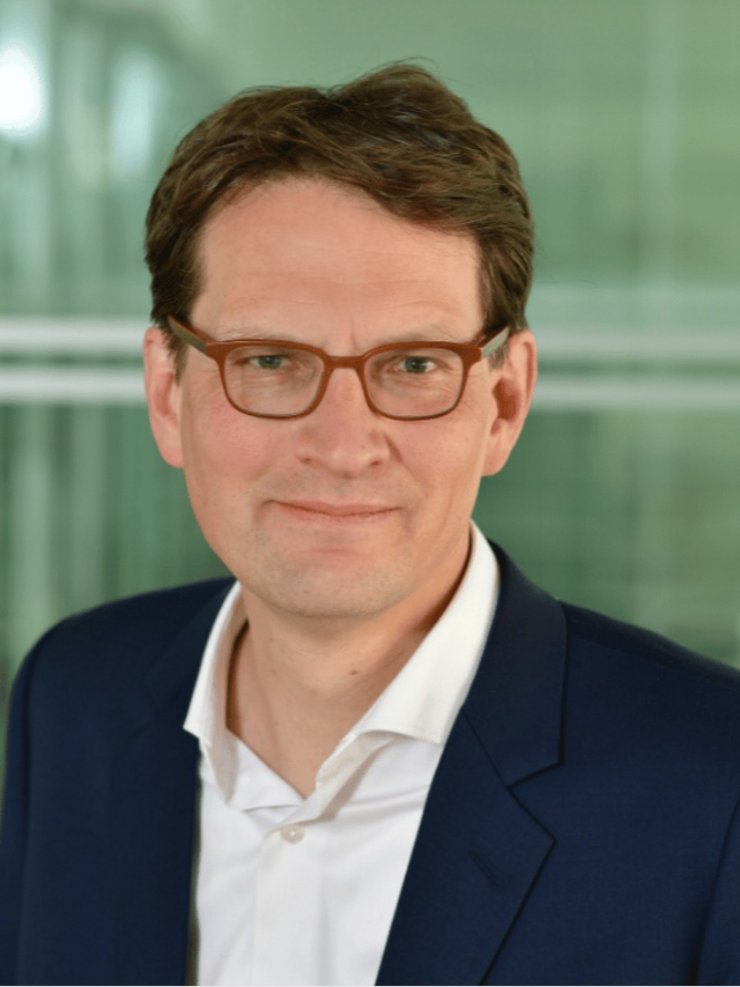
Looking back at crises that have been successfully managed politically, as political scientist Tim Heinkelmann-Wild (LMU Munich) emphasised during the panel discussion following the lecture, brings home to us that a system of rules can help all parties to a conflict in times of intense rivalry. The current questioning of norms that have long been taken for granted – such as the ban on anti-personnel mines – is reminding more and more people of the actual benefits of the liberal order.
Value-based action and the need for compromise
But what comes next? Certainly not lip service and symbolic gestures; these undermine credibility and leave partners in the lurch. What is needed, according to Heinkelmann-Wild, is a common European strategy. To be able to act effectively, Krastev suggests that we should spend less time trying to change others and more time ensuring that we ourselves do not change. Putting one’s own principles and values into practice is often the most difficult part – Europe cannot expect its partners to do this unilaterally. Heinkelmann-Wild sees the fact that the European Union is repeatedly accused of applying double standards as proof that it still has something to offer, or at least stands for something: namely, action based on norms. This ‘soft power’ advantage should be utilised with greater self-confidence once again, as inaction is currently damaging international law, for example.
In his contribution, however, BKHS Fellow Alexander Lipke emphasised that shared values do not always translate into common strategic priorities. Rather, one must navigate the international landscape in such a way that – despite all the pressures to compromise and ambivalent decisions – the overriding goal of peace is not lost sight of.
A roadmap for tomorrow
Politics, however, is not merely a contest of power between heads of state. It also plays out in private spheres and on the streets. The younger generation, in particular, is increasingly engaging with these issues, as the recent protests have shown. To ensure that fears and concerns do not turn into anti-democratic forces, there must be a space for them.
In terms of practical educational work, this means that young people must learn to form their own opinions and understand complex political issues, said Alisa Rieth (BKHS) at the conclusion of the lecture evening. In the escape game ‘Unlock Europe’, school pupils, university students and other young adults learn to do just that: faced with real-world problems from international politics, they must discuss them together and choose between competing policy options. Be it in trade policy, climate action, international healthcare or conflict resolution in the field of security policy.
The term ‘Realpolitik’ was first coined in 1853 by the liberal politician August Ludwig von Rochau in a polemic; since then, it has frequently been adapted to serve specific political interests and used in a wide variety of contexts. Despite these processes of change and instrumentalisation, one thing is certain: realpolitik and a values-based understanding of democracy will always be at odds with one another. Balancing these differing interests and mediating between them remains an ongoing task.