Since the opening of our exhibition “Schmidt! Living Democracy” in the summer of 2021, the world has changed: Covid-19 no longer shapes our daily lives, Angela Merkel has stepped down, Russia has been waging a war of aggression against Ukraine for over four years, Donald Trump is undermining US democracy, Twitter is now called X, the Queen has passed away, average temperatures have soared, and large language models are writing speeches for politicians – and our shopping lists to boot.
In these fast-moving times, the medium of the exhibition seems particularly slow. Almost like a brake on history. Whilst the world around the museum is changing at an unprecedented pace, the texts, images and objects remain the same.
And yet it cannot be said that time has passed the exhibition without leaving its mark. For a museum is not complete without its visitors. It is only through their perspectives and their questions that an exhibition unfolds its impact. What preoccupies people, what themes they bring with them, what concerns and hopes drive them – all of this has changed over the past five years – and with it, the way in which the exhibition is interpreted and understood.
A photograph of an empty motorway taken on Car-Free Sunday in 1973: It took on a different meaning after nationwide COVID-19 lockdowns temporarily brought mobility to a standstill, and it took on yet another meaning after petrol prices soared following Russia’s attack on Ukraine or the US’s attack on Iran.
Exhibition ‘Making: Today for Tomorrow’
This presents us with a particular challenge: those planning exhibitions must already be thinking today about what might be on people’s minds in one, two or five years’ time. For museums to remain relevant, they must connect with the everyday experiences and questions of their visitors. This demonstrates once again how closely the future and history are intertwined. Anyone who communicates history must always develop a vision of the future as well.
This patience and care have always been core strengths of exhibitions, the value of which is now particularly evident. Themes and objects selected with care and over time offer people a space for reflection over the long term, providing an opportunity for dialogue and contemplation – even, and especially, in turbulent times.
For us, this shift in visitors’ perspectives is particularly evident where they actively engage with the exhibition themselves.
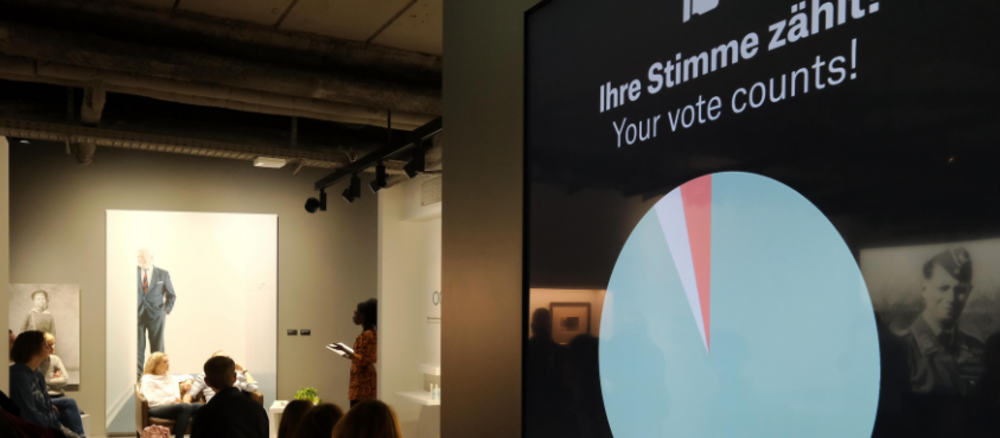
“Your voice counts!”
To this end, we have included three stations in the exhibition. At each of the ten themed tables, visitors can vote on current issues relating to democracy (“Your voice counts!”), a timeline invites visitors to draw their own conclusions based on historical events (“Share your memories!”) and quotes from Schmidt provide a starting point for forming their own views (“Share your opinion!”).
It is particularly fascinating to observe the exchange of views on controversial topics, such as Schmidt’s stance on phasing out nuclear power, immigration or human rights in China: if the political situation outside the exhibition becomes more tense, this is also reflected in the attitudes of the visitors. That said, a dominant opinion does not necessarily emerge. Whilst exhibition visitors may increasingly appear to support Schmidt’s views on migration (“You must not turn France, England or Germany into countries of immigration.”), there are at least as many people who clearly disagree with this stance. Here, the exhibition provides an opportunity for democratic debate and opens up different perspectives on an issue, enabling visitors to form their own opinions.
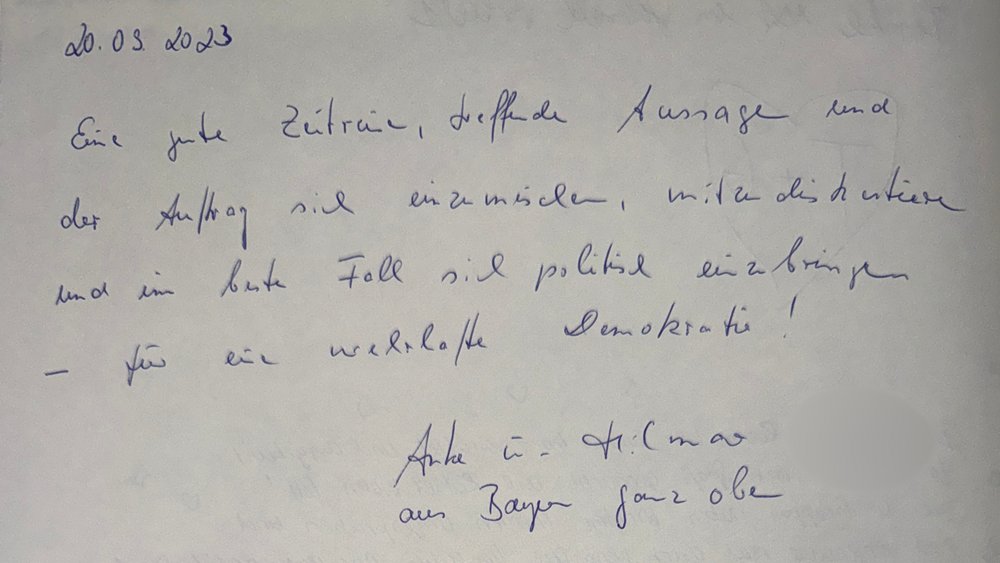
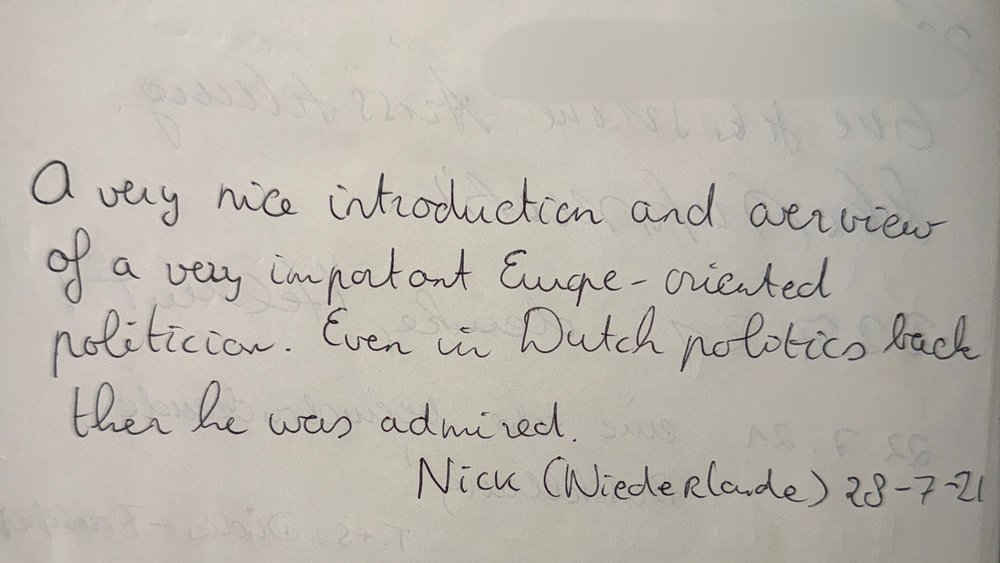
We are also interested in the visitors’ book, which has been on display from the very beginning. It contains many comments that reflect on current affairs – and, after five years of the exhibition running, it is time for a brief review. Firstly: what was important to Schmidt – the concern for the preservation of German democracy – is also understood by many of our visitors, such as Jill from Canada, who highlights the international dimension of the problem. The continued relevance of the issues of the 1970s and 1980s as a ‘prelude to the present’ is also frequently commented on, sometimes with the bitter observation that most of these crises persist.
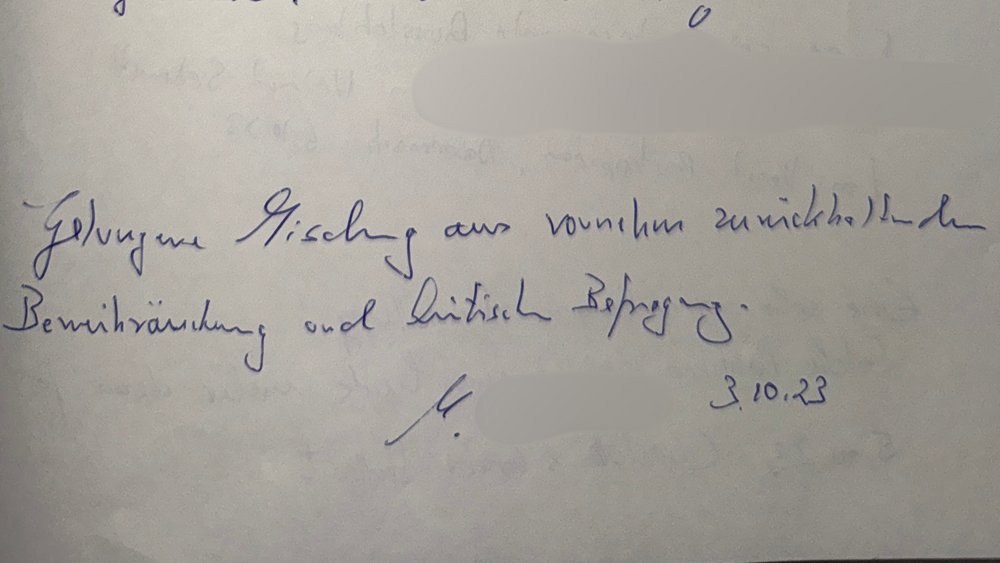
‘Restrained praise and critical scrutiny’
Perhaps what preoccupies us most, time and again, is the question of whether we have succeeded in striking a balance between honouring Schmidt’s life’s work on the one hand and maintaining a critical distance on the other. Comments such as the following (much to our delight) also show that we may not have been entirely off the mark in our conception and presentation: “A successful blend of elegantly restrained praise and critical scrutiny.” Even though we do not, of course, entirely recognise ourselves in this tongue-in-cheek statement, we do believe we can detect a sense of appreciation. Whether a qualified majority would ultimately agree with this is, of course, another matter entirely.
We were also delighted to find entries in the book from people in at least 13 countries, some of whom had written in their native languages. That would certainly have pleased Schmidt too, for whom the transnational dimension of politics and exchange was always of great importance. One comment that particularly shows us that we offer more than just information and friendly suggestions comes from a young man from Bavaria: he said the exhibition had motivated him to become politically active; naturally, we were delighted to read that.
Generally speaking, there has been a great deal of praise for the exhibition (and, incidentally, time and again for the design and structure of the presentation). On the one hand, this is a cause for celebration; on the other, it raises the question of which people we are reaching with our exhibition and who typically writes in exhibition guest books. We haven’t systematically investigated this yet, but we will look into it in our future work.