
Politicians hope that the use of citizens’ councils will reduce the distance between citizens and politicians and enable them to have a greater say. In contrast to the often heated and abbreviated debate on social media, the deliberative decision-making process typical of citizens’ councils allows for respectful dialogue and increases the chance of balanced and widely accepted proposals. Many also see citizens’ councils as a way of empowering citizens and involving a representative cross-section of the population in the decision-making process.
But do citizens’ councils deliver on these promises? What can they achieve? How democratic are lot-based, deliberative participation processes?
Participatory turnaround
In the course of the participatory turn, democracies around the world have spent the last few decades looking for new ways to revitalise parliamentary democracy and increase social participation in political decisions. While referendums, i.e. plebiscites and citizens’ decisions, were initially seen as the means of expanding citizen participation in Germany and the legal options at state and municipal level have been greatly expanded since the 1990s, enthusiasm has since waned considerably, not least due to the Brexit referendum and its extreme consequences. Problems such as the risk of manipulation and the reduction of complex contexts to a simple yes/no question are now viewed more realistically.
Deliberative wave
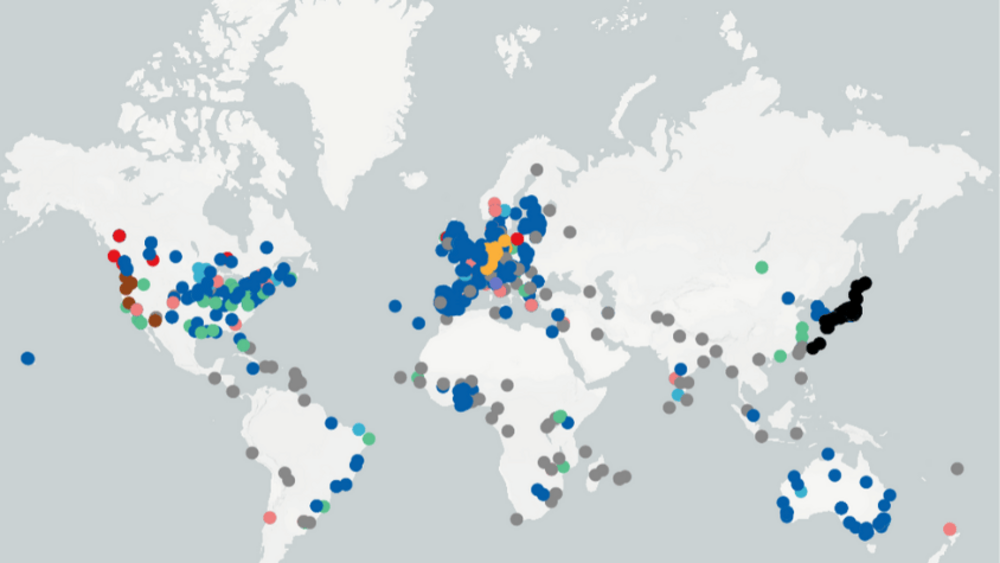
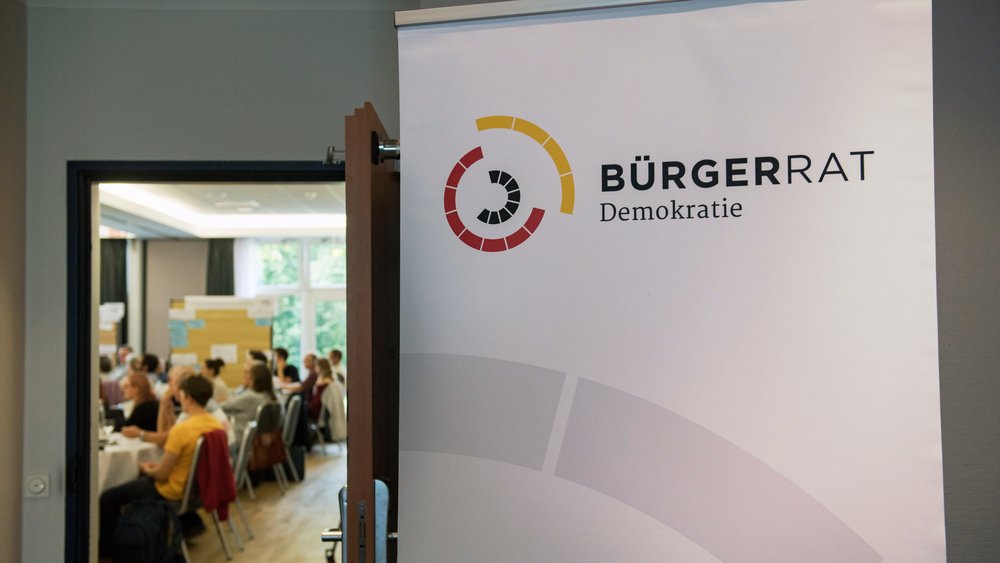
In recent years, the deliberative wave has hit Germany: A clear majority of the population would like to see more discourse-based participation processes and their expansion to federal level. The political parties are also increasingly taking this on board: The last grand coalition announced a commission on the topic and the traffic light coalition has prominently included the format of citizens’ councils in its 2021 coalition agreement. The climate movement has also discovered the instrument for itself and is calling for a climate citizens’ council. In fact, the number of lot-based, deliberative participation processes has increased significantly over the last ten years and Germany is now an international pioneer when it comes to the use of citizens’ councils. Since being trialled at federal level with the Bürgerrat Demokratie 2019, these forms of citizen participation have become known to a wider public and the term “citizens’ council” has become established. However, citizens’ councils are not a new phenomenon, but have been in use at state and municipal level since the 1970s. There are also countless names for this form of citizen participation – from “citizens’ forum”, “social council” and “citizens’ conference” to “democracy convention” and “future council” to the terms “planning cell”, “deliberative polling” or “mini-public”, which are commonly used in research.
No representative cross-section, no empowerment
However, the hope that the random selection would represent a cross-section of the population is generally not realised. A recurring problem is that citizens’ councils are disproportionately made up of older, more highly educated men, who can use their participation as a further opportunity to raise their already privileged voices. Marginalised social groups, on the other hand, often do not even accept the invitation, no longer appear in the course of the process or fade into the background during the discussion. What’s more, a group of no more than 200 people cannot possibly reflect the diversity of the German population.
As citizens’ councils usually remain inconsequential, the desired empowerment effect hardly materialises. However, full implementation of their proposals, as is often expected by the participants, is not necessarily desirable. This has to do with the limited inclusivity of the instrument, but also with the lack of sanctionability of citizens’ council decisions. It is important that citizens are taken seriously and that politicians consider the proposals. However, even staunch advocates of democratic innovation, such as the Last Generation or Mehr Demokratie e.V., are now making it clear that citizens’ councils are supplements to parliamentary democracy and should only have an advisory effect.
The great strengths of citizens’ councils
Based on the wide range of experiences with the instrument, the initial euphoria seems to be giving way to a more differentiated view, and we should seize this opportunity: We should stop exaggerating the lottery principle and finally take seriously the representation deficits that characterise citizens’ councils. These should not be lightly brushed aside again and again, as they are central to the legitimacy of the instrument.
At the same time, we should utilise and value citizens’ councils for what they can actually achieve:
One of the great strengths of citizens’ councils is their ability to make balanced judgements on complex issues that can be trusted by the public and provide guidance. They can point out overlooked problems and improve the overall quality of social discourse. However, as public attention is a prerequisite for this and at the same time a contested and scarce commodity, citizens’ councils should be used in a very targeted manner. They are particularly suitable for certain issues, namely those that affect us all and require ethical considerations, and those that affect future generations, powerful lobby groups or politicians’ own interests. Electoral law reforms are a good example of the latter.
In principle, citizens’ councils are also suitable as “democracy schools” for the participants. In the context of respectful dialogue with people outside their own echo chamber of like-minded people, individuals can rethink their own positions and practise forging compromises. They broaden their understanding of each other and of the logic of political processes, which continues even after the citizens’ consultations have ended. However, these processes are certainly far too time-consuming and, above all, too expensive for this effect, which only benefits the respective participants. It can also be assumed that interest in participation will decrease if this educational effect is the main focus.
In conclusion, it can be said that although citizens’ councils do not fulfil all the hopes placed in them, they can certainly stimulate democratic discourse. Above all, their use will lead to fairer participation if citizens’ councils are sensibly linked with other “democratic innovations” and the parliamentary system.