
The crises of an export nation
12. Feb 2022
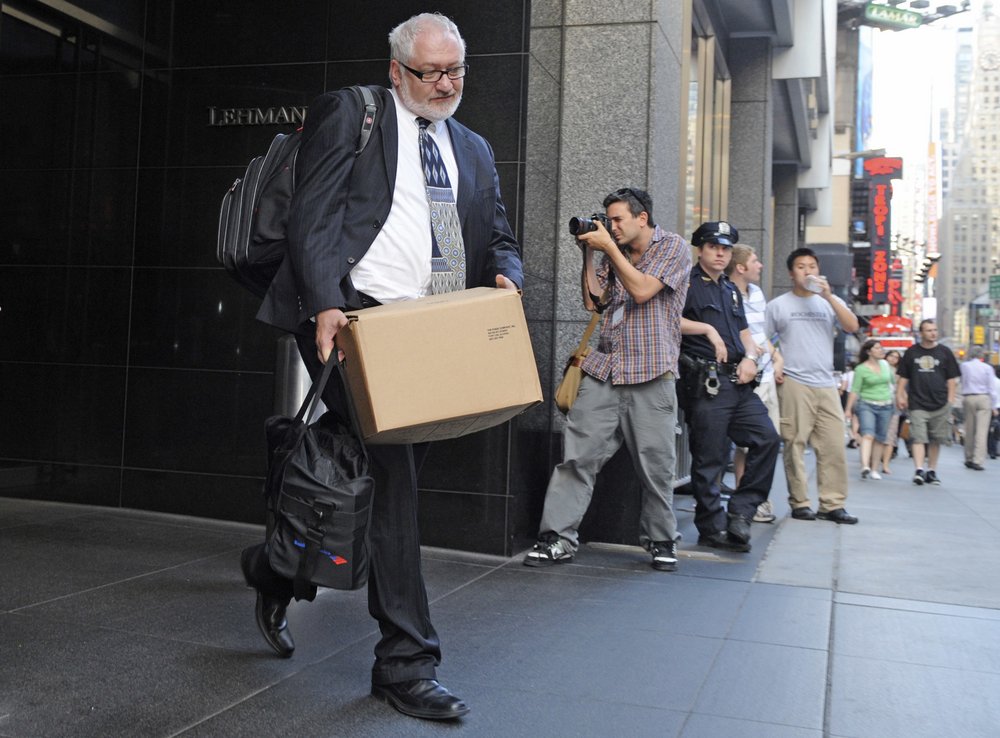
The consequences of the 2008/2009 financial crisis put the European Union to the test - the burst property bubble in the USA in particular also threatened the existence of some banks in Germany. Governments tried to reassure the financial sector and savers with so-called rescue packages. In Germany alone, this package totalled around 500 billion euros. As if that wasn't enough, there was also the Greek sovereign debt crisis, which continues to this day. There were loud calls for Greece to leave the eurozone and draconian austerity measures were imposed.
For Helmut Schmidt, as an attentive observer of the crisis, it was clear who was to blame for this global crisis: The financial system in its current form, which he sometimes referred to as "predatory capitalism". The causes may have been more diverse, but a look at the policies of the German government shows: The handling of the crises in the 1970s was a blueprint for government action in times of economic crisis. The end of the "Bretton Woods" system and the so-called economic miracle, fuelled by the oil price crises of 1973 and 1979, plunged the Federal Republic into severe recessions. Right in the middle of it all: Helmut Schmidt, first as Finance Minister, later as Federal Chancellor.
The global economic crisis of 1929, Schiller and Keynes
It could be said at the outset that commentary "from the sidelines" is often cheap and that cyclical crises in the capitalist economic system are systemic and therefore not surprising. But Helmut Schmidt's in-depth knowledge as an economics graduate and his witnessing of three global economic crises carried weight. His calculations, often perceived as cool and unemotional, were invaluable both for social democracy and for his public image. His impressions and lessons learnt from the world economic crisis of 1929/1930 formed an important basis for his political actions. He always saw the crisis and its consequences as a warning to the Germans. His aim was to keep unemployment low at all costs.
During his studies of economics at the University of Hamburg, he was influenced by his university teacher and later patron and rival, Karl Schiller. Schiller was a staunch advocate of Keynesianism, a school of economics that assigns the state an active role. The aim is to achieve full employment. What all currents within this school have in common is that they consider the market economy to be unstable and the so-called self-healing powers of the market to be unrealistic. In order to generate growth, the state should intervene in the economy, for example through tax breaks for investments in infrastructure. After Schiller resigned in 1972 due to irreconcilable differences, for example over the federal government's monetary policy, he was succeeded by Helmut Schmidt.
"The global economy is our destiny"
The decade in which Schmidt worked first as Finance Minister, then as "Super Minister" (Economics and Finance) and, after Willy Brandt's resignation, as Federal Chancellor, is regarded as a decade of upheaval and transformation. In particular, the financial world of western industrialised countries changed fundamentally after the "neoliberal turnaround" around 1980. The decade was also characterised by the disappearance and decline of once large industrial sectors, such as shipbuilding and textile production, as well as by "stagflation" (stagnating economic growth and rising inflation, i.e. loss of value of the currency). Unemployment rose, as did the cost of living. Schmidt was in the "engine room" of political power from the very beginning and influenced its fortunes until his resignation.
In order to understand the actions of the Federal Republic in those years, it is necessary to take a look at its exceptional economic situation. After the Second World War, it was quickly integrated into the global economy; Germany's location had always been predestined for exports (central in Europe, bridge to the East) and also dependent on the world market. Schmidt was aware of this throughout his life: "The global economy is our destiny!" is the title of one of his writings. A coordinated global economy is indispensable for domestic order.
The engine of the "economic miracle" of the first post-war decades was the so-called middle class, which produced highly specialised goods for the world market. Due to the success of the German export model, organised labour was rewarded with social security mechanisms and wage increases. The "German model" kept inflation and unemployment low through a restrictive monetary policy and kept industry competitive. The greatest danger was the compartmentalisation of sales markets (protectionism). The Federal Republic converted economic weight into political weight so that it could effectively counter the isolationist tendencies of other countries.
Currency crisis before the oil price crisis - the collapse of the Bretton Woods system
In order to maintain the competitiveness of German products on the world markets, it was essential to keep wages and prices low and thus minimise the risk of inflation. The Bundesbank (formerly the "Bank deutscher Länder") achieved this primarily by strictly limiting the money supply.
The Bretton Woods system, with the US dollar as the so-called anchor currency, was intended to create stable conditions for the global market and prevent countries from printing too much money, thereby creating the risk of inflation. Among other things, it failed due to the massive glut of dollars in the wake of the Vietnam War. This led to massive deficits in the US balance of payments and weakened the dollar. However, the system, the economic "essence of the post-war order", had been in need of reform since the 1960s. Among other things, the dominance of the US dollar, but also the unilateral decision, initially by the Federal Republic of Germany, to "float" the German mark put an end to the regime of fixed exchange rates. This floating meant a move away from a fixed exchange rate towards an exchange rate determined by supply and demand on the foreign exchange market, i.e. without state intervention.
Surprisingly, the greatest defender of floating was Karl Schiller. Schiller wanted to revalue the Deutschmark and at the same time free the German economy from dependence on the dollar and exports, i.e. increase domestic demand. For Schiller, "floating" meant greater exchange rate flexibility. It was intended to enable a monetarist policy in the short term, which would work against inflation and inflation on the outside, but not jeopardise the social partnership on the inside. Schmidt, on the other hand, was in favour of stronger controls and administrative measures, but was unable to get his point of view accepted, partly because Schiller enjoyed the backing of Federal Chancellor Willy Brandt. As it turned out, this made it possible to exert pressure on other currencies and pursue a common price policy.
From the currency snake to the European Monetary System (EMS)
In March 1972, even before the Bretton Woods system officially came to an end, Schiller and his French colleague Valéry Giscard d'Estaing launched the so-called currency snake at European level, a measure against uncontrolled fluctuations in exchange rates - and a key prerequisite for stable economies. The "snake" forced countries such as Belgium, Denmark and the Netherlands to adopt a "tight money policy". The USA did not follow suit and exerted pressure on the currency snake by devaluing the dollar. a devaluation spiral followed in 1976, when Italy devalued the lira by 20 per cent in March.
The policy of the "snake" ultimately led to the European Monetary System (EMS) of 1979, which was implemented by French President Valéry Giscard d'Estaing and Helmut Schmidt. It effectively hedged exchange rate fluctuations. Unauthorised devaluation within the EMS was no longer possible without leaving the system; the economic and political costs of this increased the deeper the integration and membership became.
Blueprint?
The global economy is the "destiny" of a state that is more dependent on its exports than almost any other. Schmidt knew this and acted accordingly. He dissected the global economic situation and looked at it from an international comparative perspective: the economic crises in times of intensified globalisation could only be solved in an internationally coordinated manner. One consequence of this realisation was the first World Economic Summit in 1975, initiated jointly with Giscard d'Estaing.
Schmidt also focussed on the "German model" with its concept of securing the social order, consisting of wage growth and job security. This model was based on the production and demand of export goods for and on the world market. In contrast to Karl Schiller, however, Schmidt's approach was less orthodox Keynesian and more pragmatic. For him, it was about securing the Federal Republic as a "trading state" and thus also the internal social order. To this end, he utilised the newly gained economic weight of the Federal Republic: not militarily, but by means of monetary policy and international institutions. A reaction to crises that has been observed time and again since 2008.

Hendrik Heetlage is a historian and was a research assistant in the “Global Markets and Social Justice” programme of the Bundeskanzler-Helmut-Schmidt-Stiftung until March 2023. He specialises in (German) contemporary history and the history of modern China. In addition to historical exhibition projects, he is involved in history and history communication in the digital space.
More