
The European Union: "A unique success in world history"
03. Jul 2021
After endless centuries of intra-European wars, the level of European integration achieved at the end of the 20th century is an unrivalled success in world history. Never before and on no other continent have a large number of nation states joined together of their own free will and renounced parts of their sovereignty. In doing so, no nation gave up its language or its national identity; some old enmities, many injuries and also some national vanities were put aside.
The leading statesmen in Europe and America at the time (I would mention George Marshall, Eisenhower, Kennedy, but above all Churchill, Jean Monnet, Adenauer and de Gaulle, as well as de Gasperi and Henri Spaak) did not act out of European idealism, but out of knowledge of European history to date. They acted out of a realistic understanding of the need to avoid a continuation of the struggle between the periphery and the German centre.
Hardly any of the Europeans living today have ever been freer than they are today, hardly any have ever lived in greater prosperity - a great achievement! If today most of Europe enjoys human rights and peace, then we could not have imagined this in 1918, 1933 or 1945. Let us therefore work and fight to ensure that the historically unique European Union emerges from its current weakness with stability and self-confidence!
Slightly clouded peace scenario
At the beginning of the 21st century, Europe appears to most people to be a peaceful continent, in stark contrast to the 20th century. An intra-European war has become unthinkable for most people. A possible military threat to European nations from a foreign state also seems extremely unlikely. Among the exceptions that cloud the image of a peaceful Europe are the unresolved conflicts on the soil of the former Yugoslavia; these could include conceivable conflicts between states that were formerly part of the Soviet Union. If a general confrontation between Western and Islamic cultures also results in military conflicts, Europe will also be involved. Islamist terrorism already poses a number of threats to Europe today.
Strategic interest in integration
However, the world has changed enormously since Maastricht in 1991/92. We have witnessed the liberation of the nations of Eastern Europe and the implosion of the Soviet Union. We have witnessed the phenomenal rise of China, India, Brazil and other "newly industrialising countries", which used to be referred to collectively as the "Third World". At the same time, the real economies of large parts of the world have become "globalised", meaning that almost all countries in the world are interdependent. Above all, the players on the globalised financial markets have acquired what is for the time being completely uncontrolled power. by 2050, each of the European nations will only account for a fraction of 1 per cent of the world's population. This means that if we want to have any hope of Europeans having any significance for the world, we can only do so together.
This gives rise to the long-term strategic interest of the European nation states in their integrating union. This strategic interest in European integration will become increasingly important. The nations have largely not yet realised this. Nor are they being made aware of it by their governments. If, however, the European Union does not achieve a common - albeit limited - capacity to act over the coming decades, a self-inflicted marginalisation of the individual European states and European civilisation cannot be ruled out. Nor can the revival of competition and prestige struggles between the states of Europe be ruled out in such a case. In such a case, the integration of Germany could hardly function. The old game between centre and periphery could once again become reality.
Neighbourhood guardians
We Germans, living with nine immediate neighbours in the centre of Europe, with the largest population and the largest economy, must at any rate be aware of this: We have no world-strategic tasks in other parts of the world; however, a peaceful and close relationship with all our neighbours remains our most important task.
A "common foreign and security policy", which some European foreign ministers have talked about in visionary Sunday speeches, does not actually exist. Whether it will ever materialise is doubtful. Even the Lisbon Treaty, initialled in 2007, cannot enforce common action. For the time being, the world has to deal with 27 different European foreign ministers and a frequently changing EU Council President.
From the outset, the British have hesitated before every step towards European integration. When Churchill recommended to the French in his Zurich speech in 1946 that they should join forces with the recently defeated (West) Germany to found the United States of Europe, he took the non-participation of the United Kingdom for granted. The inclination of the British political class to keep their country apart was due to motives of prestige and power politics as well as concerns about damaging national identity. In contrast, the economic arguments put forward were actually of less weight - as they are today. if we Germans were tempted, based on our economic strength, to claim a leading political role in Europe or at least to play primus inter pares, an increasing majority of our neighbours would effectively resist this. Our central geopolitical position, our unfortunate role in the course of European history up to the middle of the 20th century, our current performance - all of this together demands a very high degree of empathy for the interests of our EU partners from every German government. And our willingness to help is indispensable.
Reform paths out of the crisis
The German political class may not be sufficiently aware of this solidarity today. But until now, it was taken for granted. The principle of subsidiarity is just as self-evident - and has also been a treaty requirement since Lisbon: the European Union must take over what a state cannot regulate or manage itself. there is no one-size-fits-all solution for overcoming the EU's current leadership crisis. Several steps will be needed, some at the same time, some one after the other. We will not only need judgement and energy, but also patience! Conceptual German contributions must not be limited to buzzwords. They should not be presented on the television marketplace, but rather confidentially within the bodies of the EU institutions. on one important point, I agree with Jürgen Habermas, who recently said that - and I quote - "we are actually experiencing a dismantling of democracy for the first time in the history of the EU!" (end of quote) (end of quote). In fact, not only the European Council and its presidents, but also the European Commission and its president, the various Councils of Ministers and the entire Brussels bureaucracy have together pushed the democratic principle to one side! When we introduced popular elections to the European Parliament, I was under the misapprehension that the Parliament would already give itself weight.
The European Union must remain a dynamically developing organisation. There is no example of this in the history of mankind. A tremendous success - achieved in the course of half a century. It may well take another half a century before we can talk of the European Union being complete.
Today, we are not advocating a United States of Europe, but a community that governs itself democratically. I sincerely ask that you consider this and that you get as many colleagues in the office or in the factory, comrades in the gymnastics club or in the sports club, garden neighbours in the allotment garden colony, that you get as many people as possible to think along with you and then join in.
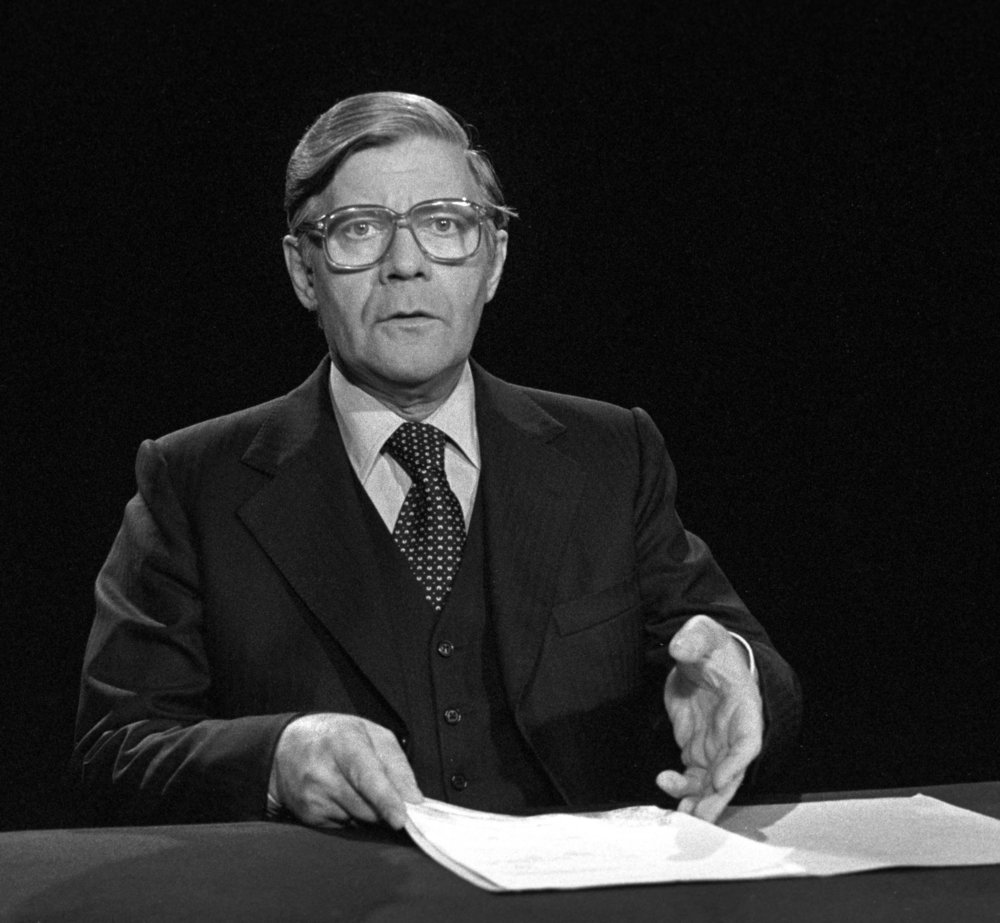
The Helmut Schmidt quotes that make up this text were taken from the following works:
- Helmut Schmidt, One for All. Der Euro vergrößert den Wohlstand und das weltpolitische Gewicht, in: Die ZEIT, 15 November 2001.
- Helmut Schmidt, Hand on heart. Helmut Schmidt in conversation with Sandra Maischberger, Munich 2002.
- Helmut Schmidt, We need courage. Europe has many weaknesses, but it is by no means finished, in: Die ZEIT, 9 June 2005.
- Helmut Schmidt, Off duty. Eine Bilanz, Munich 2008.
- Germany in and with Europe. Speech by Helmut Schmidt on 4 December 2011 at the SPD party conference in Berlin, www.spd.de/aktuelles/detail/news/deutschland-in-und-mit-europa/11/11/2015/.
- Helmut Schmidt, My Europe. Speeches and essays. With a discussion between Helmut Schmidt and Joschka Fischer, moderated by Matthias Naß, Hamburg 2013.
The text, which has been slightly abridged here, was published in the magazine Internationale Politik Special, No. 4/2021, "Die Entdeckung Europas. Why the EU can do more". It is available both by subscription and for 9.90 euros from station bookshops.
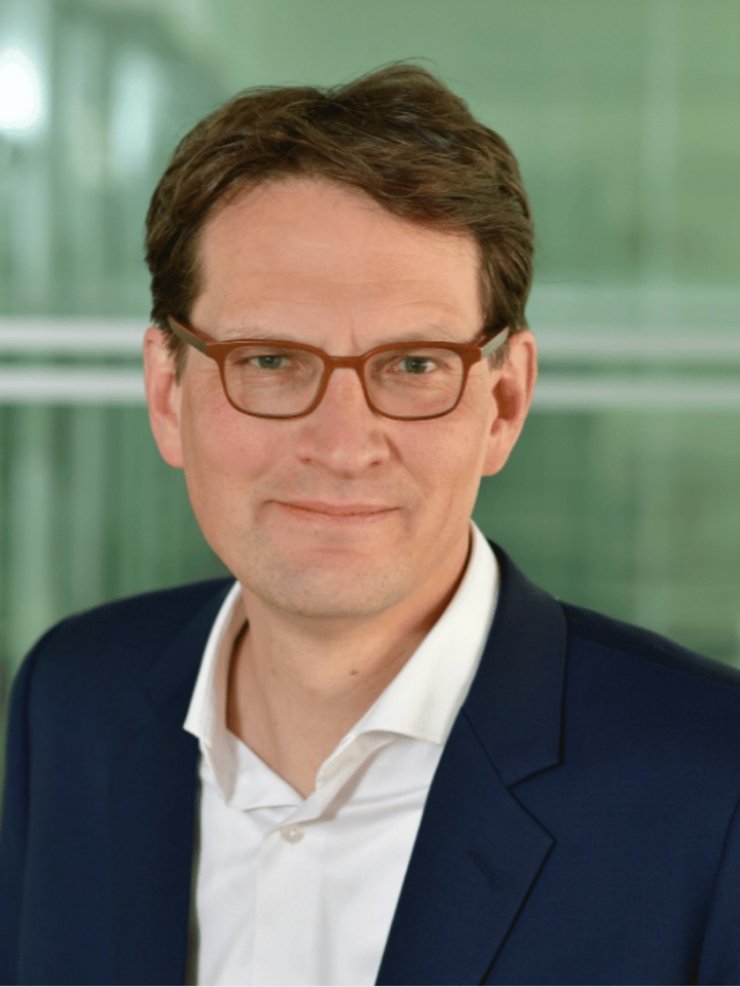
Thinks of Helmut Schmidt as a visionary who certainly did not have all the answers for the 21st century, but who asked the right questions. As Chairman of the Board and Managing Director, Meik’s focus is on the Foundation’s strategic direction, the budget and staff development. He fosters networking across politics, business and culture, and is passionate about innovative projects. As a historian, Meik has edited the extensive correspondence between Willy Brandt and Helmut Schmidt and written a concise 100-page biography of Schmidt aimed at a general audience. He also has many years’ teaching experience, particularly at the University of Cologne.
More