
The war against Ukraine and the European peace project
05. Nov 2022
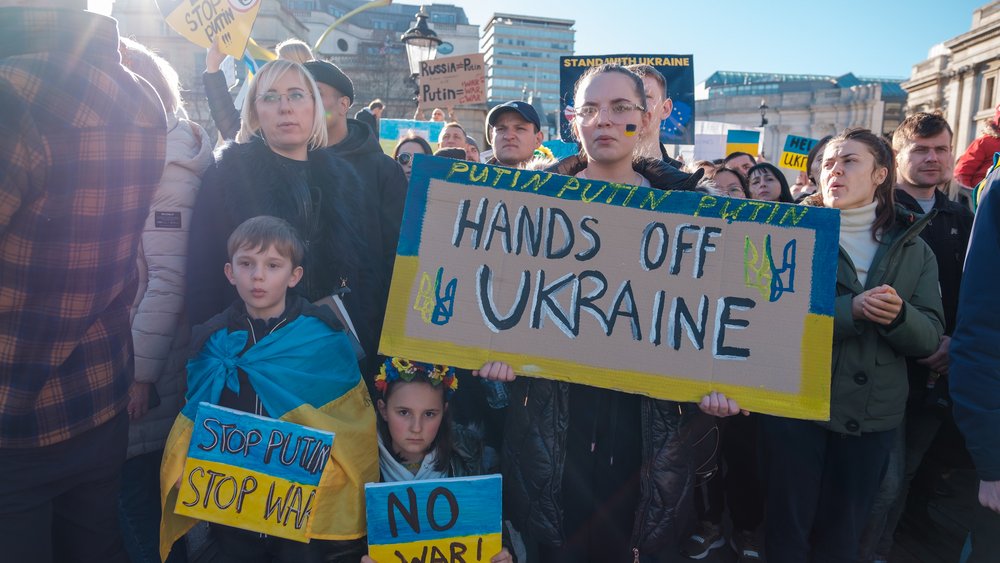
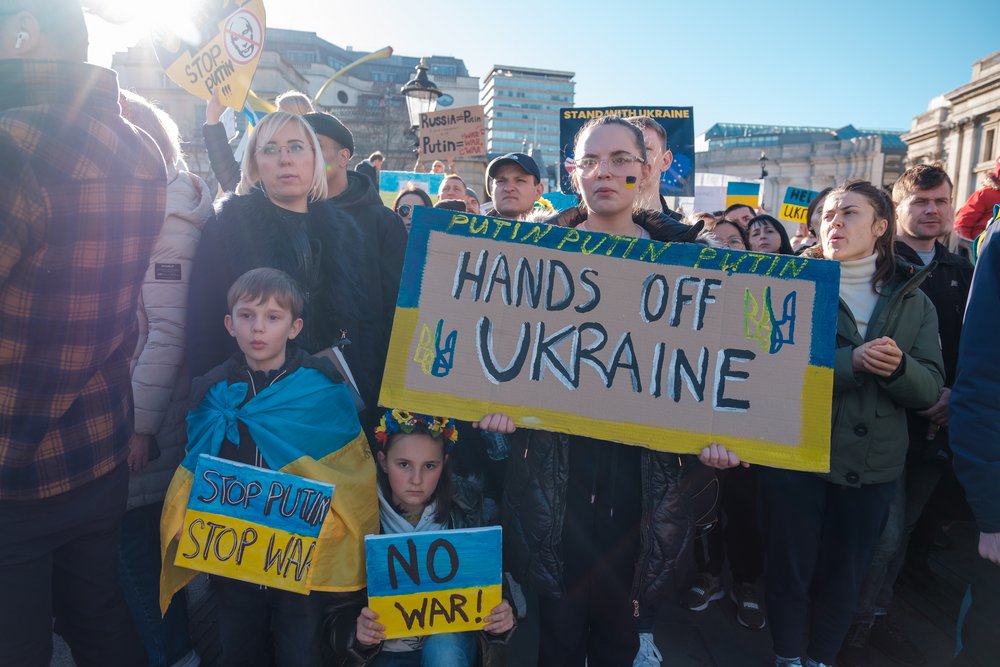
Today, almost 50 years later, Helmut Schmidt's quote has lost none of its topicality. Its relevance is tragically obvious in view of the Russian war of aggression against Ukraine. The war represents a blatant breach of international law, of respect for state sovereignty and territorial integrity and of the general prohibition of the use of force. And it is causing immeasurable suffering for the people of Ukraine.
Putin's Russia is not only breaking international law with this war, but - as we often read and hear these days - is also shattering the European peace and security order as a whole by preferring violence and the arbitrariness of the strongest to peaceful conflict resolution, dialogue and cooperation. Common neighbourliness and cooperation are now being replaced by open confrontation with, demarcation from and defence against Russia. In fact, this means nothing less than a turning point and a new era for the future safeguarding of peace and the shaping of security in Europe.
Europe as a peace project
But what does this mean for the "European peace project", which was founded after 1945 with the overriding motive of preventing a renewed outbreak of war on the continent through economic interdependence and political integration? The project that seeks to counter aggression and violence with a rules-based order and community of values in the form of the EU, in which the member states resolve their affairs through dialogue, cooperation and solidarity?
In its narrow, inward-looking form, the peace project has endured: the member states have not waged war against each other since joining the EU or its predecessor organisations. The EU has now grown to 27 states and has substantially expanded its areas of responsibility and competence. This is (and remains) a unique achievement from a historical and international perspective.
Looking outwards, however, it also means that war is once again raging in Europe, that an EU neighbour and ally, barely two hours' flight from Berlin, is being attacked by another state with tanks and missiles. In an initial reaction, the EU has responded with resolute unity and full solidarity with Ukraine. In addition to comprehensive sanctions packages against the Russian regime and humanitarian, economic and political support for Ukraine, the EU is supplying weapons to an ongoing military conflict on a large scale for the first time with the European Peace Facility . However, eight months after the start of the war, solidarity is crumbling in several places: Not only do the member states have different positions on the type and scope of arms deliveries, there are also protests from the population, for example in the Czech Republic in favour of an end to sanctions against Russia and in Germany against rising energy prices.
And it is clear that although the current dividing line runs militarily between the EU and non-EU, the European states have been exposed to hybrid warfare by Russia for several years - and to a much greater extent since the start of the invasion in February 2022. This includes attacks on gas pipelines and cyberattacks on parliaments or companies as well as espionage and disinformation campaigns. The boundaries between war and peace are becoming blurred.
Many dimensions of security and cracks in the European foundation
All of this only scratches the surface of the consequences of a shattered European security and peace order. However, it is already becoming clear and immediately tangible that security cannot only be thought of and guaranteed in military terms.
Security encompasses more than military force and defence; it includes environmental and climate protection as well as the economic dimensions of global supply chains, raw material dependencies and balanced investment control. Security must also be considered and shaped at the interfaces between the political and economic spheres, for example with regard to critical infrastructure in the areas of energy, transport and health. This can be seen not least in the current discussion about the Chinese Cosco Group's involvement in a terminal in the Port of Hamburg.
Finally, a broad understanding of security also encompasses domestic political processes and social developments, i.e. increasing inequality, polarisation and radicalisation. The magic word is democratic resilience and aims to strengthen European democracies and make them (more) resilient - against both external and internal threats.
And this is precisely where the cracks in Europe's foundations are becoming more and more apparent. It is not only the war in Ukraine and other global crises such as climate change and the coronavirus pandemic that are challenging the European Union as a guarantor of security and a peace project. The idea of the EU as a community of values of liberal democracies is also increasingly being called into question from within. This is manifested, for example, in the dismantling of the rule of law and independent judiciary in Poland and Hungary or in the rise of right-wing nationalist forces, from which the Sverigedemokraterna in Sweden or the Fratelli d'Italia in Italy were able to benefit in recent parliamentary elections.
This also requires a strong response - at national and European level. Only those who are internally stable can effectively confront challenges and crises and perhaps even emerge from them stronger. In the past, crises have also been a driving force for further European integration. However, this is by no means automatic, but depends largely on how the EU, the member states and, not least, European citizens behave in times of multiple crises.
Countering fears about the future and a lack of trust in the EU - "on a small and large scale"
In the face of current crises, fears about the future, uncertainty and a lack of trust in the EU's ability to solve problems are spreading among European citizens - especially among young people. Studies such as those conducted by the Friedrich Ebert Foundation and d|part as well as the TUI Youth Study 2022 show that young people are not being listened to enough at European level. They feel insufficiently informed and that educational and exchange formats do not enable them to participate in debates on shaping the EU.
Research shows that more knowledge about the structures and areas of responsibility at European level generally also means more trust in the EU, its procedures and competences. Those who also associate personal advantages and their own positive experiences, for example through a stay abroad at school or university or the EU-funded sports centre around the corner, with European politics are more inclined to get involved in European issues of the future.
This void in European political participation and involvement must be filled. This is all the more true in view of Russia's war against Ukraine, which has shaken the apparent self-evidence of security and peace in Europe. This calls for a comprehensive package of measures at all levels of politics and society, of which (European) political education programmes can only be a single instrument. However, it is particularly important to provide more information about the EU's role in peace and security policy, to discuss its potential and limitations in equal measure and to connect with the current realities and everyday lives of young people and young adults. For this reason, we are currently working with the Institute for Peace Research and Security Policy at the University of Hamburg to develop an escape game for this target group. You can find out more about the EU's role in peace and security policy and our idea of communicating this in educational programmes here.
From experience-oriented stays abroad and sponsored sports programmes to abstract questions about the European security and peace order, war and peace and securing our peaceful coexistence in Europe, the range is seemingly huge. Fortunately, the quote from Helmut Schmidt mentioned at the beginning can help: Working for a common Europe is the pledge of peace - this applies to peace at the level of nation states and the EU as well as to peace in the everyday lives of people in Europe. This is where we are all called upon and challenged.