
Walking in the footsteps of Helmut Schmidt through Hamburg
13. Aug 2022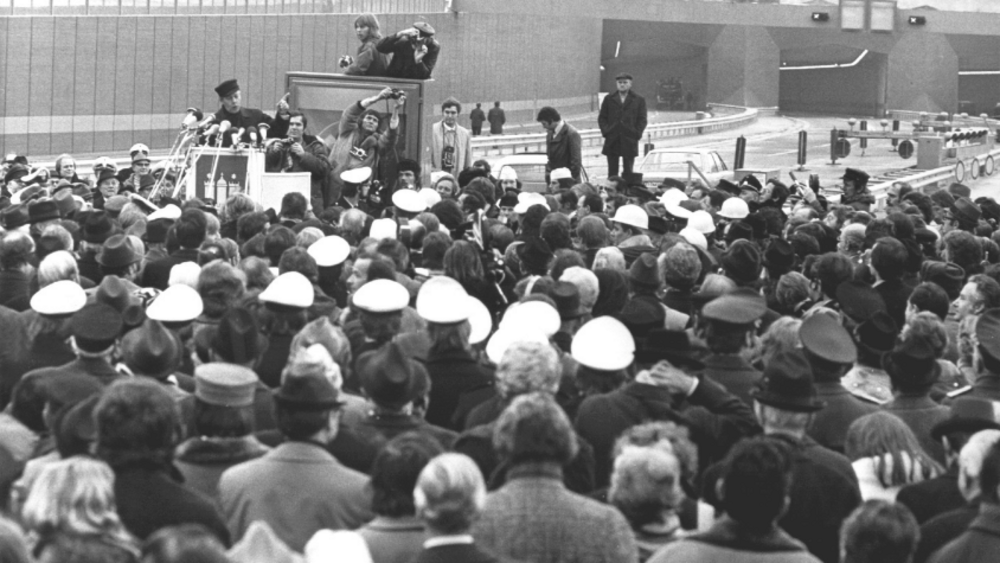
Helmut Schmidt was biographically connected to his hometown in more diverse ways than probably any other German statesman: born in the Finkenau Women's Hospital, graduated from the Lichtwark School in Winterhude, married in the Uhlenhorst registry office, at home for almost 54 years on Neubergerweg in Langenhorn and buried in the Ohlsdorf cemetery. At the political level, after starting his career in the transport administration, he worked as a police and interior senator and as a member of the Bundestag, first for the Hamburg VIII constituency and later for Bergedorf. Testimonies to such a close relationship include the television documentary "Ein Mann und seine Stadt" (1986), which was made for Norddeutscher Rundfunk according to Schmidt's script, and the volume of texts and interviews with his "Hamburger Ansichten" (2015), as well as the booklet on "Helmut Schmidt's Hamburg" (2019) written by his journalist friend Matthias Naß.
From the archive to the web
These publications prompted the Chancellor Helmut Schmidt Foundation's history team to continue their search in the archives. We have compiled the results of our research on the interactive Schmidt Map, where 60 locations can currently be clicked on. This gives anyone interested the chance to combine historical and political education with leisure activities - either out and about in the city or from the comfort of their sofa at home, depending on their mood and the weather. Navigation is either geographical via selected tours (old town route, ramparts route, canal route) or content-related via individual topics (private life, state politics, federal politics, culture and consumption, places of remembrance). In addition to brief information, each location entry shows a contemporary historical source, i.e. a film clip, a photo or a text document.
A question of faith
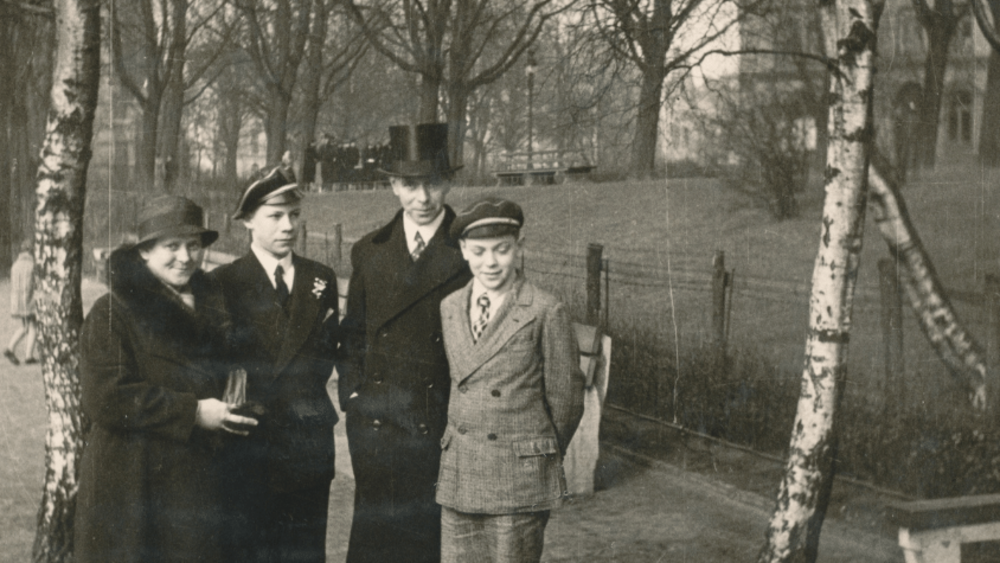
The church of St. Gertrud am Kuhmühlenteich, located very close to the geographical centre of Hamburg, is more of an insider tip among the entries on private life. The 15-year-old Helmut was confirmed on 11 March 1934 in the Uhlenhorst church where his parents' wedding had already taken place in 1916 - and where he was to celebrate his golden confirmation 50 years later. Looking back, Schmidt remembers that the "introspections" of the Roman emperor Marcus Aurelius, which he received as a gift from an uncle, were more intellectually appealing than his reading experiences with Bible texts. In addition to the music played in churches, as a teenager he was particularly impressed by their architecture, of which St Gertrude's is certainly a successful example, given the use of 460 different types of stone and the tower that is bricked up to the top.
Sport as politics
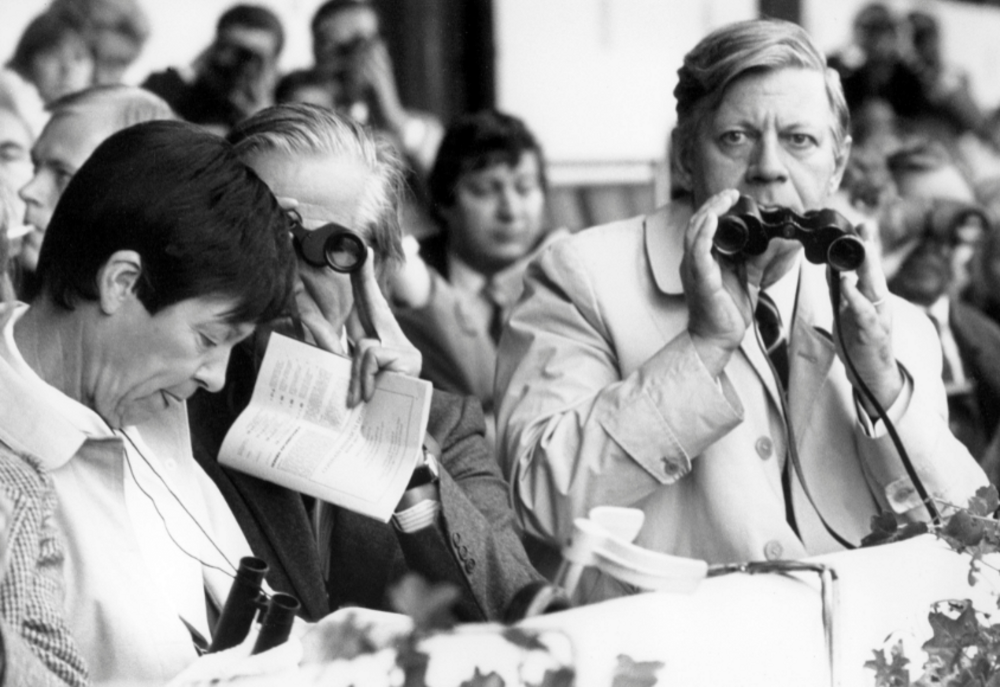
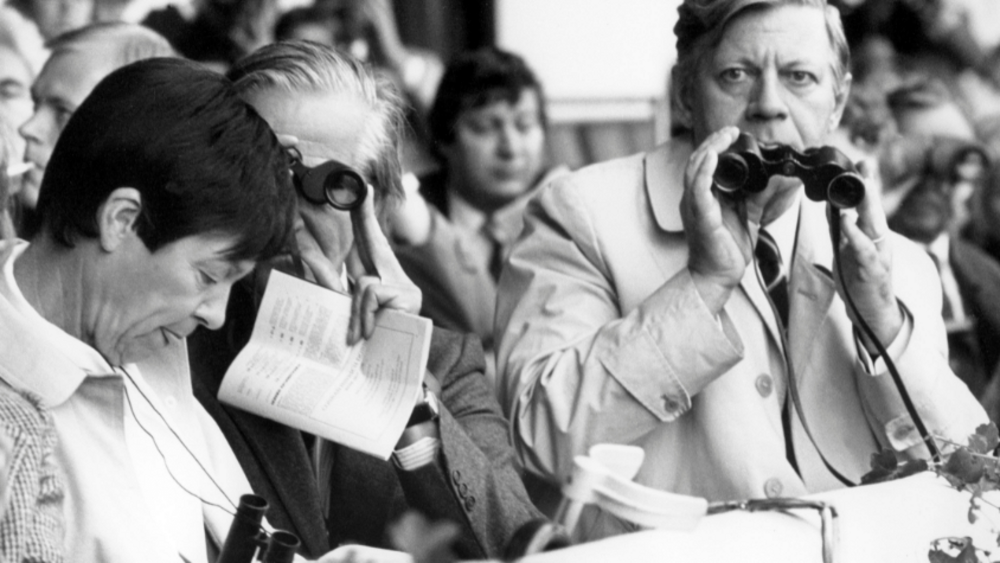
One of the more or less beloved representational duties of a head of government is to attend free sporting events. For many years, Schmidt was a welcome guest of honour at the racecourse in the Horn district, where he knew how to make the most of the platform on offer and, in turn, attracted increased media interest. However, according to the well-informed tabloid press, his earnings from horse betting were rather limited, as he alternately bet wrong and right at the autumn meeting on 16 September 1979. Incidentally, Schmidt sat in a similar official capacity in the stands of the Volksparkstadion at the end of June 1974, when Jürgen Sparwasser scored the GDR team to win the preliminary round 1:0 in the inner-German football duel - two weeks later, however, West Germany became world champions.
Stage for the Federal Chancellor
Schmidt liked to use his hometown as a political platform: this not only applied to visits by friendly statesmen to his private home in Langenhorn, but also to events such as the opening of the new Elbe Tunnel on 10 January 1975, although construction work had already begun in 1968 during Kurt Georg Kiesinger's chancellorship and the Federal Ministry of Transport was actually responsible for the project. But Schmidt did not miss the opportunity to open the three-kilometre-long structure to motor traffic in front of a large audience. The folklore of the celebrations included a ceremonial sip from an oversized beer glass, as well as an "Elbtunnelwitz" (Elbe Tunnel joke), some of which was recited in Low German. Previously, around 600,000 people had taken the rare opportunity to walk dry-footed between Övelgönne and the harbour area.
Honour with discordant tones
After the end of the social-liberal coalition in autumn 1982, Schmidt's focus shifted from the Rhine back to the Elbe, although he still held a seat in the Bundestag until 1987. On 22 December 1983, the Hanseatic city awarded him honorary citizenship for "outstanding statesmanlike achievements" in the town hall at the suggestion of the Senate. In contrast to the SPD and CDU, the Green-Alternative List, which had only recently been represented in the parliament, firmly rejected such an honour. Before the vote, GAL member of parliament Thomas Ebermann took the floor to lament a "hypocritical consensus" between the two major parties and to accuse the former chancellor of a "lust for crisis management" that jeopardised democracy. According to reports in the local press, Schmidt listened to the counter-speech "with a petrified face", but then politely thanked him "for his encouragement and polemics" at the reception afterwards.
Places of remembrance
Schmidt remained closely associated with Hamburg until his death on 10 November 2015, among other things as editor of Die Zeit and much-visited elder statesman. Institutions named after him, such as the airport and the Bundeswehr University, a grammar school and a student house, bear witness to his esteem in his home city. Since summer 2021, our exhibition "Schmidt! Living Democracy" in the Kontorhaus district has also been presenting exciting insights into a century of German and international contemporary history.
Author
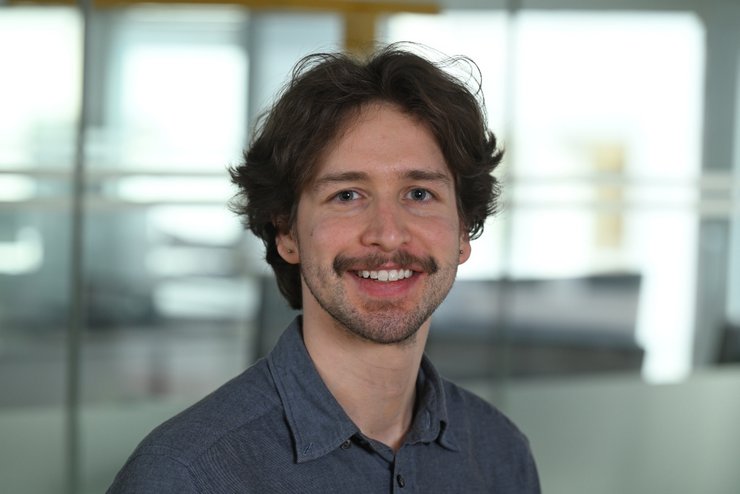
Dr Johannes Zechner was a curator at the Federal Chancellor Helmut Schmidt Foundation until 2024. Before joining the Bundeskanzler-Helmut-Schmidt-Stiftung, he was a lecturer at the Friedrich-Meinecke-Institut of the Freie Universität Berlin and a research associate and exhibition curator at the Deutsches Historisches Museum. In his post-doctoral project "Nations behind Glass", he analysed representations of collective identity in German and American history museums.
More