
Overview
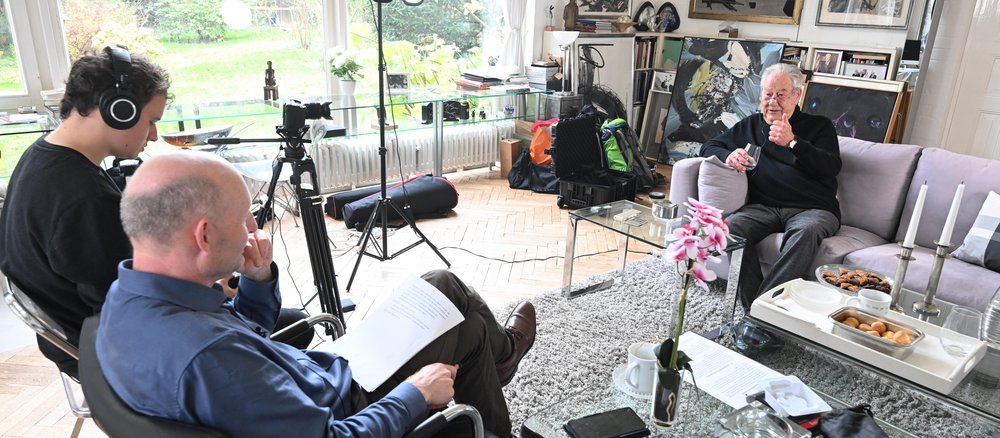
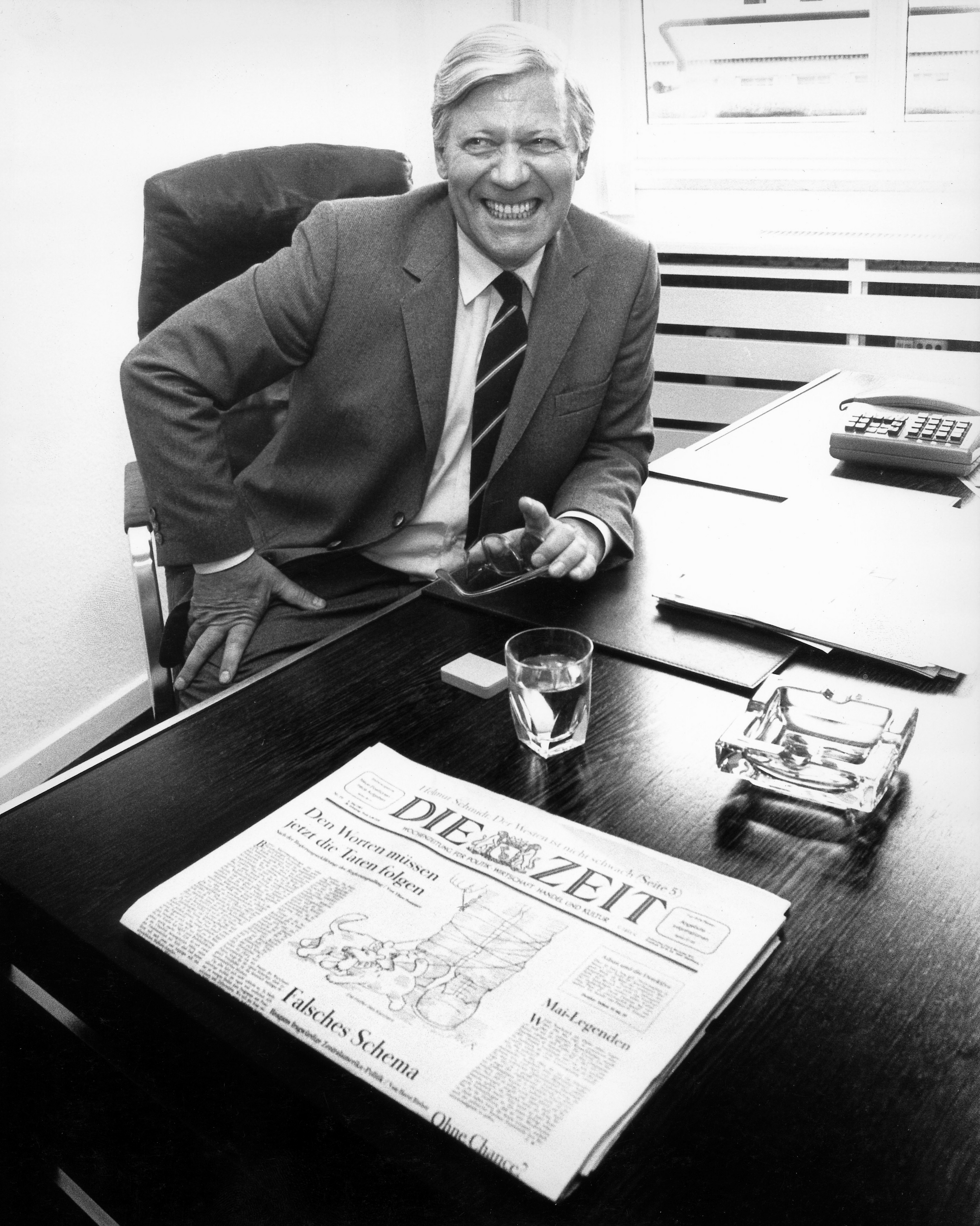
In our oral history project, we interview people who worked with Helmut Schmidt during his time as an active politician, as well as afterward in his roles as former chancellor, publicist, and editor-in-chief of *Die Zeit*. In doing so, we do not limit ourselves to prominent figures from politics, the media, and business who were among his closest associates. We also give a voice in particular to the eyewitnesses who are often overlooked and unheard: women and men who, for example, drafted speeches for Schmidt, managed his offices, advised him, and accompanied him on trips around the world. In other words, those individuals who played a direct role in shaping his work but mostly remained in the background.
For our interviews, we speak with prominent personalities from politics, media, and business as well as with the often-overlooked figures behind the scenes. These include, among others, speechwriters, close advisors, office managers, and long-time staff members who accompanied Helmut Schmidt on national and international trips. This eyewitness project thus creates a unique historical documentation of Helmut Schmidt’s political legacy, working methods, and personality. Through authentic eyewitness accounts, personal memories, and previously little-known perspectives, a multifaceted portrait of the former Chancellor and his era emerges.
The Goals of Our Project
We hope that these (partially) narrative interviews will help fill gaps in our knowledge and provide new insights into areas about which little is generally known and which have not yet been accessible to the public. The eyewitness accounts and assessments of the participants are intended not only to deepen our understanding of Helmut Schmidt’s personality, his thoughts and actions, his working methods, and his network. At the same time, we also aim to document and explore the professional biographies, daily work routines, and perspectives of the people who worked for him and got to know him closely. The goal of the project is to use these oral history interviews to create a multifaceted and compelling space of memory and to preserve it for posterity. We also aim to contribute to the reconstruction of historical contexts and processes.
Our Questions and Interests
Our research interests are diverse: On the one hand, in the interviews we ask what working for and with Helmut Schmidt was like in concrete terms, what tasks and challenges had to be overcome, and how the interviewees personally experienced and perceived him as a politician and as a person. What specific events and experiences do they recall? What were the defining or even critical moments in their collaboration? What characteristics defined Schmidt’s behavior in his immediate professional environment? What was his understanding of politics, history, journalism, and art? On the other hand, the interviewees themselves are the focus of the project: Who are the people who worked for and with Schmidt? How did their lives unfold before and after their time with him, and how did those years shape the rest of their lives?

Our project team and our partners
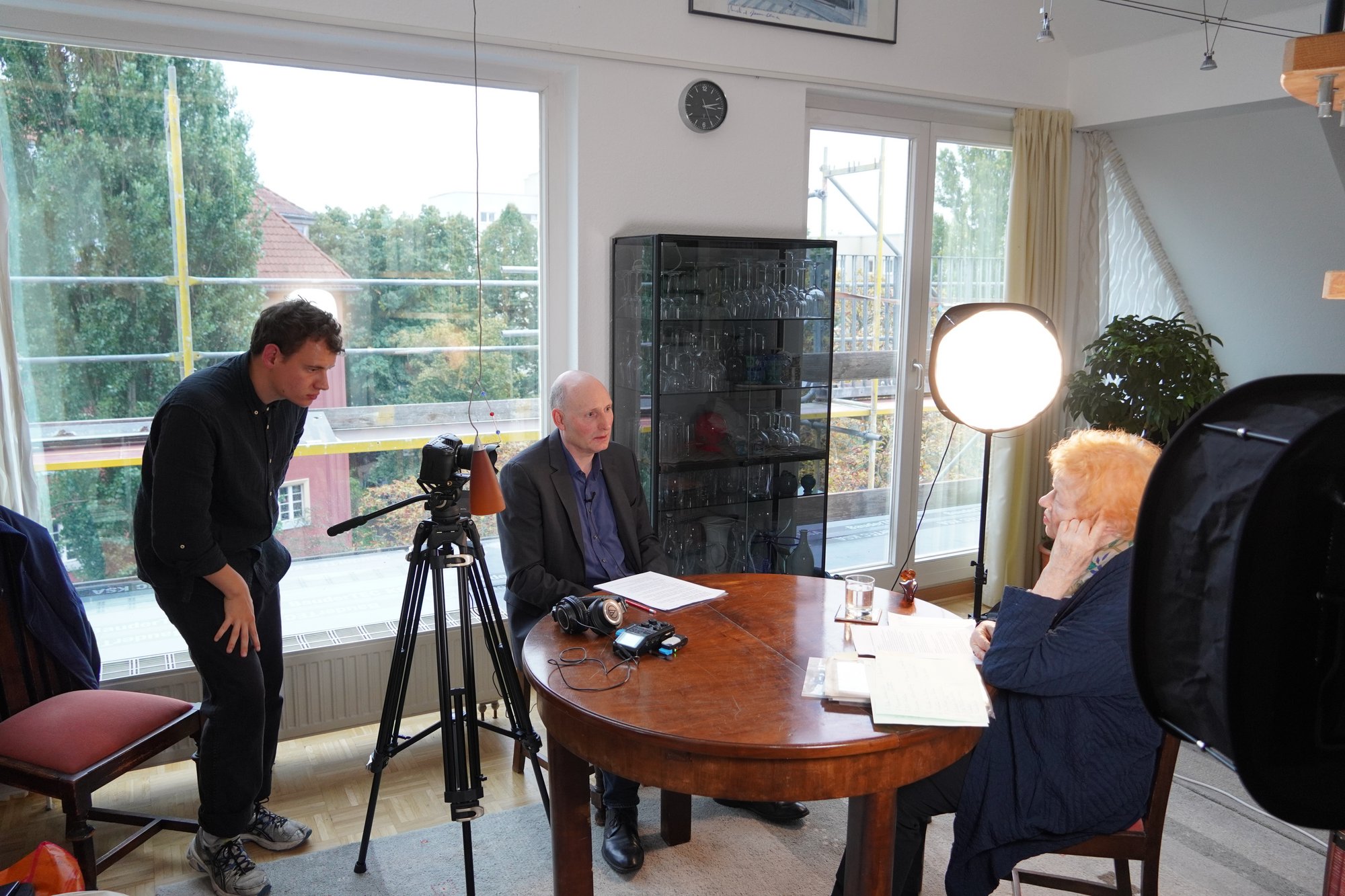
The eyewitness project of the Federal Chancellor Helmut Schmidt Foundation began in January 2024 and is scheduled to run for three years, through the end of 2026. We plan to conduct approximately 30 oral history interviews, which we will record using a camera and/or an audio recorder. The project is being carried out by our research associate, Dr. Wolfgang Schmidt, and our student assistant, David Hopper.
Upon completion of the eyewitness project, we will archive and present the audiovisual interviews on the digital cataloging and research platform Oral-History.Digital (oh.d). In this way, we provide individuals and institutions wishing to use and analyze the interviews for historical research, media coverage, or political education with direct access to the source material. The basis for our collaboration with oh.d is a cooperation agreement with the University Library of Freie Universität Berlin, which, together with the “Archiv Deutsches Gedächtnis” at FernUniversität Hagen, the “Werkstatt der Erinnerung” at the Research Center for Contemporary History in Hamburg, the Chair of Media Informatics at Otto Friedrich University of Bamberg, and the Bavarian Archive for Speech Signals at Ludwig Maximilian University of Munich, has developed and operates the internet platform.
Our samples to watch and listen to
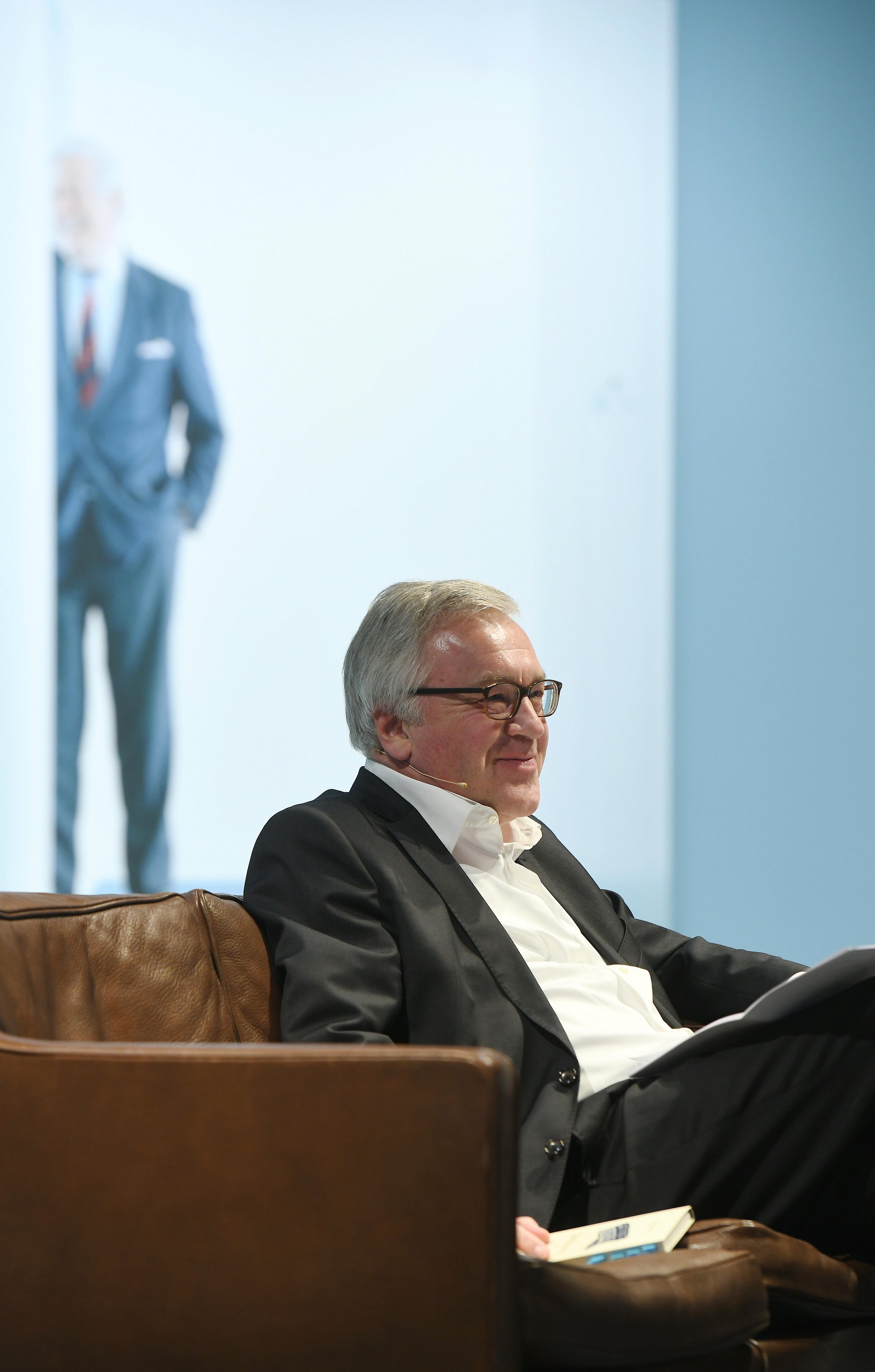
As of June 2026, we have conducted 26 interviews. Among those we spoke with last year were former *Die Zeit* editor-in-chief Robert Leicht, *Die Zeit* correspondent Matthias Naß, and Helmut Schmidt’s editor and literary agent Thomas Karlauf. Here you can watch and listen to short excerpts from these and other interviews. Another video clip offers a behind-the-scenes look.