
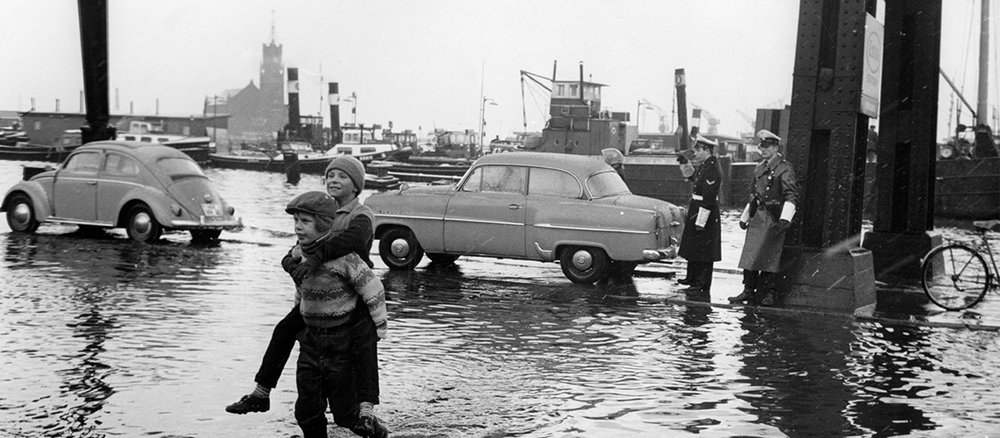
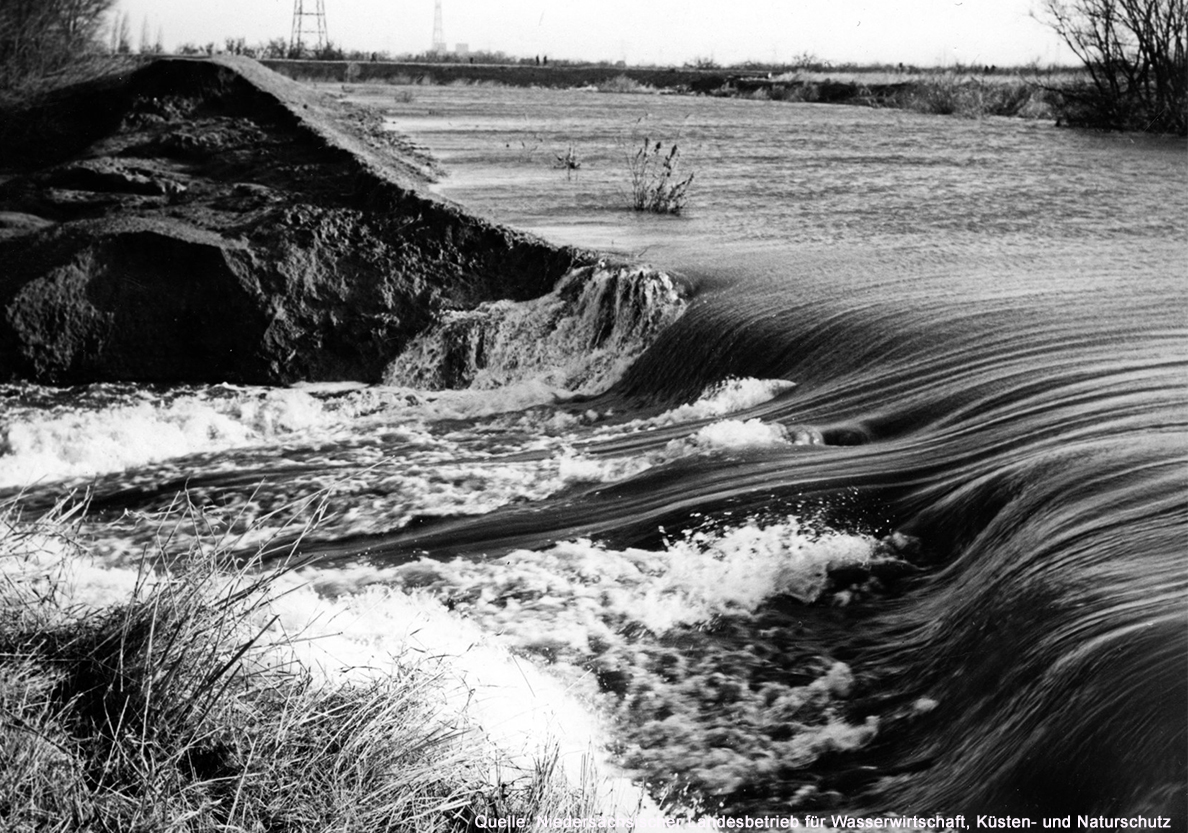
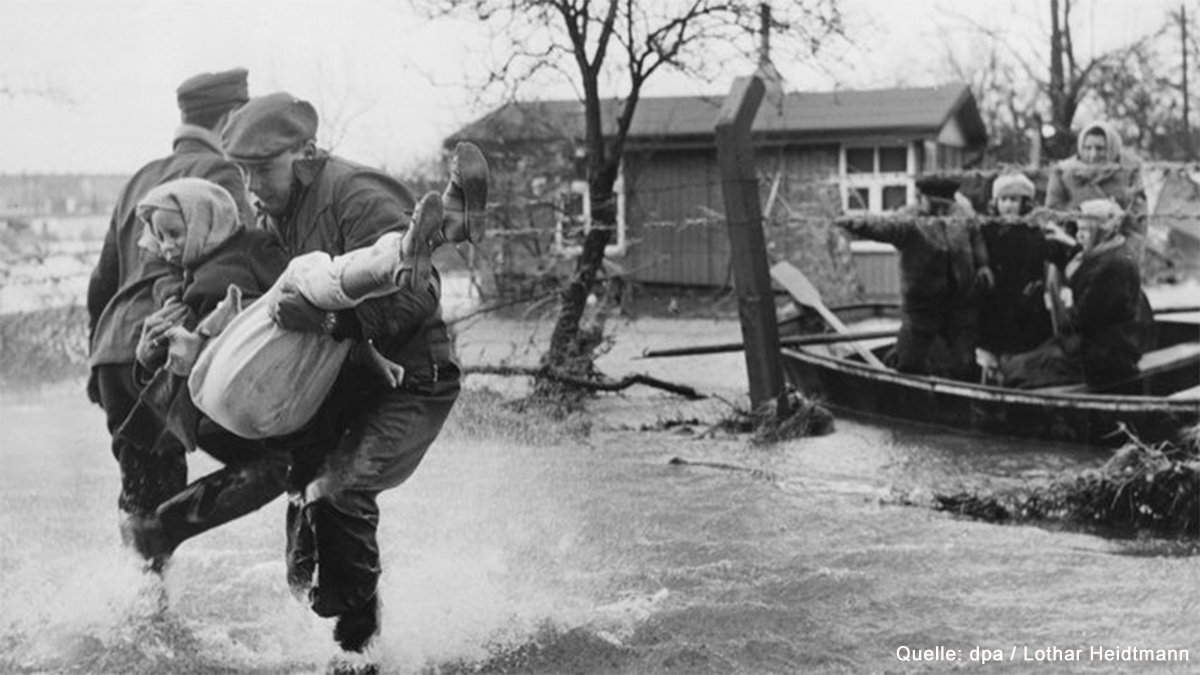
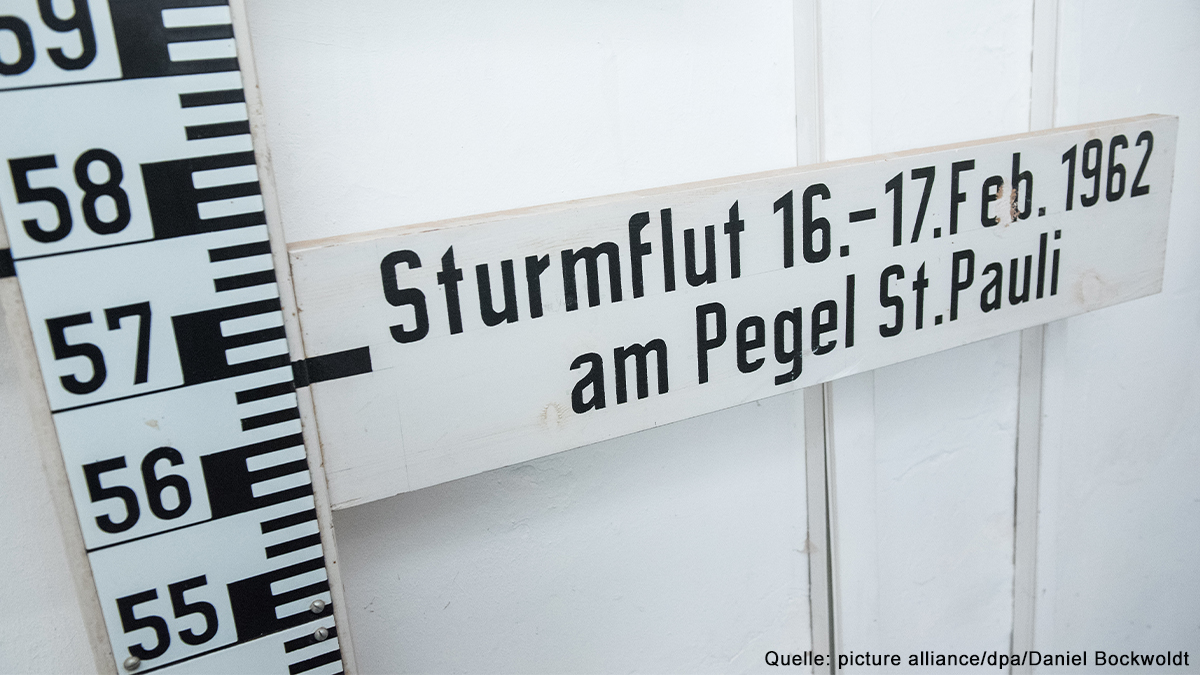
During the night of 16–17 February 1962, the hurricane-force storm Vincinette struck northern Germany with wind speeds of up to 130 kilometres per hour. The River Elbe reached a historic high-water level of 5.70 metres. Dikes failed, and entire districts—particularly in the south of Hamburg—were flooded and severely damaged.
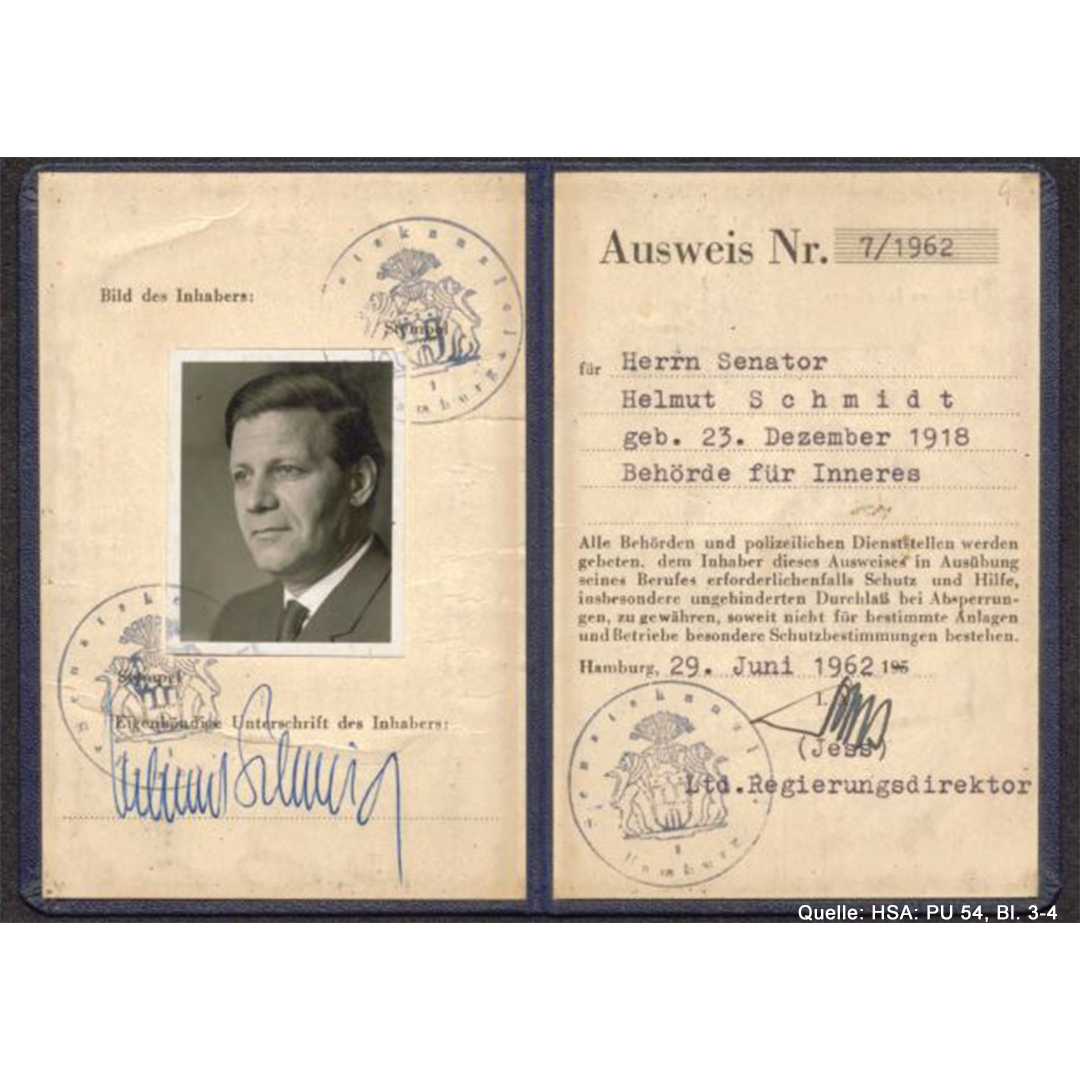
Closely associated with the response to the disaster is Helmut Schmidt. Serving as Hamburg’s Senator of the Interior at the time, he coordinated rescue operations and initiated rapid emergency measures. His crisis management remains a defining element of his political legacy and is widely regarded as an example of decisive governmental action in an extreme situation. Looking back on the events, Schmidt stated that his priority had not been bureaucratic procedures, but the saving of human lives. He also emphasized the remarkable solidarity and willingness to help that many people experienced during those difficult days.
The Project: Recounting the Flood
Even decades later, the flood remains highly relevant. A public history project by the Helmut Schmidt Foundation has comprehensively re-examined the events and made them accessible to new audiences.
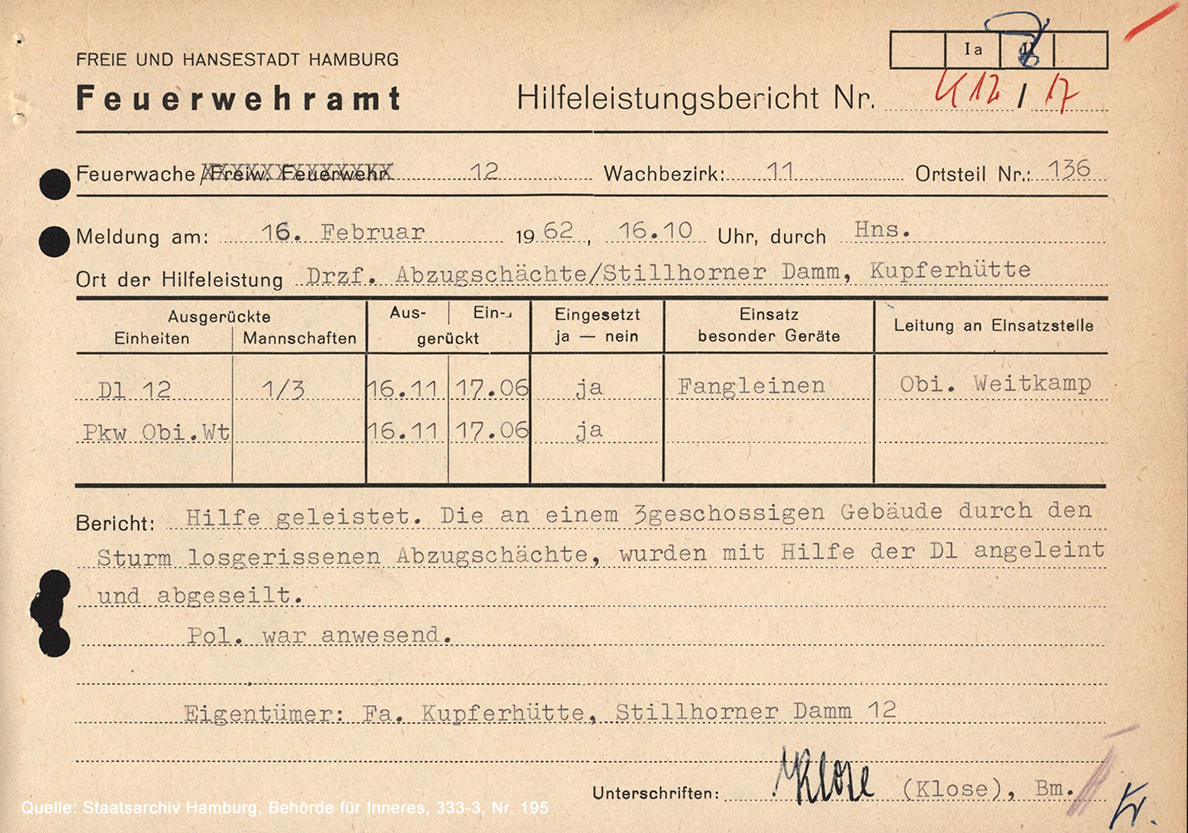
The project is based on more than 200 archival sources, including operational reports, eyewitness accounts, maps, historical photographs, and film footage. Drawing on these materials, researchers have created a detailed chronology that reconstructs the course of the disaster almost minute by minute and presents it in an accessible format. Visitors can explore handwritten notes from crisis management meetings as well as original emergency reports. Historical images and official documents vividly illustrate the scale and impact of the catastrophe.
The project demonstrates that the flood is not merely a closed chapter of history. It continues to raise important questions about crisis management, the role of state institutions, and social solidarity. In this way, the events of 1962 remain highly relevant to contemporary discussions about resilience, responsibility, and collective action in times of crisis.

Digital Storytelling: The Twitter Project
One component of the project was the Twitter account 60 Years of the Hamburg Flood (@HHFlut1962). Throughout 2022, key events of the storm surge were retold in real time and linked to original historical sources. This approach provided audiences with an immediate sense of the chronology and dynamic nature of the disaster.
Although the account is no longer actively maintained, it remains available as a digital archive and continues to offer an engaging way to explore this chapter of Hamburg’s history.
Voices, Conversations, and the Culture of Remembrance
The project was further enriched by conversations with eyewitnesses, academic researchers, and experts in disaster management. Through a variety of formats, participants reflected on how people experienced the flood and examined its continuing significance today.
Central themes included contemporary understandings of safety and security, the ways societies remember past events, and the lessons that can be drawn for responding to present-day crises. The resulting video and audio productions remain available and provide opportunities for deeper engagement with these topics.
In a discussion with historian Franziska Zollweg, eyewitnesses Jürgen Karsch and Klaus Peter Leiste shared their personal memories of the night of the flood. Their accounts were complemented by perspectives from cultural practitioners and flood protection specialists. Together, they explored how the memory of the storm surge can be preserved and communicated, and how Hamburg’s flood protection and emergency preparedness have evolved since 1962.
A live podcast also addressed the question of how cultures of remembrance can be actively shaped and what contribution public history projects can make. Topics included the significance of the flood for Helmut Schmidt’s political development and its influence on the modernization of structures and procedures within the Hamburg Fire Brigade.
Why the Flood Still Matters Today
The Hamburg Flood of 1962 is far more than a historical event. It highlights the vulnerability of urban environments and demonstrates the importance of effective institutions, rapid decision-making, and social solidarity in times of crisis.
Against the backdrop of climate change and increasingly frequent extreme weather events, the lessons of the flood remain highly relevant. By making history accessible and understandable, the project encourages reflection on the past and invites us to learn from it in order to better prepare for the challenges of the future.

Your contact person
Franziska heads the correspondence project at the Helmut Schmidt-Archiv, where she combines archival description and cataloguing of the impressive collection of letters with issues relating to long-term archiving and historical and political education.
She studied German Studies, European History and History at Otto von Guericke University Magdeburg and the University of Hamburg. She has been with the Bundeskanzler-Helmut-Schmidt-Stiftung since 2017, where she previously oversaw the “60 Years of the Storm Surge” project.
More