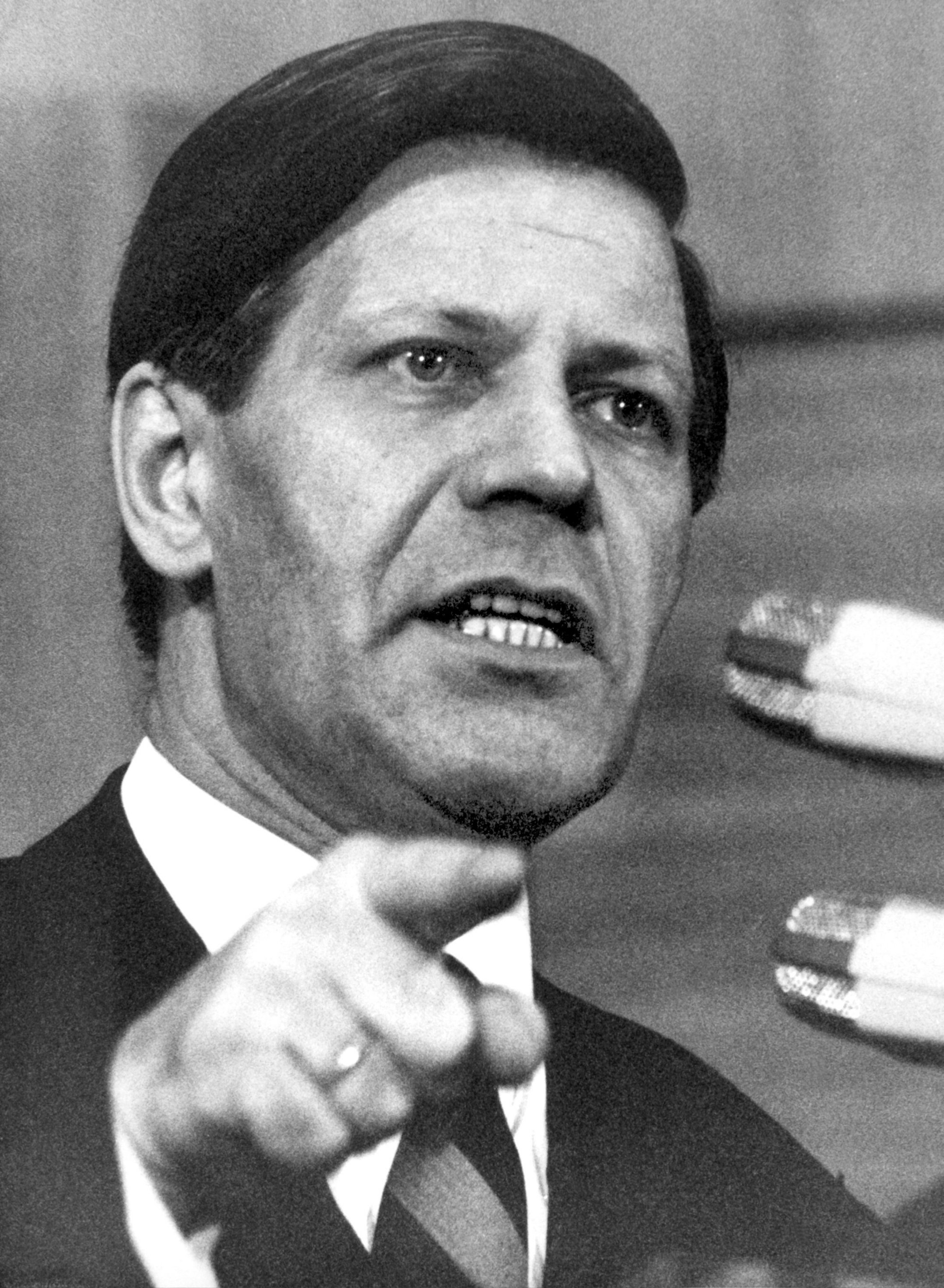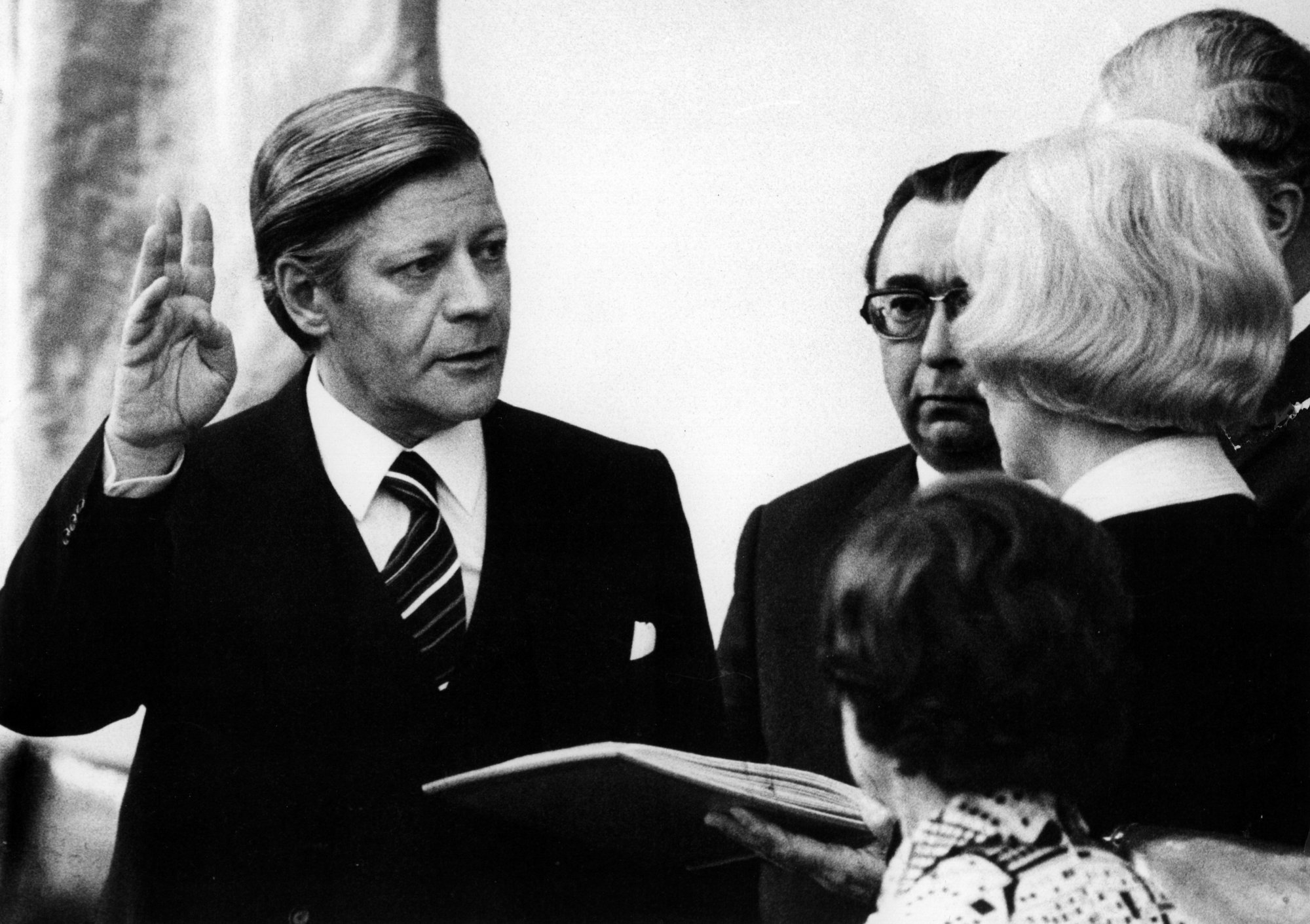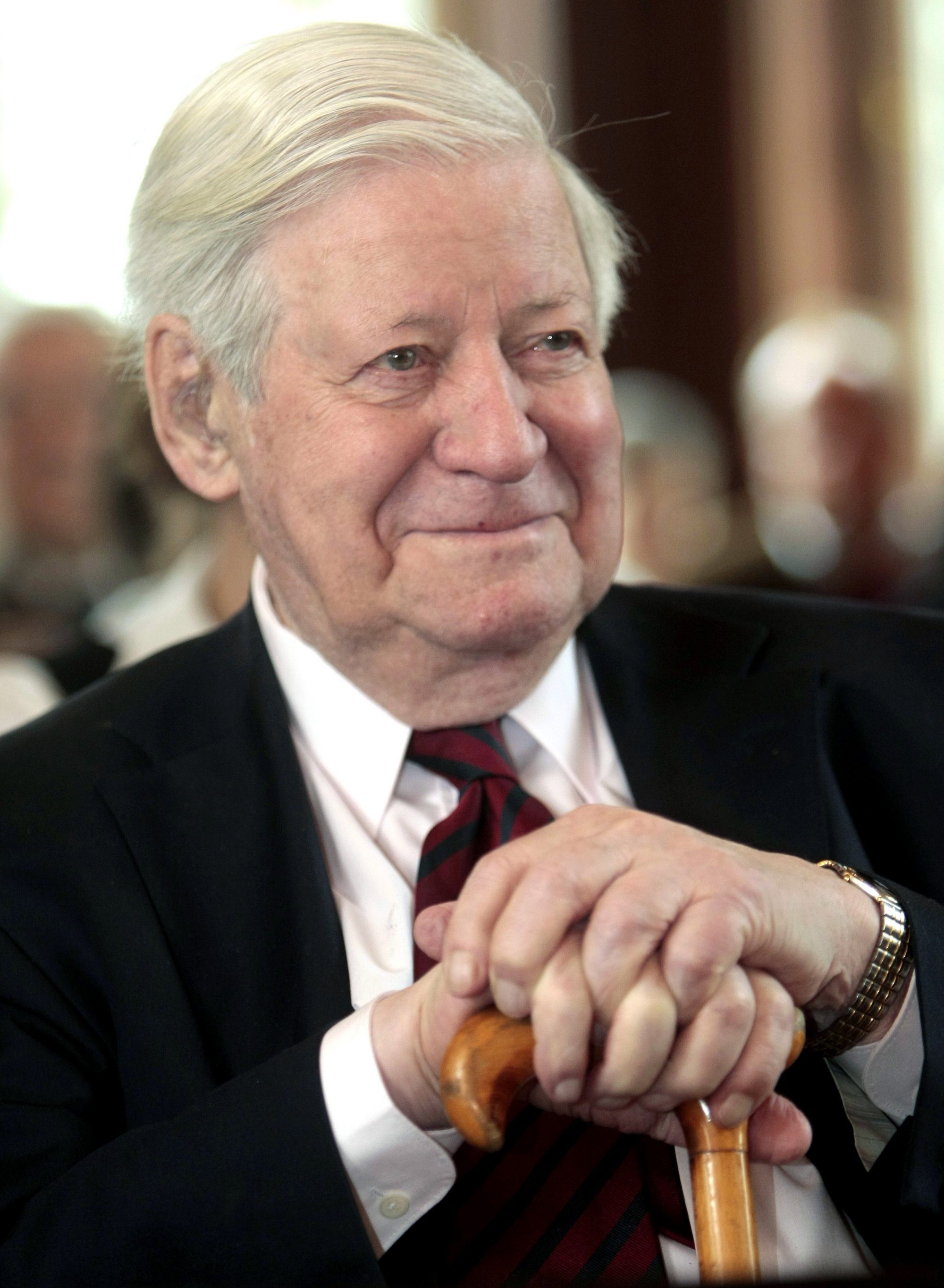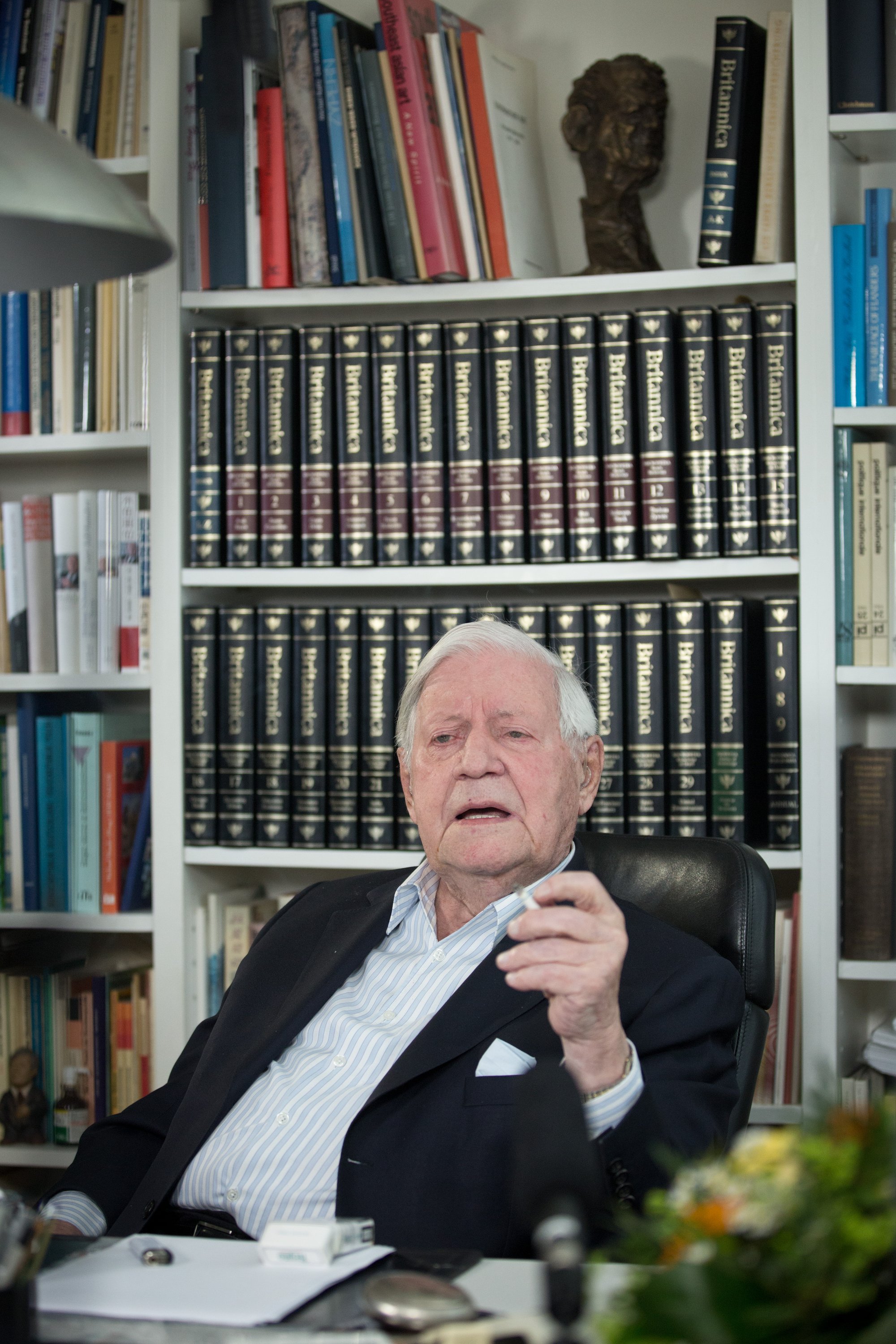
Helmut Schmidt was born in Hamburg in 1918. Between 1953 and 1987, he served as an SPD member of the Bundestag, as a senator in Hamburg and as parliamentary party leader and minister in Bonn. In May 1974, the Bundestag elected him as the fifth Chancellor of the Federal Republic of Germany. After his term of office, which lasted until October 1982, he also worked as editor and, in the meantime, publisher of the Hamburg weekly newspaper Die Zeit. Even after the end of his political career, Helmut Schmidt continued to work with great commitment in favour of European unification, international understanding and the solution of global problems.
Many people remember Helmut Schmidt in particular as a hands-on crisis manager during the Hamburg storm surge of 1962 and later in the face of the challenges of global economic crises in the early 1970s. Later in his term of office as Federal Chancellor, he demonstrated a resolute and consistent stance against the terrorism of the Red Army Faction. He fought for a strategic balance of medium-range nuclear weapons in Central Europe – an issue that was extremely controversial both among the population and within his party.
Helmut Schmidt’s exceptional abilities as a defence, foreign, economic and financial politician went hand in hand with a keen sense of art, music, literature and philosophy, an interest he shared with his wife Hannelore (known as “Loki”, née Glaser), a teacher and natural scientist also born in Hamburg, to whom he was married for 68 years. Helmut Schmidt was held in the highest esteem both at home and abroad: as a sharp mind, an urbane chronicler and homo politicus, for whom controversial debate was an essential part of democracy. Helmut Schmidt received countless honours, prizes and awards all over the world. The result of his extraordinary productivity are around 50 books and hundreds of articles in Die Zeit and other newspapers, magazines and books.