
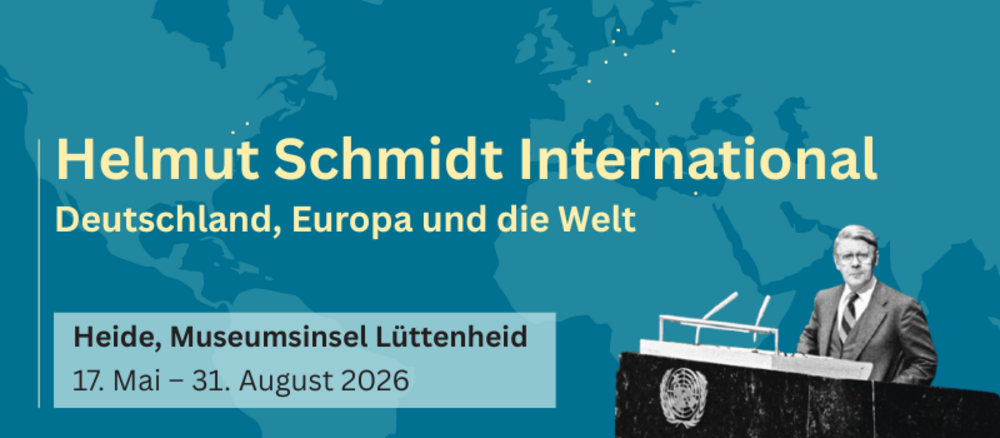
About the exhibition
Helmut Schmidt served as Federal Chancellor (1974–1982) during a period of upheaval: in the midst of a severe economic and financial crisis, national solutions were no longer sufficient. At the same time, the conflict between NATO and the Eastern Bloc states intensified.
The social-liberal government under Chancellor Schmidt focused on cooperation: It continued the “New Ostpolitik” of SPD Chancellor Willy Brandt, which aimed at rapprochement with the GDR and Poland; together with France, it promoted economic integration processes; and, by establishing the G7 summits and the “Conference on Security and Co-operation in Europe”, to strengthen international crisis management.
The exhibition “Schmidt International” illustrates, across ten sections, just how closely Germany, Europe and the world are intertwined: How can political cooperation across borders succeed? How should Western democracies conduct themselves towards autocratic states? How do we safeguard freedom and the rule of law in the long term?
Museum Island Lüttenheid, Lüttenheid 40, 25746 Heide
Opening hours:
Tue–Thu 2.30 pm to 5.00 pm, Fri 11.30 am to 2.00 pm, Sat 2.30 pm to 5.00 pm, Sun 11.00 am–5.00 pm
Admission: Adults €4.00, families €8.00, concessions €2.00, children under 6 free
You can find more information here.
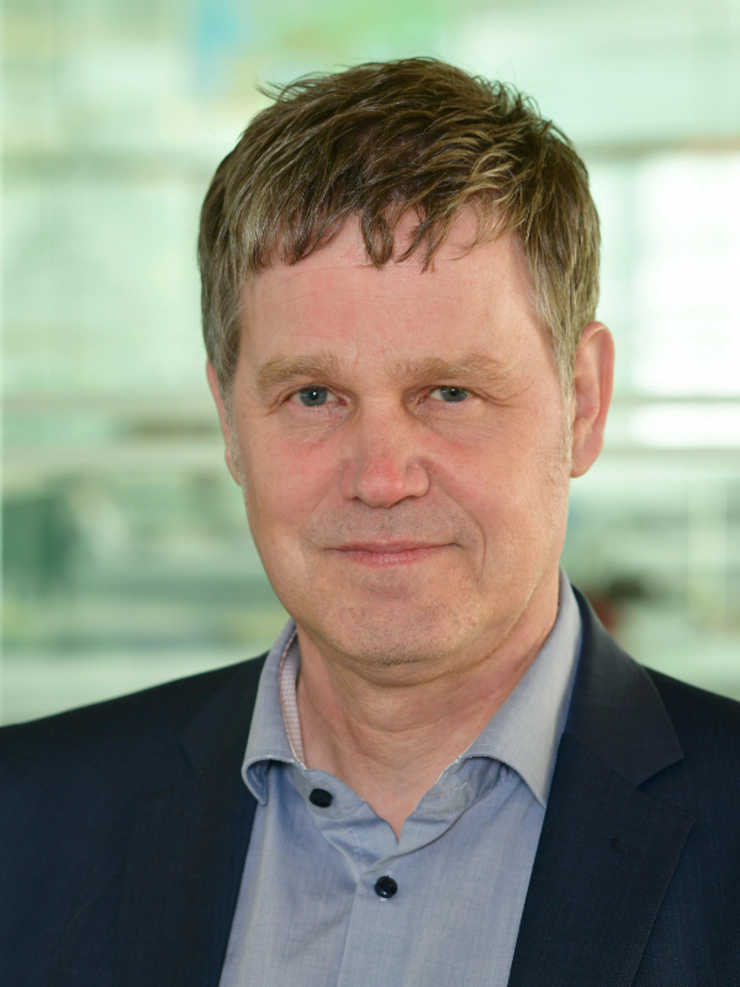
Magnus combines in-depth expertise on the life and political career of Helmut Schmidt with public history formats centered on the foundation’s exhibition projects. Central to this work is always the question of how history and the present are interconnected.
He studied history in Göttingen and earned his doctorate at the University of Erfurt on the everyday history of World War II. Since 2005, he has worked both independently and as a staff member and exhibition curator for institutions including the German Historical Museum in Berlin, the Foundation Memorial to the Murdered Jews of Europe, the Hamburg Institute for Social Research, and the University of Vienna.
More