
Between crisis management and the right to shape the future
04. Jun 2022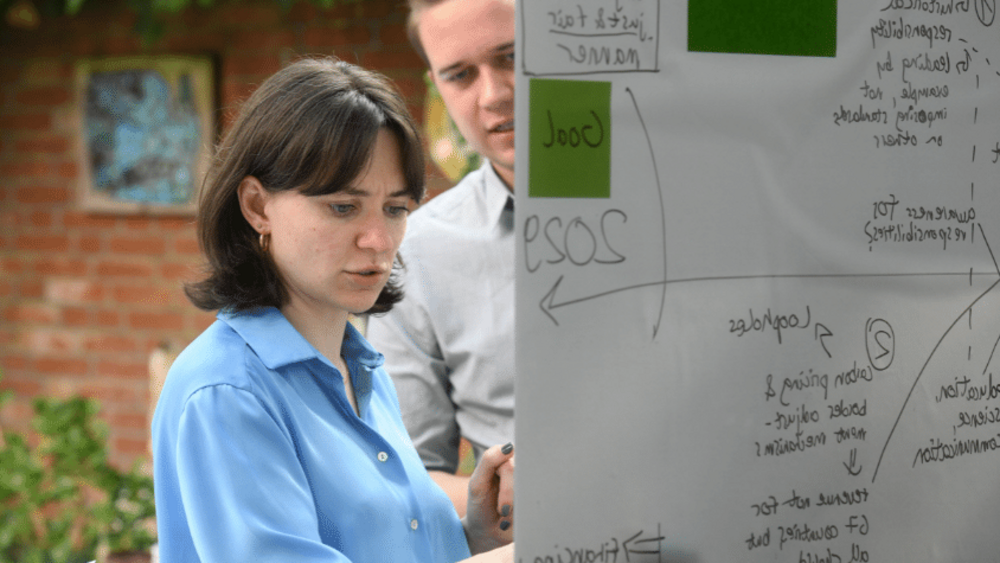

In 2022, Germany will hold the rotating G7 presidency. In its programme, the German government has set itself the goal of "Progress for a just world". At the beginning of the year, Federal Chancellor Olaf Scholz declared: "We will use our presidency to make this group of states a pioneer. A pioneer for a climate-neutral economy and a just world." the German Presidency therefore intends to use the G7 not only as a forum for international crisis management, but also to actively help shape international policy in a value-led manner.
However, the Russian attack on Ukraine began just a few weeks after the motto was announced. In doing so, Kremlin leader Vladimir Putin destroyed the European peace order and created new geostrategic realities globally. Since 24 February 2022, the G7 has once again found itself in its familiar role of crisis manager. Tried and tested in this role, the group has reacted quickly and cohesively and imposed sanctions. But what remains of the original goals?
An opportunity for more cooperation
The G7 is once again faced with the challenge of lending itself legitimacy and not only reacting to crises, but also living up to its own aspirations. In fact, the intensifying international rivalries may even give the G7 states an opportunity to update their own legitimacy and thus actively shape international politics.
founded in 1975 by Valéry Giscard d'Estaing and Helmut Schmidt as a forum for informal exchange between the leading industrialised nations, the question of the G7's topicality is justified. The seven leading industrialised nations are no longer represented in the G7, the rest of the world is no longer prepared to simply accept the G7's claim to leadership, and the G7 societies themselves are no longer fully convinced of this format and its policies.
Nevertheless, the Group of Seven offers a space for international cooperation in the face of increasing geopolitical competition. In this sense, the Group's prompt joint response to Russian aggression is an important signal for the international community - even if the G7 is not (or no longer) able to resolve crises of global proportions on its own.
Always relevant: values-based international cooperation
However, international alliances such as the G7 must be more than mere communities of convenience. The G7 countries emphasised their shared values as democracies back in 2014. At that time, the seven "leading democracies" reacted to Russia's annexation of Crimea in violation of international law and excluded Russia from the former G8. The Russian war of aggression in Ukraine, which began in February 2022, and thus the violent breach of international law by a former partner, lends a new urgency to the future of global cooperation. As an alliance of "economically strong democracies", the G7 can use this opportunity to set the tone internationally for a foreign policy based on democratic values.
It is therefore all the more important that the G7 not only stand together as partners with shared values and convictions, but also implement them. If the G7 wants to increase its legitimacy as a community of values, its activities, which are often derided as summit politics, must go beyond mere lip service. To achieve this, the G7 must open up both internally and externally. It must closely involve its own civil societies in decision-making processes and enter into international cooperation with other democracies - and their civil societies.
Legitimacy instead of exclusivity
Following on from the G7 Cornwall Consensus from 2021, the role of the state in economic policy must be renegotiated. International cooperation and the national economies of the G7 countries, which are characterised by inequality, show that economic integration alone does not lead to prosperity for all and thus to the spread of democratic values. As the developments in the USA clearly demonstrate: Even established democracies can be undermined if the concerns of a large proportion of the population are ignored. However, the G7 is still not anchored in the public discourse. Through the so-called engagement groups (Civil7, Science7, Women7, Think7, Youth7, Business7, Labour7), selected civil society actors are already involved in the preparation of the G7 processes, but completely outside the public eye.
Cooperation between the G7 states and the G20 is already established in some areas - but is becoming increasingly complicated, as China and Russia are also part of this grouping. With their self-image as a community of values, cooperation between the G7 and G20 is therefore becoming more problematic. Furthermore, the question of legitimacy at a global level also arises for the G20. However, the G7 can gain new legitimacy through a values-based foreign policy that enters into international partnerships on the basis of its shared convictions. People must be at the centre of this and cooperation should be entered into on an issue-related basis.
Shaping international cooperation now
International cooperation and globalisation are currently facing major challenges. At this point, the G7 can utilise its current unity in a targeted manner and act as a shaper of future issues. With a positive agenda, the G7 can utilise the current momentum to consolidate common positions and translate them into practical policies. This applies both to the management of immediate crises and complex global tasks as well as to the long-term organisation of international cooperation. Indeed, many aspects of their agenda are more pressing than ever: the humanitarian challenges posed by wars worldwide, the realisation of global vaccination justice in the face of the pandemic and the fight against climate change at a global level are just a few highlights.
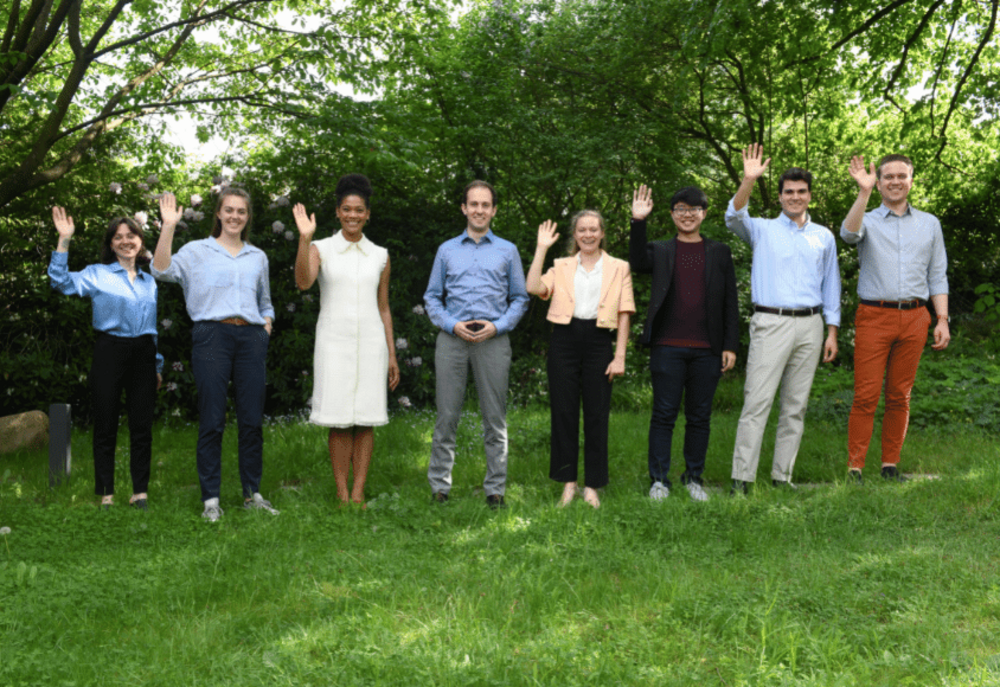
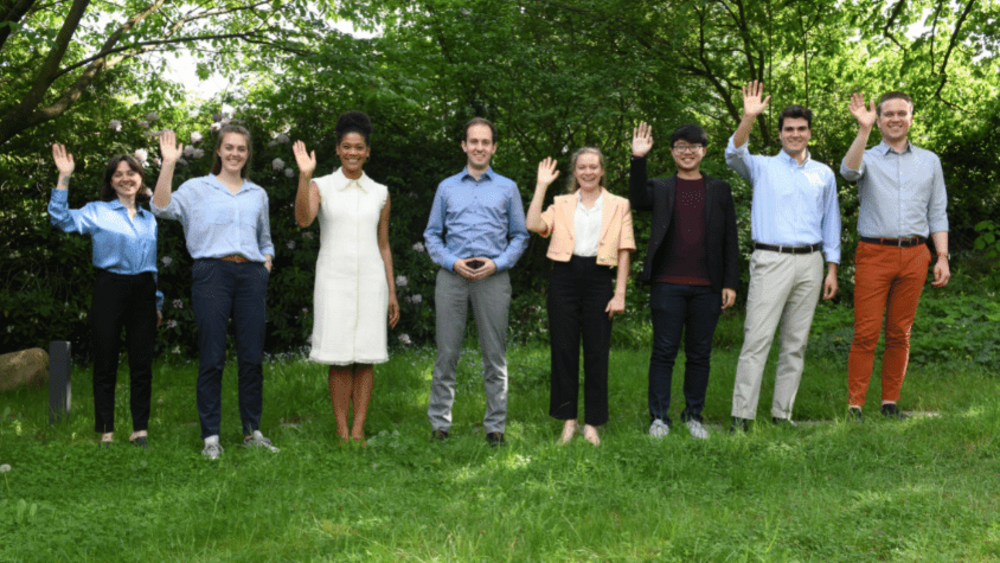
The realisation of a value-based foreign policy is urgent. This requires international cooperation, the involvement of civil society and fresh impetus. For this reason, we have invited eight young people from the G7 countries and Ukraine as a guest country to the Helmut Schmidt House for a BKHS NextGen7 Summit. Taking up the idea of our namesake of a lively discourse in a confidential setting, the young representatives spent two days there discussing and developing policy recommendations on the topics of climate justice, digital democracy, gender equality and international cooperation beyond the G7. The young generation's policy recommendations will be published in mid-June, before the summit in Elmau.
Back in 2014, the G7 defined itself as an alliance of values that goes beyond economic cooperation. Now is the time for this alliance of values to deliver credibly. A values-based foreign policy is needed right now - which is why the motto "Progress for a just world" must point the way forward.

Author
Elisabeth combines economic security and geoeconomics with issues of social inclusion and international cooperation. Her research focuses on EU-U.S. trade policy and the distributional effects of international economic policy.
She studied in Nuremberg, Berlin, and at Indiana University, and earned her Ph.D. in International Relations from the Free University of Berlin. Her professional career has taken her to the German Marshall Fund and to various research positions at the Europa-Kolleg Hamburg, the Bertelsmann Foundation in Washington, D.C., as well as at Princeton University and Georgetown University.
Elisabeth teaches International Relations and U.S. Foreign Economic Policy at HTW Berlin and the Free University of Berlin.
More