On 3 October 1990, the German Democratic Republic joined the Federal Republic of Germany (in accordance with Article 23 of the Basic Law). This marked the end of the GDR’s 40-year history. For the citizens of the new federal states, state unity was to fulfil the demands for which a small minority had been campaigning since the early 1980s and for which hundreds of thousands of people had finally taken to the streets since autumn 1989: Freedom, democracy and the rule of law. An important prerequisite for the success of the peaceful democratic revolution in the GDR was the economic and political decline of the SED regime and with it the Eastern European states under the leadership of the Soviet Union at the end of the 1980s.
For people in the new federal states, the upheaval that accompanied unification after 1990 was in part dramatic: on the one hand, new opportunities for professional and private reorientation opened up. In addition to the freedom to travel, there was now also freedom of establishment throughout Europe – because the population of the former GDR also became EU citizens. From a political point of view, the pressure to conform and the terror of opinion also came to an end and, for some, liberation from prisons and penitentiaries.
Although people gained access to the Western world of goods, which many had long missed, practically overnight, the massive rise in unemployment following the bankruptcy of numerous companies after reunification dampened the joy of many in the face of such new achievements. Despite the joy of many new freedoms: The economic decline brought about by wrong economic policy decisions, and in some cases by fraudulent practices, contributed to the fact that people everywhere could not identify with the new community and its capitalist economic system. A long-term economic programme (“Aufbau Ost”) is still helping to bring living conditions in East and West closer together.
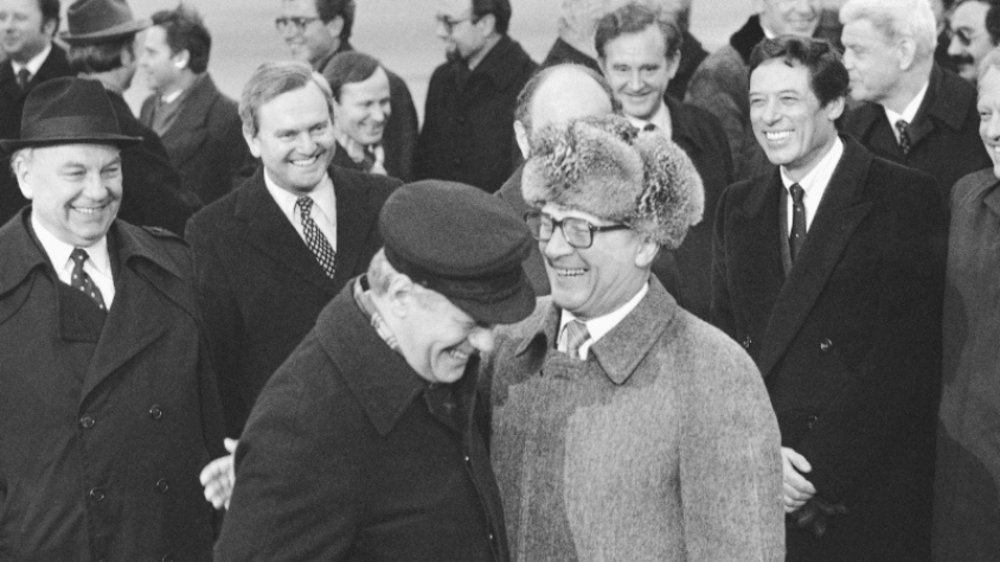
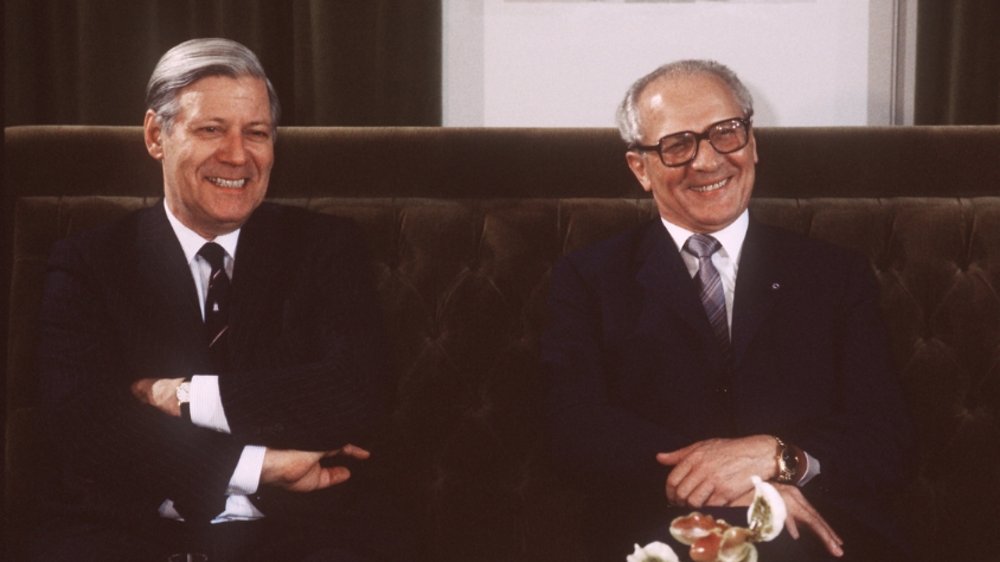
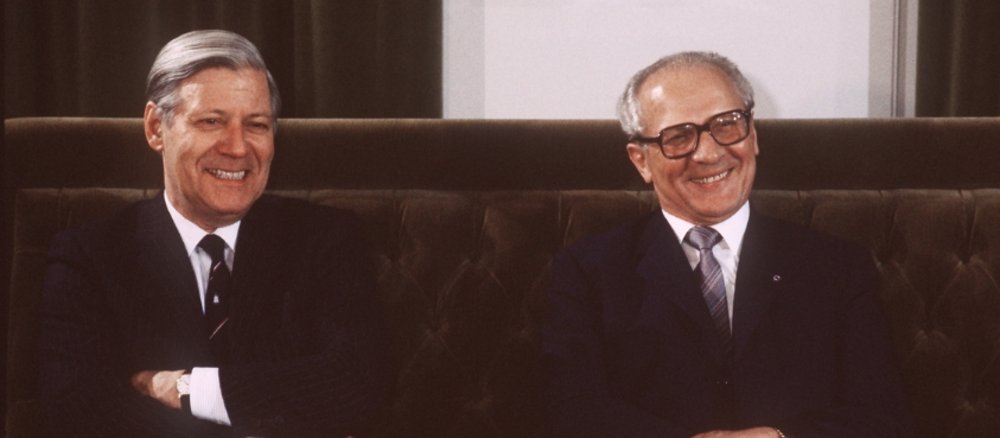
in 1990, there was great support in Germany for the unification of the two German states. The basis for this was a strong feeling of togetherness over four decades of division – even if this varied depending on generational background or political preference. The fact that people did not become strangers to each other despite the deep division not only of the two countries, but of large parts of the world at the time into two hostile blocs, was a central element of the West German governments’ Germany policy. In practice, this initially applied above all to the change to a “policy of rapprochement” in the course of the “New Ostpolitik” under Federal Chancellor Willy Brandt, consistently continued by his successor Helmut Schmidt. Particularly since the suppression of the Prague Spring in 1968, there was a growing realisation within the Social Democratic Party leadership that a fundamental system change at state level in the Eastern European countries was hardly realistic; greater success, especially for the people in both German states, was promised by ensuring that Germans in East and West did not become too alienated from each other on a day-to-day level. The long-term goal of a whole series of treaties under constitutional law (“Eastern treaties”) was always the completion of German unity. The fact that this would already become a reality in 1990 surprised most people at the end of the 1980s. Schmidt and other contemporaries assumed that the division would last well into the 21st century.
The programme of a policy of rapprochement was implemented by the social-liberal coalitions (1969-1982) in various areas: the reduction of the “forced exchange” levied by the GDR for travel through the Iron Curtain, which was particularly problematic for materially disadvantaged West Germans, the improvement of transport routes between the states, the release of GDR prisoners by the Federal Republic, the expansion of travel opportunities to the West for GDR citizens and much more.
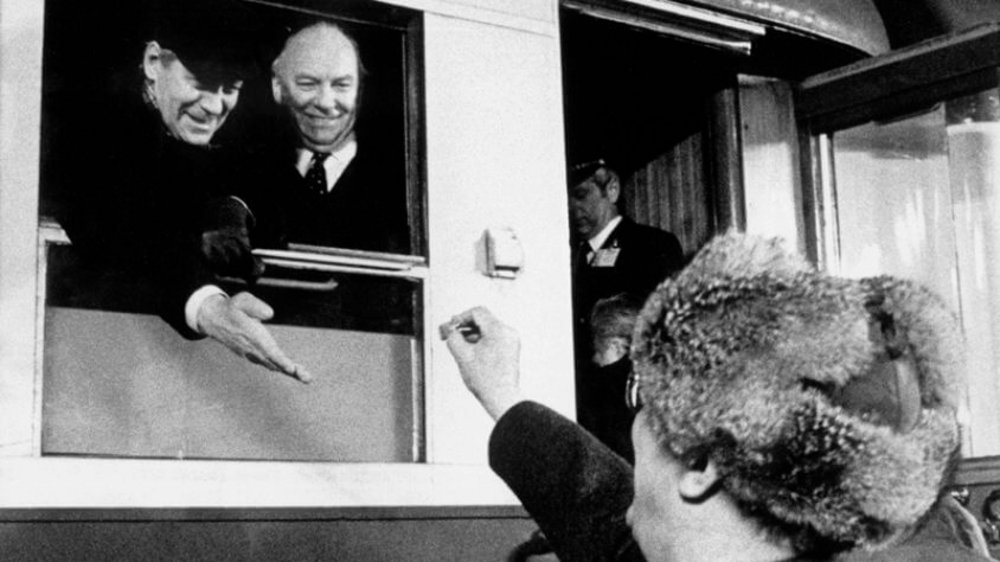
Helmut Schmidt also cultivated dialogue in other areas. His visit to Güstrow in 1981, at the height of the “Second Cold War”, is still well known today: the eerie images of a town sealed off by the GDR state security are as memorable as his spontaneous attempt to make contact with people on the street. Then, after his chancellorship, his speeches in East German places of worship and contacts with high church representatives such as the consistorial president of the Evangelical Church of Berlin-Brandenburg, Manfred Stolpe (1982–1989). In keeping with this commitment to German-German exchange not only at a political and institutional level, but also at a cultural and civic level, he established the German National Foundation in 1993 and contributed part of his private assets to it. To this day, the foundation aims to “promote the growing together of Germany, strengthen the idea of the German nation as part of a united Europe and contribute to a national identity in a peaceful, cosmopolitan Germany”.
In addition to this direct commitment, Schmidt was also always active as a journalist in order to promote his German political goals. In his essays, speeches and monographs, he combined courage and confidence with warnings and scepticism. In an essay from August 2004 (published in the 2005 collection of texts “Auf dem Weg zur Deutschen Einheit”), for example, he criticised the fact that West German politicians (in East and West) should have prepared people more clearly from the outset for the major impositions, especially economic ones, in the face of unification. Partly due to the resulting major disappointments, people “in the East felt deceived, patronised and belittled by the West”. But he also warned the population of the former GDR against a false sense of entitlement: the purchasing power of their pensions, for example, was considerably higher than in other post-communist states, and the transfer payments that the state and society in the West had made for the East in the years after 1990 had been extraordinarily high; as almost always, he also urged prudence, realism and mutual understanding in this context – and warned against overly simple solutions offered by populist voices. Schmidt the pragmatist and admonisher, the sceptic who, as a publicist and elder statesman, sought solutions long after his departure from the political stage of the Bundestag, repeatedly offering comprehensive measures and concepts – and who, to the very end, was committed to overcoming the division of the two German states.