
As economic security climbs to the top of the European agenda, the strategic focus is shifting from high-level Brussels frameworks to national and local execution. With Germany currently drafting its first National Economic Security Strategy, public officials face a critical challenge: How do we translate global commitments into resilient domestic realities?
Taking place in the immediate aftermath of the G7 Summit, this event marks the launch of the final report of the BKHS project “Inclusive Geoeconomics” by Dr. Elisabeth Winter and Lea Holst. Concluding over 1.5 years of qualitative research – including 25 expert interviews with EU, national and regional policymakers – the report introduces a four-dimensional model of economic security that moves beyond defensive trade measures. It argues that true economic resilience cannot be achieved through technocratic de-risking alone; it fundamentally requires balancing economic competitiveness with strategic sovereignty, ecological sustainability and domestic social cohesion.
To discuss how policymakers at the EU as well as German federal, state and local levels can operationalise these goals with an inclusive geoeconomics strategy, we are glad to bring together a distinguished panel of experts:
- David Wilkens, Deputy Head of Unit for International and European economic security and geopolitical analysis, German Federal Ministry for Economic Affairs and Energy
- Dr. Cédric Koch, Policy Fellow im Europa-Zentrum bei der DGAP
- Dr. Elisabeth Winter, Deputy Managing Director and Programme Director “Global Markets and Social Justice”, BKHS
- Lea Holst, Research Assistant “Global Markets and Social Justice”, BKHS
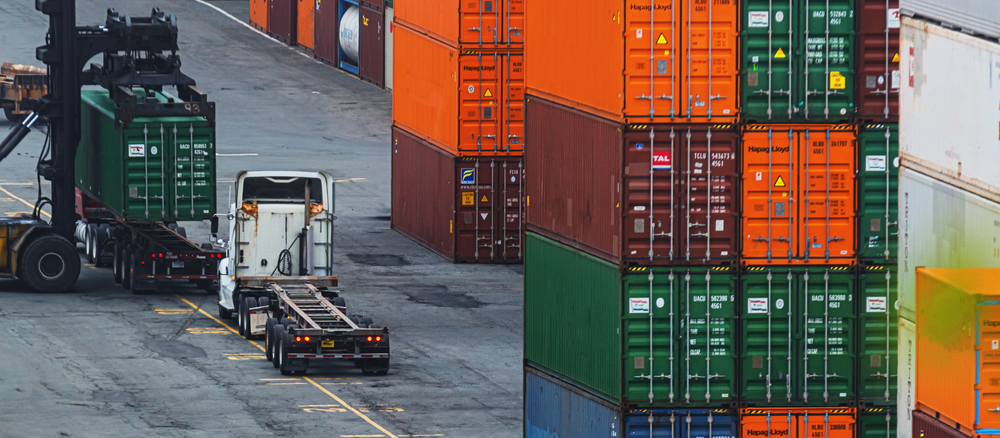
The discussion will focus on the report’s actionable “Inclusive Geoeconomics Checklist” for public administration, applying it to two critical German case studies: the Port of Hamburg (protecting critical infrastructure amid multi-level governance) and the EV sector (navigating the “China Shock 2.0” and raw material dependencies).
Feel free to forward this invitation to colleagues within your institutional networks who are working at the intersection of economic policy, foreign affairs, and regional development.
We look forward to a stimulating discussion with you on 18 June!
Register here.
Thursday, 18 June 2026
10.00-11.00 a.m. (CET)
Online

