
"Hardship cases" became "forgotten victims" of the Nazi dictatorship
26. Mar 2022

On 17 March 1982, Federal Chancellor Helmut Schmidt meets a delegation from the newly founded "Central Council of German Sinti and Roma" for an hour and a half of talks. The most important point is the recognition of the genocide of the minority on "racial" grounds during the National Socialist dictatorship. Since the 1970s, the Sinti and Roma have also been publicly fighting for half a million dead and only a few thousand survivors to be recognised by the state and society as victims of National Socialism. After the discussion, they have at least formally achieved this goal. Not only the victims' association, but also many media outlets are currently reporting on the 40th anniversary of a declaration that symbolises the acceptance of historical responsibility in German politics.
Terrible lawyers
The discussion was "open and very harmonious", according to a statement issued by the Central Council on 18 March 1982. Until then, the attempts of the few survivors who actually dared to go before the authorities or courts had been in vain for 37 years. In addition to the victims of the so-called "hereditary health courts", homosexuals, those persecuted as "asocial", Jehovah's Witnesses and those persecuted by the Nazi military courts, the Sinti and Roma were also among the groups later labelled "forgotten victims". The Federal Compensation Act (BEG) in its various versions since 1953 has systematically excluded them from any rehabilitation - despite the fact that the Nazi state persecuted and murdered the Sinti and Roma as "racially inferior". The rejection notices issued by the courts in the post-war period often reflect the mentalities of the former persecutors. The people, some of whom are still vilified as "gypsies" today, were hit particularly hard by a judgement of the Federal Court of Justice (BGH) in 1956. Although the judges of Germany's highest civil court did not fundamentally question the murder of hundreds of thousands of people, they did state that persecution on "racial" grounds had only occurred since 1943. State persecution measures prior to this were legitimate, as they were prompted by "their [the Sinti and Roma's] own asociality, criminality and wanderlust". It goes on to say: "As experience shows, they tend to commit crime, especially theft and fraud, and they often lack the moral instincts to respect other people's property because, like primitive people, they have an unchecked instinct for occupation." In 1963, a new formulation of the Federal Court of Justice relativised this deeply racist judgement. Nevertheless, many hardships remain and successful trials for the few survivors continue to be the exception.
Civil society protest and parliamentary initiatives
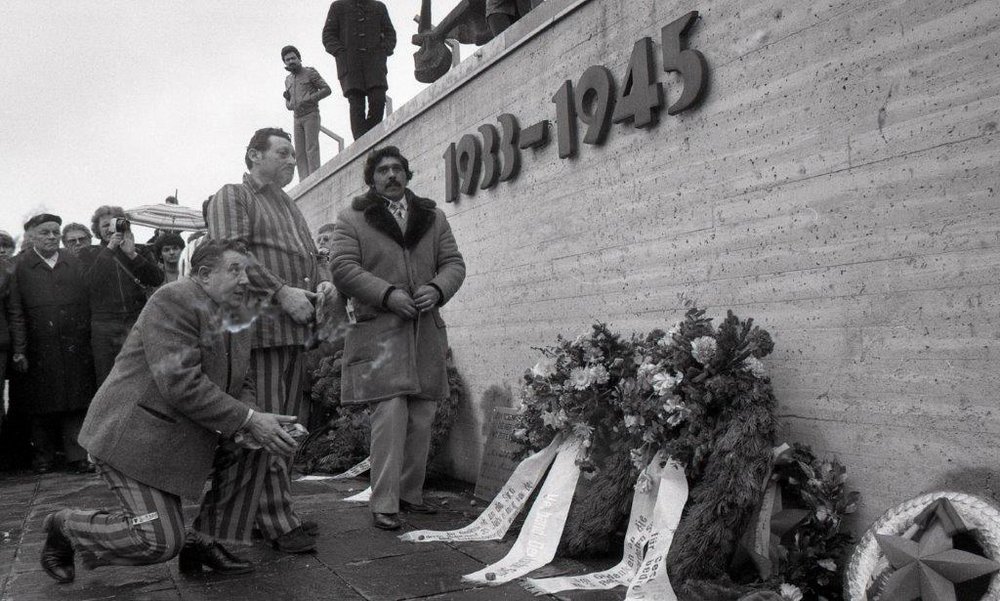
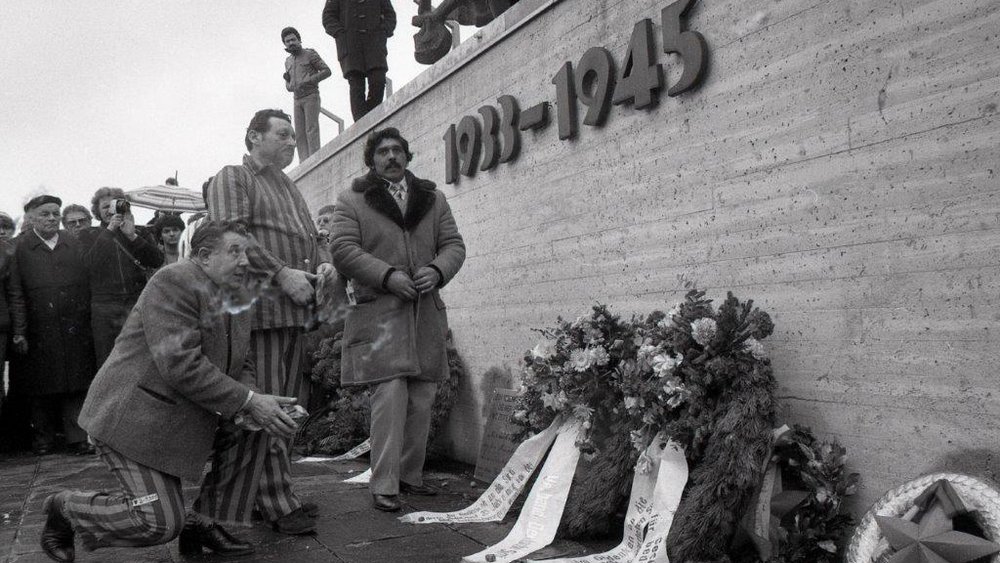
Willy Brandt's assumption of office in the autumn of 1969 was a milestone in the debate about a reasonable approach to the issue for the Sinti and Roma. The signal effect of the first Federal Chancellor appointed by the SPD, who himself had to flee abroad to escape persecution by the National Socialists, was enormous. But progress continued to be slow in the 1970s; only a series of sometimes spectacular actions by activists from an increasingly self-confident civil society brought things forward. On 4 April 1980, twelve members of the minority went on hunger strike on the grounds of the Dachau concentration camp memorial site near Munich. They demanded clarification about the whereabouts of Nazi "gypsy files", which were still being used by the authorities in the Federal Republic to reject applications for compensation. The activists also want the police and judiciary, particularly in Bavaria, North Rhine-Westphalia and Hamburg, to stop storing the personal details, fingerprints and other data of Sinti and Roma in separate files.
One positive result of such campaigns is the successful attempt to gain the ear of the fifth Chancellor of the Federal Republic of Germany. As Finance Minister in 1973, Helmut Schmidt reacted cautiously to the expansion of the group of people who were to be financially compensated by the state. However, recognising the suffering experienced by the Sinti and Roma was something else. At the end of the meeting, the decisive sentences that were to form the starting point for the historical and legal debate in the years to come were written:
"Serious injustice was inflicted on the Sinti and Roma by the Nazi dictatorship. They were persecuted on racial grounds [...]. These crimes have fulfilled the offence of genocide."
Schmidt also advocates moral reparation and emphasises the Federal Republic of Germany's duty to compensate the victims and improve their social situation. This signalled a new beginning in the Federal Government's relationship with the German Sinti and Roma. Shortly before he was voted out of office as Federal Chancellor, Schmidt also ensured that a federally funded office of the Central Council was set up in Heidelberg.
The Federal Government's declaration following the meeting in March was followed on 26 August of the same year by the establishment of the first fund for "persecuted persons of non-Jewish descent to compensate for hardship in individual cases in the context of restitution". From then on, it was possible for the authorities to grant ongoing aid in addition to one-off payments "in special exceptional cases". At this time, it is therefore still explicitly about so-called hardship cases, a legal claim is excluded. Nevertheless, the establishment of the fund was the prelude to further demands and motions that had been introduced into the Bundestag since the mid-1980s, mainly by the Greens and later also by the SPD, which were then also gradually implemented; central points here too: addressing current discrimination and harassment of Sinti and Roma in German society.
A look at the present
Romani Rose, then as now Chairman of theCentral Council of German Sinti and Roma, emphasises that the fight for the rights of his own minority was not just about recognising historical facts. For him, the coexistence of the majority society and the minority in the present is central. The Sinti and Roma have lived on German soil for over 600 years and have provided important impulses for German and Western culture. Schmidt and Rose have remained in contact over the years. In 2004, the Chairman of the Central Council asked Schmidt to give a welcoming address at a commemorative event. Schmidt had to cancel due to his health, but was happy to provide the text. The letter, which has been preserved in the Helmut Schmidt archive, shows Schmidt's attachment to the subject. As is so often the case with Schmidt, culture forms a bridge, especially music. This also becomes clear at a meeting between Rose and Schmidt in 2014. Rose recalls that the former chancellor was initially very interested in the difficult living conditions of Sinti and Roma, especially in Eastern Europe - a point that has lost none of its topicality today, in 2022, in view of the Russian war of aggression on Ukraine and the particularly precarious situation of Roma war refugees. However, Rose was particularly impressed by Schmidt's great expertise in the 2014 interview, as he was able to categorise the influences of the Sinti and Roma on Johann Sebastian Bach, Georg Friedrich Händel, Franz Liszt and other important musicians and composers very well.

Author
Magnus combines in-depth expertise on the life and political career of Helmut Schmidt with public history formats centered on the foundation’s exhibition projects. Central to this work is always the question of how history and the present are interconnected.
He studied history in Göttingen and earned his doctorate at the University of Erfurt on the everyday history of World War II. Since 2005, he has worked both independently and as a staff member and exhibition curator for institutions including the German Historical Museum in Berlin, the Foundation Memorial to the Murdered Jews of Europe, the Hamburg Institute for Social Research, and the University of Vienna.
More