A gravel path leads the last stretch from the main road down to Brahmsee. At the end of this cul-de-sac stands the former holiday home of Helmut and Hannelore “Loki” Schmidt – barely bigger than an allotment shed. Right next to it: a gnarled, deeply intertwined forest – Loki's primeval forest. The Schmidts acquired the approximately seven hectares of land as a fallow field in 1986. In an interview, the popular Hamburg native recalls that she dared to try a botanical experiment here. She left the soil to its own devices and observed how nature made the plot its own, which plants germinated and how flowers developed. Thanks to her efforts, the wasteland became a habitat for plants and animals again. The German Botanical Society honoured Loki Schmidt's primeval forest project as “a pioneering achievement in scientifically based nature conservation” and called her a pioneer of nature and species conservation in Germany. According to the resolute botanist, she would have liked to have studied biology as a young woman and become a researcher, but she could not afford the tuition fees at the time and so she decided to study to become a teacher – but her real life's work still lay ahead of her.
“I shamelessly exploited my husband’s name”
As the wife of the Federal Chancellor, Loki Schmidt took on protocol duties between 1974 and 1982, but also became increasingly involved in plant and nature conservation. During this time, she set up the Board of Trustees for the Protection of Endangered Plants, which a few years later became a foundation: today’s Loki Schmidt Foundation. She demonstratively used the prominent figure of her husband. She talked about these issues early on, Loki recalls in an interview, but who listened to a little Schmidt teacher from Hamburg? Nobody. “I shamelessly exploited my husband's name,” she admitted mischievously.
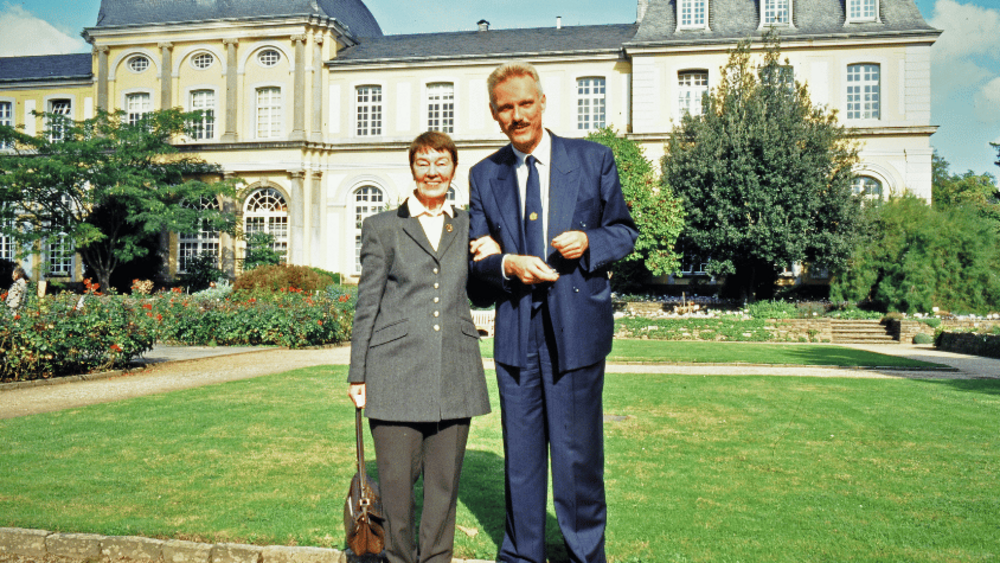
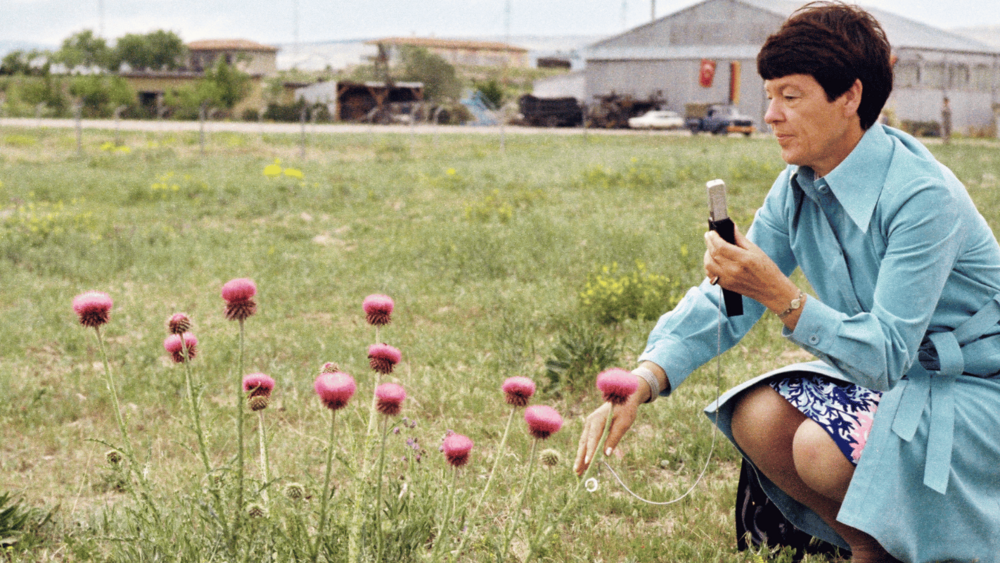
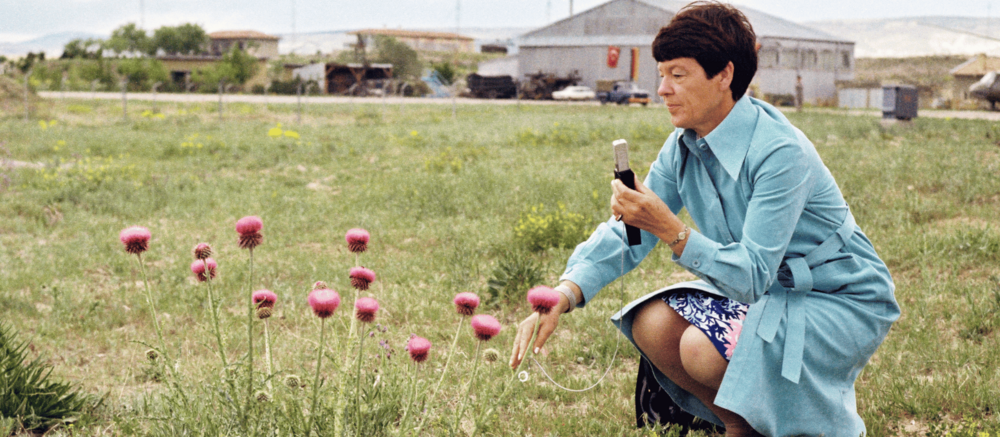
Even as a little girl, she was fascinated by plants. The longing for them and concern for endangered species became Loki Schmidt's lifelong companions. They took her all over Germany and even around the world. She travelled to the flood forests of the Amazon and to Lake Nakuru in Kenya, marvelled at the biodiversity of Borneo and the tropical forests of Ecuador and in 1985 discovered a previously unknown pineapple plant in Mexico, which was given her name: Pitcairnia loki-schmidtiae. This was later followed by a bromeliad (Puya loki-schmidtiae), a balsamine plant (Impatiens loki-schmidtiae), a Venezuelan rose plant (Lachemilla loki-schmidtiae) and a species of scorpion (Tityus lokiae). then in 1991 came the world sensation: the self-taught botanist collected the extremely rare Strasburgeria robusta, an evergreen tree species, on her research trip to New Caledonia and presented it to the Botanical Garden in Bonn.
Loki Schmidt established gene databases for endangered plant species in Germany and launched the international gardeners' exchange programme. She was one of the first environmentalists in the new Bonn Republic at a time when there was no Green Party and no Federal Ministry for the Environment and Nature Conservation. The initial mockery of “Blümchen-Loki” quickly gave way to respect for a recognised botanist. Terms such as sustainability or climate change played no role for Loki Schmidt. She was always concerned with the most effective, direct nature conservation – and that was precisely her significant contribution.
Studying biology at last
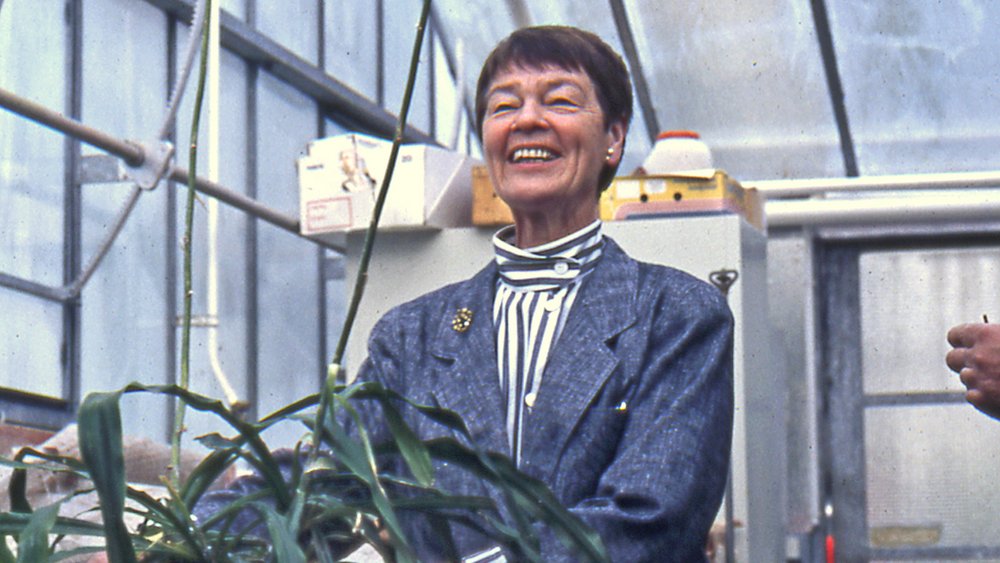
in 1986, a lifelong dream came true for Loki Schmidt – she was finally able to study biology. Shortly beforehand, she met Wilhelm Barthlott, Professor of Botany and Director of the Botanical Gardens in Bonn, with whom she regularly exchanged ideas from then on. One day, Barthlott's students invited the prominent Hamburg native to take part in their university seminar. To everyone's surprise and enthusiasm, Loki accepted the invitation with great pleasure and from then on attended lectures and seminars as often as she could, including on the “Vegetation of the Earth” and the “Systematics of Flowering Plants”. She was channelled into the lecture hall via a corridor in the basement, but always without personal security, recalls Wilhelm Barthlott. Sitting in the midst of the “other” students, they had hours of conversations with her afterwards, during which it became clear that Loki Schmidt had incredible expertise, the botanist continues. “She knew what she wanted and never stood in her husband's shadow.”
“My life would have been enough for five”
Loki Schmidt campaigned for environmental issues until the end of her life. She was honoured with numerous prizes and awards for her commitment, merit and tireless efforts in all areas of scientific and practical nature conservation. However, the most important thing for her remained educating people and talking to them. Even at the age of 90, together with biologist Lothar Frenz, she wrote the “Nature Book for the Curious” and encouraged readers to discover the environment on their doorstep with alert eyes – because nature conservation begins at home!
Loki Schmidt retained her notorious scientific curiosity until the end of her life. Even her imminent death did not frighten her, but allowed her to reflect on ageing from a scientific perspective with incredible detachment and without any melancholy. Her life, Loki summarised in old age, had been enough for five – “I have remained very grateful for all that I have seen!”.
Info
Loki Schmidt's estate, which is also preserved in the Helmut Schmidt-Archiv in Hamburg-Langenhorn, includes her own work, private correspondence and documents from her work as a conservationist. The “travelling boxes” she created document her research trips as a self-taught biologist and provide a deep insight into the history of nature conservation and its global interdependencies. To this day, Loki Schmidt's role in the development of German nature conservation has not been scientifically analysed.