
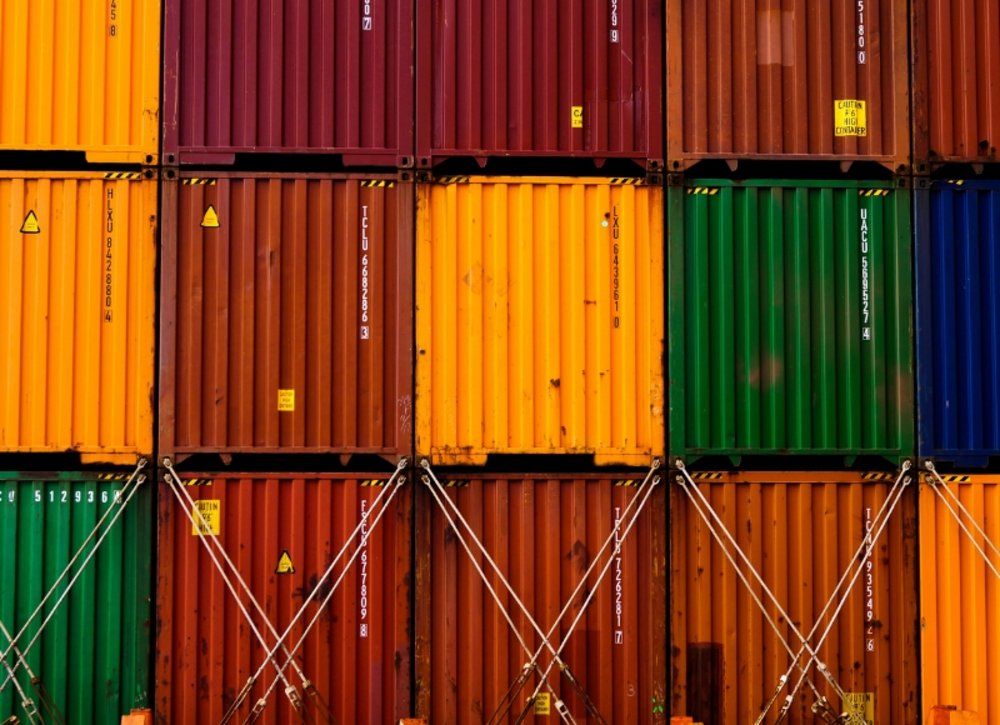
Since the end of the 1970s, the international networking of markets with as few state restrictions as possible has been seen as a guarantee for prosperity and peace. Deregulation and privatisation as well as the erosion of trade union co-determination rights were dominant processes under the regime of "Reaganomics" and "Thatcherism". Meanwhile, following extensive energy deals with the Soviet Union, German Chancellor Helmut Schmidt proclaimed to the critical US government: "Those who trade with each other do not shoot at each other". A dogma that was appropriate at the time, but has reached its limits today.
Economic interdependencies have created asymmetrical dependencies, and states are now prepared to use these as a weapon for their own interests. The Russian war of aggression against Ukraine is symbolic of the shattered expectations of globalisation and its peacemaking effect. This development and the increasingly protectionist and rivalrous behaviour of the USA and China are fundamentally changing international trade dynamics. In response, the EU is trying to reduce its dependencies and at the same time preserve the global trading system. Countries in the Global South are pursuing different strategies: many, such as the current 120 members of the Non-Aligned Movement, are staying out of the global showdown. Others, such as Iran, opt for one side - usually not that of the "West" - or, like India, maintain strategically advantageous relations with the competing superpowers.
Against the backdrop of political-strategic economic decisions worldwide, experts are talking about a return of geoeconomics - the use of economic instruments by states for political goals. This currently primarily serves security policy interests, such as the protection of critical infrastructure and the establishment of security of supply. In Germany, for example, value chains are being diversified in order to reduce dependencies on autocracies such as China. However, it is often overlooked that socio-economic and ecological factors, such as decent work or protection from disasters, also play a decisive role in international economic and therefore political stability. An international economic system that neglects this addresses the symptoms but not the underlying causes of the international order in upheaval.
The problems of unregulated globalisation
A major cause of the problems of unregulated globalisation lies in the inequalities it creates and reinforces. It is true that economic globalisation helps to reduce income inequality between countries worldwide, as countries in the early stages of the globalisation process show higher overall growth effects than countries that are already globalised. At the same time, however, globalisation leads to significantly higher income inequality within countries because it favours rich players more than poor ones, as Lang and Tavares 2023 show. As a result, it is primarily wealthy people around the world who benefit from the developments described above. A recent study by the Hans Böckler Foundation's Institute of Economic and Social Research (WSI) confirms this finding for Germany as well. Despite years of economic growth and low unemployment, income concentration and poverty increased in the 2010s. Furthermore, distribution inequalities are strongly characterised by social and ethnic origin.
However, economic inequalities are more than just a socio-political problem within states, as their real impact on the stability of the international system shows. The current reorganisation of the international economic order according to security policy priorities harbours the danger that this will happen at the expense of democratic processes. In particular, when people have the feeling that geostrategic decisions take precedence over their interests, the population's mistrust of democratic institutions is reinforced. Populist and protectionist forces exploit this. They call for national isolationism or blame elites for economic problems. Neither the unregulated international economic order nor the current focus on security policy priorities within geo-economic practice are able to counteract these developments.
A comprehensive approach to the global economy
In the face of global economic challenges, a proactive reorientation of foreign economic policy is needed. In addition to current security policy priorities, a comprehensive approach at national and international level must also include social and ecological factors such as decent work and protection against disasters in order to address the causes of existing problems. Global supply chains must be reorganised accordingly - not only to withstand geopolitical tensions, but also to enable a good life for all. An inclusive geo-economy is needed that allows all countries and people to participate in and benefit from international economic globalisation.
States must act as active shapers of economic policy - not protectionist and exclusively security-driven, but with a positive agenda for an international economic policy that not only creates a resilient, but also a sustainable and just international order. In the current BKHS project "Inclusive Geoeconomics " in the Global Markets and Social Justice programme line, we are researching how such an approach can be designed and implemented in the EU.
Curious? Then register now for our project-related updates, which we will send out once a quarter by e-mail in English:
Registration Updates Inclusive Geoeconomics