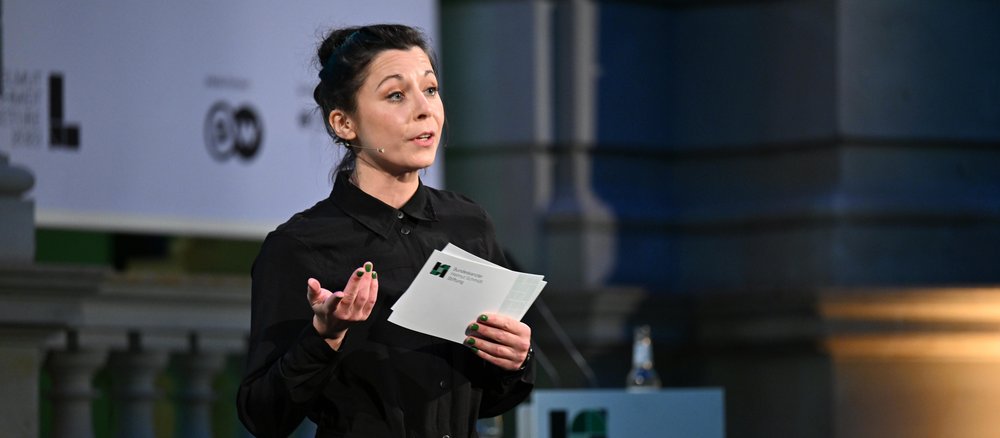
The globalisation of tomorrow will look different from the globalisation of yesterday. We are currently in the midst of a poly-crisis characterised by economic, security, climate and geopolitical shocks that are closely interwoven across borders. But what is currently going wrong in the global structure? And how can global economic interdependencies be made more secure, but above all fairer and more sustainable?
Together with more than 200 guests, we discussed these questions on 4 December 2023 under the motto “Remaking Globalisation!” and looked for possible answers to current global and economic policy challenges. To this end, we asked a large number of experts for concrete proposals for solutions – and received a variety of answers: from the authors of our BKHS Magazine, from the speaker of the Helmut Schmidt Lecture and the panellists on stage and from our guests in the evening. Representatives from academia, politics, think tanks, the arts and activism had their say in a variety of formats. You can download the entire issue of our BKHS Magazine on “Remaking Globalisation!” here and share further impressions of the evening of the Helmut Schmidt Lecture with you here. I would like to take this opportunity to discuss four concrete proposals for solutions that we were able to discuss during the evening.
Expanding crisis expertise in Berlin
First and foremost, of course, the speaker at the Helmut Schmidt Lecture, Professor Dr Moritz Schularick, was the focus of the event. As the new President of the Kiel Institute for the World Economy (IfW), he is particularly keen to strengthen the interface between politics, think tanks and science and, in this way, to expand crisis expertise in Berlin. This is particularly important at this time, as autocratic governments in particular are increasingly using economic interdependencies as a strategic weapon in security and foreign policy debates. This must be countered.
The energy crisis following Russia’s widespread invasion of Ukraine has clearly shown that global dependencies not only bring opportunities, but also dangers. Especially when economic interdependencies are used as political leverage, globalisation takes place under different circumstances. According to Moritz Schularick, we need to expand the intellectual infrastructure in Berlin for this new geo-economic reality.
Reforming international institutions
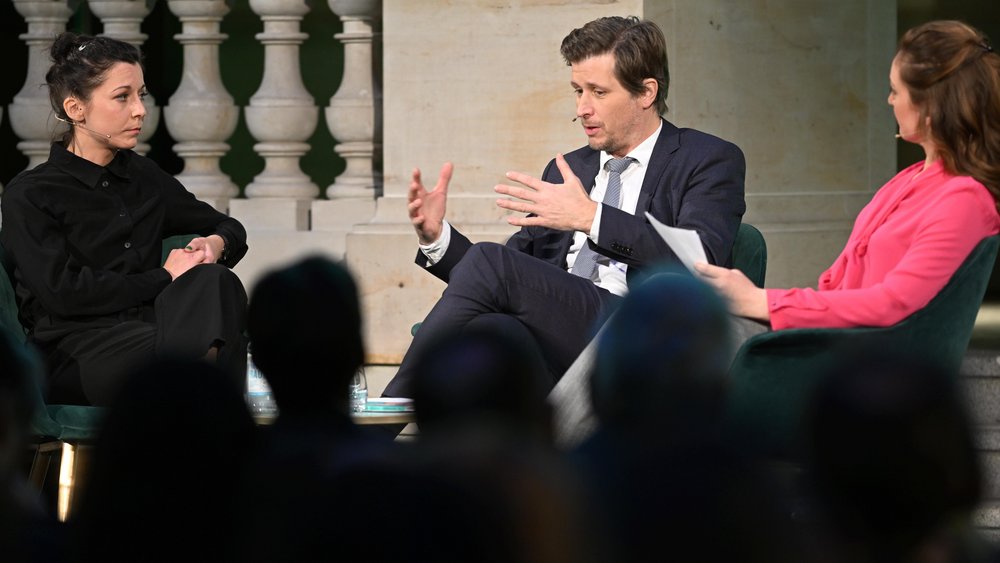
After the speech, I had a discussion with Moritz Schularick and Yunnan Chen, an expert on financial policy issues in development work at ODI London and author of this year’s BKHS Magazine. You can read Yunnan Chen’s article “Common Prosperity as common interest: how great powers can cooperate to promote development” in full here. Our debate focused on the different perspectives on changing globalisation and the question of how challenges are perceived by the actors involved and where approaches to solutions differ.
In the discussion, Yunnan Chen emphasised that changing globalisation is analysed differently from the perspective of the Global South. After all, globalisation has so far been shaped by the Global North according to its interests. This is particularly noticeable in the development of international institutions, in which the limited influence of countries from the Global South no longer corresponds to the international power structure. Yunnan Chen emphasised that this momentum must be used to eliminate these structural inequalities and reform international institutions.
Economic growth is not an end in itself
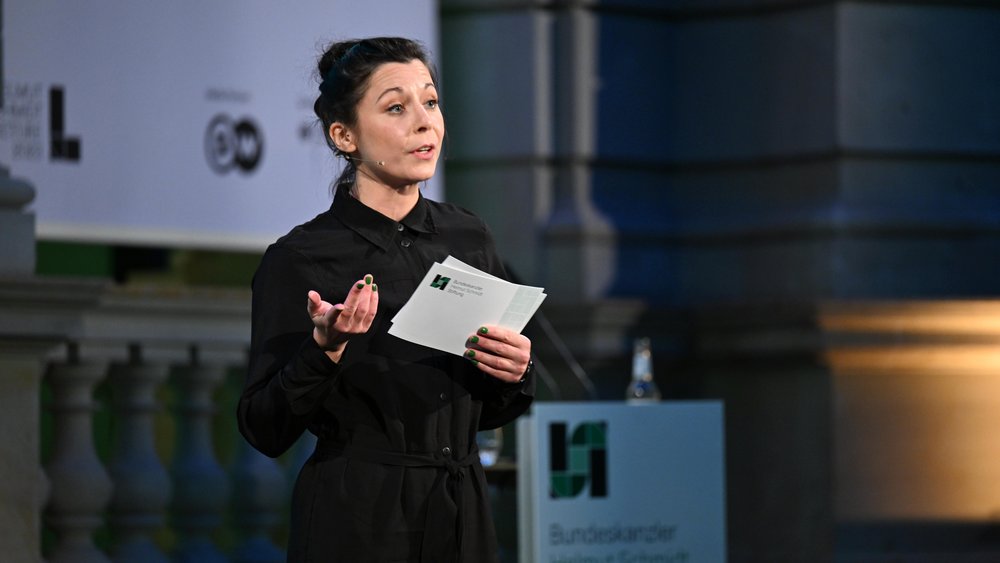
In the panel discussion, moderator Kristie Pladson, a journalist with our media partner Deutsche Welle, asked us about the representation of non-state actors and their interests in shaping international economic policy. In view of the current polycrisis, we need to rethink the interplay between politics and business. In order to find new ways for a global economic order, I emphasised, we must reassess whether and to what extent the nation state has an active role to play in the national and international economy.
International trade and economic growth must not be an end in themselves. My recommendation is therefore that the focus of the state should not be on national economic indicators, but on people as part of an active economic policy. This is the only way to reshape a sustainable global economic order. Far too often in the past, trust was placed in the power of the market. In view of the increasing geo-economic view of global economic interrelationships, this paradigm must be scrutinised.
Read my article “Economic security as human security” from the BKHS Magazine here, in which I explain why economic security should not only be discussed from a national security perspective with a view to China, but also from an environmental and socio-political perspective with a view to the individual.
Considering climate in economic issues
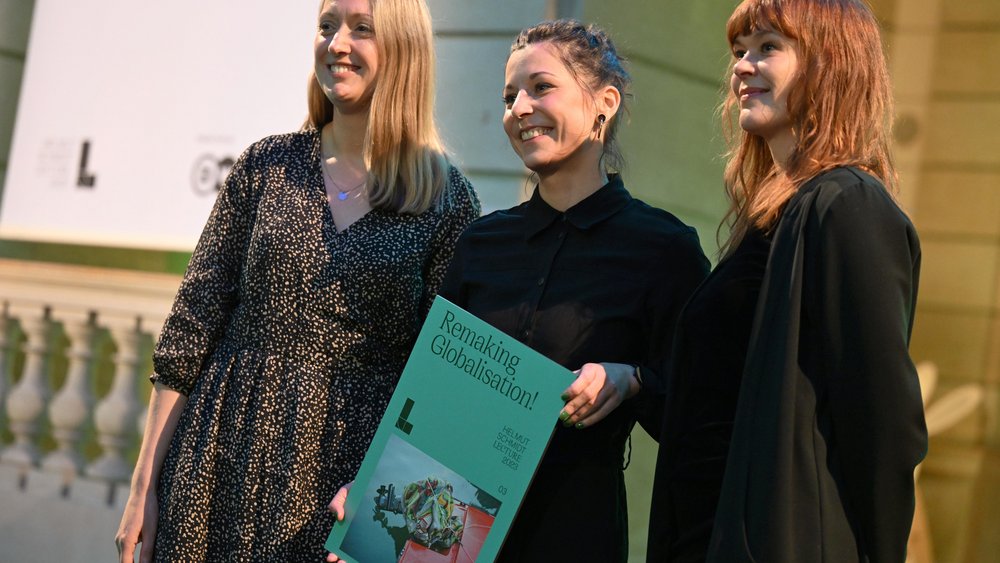
A special moment of the Helmut Schmidt Lecture each year is the launch of the accompanying BKHS Magazine, edited by my colleagues Dr Julia Strasheim, Dr Eva Krick and myself. Following our call “Remaking Globalisation!”, the authors developed concrete proposals and recommendations on how we can reshape globalisation from a sustainable and social perspective. Following their ideas, we asked our guests where they see the greatest need for action, which political instruments they consider particularly promising and who needs to implement them. For the first time this year, everyone was able to take part in a vote at two meeting points. Through the intensive exchange and lively participation, it quickly became clear that our guests are in favour of the climate being involved in all economic issues. They voted in favour of the state taking on a more central role: both by sanctioning climate-damaging corporate actions and by providing incentives to change individual consumer behaviour. For a more detailed analysis of the survey of our lecture, please check our homepage – exciting insights will follow soon!