
Last chance for a fair world trade system?
04. Dec 2021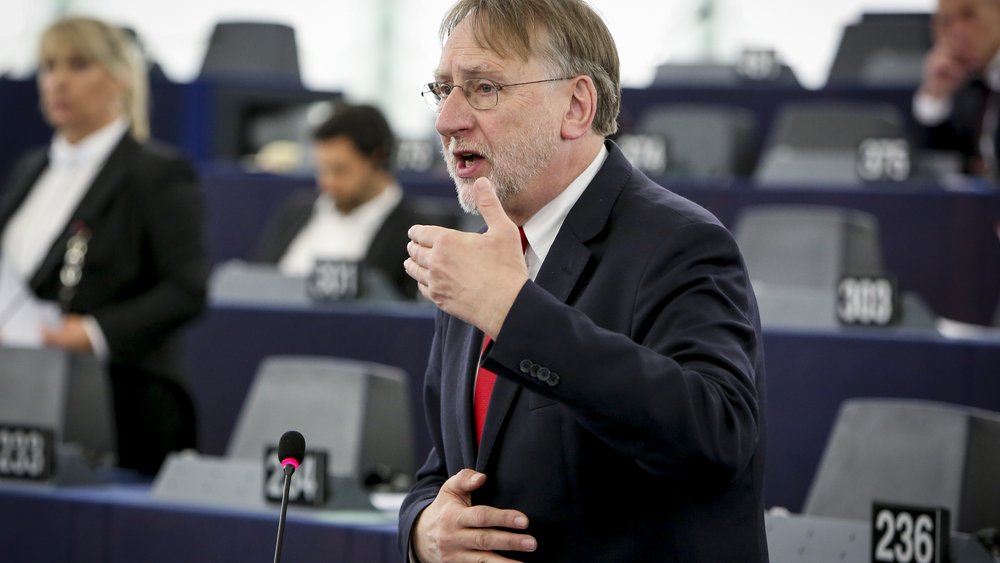
It is not just since the coronavirus pandemic that we have needed resolute cooperation across national borders to ensure fair, sustainable and rules-based global trade. But now more than ever, you would think. After all, the pandemic has clearly shown us the weaknesses of our current economic system: The international dependencies in the shortage of face masks, the disruption of global supply chains with months of consequences due to worldwide lockdowns, the dispute over patent rights for vaccines or the rapid spread of virus mutations due to global mobility are just a few examples. More than ever, the pandemic has made us realise how trade policy dependencies are linked to the management of global and local crises. However, our everyday lives are not only strongly characterised by trade policy issues during a pandemic - it also brings the existing problems to the fore once again.
It is therefore all the more regrettable that the 12th WTO Ministerial Conference in Geneva planned for 30 November to 3 December had to be cancelled - the meeting of the WTO's highest decision-making body has now been postponed for the time being due to the new mutation Omikron, of all things; a catch-up meeting may be held in March 2022. Inevitably, I had to ask myself whether we can afford to wait that long. After all, international cooperation and solidarity are urgently needed right now.
Last week, I spoke to Bernd Lange about the WTO situation and the current state of European and transatlantic trade policy. As a Member of the European Parliament, he has also been Chairman of INTA since 2014 and rapporteur for trade relations between the European Union (EU) and the USA. He has been campaigning for a fair and sustainable trade policy for many years.
Transatlantic trade cooperation
The USA is the EU's traditional trade policy partner - despite regular disputes over subsidies for aircraft manufacturers or the export of genetically modified foods. The old trade barriers erected by Donald Trump have not yet been completely removed, admits Bernd Lange. However, he asserts that the Biden administration is clearly committed to multilateralism, which would open up significantly more opportunities for cooperation. At the same time, however, the USA is currently strongly focussed on domestic policy. An observation that I am sure many share. I also immediately thought of Biden's promise of a "Foreign Policy for the Middle Class". Since foreign policy issues are not the top priority for the US government, Lange believes, the US is not fully committed to transatlantic cooperation within the WTO, despite its clear commitment to multilateral cooperation.
Bernd Lange is both sympathetic to the domestic political orientation of the USA, but also emphasises the urgency of transatlantic cooperation in trade. We agreed that the sheer size of the common market means that the already highly integrated economies of the EU and the USA are of central importance in the global economic system. Accordingly, Bernd Lange sees the recently launched Transatlantic Trade and Technology Council (TTC) as a central building block for the further development of the international rules-based trading system. Initially developed by two like-minded partners, the TTC is intended to become a platform for setting common standards that can ultimately be raised to the multilateral level of the WTO.
Universal standards instead of a global trade police force
However, the USA and the EU should not claim to be able to set standards for the rest of the world with the TTC. Lange therefore clearly argues that the interests of both civil society and the countries of the Global South should be taken into account when developing international standards. He shared my view that the EU and the USA should not be allowed to develop standards within the framework of the TTC that exclusively serve transatlantic interests. When asked about the EU's positioning between the ongoing (trade) policy confrontation between the USA and China, he would nevertheless like the EU to utilise its strength as a global economic power and also stand up for its own interests. To do this, the EU must sharpen the trade policy instruments in its toolbox, while remaining an open economy. (We have not discussed the extent to which this is a commitment to further trade cooperation with China and a rejection of the tougher US stance towards China) For Bernd Lange, the European Supply Chain Act is an important trade policy instrument. It obliges companies to protect basic human rights abroad as well and thus has political influence far beyond the borders of the EU. For Lange, it is clear that we are not the world's trade policy police and we do not want to export our world view. Instead, he calls for universal standards to be made the basis of the common trade policy order, both bilaterally and multilaterally at WTO level. Specifically, he mentions the core labour standards of the International Labour Organization (ILO), the UN environmental standards, the Paris Climate Agreement and the UN Sustainable Development Goals (SDGs).
Director-General Ngozi Okonjo-Iweala has the potential to modernise the WTO
With or without a ministerial conference, Bernd Lange's message to the WTO is clear: "No Time To Die!", in reference to a well-known James Bond film. What he wants to say is that the general question of success only plays a subordinate role for him at the moment. It is much more important to keep the process of multilateral trade co-operation alive than to adhere to strict criteria for success. He would like the WTO to send out signals and show that it is still the regulating authority for the world trade order. For him, important signals would be a stronger role for the WTO in trade policy in the health sector, the first steps towards reforming the WTO itself and the conclusion of the negotiations on the elimination of harmful fisheries subsidies, which have been ongoing for 20 years.
Even though the WTO has now had to cancel its first ministerial conference at short notice, Bernd Lange remains convinced that the new WTO Director-General Ngozi Okonjo-Iweala has the opportunity to become a "game changer". For him, it is clear that without her, failure would be inevitable. Even if I critically remarked that nobody could expect a "one-woman show" from her - after all, the WTO is and remains a consensus-based international organisation with 164 very different members. Bernd Lange emphasised in our conversation that she had already brought a new dynamic to the WTO. For example, it has succeeded in involving India more closely again, although the government there is very sceptical about many WTO initiatives. Okonjo-Iweala has succeeded in creating space for a new dialogue in the WTO. This dialogue can become the basis for a modernisation of multilateral processes. In favour of a resolutely cooperating WTO that guarantees rules-based, fair and sustainable world trade.

Elisabeth combines economic security and geoeconomics with issues of social inclusion and international cooperation. Her research focuses on EU-U.S. trade policy and the distributional effects of international economic policy.
She studied in Nuremberg, Berlin, and at Indiana University, and earned her Ph.D. in International Relations from the Free University of Berlin. Her professional career has taken her to the German Marshall Fund and to various research positions at the Europa-Kolleg Hamburg, the Bertelsmann Foundation in Washington, D.C., as well as at Princeton University and Georgetown University.
Elisabeth teaches International Relations and U.S. Foreign Economic Policy at HTW Berlin and the Free University of Berlin.
More