Many people share the feeling that the world around them is getting louder and louder. Where there used to be three or four positions publicly arguing for opinion leadership, there are now thousands. Disputes are everywhere - even if it's a dispute or a reckoning - and breaking news is everywhere. It is almost impossible to protect oneself from heated debates (whether conducted by oneself or as an onlooker). It is therefore surprising what a recent long-term study has found: Despite everything, people seem to be "slipping into a silence". Compared to 2005, the volume of speech has shrunk by a remarkable 28 per cent. This refers, mind you, to the spoken word. on average, 338 fewer words pass people's lips every day. The proportion of digital communication has been increasing rapidly since 2005. This explains the decline in direct dialogue, at least in part.
The fact that we still feel as if someone is constantly turning up the volume or as if we are permanently suffering from digital tinnitus does not say anything in general about the quality of online communication, but it does give us reason to listen more closely.
Less room for nuances
The law of the jungle often applies on the internet. The consequences can be seen in toxic exchanges in comment columns or in undifferentiated, sometimes insulting opinions that are spread without a social filter. The digital debate culture often does not come off well in discourse criticism: echo chambers reinforce populist positions, hatred and disinformation. The excessive use of social media can cause stress, loneliness and excessive demands. How social media, the decline in direct interaction and the disappearance of words exchanged personally between people affect society and democracy are some of the most pressing questions in many social sciences.
It should not be forgotten that the internet is also an important, sometimes even the only, form of social participation for many, that it can be an accelerator of democratisation and that news consumption has diversified thanks to easy accessibility online.
It goes without saying that respectful dialogue is also possible online and is no less valuable than any other form of interaction. Some encounters or even entire movements (Arab Spring, #MeToo) make it from the internet into the analogue world and unfold a great impact in the interplay of both spheres.
And yet the digital, and in particular the written dialogue with character limits, often lacks something crucial: the nuances. Precisely those nuances that enable an intensive human connection, understanding and change of perspective - in a way that can usually only arise in direct dialogue.
"This meeting could not have been an email"
At the same time, the digital world often lacks impartiality and randomness. When people discuss something online, the topic and tone of the debate are usually already set. A conversation at the bus stop about a late bus, on the other hand, can develop in an almost infinite number of directions. Small talk is much more difficult in an email than at the conference table. "This meeting could have been an email" is a common meme in some office chats. And yes - sometimes that may be true. But could every meeting really have been an email? After all, it's not just about the reactions to a specific issue. It's also about being seen as a person. And that is not only good for the psyche, but also for democracy. For some years now, studies have linked emotions such as loneliness and feelings of not being seen with anti-democratic tendencies. Reviving personal dialogue can therefore be one of the key levers in the struggle for cohesion in a democratic society.
Conquering spaces
But how can conversations succeed when we not only run out of words, but also opportunities to speak? It's not just the world of work that has gone digital; everyday life is also increasingly organised on smartphones. All that remains is leisure time, which most often takes people to places of encounter. But even these spaces are currently struggling. The so-called "third places" are increasingly disappearing: corner pubs and youth clubs are closing, cinemas and swimming pools are becoming more expensive, parks are turning into car parks. Social and democratic infrastructure is disappearing with them. Protecting such places should be a central political task in the interests of a diverse, open and strong democracy. Anyone who wants to do something about this should also work on conquering new spaces. In particular, those that have not previously invited dialogue as a matter of course.
These could be places, for example, that still have the reputation of primarily appealing to educated elites. Exhibitions and museums are a prime example of this. Many museums have been actively working for years to avoid being perceived as "hallowed halls" and have developed a new self-image. They no longer want to be repositories for things and knowledge, but a meeting place and discussion platform for everyone. Museums want to be conquered. Despite all efforts, the fear of contact is still there: in museums, people are still too often silent, their steps are cautious and their arms are folded. Or they are not visited at all.
The loud museum
The Long Night of Museums is one of the best annual opportunities for people in Hamburg to break with museum conventions and reservations. 53 exhibition venues will be taking part again in 2026. Last year, a good 24,000 people took part in the event. That's 24,000 opportunities to engage in dialogue with each other.
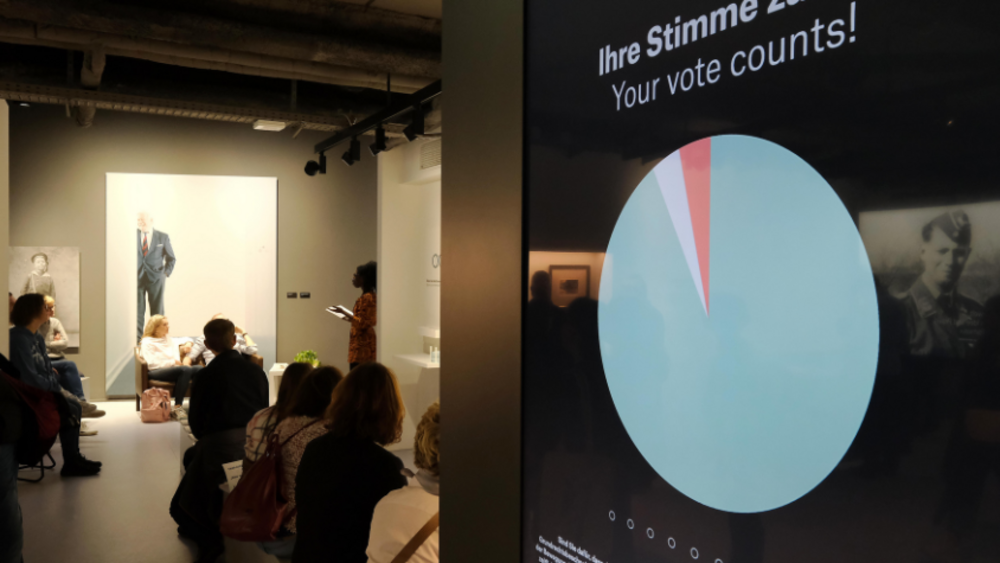
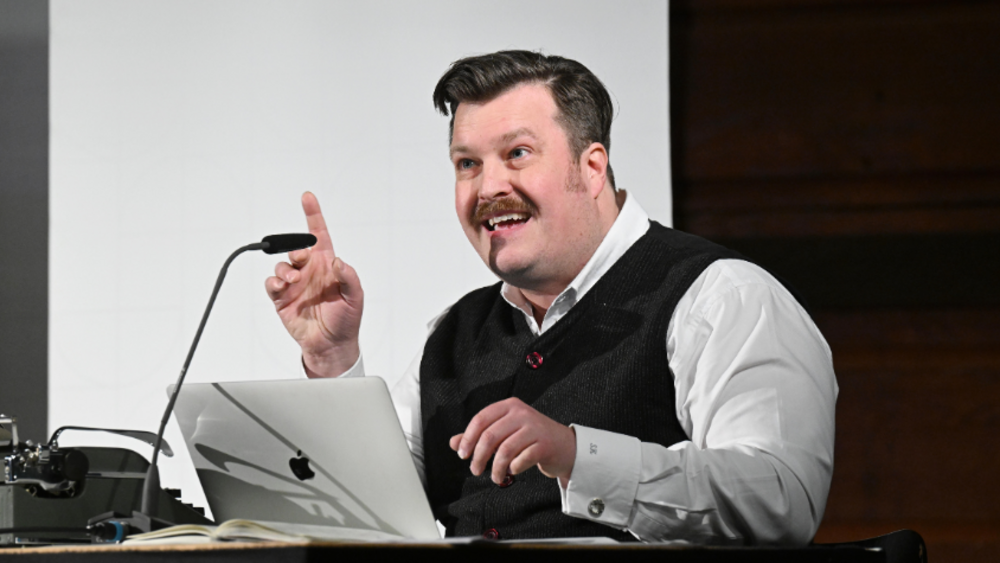
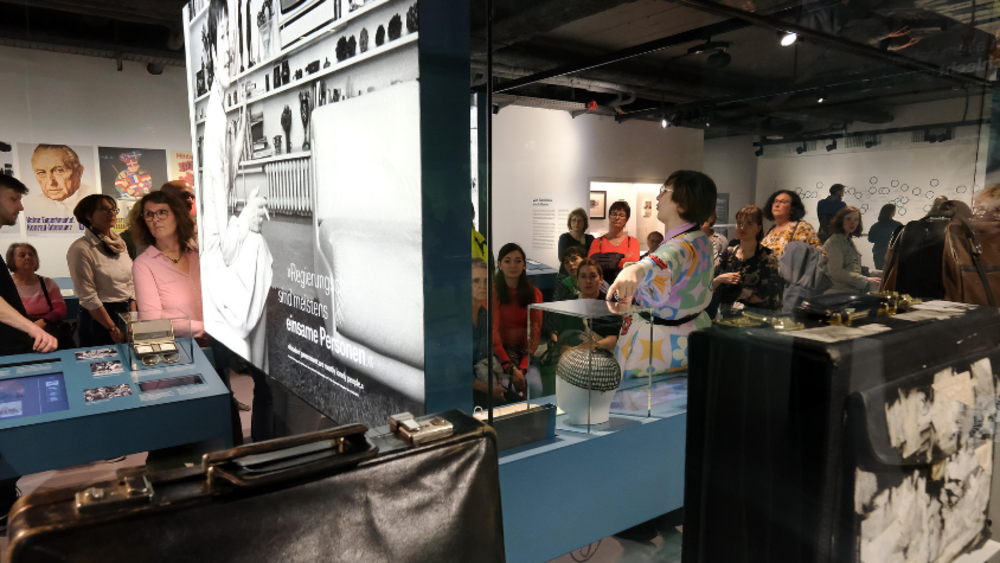
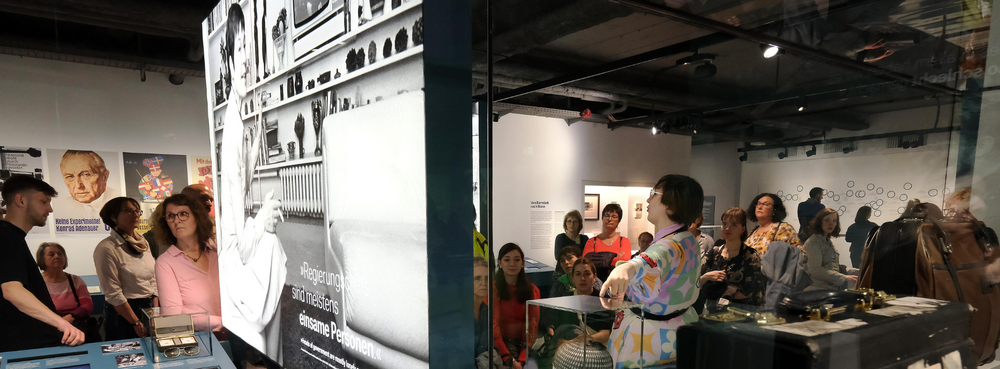
In our exhibition "Schmidt! Living democracy" you will encounter some of them. Exchange and debate were central elements of Helmut Schmidt's understanding of politics. We are building on this. That is why this year's Helmut Schmidt Forum is deliberately being held under the motto "Night Talks: Democracy in Dialogue": we are asking questions and creating spaces and occasions for discussion. Here you can argue and vote on political hot takes, drink coffee and talk straight about the issues that concern you. You can find out how Helmut Schmidt interacted with fellow travellers and leave messages for other guests. Nobody "slips" into silence here. You can find our entire programme here.
When was the last time you had a conversation with someone you didn't know? If you have to think, it's been too long. Get your 338 words back on 18 April. Maybe even a few more.