
On the soundtrack of history
02. Jul 2022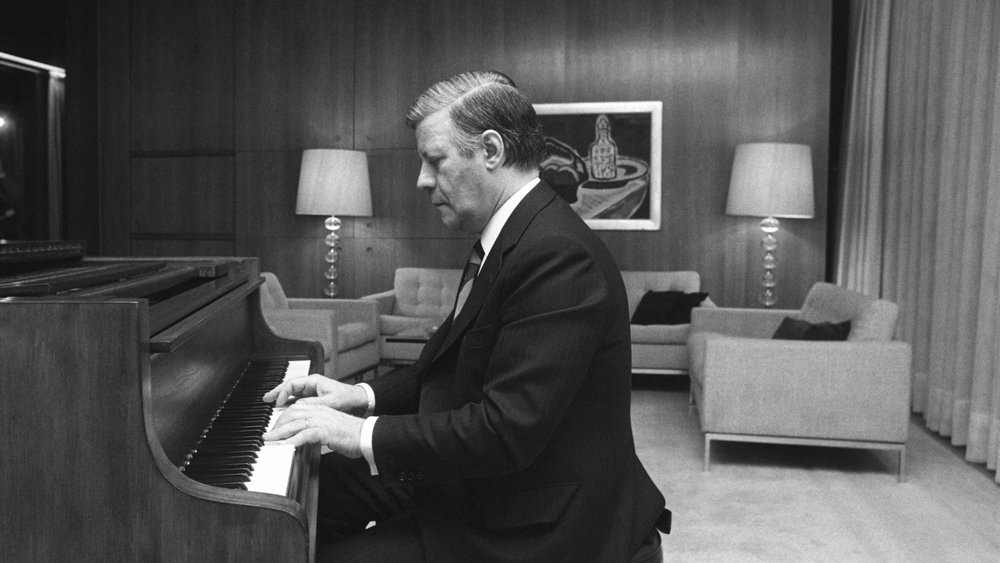
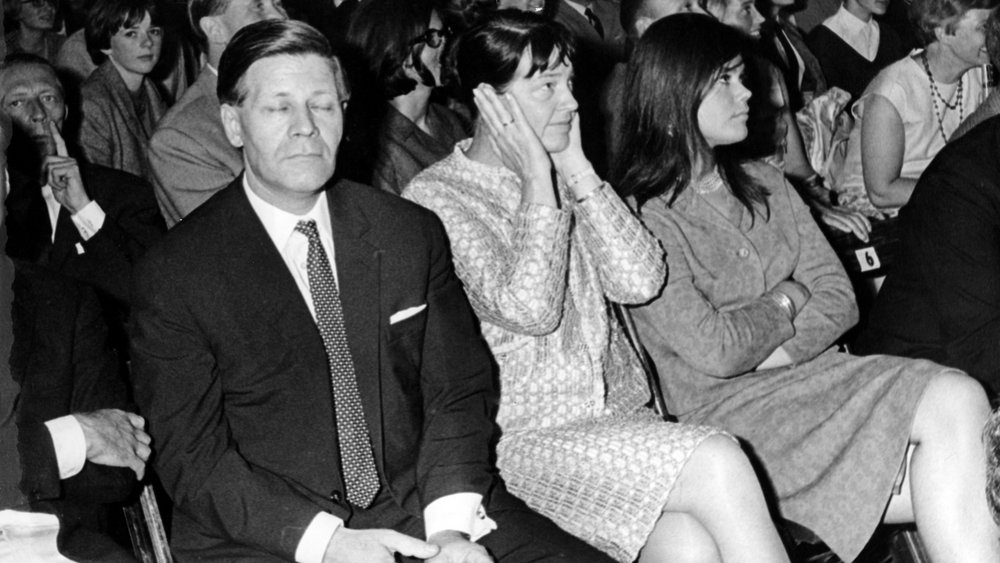
6.000 screaming fans and Helmut Schmidt in the centre of it all. It is 1966 and the whole of Hamburg is gripped by "Beatlemania". The beat band from Liverpool had already performed dozens of times at Hamburg's notorious Star Club in the early 1960s, making the post-war youth sweat. Now the musicians returned to the Hanseatic city as world stars for two concerts. Helmut Schmidt, who at the time had returned to federal politics from his position as Hamburg's Senator of the Interior, also attended the spectacle with his wife Loki and daughter Susanne. However, he does not seem to have been particularly moved by the performance: a photo shows Schmidt with his eyes closed and his facial expressions expressionless. Nevertheless, he did like the four mushroom heads, as he recounted in an interview decades later.
Hip-swinging instead of village music
For many in the audience at Hamburg's Ernst-Merck-Halle, however, the concert was about far more than just individual musical taste. It was a rebellion against the parents' generation, a detachment from the post-war years that were perceived as leaden, a look out into the world. Fittingly, the Star Club also courted its young audience with the promising slogan "The hardship has come to an end. The time of village music is over". This was aimed primarily at pop music and folk songs, the dominant musical genres of the early post-war period.
For large sections of the parents' generation, it was a refuge and a longingly dreamed-of ideal world, but for more and more young people it was unbearably staid. They increasingly orientated themselves towards trends from Great Britain and the USA, listened to rock'n'roll or danced the twist. In retrospect, the hip-swinging teenagers seem quite harmless compared to the youth movements that were still to come in West Germany, but with the freedoms they had fought for and their suddenly recognisable voice, they were also a foretaste of the '68 movement. This, in turn, was able to anchor itself in (West) German cultural memory with its very own soundscape: "Ho Chi Minh" chants, Jimi Hendrix guitar riffs and acoustic sounds form the soundtrack of these years for us today.
With an ear to the soundtrack of German history, it quickly becomes clear that music always has a political side alongside its artistic and commercial aspects. This applies to peace and protest songs as well as pop music, but also to every pop song or carnival hit.
A lifelong passion
The history of music and politics are often interwoven in very different ways. A look at Helmut Schmidt's life reveals some of these intersections. Although he was not always as directly involved in the epicentre of pop history as he was in the deafening screams during the Bravo Beatles lightning tour in 1966, at almost 97 years of age he was both a witness to and an actor in the major social movements and upheavals of the time, all of which came with their own sound. Schmidt remained suspicious of many things, such as the colourful and loud peace movement with its protest rallies, which were often accompanied by music, and he was also never able to make friends with rock music.
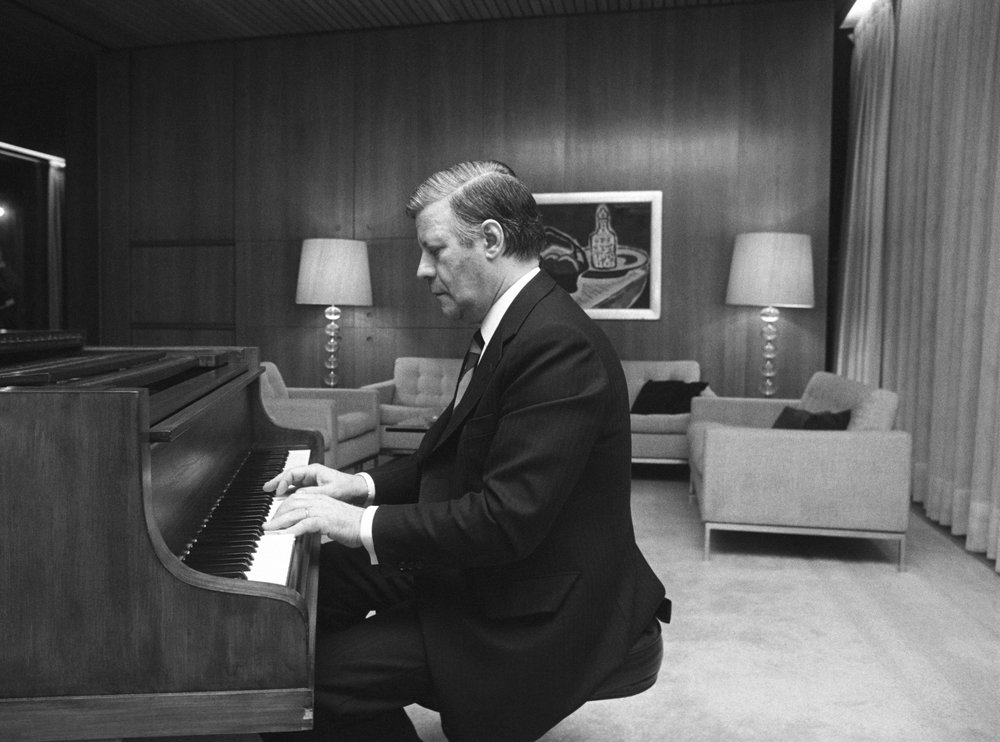
But his own biography shows the important role that music can play and the great emotional power it possesses. He learnt to play the piano as a child and retained this passion into old age. Even when he could barely hear, Schmidt regularly sat down at his piano to play. Even during the war, he sacrificed five marks a month from his meagre army pay for a rented piano. After the Second World War, he enjoyed the freedom to listen to American jazz, which had been ostracised during the Nazi era. In music, Schmidt once said, referring to his favourite composer Johann Sebastian Bach, his soul had recovered.
The crackle of the past
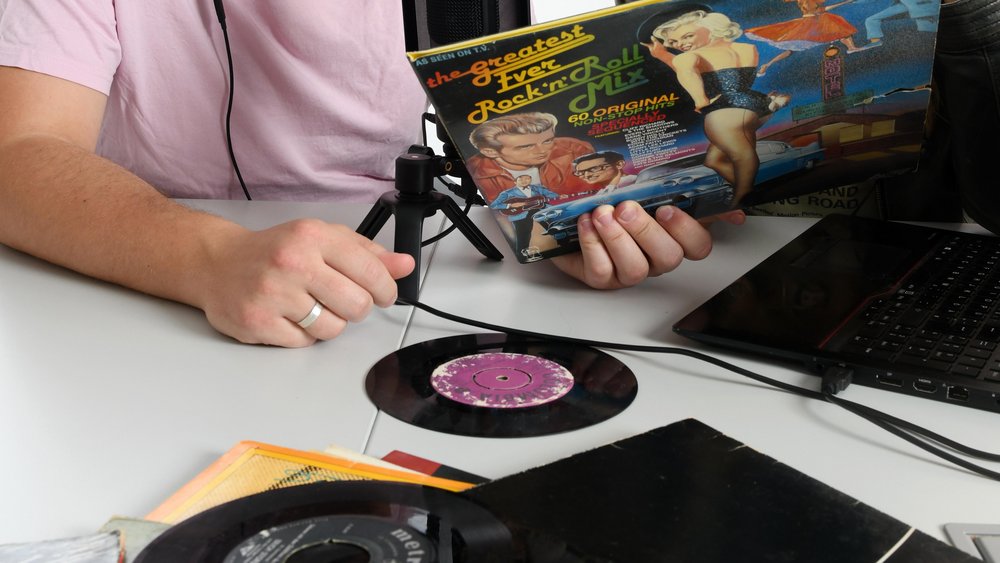
Reason enough for us to take a musical approach to the history of the Federal Republic. In the new podcast from the Bundeskanzler-Helmut-Schmidt-Stiftung, we put the needle on the crackling soundtrack of history. With open ears, we roam through the past and, time and again, through the long (musical) life of Helmut Schmidt. We explore the longings of the post-war period, travel with Rudi Schuricke to the Capri fishermen, wish for "sausages with salad" and ask: "Who is going to pay for this? Who has that much money?". We accompany Helmut Schmidt through his political career and observe the influence that the "economic miracle", the new social movements and the "Cold War" had on music, for example, and how music in turn shaped society. Music makes history denser, richer and definitely more entertaining. We cordially invite you to join us.
Click here for the podcast.

Merle Strunk, M.A., is a historian specialising in knowledge transfer in museums. She has been involved in exhibition and publication projects in various institutions, including the Museum der Arbeit. As a history mediator at the Bundeskanzler-Helmut-Schmidt-Stiftung, she works on building bridges between historical events and the present. She also works on questions of visual and public history.
More
Hendrik Heetlage is a historian and was a research assistant in the “Global Markets and Social Justice” programme of the Bundeskanzler-Helmut-Schmidt-Stiftung until March 2023. He specialises in (German) contemporary history and the history of modern China. In addition to historical exhibition projects, he is involved in history and history communication in the digital space.
More