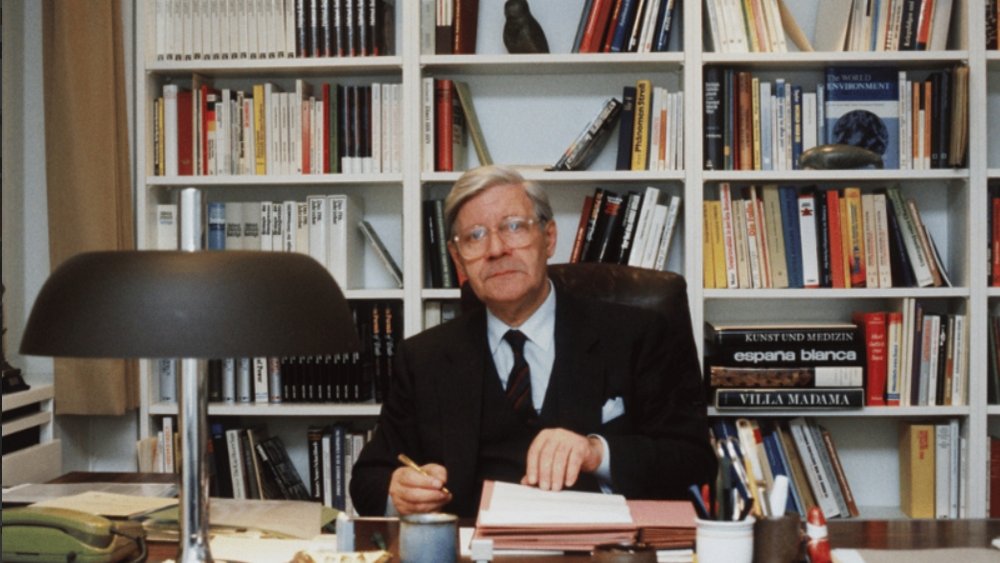
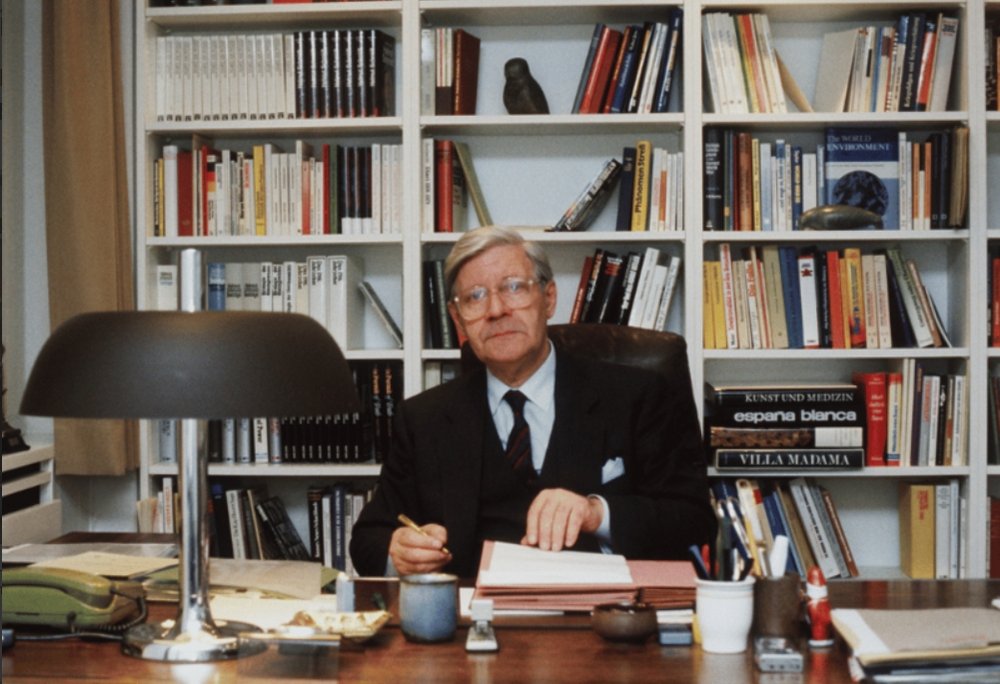
650 folders with black melange covers are packed tightly together on 60 metres of massive archive shelves. They contain tens of thousands of letters that Helmut Schmidt wrote and received throughout his life. The correspondence from the years 1953 to 1986 is a particular focus: it marks Schmidt's time as a member of the German Bundestag and provides new insights into the history of the Federal Republic. It is now being systematically catalogued for the first time in the Helmut Schmidt Archive.
Letters of extraordinary value
In view of Helmut Schmidt's political significance and his extensive work, his letters are of extraordinary social and historical value. In these years alone, Schmidt exchanged ideas with more than 2,000 people from the fields of politics, business, culture and religion. In addition to extraordinary individual pieces such as the letters from Pope Paul VI or King Juan Carlos, there are correspondence with high-ranking politicians, SPD comrades, friends and advisors that spanned decades.
One example of this is the correspondence between Helmut Schmidt and Conrad Ahlers, which began more than 60 years ago: As a critical journalist, Ahlers was arrested on suspicion of treason in the course of the “Spiegel affair” – one of the biggest media scandals in German post-war history. In his letter of 22 November 1962, Schmidt, who as Hamburg's Senator of the Interior was himself under suspicion, assured Ahlers, who was in prison, that he did not doubt his integrity for a minute.
The correspondence, which began with the affair and lasted almost two decades, impressively documents Schmidt's fundamental convictions. It also illustrates the events that directly resulted from the affair. In the same year, Schmidt successfully campaigned for a new Hamburg press law, which aimed to carefully balance the rights and obligations of the press towards citizens and the state.
This is the extraordinary value of these testimonies to history: whether handwritten or typewritten, private or official correspondence, a comprehensive manuscript or a short note: letters have a variety of forms and functions and provide valuable insights into history and its background. Comprehensive correspondence collections, such as Schmidt's, impressively document the life and work of people in contemporary history and enable the reconstruction of global networks.
“History affects every citizen”
“History concerns every citizen”, Helmut Schmidt warned in his speech at the 1978 Historians' Day, recognising that history not only needs to be mastered, but that future history also needs to be prepared for future generations. He himself made a decisive contribution by setting up a comprehensive private archive - today's Helmut Schmidt Archive in Hamburg-Langenhorn. Based on his conviction, Schmidt granted researchers and academics access to his archive during his lifetime and ordered the opening of his estate. On this basis, the letter collection is being intensively analysed in several sub-projects. The content is being recorded, digitised and made available for analysis in accordance with the applicable legal provisions. However, due to the processing of the letter collection, it will only be available to archive users to a very limited extent until 2025.