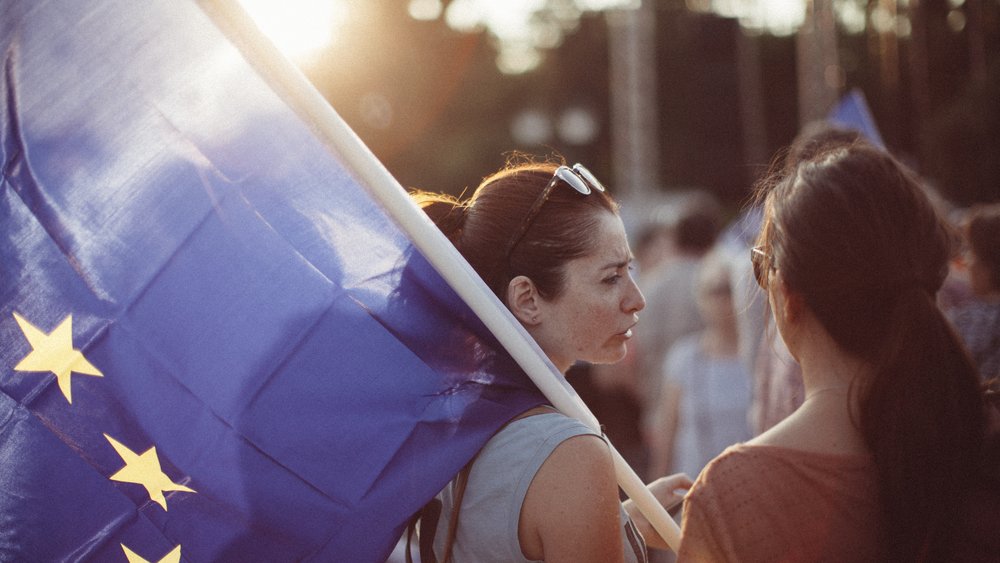
Less than ten years ago, on 10 December 2012, the EU was awarded the Nobel Peace Prize by the Nobel Committee in Oslo for its achievements in preserving peace and freedom in Europe. Almost exactly a year earlier, Helmut Schmidt called for commitment to the European project in his last speech at an SPD federal party conference on 4 December 2011. In particular, he emphasised the historical achievements of the unification process for peace in Europe: “If most of Europe today enjoys human rights and peace, then we could not have imagined this in 1918, 1933 or 1945. Let us therefore work and fight to ensure that the historically unique EU emerges from its current weakness with stability and self-confidence!”
Today, it seems that not much remains of the idea of the EU as a “peace project” on the continent or even as a “peace power” in the world. The list of current contradictions in this idea is long. It is a “crisis of many crises”, as political scientist Andreas Grimmel describes it in his book “The New European Union”, which strike at the very heart of the peace project.
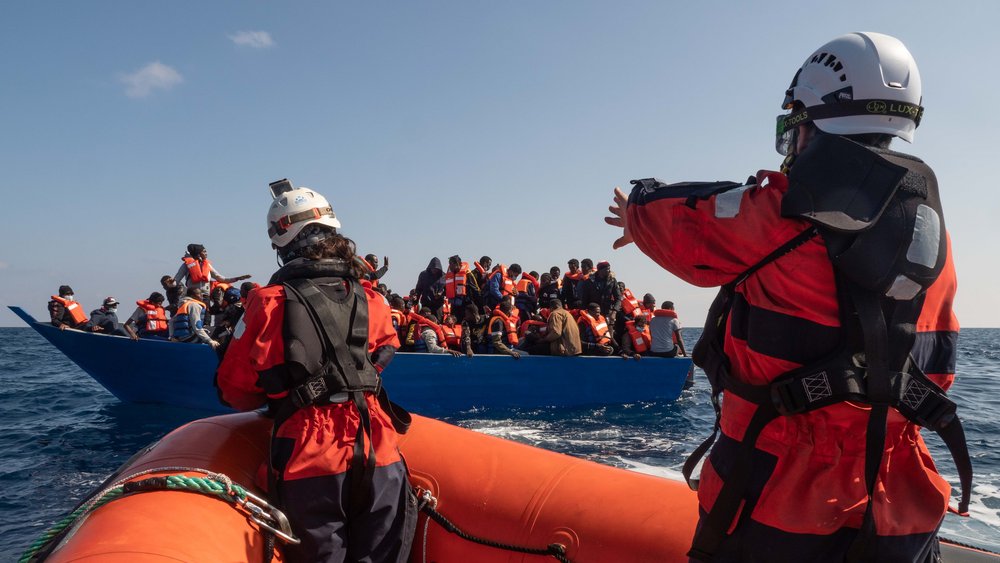
The EU peace project is failing every day in the Mediterranean. According to the United Nations, more than 20,000 people seeking protection have drowned on their way to Europe since 2014. As recently as the end of April 2021, three rubber dinghies ran aground off the Libyan coast: 130 refugees died. In camps, such as on the Greek island of Lesbos, refugees live in inhumane conditions. At the EU’s external border, they are subjected to illegal “pushbacks”, which are intended to send them back to the countries they fled from, sometimes by force and without a completed asylum procedure. The EU border protection agency Frontex has been criticised for this for months.
The annual reports of the world’s largest democracy research organisations also show a global trend towards autocracy, which also affects Europe. The organisation itself describes Hungary’s fall in Freedom House’s democracy index as “unprecedented”. The Varieties of Democracy Institute also believes that Hungary can no longer be described as a democracy in view of the attacks on academic freedom or the independence of the judiciary. These developments are compounded by restrictions on the fundamental rights of population groups. In December 2020, for example, Hungary’s parliament voted in favour of a constitutional reform under which only heterosexual couples are recognised as parents. In Poland, an almost complete ban on abortion has been in force since January 2021. These are also issues that affect the core of the European peace project, as they are about who is allowed to live in peace and freedom in Europe.
And then the EU’s foreign policy role raises questions about the model of a global peace power. The “World Peace Index” from the Australian Institute for Economics and Peace shows that the state of peace in the world deteriorated for the ninth time in the past twelve years in 2020. Although the number of war deaths worldwide is decreasing, war violence is increasing in countries where the EU is particularly active in implementing conflict resolution measures. These include Afghanistan, Mali and Niger. Malian human rights activist Drissa Traoré recently formulated the dilemma particularly clearly in the French newspaper Le Monde by pointing out that more civilians were killed in his country in 2020 by Malian armed forces trained as part of the multinational EU training mission than by Islamist militias.
Putting the self-image of the “peace project” to the test
Is our perception that Europe is failing as a peace project also due to the fact that we cultivate an exaggerated self-image of the visions of peace in the European unification process? Kiran Patel, Professor of European History at Ludwig-Maximilians-Universität München and this year’s first Scholar-in-Residence of the Bundeskanzler-Helmut-Schmidt-Stiftung and the Europa-Kolleg Hamburg, argues this in his book “Project Europe: A Critical History”.
One example is the handling of Europe Day itself. The day goes back to the date of the Schuman Declaration on the founding of the European Coal and Steel Community on 9 May 1950, in which the then French Foreign Minister Robert Schuman set out a vision for the future of cooperation in Europe. According to the famous wording of the declaration, the pooling of coal and steel production, which was so important for the defence industry, was intended to make another war between Germany and France “not only unthinkable, but materially impossible”. Patel points out, however, that peace was not the sole motive for action on the part of the actors involved; and that European unification in its early days benefited more from peace as a basic condition than it characterised it itself. One might add that France was waging a bloody colonial war in Indochina at the time of the declaration, in which it is estimated that hundreds of thousands of civilians lost their lives. That doesn’t have much to do with a peace project.
The wars in Yugoslavia are another example of the EU’s exaggerated hopes for peace. in 1991, the then President of the Council and Luxembourg Foreign Minister Jacques Poos commented on the violence: “This is Europe’s hour.” What he meant was that the Community should take responsibility for conflict resolution due to its geographical proximity and identity as an alliance of values. In the course of the conflicts in Slovenia, Croatia and Bosnia, however, it became clear that it was not up to this challenge: “Europe” was primarily visible through the efforts of the member states to end these conflicts. The USA and NATO played a greater role.
Why it is worth taking a long-term look at the European peace project
However, a historical look at the EU and its predecessor institutions also helps to categorise current crisis narratives about the idea of the “peace project” and not to underestimate the contribution of the unification process to peace in Europe, despite all the contradictions.
In her recently published book “Conquering Peace: From the Enlightenment to the European Union”, historian Stella Ghervas, for example, tells the story of European history not in terms of its many wars, but along the continuities of the idea of peacemaking that have characterised efforts towards a united Europe since the early 18th century. And in “Project Europe”, Kiran Patel analyses how the unification process after 1945 contributed to peace – through a culture of compromise and trust-building between political elites who regularly gathered around a table to negotiate. This importance of personal contacts can also be found in Helmut Schmidt’s political biography. Schmidt regularly received heads of state and government from neighbouring European countries at his home in Hamburg-Langenhorn.
In our short film “Peace Project Europe – in the centre of Hamburg!” we show which rooms and objects in the Schmidts’ home are particularly closely associated with the idea of Europe as a “peace project”.