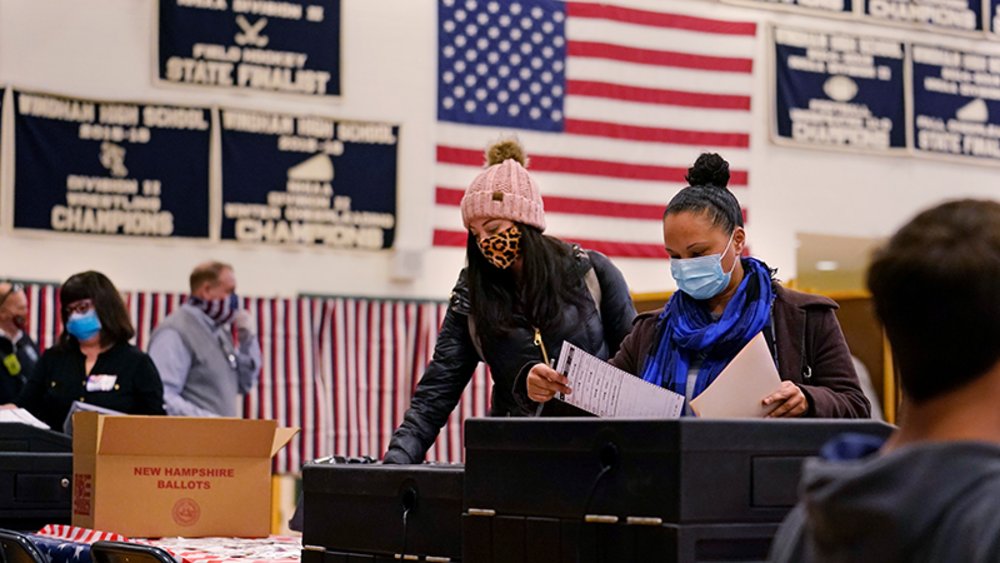
For years, people have been discussing whether democracy in the USA is crumbling. Some see it in danger: in 2017, Donald Trump's first year in office, the country was downgraded from a full democracy to a flawed democracy in The Economist magazine's democracy index. The events on 6 January 2021, when Trump supporters stormed the parliament building in Washington D.C. to prevent the certification of the election results, can be interpreted from this perspective as the preliminary peak of these developments. Others constantly emphasise the stability of the so-called "oldest democracy in the world", which has proven to be impressively resilient even at critical moments over the past four years.
In the USA, the long tradition of the rule of law and the robust separation of powers is often emphasised.
In order to examine how stable US democracy really is, it is worth asking what criteria actually constitute consolidated democracies. According to an established definition by political scientists Juan Linz and Alfred Stepan, democracies are consolidated when democratic decision-making at three levels of society is the only acceptable way forward. Firstly, it must be ensured under constitutional law that political conflicts are resolved exclusively within the framework of democratic institutions and rules. These can be, for example, free and equal elections or constitutionally guaranteed demonstration rights. Secondly, democracy must be anchored in the behaviour of all relevant political actors - such as parties - in such a way that no actor wants to abolish it. And thirdly, the majority of citizens must have internalised that democracy is the only right way to govern a country, even in times of crisis.
The argument in favour of the stability of US democracy is currently being formulated primarily on the first, institutional level. The long tradition of the rule of law and the robust separation of powers in the USA is often emphasised. The historian Heinrich August Winkler, for example, recently said on Deutschlandfunk radio that he is counting on "American constitutional patriotism"; the journalist Matthias Naß wrote in DIE ZEIT that the "institutions will survive"; and the Vice President of the German Marshall Fund Thomas Kleine-Brockhoff reflected on Deutsche Welle that Western democracies such as the USA are much more robust than "fatalists" believe.
These comments also reflect the broad realisation in political science that democracies survive for two main reasons. Firstly, because their institutions (for example, constitutional courts) can act as robust veto players and defenders of democratic principles. Secondly, because changes of power through free and equal elections also allow them to correct flaws in the system. At the same time, however, the question arises for the USA as to how much the "victory of the institutions" over Trump - for example when he attempted to challenge the election result in the courts after his defeat in November 2020 without solid evidence - was also simply characterised by luck, as journalist Anna Sauerbrey emphasised in the Tagesspiegel.
How stable is the state of democracy in the USA?
The question of the stability of US democracy also arises at the second level of consolidated democracies according to Linz and Stepan - the behaviour of relevant political actors. On the one hand, this is the case due to the significant strengthening of far-right groups, which planned the kidnapping of Michigan Governor Gretchen Whitmer in October 2020, for example, and which are now one of the greatest terrorist threats to US security authorities.
On the other hand, this question is also justified in view of developments in the US party system. Before the 2020 election, experts such as philosopher Susan Neiman cited the increasing drifting apart of the Democratic and Republican parties as one of the greatest challenges facing US democracy. However, debates about the growing political divide ignore the real problem, namely that only one party still follows the principles of representative democracy at all. The political scientist Adam Przeworski once defined democracies as systems "in which parties lose elections". The behaviour of 147 members of the Republican Party, who objected to the election result on 6 January 2021 in order to overrule the will of the voters, is incompatible with this. The Varieties of Democracy Institute at the University of Gothenburg therefore considers the Republican Party to be closer to autocratic parties such as the Turkish AKP than to "classic" conservative parties in established democracies in an international comparison. And historian and journalist Annika Brockschmidt emphasises in DIE ZEIT that hostility towards democracy has not only recently been practised by parts of the Republican Party, as strategies such as preventing people from voting (especially minorities who traditionally vote for the Democratic Party) or redrawing constituency boundaries to their own advantage have long been part of the party's repertoire.
At the third level of consolidated democracies, Linz and Stepan emphasise the importance of citizens' positive attitudes towards democracy. Political scientists Daniel Ziblatt and Steven Levitsky also write in their 2018 book "How Democracies Die" that institutions alone cannot save democracies if they do not have the support of the population. In the USA, surveys conducted by the PEW Opinion Research Centre show that the majority of citizens believe that democracy is generally the best form of government. However, almost 60 per cent of those surveyed are also dissatisfied with the way it works in the USA. The problem becomes even clearer in a recent study by researchers Matthew Graham and Milan Svolik in the journal American Political Science Review. They do not ask whether citizens generally consider democracy to be a good thing, but whether voting decisions reveal this attitude. Their findings: only a very small proportion - 3.5 per cent - of US citizens prioritise democratic principles in their voting decisions or even punish violations of such principles by political candidates.
Is democracy in the USA damaged in the long term?
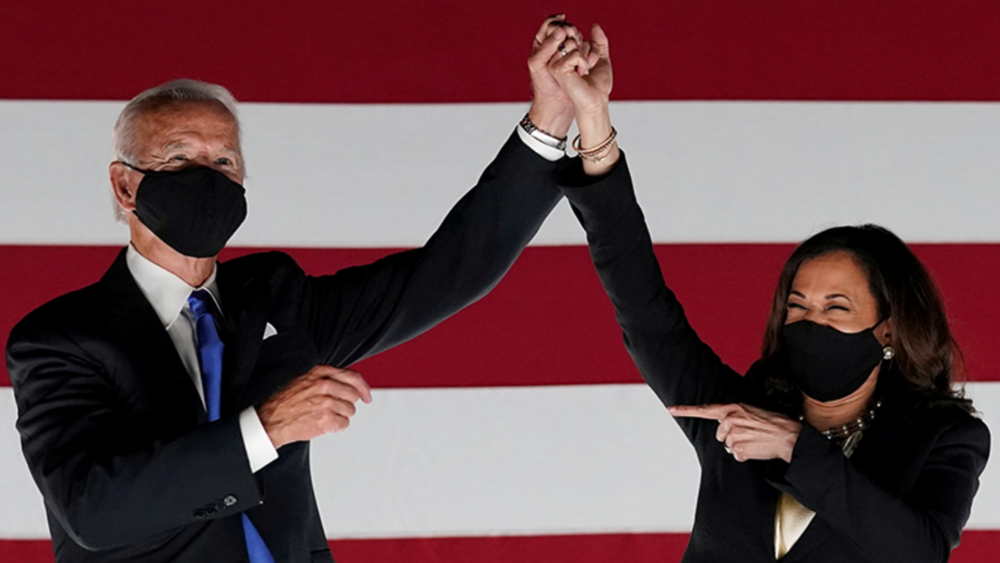
To summarise, the answer to the question of the stability of US democracy at all three levels is at least divided. Ziblatt and Levitsky, who were criticised for being pessimistic after the publication of their book, recently told the New York Times: "We weren't pessimistic enough." Even though Joe Biden will be sworn in as president and Kamala Harris as vice president on 20 January, it is no exaggeration to say that democracy in the US has been damaged in the long term. This is because anti-democratic institutions and strategies such as vote suppression will remain in place, as will a party that to a large extent no longer feels committed to democracy. The attacks against the election result in recent weeks also have the potential to undermine citizens' trust in the electoral system in the long term, create the powerful myth of a stolen election among supporters of Donald Trump and damage the international image of the USA. Not least for this reason, author Malka Older even concludes in Foreign Policy that democracy in the USA has at best been given a "reprieve".