“Remaking globalisation!” Reshaping globalisation together
We are currently entering a new phase of globalisation. In my opinion, this is not a bad thing in itself. Indeed, what we currently understand by globalisation urgently needs to be revised if it is to pave the way for a green and just transformation. Unfortunately, however, such a will to reform is not evident in the current debates surrounding this colourful term. Neither approaches that protect the climate nor ways to combat the inequalities caused by the current form of globalisation play a serious role. Instead, there is talk of the “end of globalisation” – as if it were not possible to reshape it.
Why a reorganisation is needed
The debate about the end of globalisation only began when the Global North started to experience its downsides first-hand. However, it is important to emphasise that many parts of the world have long been aware of these negative aspects of globalisation. The fact that globalisation produces both winners and losers is by no means a new realisation.
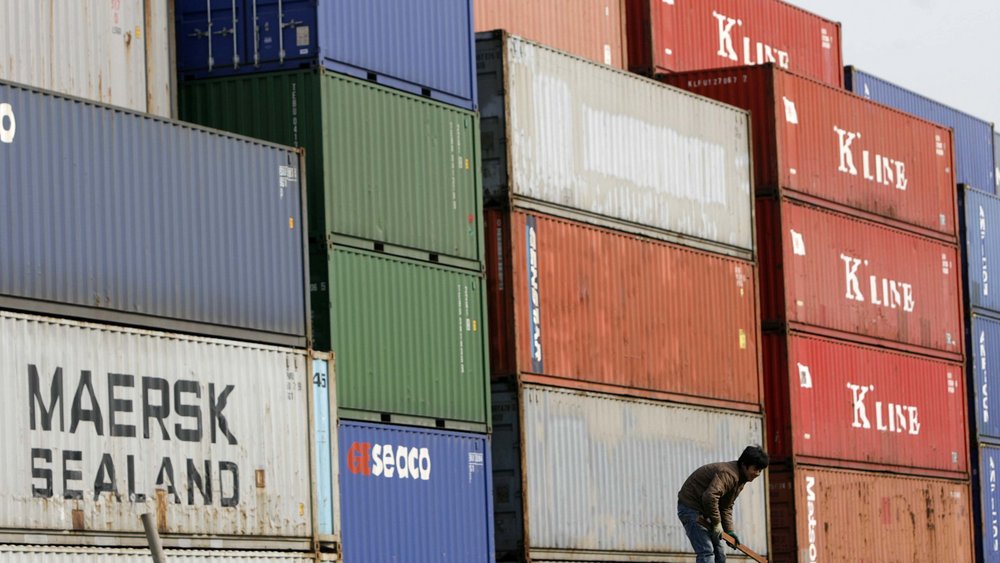
Today, industrialised countries fear the consequences of globalisation – and the economic interdependence it has created. Perhaps the most important buzzword we have heard in this debate in recent years is that of “weaponised interdependence”: states such as China and Russia exploit the “West’s” economic dependence on their resources to gain strategic and security advantages.
This revival of geo-economic tactics – the use of economic means to achieve security objectives – is based on a whole series of events that have shaken the global order and globalisation as we knew it. The economic fallout from the 2008 financial crisis posed major challenges for the US and the EU. in 2016, Brexit and the election of Donald Trump shook both sides of the Atlantic. Quite a few voters saw globalisation, together with technological change and deindustrialisation, as a cause of economic stagnation or even their social decline. Distrust in democracy, economic nationalism and protectionism became increasingly widespread.
As a result of advancing globalisation, many people felt unheard. While companies usually have easy and, above all, influential access to the government (for example through lobbying), civil society representatives receive less attention and have to fight for influence. This is particularly problematic as issues that have a direct impact on individuals are given a much lower place on the agenda. Examples include environmental protection and labour and human rights regulations.
Trump’s trade war against China and allies such as the European Union, coupled with years of disruptions to global supply chains due to the COVID-19 pandemic, increasing uncertainties in production due to climate change, Russia’s war against Ukraine and the subsequent energy crisis, have shaken globalisation even further. Globalisation is thus progressing along the path of its own fragmentation, often along nationalist and ideological lines.
“Remaking Globalisation!” – our call for the Helmut Schmidt Lecture 2023
Globalisation must therefore be rethought and reshaped. But how? With the slogan “Remaking Globalisation!”, we are approaching this question together with many other actors at the Helmut Schmidt Lecture 2023 and in the third issue of our BKHS Magazine.
Our understanding of globalisation is broad and encompasses the pronounced interconnectedness and interdependence of people and countries around the world. So when we talk about globalisation, we are talking about much more than just international trade. Globalisation refers to a process in which the interdependencies between the world economy, cultures and populations are increasing to such an extent that not only goods and services, but also social and cultural influences are converging worldwide. We include in our interpretation all kinds of processes: from economic, social, cultural and technological to institutional interdependencies of ideas, knowledge, information, goods and services that have spread around the world.
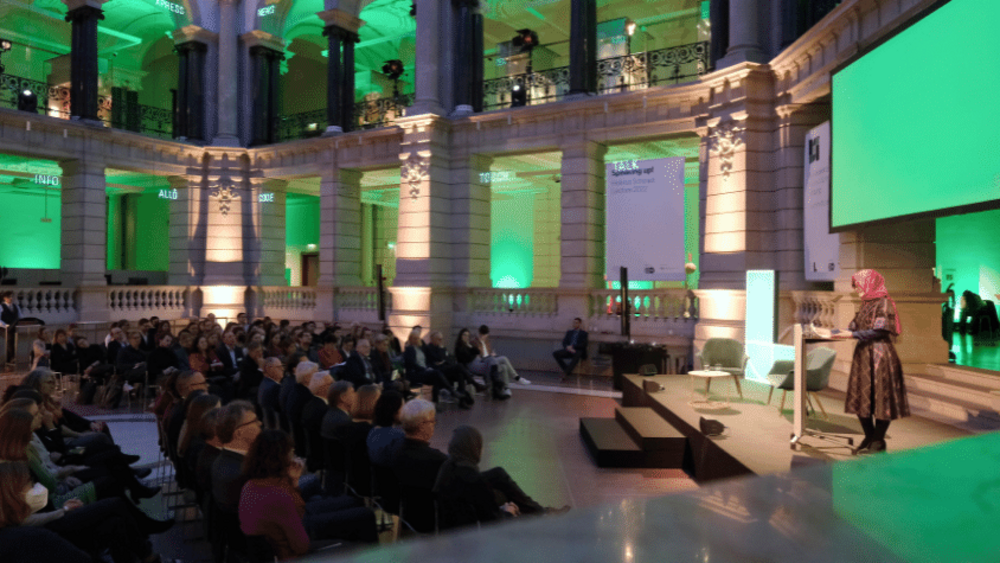
Together with our lecture speaker, the authors of our BKHS Magazine and with you, we would therefore like to discuss and develop future perspectives at the Helmut Schmidt Lecture 2023 on 4 December 2023. We want to exchange concrete and multifaceted ideas with each other to reshape globalisation and thus make it better.
A new form of globalisation
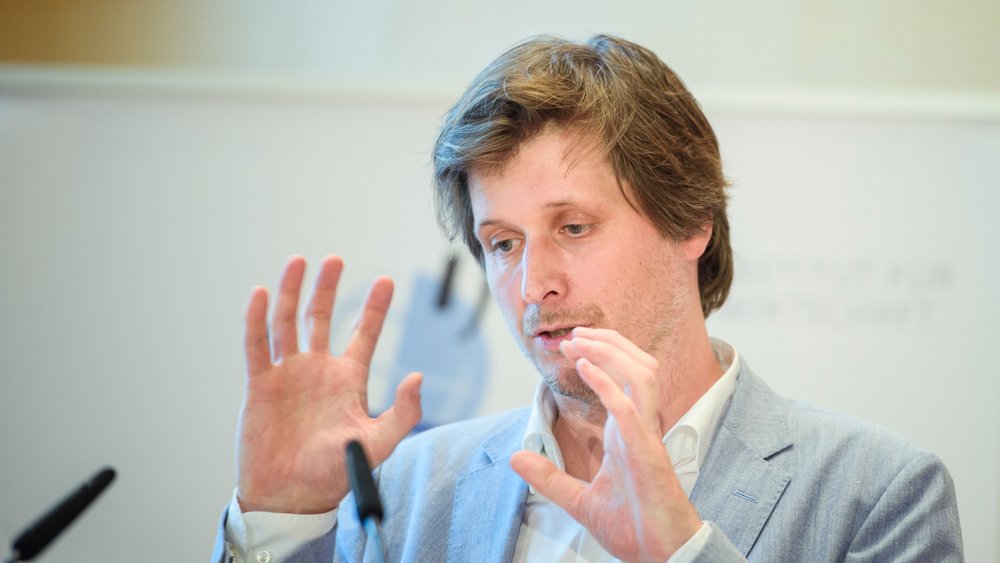
We are delighted to have secured a speaker for our Helmut Schmidt Lecture 2023 who is a prominent advocate of reshaping globalisation. Professor Dr Moritz Schularick is President of the Kiel Institute for the World Economy (IfW) and Professor of Economics at Sciences Po (Paris). He is an internationally renowned economist whose research has had an impact on politics. Schularick studies the past and future of globalisation. He is actively engaged in academic, public and political discourses to promote economic knowledge and combat global inequalities.
He emphasises that the focus of globalisation is no longer on the greatest possible prosperity from global value chains. Rather, the focus is shifting in a changing world. for him, “Remaking Globalisation!” therefore means adapting to a different form of globalisation that is changing in line with new geopolitical realities.
In view of the stronger focus on security policy, including economic activities, Schularick believes that in future we will have to pay more attention to two dynamics of international business that we have often ignored in the past: Firstly, to what extent does trade with other countries make us dependent on them and vulnerable; and secondly, to what extent does trade with countries that we do not consider close friends make them economically strong – and therefore potentially threaten our own security.
A new global economic order is emerging in which the financial benefits of openness, integration and trade are set against the dangers of exploitable economic dependencies. Moritz Schularick is therefore looking for answers as to how we can limit the damage to our own economies in the event of global shocks.
“Remaking Globalisation!” also far beyond trade policy
On the evening of the Helmut Schmidt Lecture, we will also be presenting the BKHS Magazine on “Remaking Globalisation!”. For the third edition of the BKHS Magazine, we as editors – the three BKHS programme directors Dr Julia Strasheim, Dr Eva Krick and myself – have invited a diverse group of academics, politicians, activists, educators and artists to contribute their wide-ranging expertise and very different experiences in relation to the various aspects of globalisation.
In various formats, the authors provide us with food for thought and concrete recommendations for action. Taken together, they show us how multi-layered globalisation is – and how many actors there are who can shape this complex process. We believe that by bringing together different perspectives and approaches, the BKHS Magazine can promote the transformation towards sustainable and just globalisation. And we hope to come one step closer to this goal by sharing ideas with you this evening.
Join us on the evening of the Helmut Schmidt Lecture 2023 and discuss with us how we can reshape globalisation together!