
Weapons to prevent war?
27. Mar 2022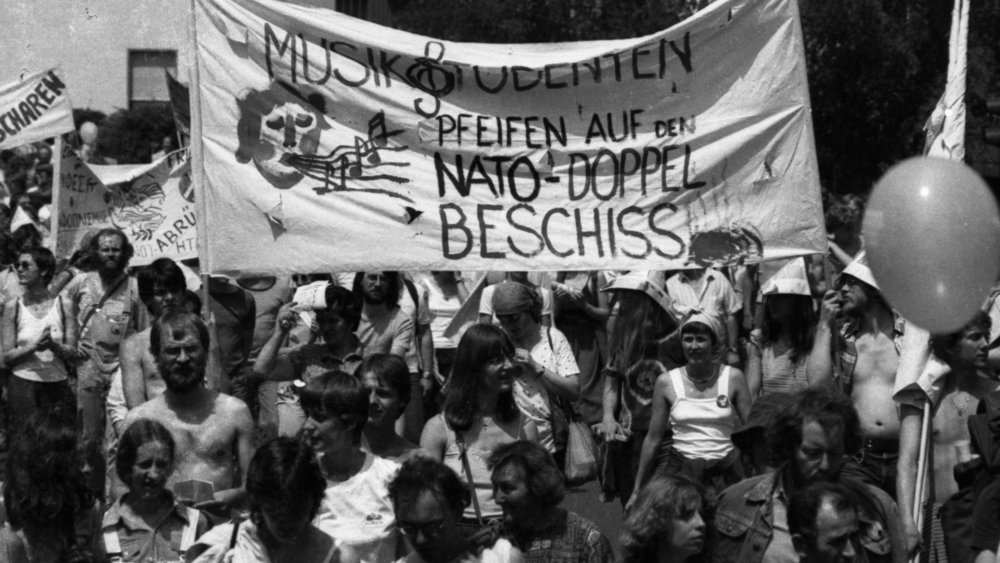
NATO's reaction to the Russian war of aggression against Ukraine was the centre of attention this week at its special summit in Brussels. Unsurprisingly, the alliance partners decided to strengthen their eastern flank with four additional combat units in Romania, Bulgaria, Hungary and Slovakia. Following the meeting, NATO Secretary General Jens Stoltenberg described the war in Ukraine as the greatest security threat in a generation. Many are currently reminded of the deterrence logic of the Cold War. But can direct parallels be drawn?
The NATO Dual-Track Decision and the strategy of balance
During the Cold War bloc confrontation, Helmut Schmidt brought about the NATO Dual-Track Decision. Published in 1979, the document provided for the stationing of new medium-range nuclear weapons and cruise missiles in Western Europe if the USA and the Soviet Union were unable to agree on effective arms control. With their decision, the foreign and defence ministers of the transatlantic defence alliance wanted to maintain the credibility of their deterrence strategy. From the point of view of the peace movement, which accused Chancellor Schmidt of accepting a "nuclear holocaust", this was a dangerous gamble with fire. In fact, the disarmament negotiations between the two "superpowers" were initially unsuccessful. In the end, however, the arms race in Europe was stopped.
Even as a young member of the Bundestag, Helmut Schmidt was in favour of a strategy of balance between the USA and the USSR. The control of nuclear armaments and the endeavour to balance them between the world powers were the focus of his book "Defence or Retaliation", published in 1961, with which he made his independent security policy concept known to a wider public. Schmidt clearly rejected the NATO strategy of nuclear retaliation against the Soviet Union, which was still valid at the time, as it would have turned both parts of Germany into a nuclear battlefield in an emergency.
Schmidt unreservedly supported the New Ostpolitik, which was prepared by Willy Brandt as Foreign Minister during the Grand Coalition (1966-1969) and subsequently implemented as Federal Chancellor, as the most important foreign policy project of the social-liberal government in Bonn. Despite all the efforts at détente and the Ostvertrag policy with the leading Warsaw Pact states, he nevertheless adhered to the need for a stable nuclear deterrent.
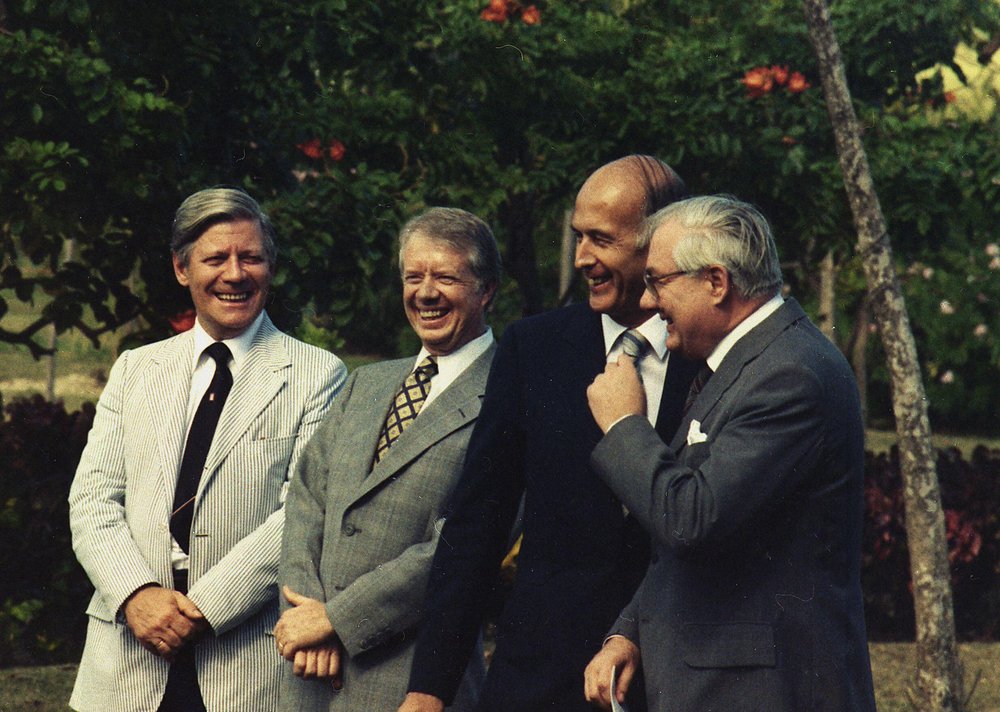
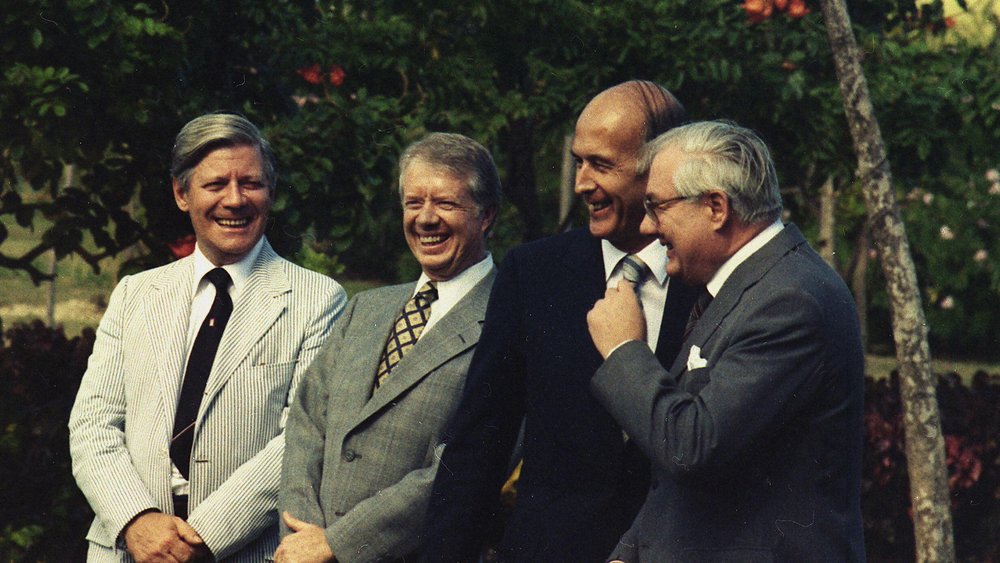
In January 1979, the heads of government of the USA, Great Britain, France and the Federal Republic of Germany then prepared the NATO Double-Track Decision on the French Antilles island of Guadeloupe. Helmut Schmidt - now himself Chancellor - gained additional international prestige through his participation in this unofficial Western board of directors, which otherwise only included the victorious powers of the Second World War. Although French President Valéry Giscard d'Estaing had issued the invitation to the security summit, the impetus for it came from the Federal Chancellor. US President Jimmy Carter and British Prime Minister James Callaghan represented the other two states.
In a speech to the International Institute for Strategic Studies in London in October 1977 - just ten days after the assassination of Hanns Martin Schleyer - Schmidt had already pointed out the lack of parity in tactical nuclear medium-range weapons in view of the Cold War. If the Soviet Union was not prepared to negotiate the reduction of its SS-20 missiles, the USA would have to station sufficient Pershing II missiles in Western Europe, not least in the Federal Republic of Germany.
Schmidt's speech, which attracted a great deal of attention in think tank and security policy circles, is regarded as the birth of the NATO Dual-Track Decision, which was finally formally adopted on 12 December 1979. Having brought it about can be seen as a political masterpiece by Schmidt. However, he felt that Jimmy Carter was unable to cope with the complicated dialectic of deterrence and arms control. The US President underestimated the military danger posed by the Soviet Union. This one-sided interpretation put a considerable strain on German-American relations.
"Disarm yourselves": demonstrations for peace
The NATO Double-Track Decision brought Schmidt a great deal of criticism from within his own party. Alongside the SPD, the growing anti-nuclear and peace movement voiced its opposition. On 10 October 1981, the first of three major peace demonstrations against the NATO Double-Track Decision took place on Bonn's Hofgartenwiese. This wave of protest, in which Erhard Eppler, a prominent Social Democrat, took part, concealed the fact that the Federal Chancellor wanted the so-called "zero solution" as the outcome of the negotiations, i.e. a renunciation of rearmament while at the same time continuing the efforts towards détente. This included the dismantling of the surplus Soviet medium-range missiles.
In November 1983, one year after the break-up of the social-liberal coalition, the so-called missile party conference of the SPD in Cologne rejected the NATO dual decision. Only 14 delegates voted in favour, including Helmut Schmidt himself, who suffered a bitter political defeat, especially as party chairman Willy Brandt also spoke out against the security policy pursued by Schmidt. Until the end of the coalition on 1 October 1982, Brandt had backed the Chancellor in the SPD - often in conflict with his own convictions.
The arduous road to arms control
When the disarmament negotiations between the USA and the Soviet Union initially came to nothing, the stationing of American Pershing II missiles and cruise missiles in West Germany, Great Britain and Italy was prepared in order to create a deterrent potential against the Soviet SS-20 missiles and "Backfire" bombers - expressly to maintain military security, without wanting to end the search for détente. From the perspective of Kremlin leader Leonid Brezhnev, the USA was striving for military superiority over the Soviet Union by renewing its medium-range nuclear weapons in Western Europe, thus jeopardising the policy of détente. At the same time, he made no further use of the negotiating option of the NATO Double-Track Decision, with the result that no agreement on arms control and disarmament was reached under his aegis or that of his two direct successors.
It was not until 8 December 1987, five years after Schmidt left the Chancellery, that US President Ronald Reagan and Soviet General Secretary Mikhail Gorbachev signed the INF Treaty on the mutual disarmament of medium-range nuclear missile arsenals in Washington. Schmidt confidently assessed this as a direct consequence of the NATO Double-Track Decision. He did not accept other interpretations that this decision had intensified the Cold War with an uncertain outcome.
Turning point in foreign and security policy
The old question of whether we can learn from history can be answered more or less sceptically. Even if wars and international crises often follow similar patterns, each historical phase has its own conditions, power constellations and risk potential. For example, the current war of aggression against Ukraine is taking place in a completely different global political situation than the negotiations on the NATO Double-Track Decision, which also influences potential solutions for this war. The once mighty Soviet Union dissolved in 1991 and the Russian president, who has been in office intermittently since 7 May 2000, is pursuing a revisionist policy, trampling on the principles of international law. In addition, China has developed into a politically, militarily and economically important state over the last 40 years, and its influential role in the Ukraine war is increasingly coming into focus. In addition, the European Union is highly dependent on Russia in terms of economic and energy policy.
Just like the European peace and security order, Germany's foreign and security policy is at a crossroads. The German government's commitment to military strength and comprehensive security with a permanent increase in the defence budget and a 100 billion euro special fund for the Bundeswehr marks a reorientation and pursues the goal of putting Putin's claim to power and the Russian potential for violence in their place.
More than 40 years earlier, Helmut Schmidt pursued a "policy of equilibrium" that was consistently derived from his own thinking. For him, it was the prerequisite for peace in Europe and the world, albeit a fragile one. Despite all the very real threat scenarios and fears on all sides at the time, the situation today is completely different: there were no missiles flying at the time, and a conventional war was also difficult to imagine.
However, if we look for lessons to be learnt from history and from Schmidt's political advocacy of the NATO Dual-Track Decision, then this includes the realisation that, in addition to the logic of deterrence, we should not lose sight of the need for diplomatic negotiations to resolve conflicts. Of course, this is a long-term process, as the Russian government is clearly not prepared to engage in serious talks at present.
Author
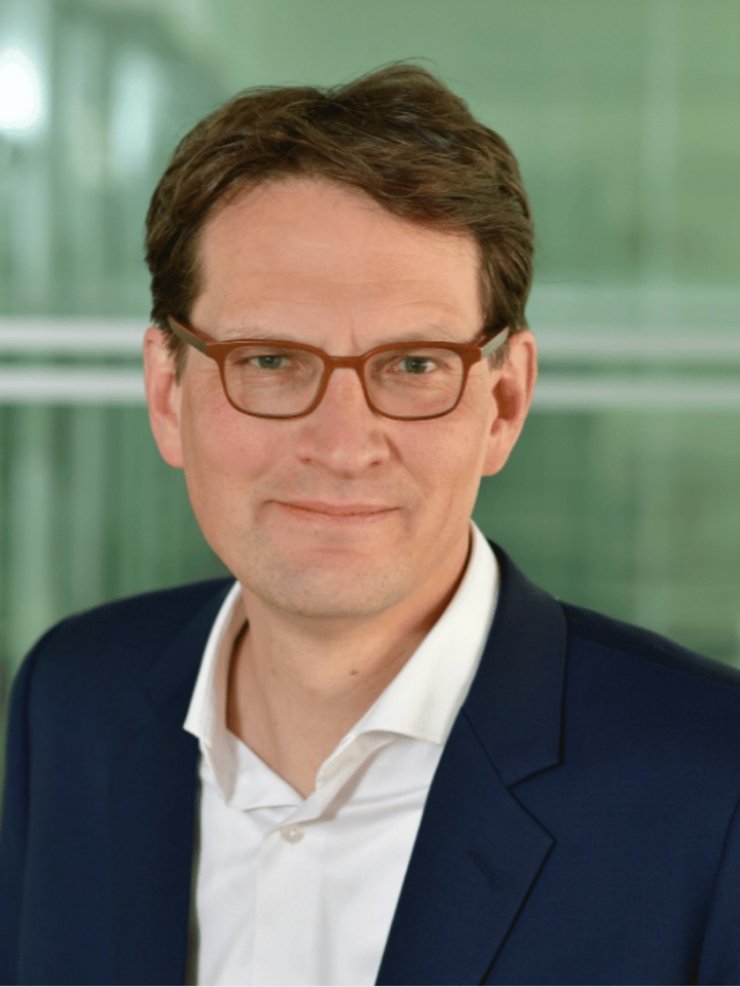
Thinks of Helmut Schmidt as a visionary who certainly did not have all the answers for the 21st century, but who asked the right questions. As Chairman of the Board and Managing Director, Meik’s focus is on the Foundation’s strategic direction, the budget and staff development. He fosters networking across politics, business and culture, and is passionate about innovative projects. As a historian, Meik has edited the extensive correspondence between Willy Brandt and Helmut Schmidt and written a concise 100-page biography of Schmidt aimed at a general audience. He also has many years’ teaching experience, particularly at the University of Cologne.
More