Postponed trial, open future and ongoing protest
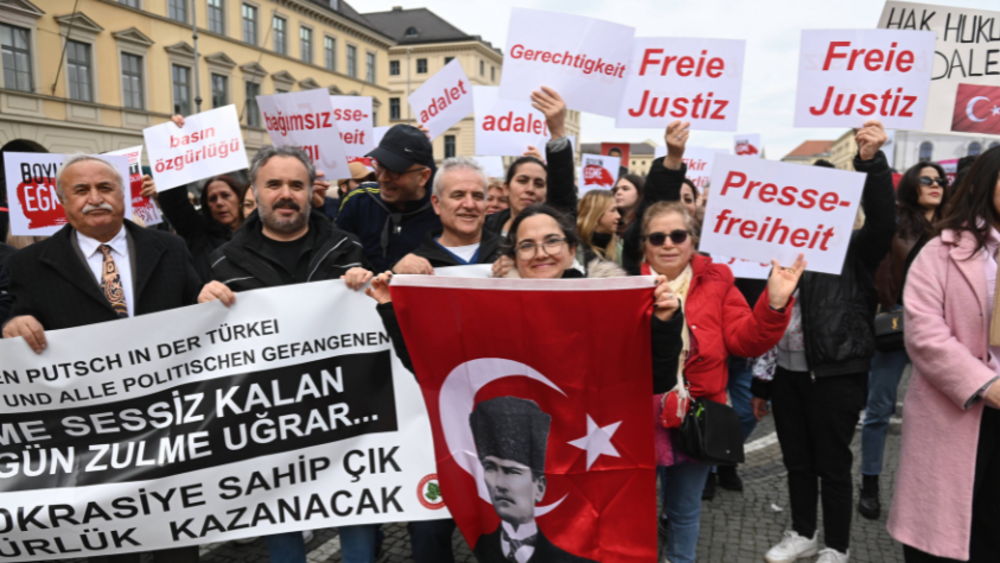
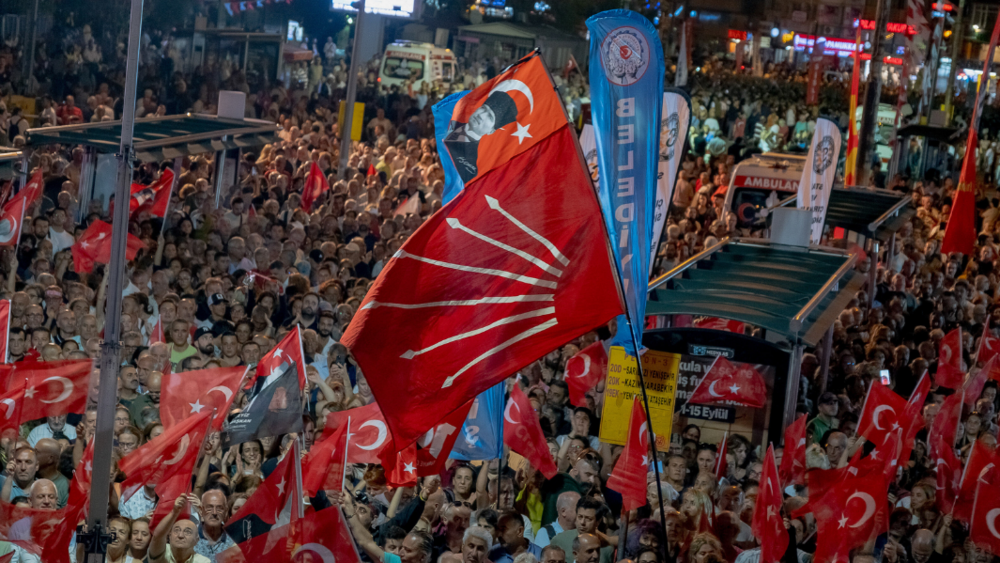
Last Monday could have been a historic day for Turkish democracy. Nothing less than the continued existence and viability of the country’s largest opposition party, the CHP, was at stake before a court in Ankara. The accusations are as follows: Irregularities at the last party congress in the election of the party leadership, including manipulation and vote buying. Party leader Özgür Özel and his leadership team are threatened with dismissal in favour of a court-ordered receivership. Özel’s predecessor, Kemal Kılıçdaroğlu, who was voted out of office at the party congress, has put himself forward for this. Tens of thousands of CHP supporters and other protesters have demonstrated on the streets and squares of Turkey in recent days after the protest movement, triggered in March 2025 by the arrest of Ekrem İmamoğlu, the mayor of Istanbul, had temporarily lost momentum. If the election is legally annulled, it could lead to a split and power struggles within the CHP, even though Kılıçdaroğlu enjoys little support. The court’s decision has now been postponed until October. The party leadership around Özel will therefore remain in office for the time being, but the pressure from the police and judiciary as well as the uncertainty surrounding the proceedings will continue. The CHP has called an extraordinary party congress for the next few days, at which Özel could be re-elected if he is removed from office. According to many experts, the coming weeks could decide whether a multi-party system continues to exist in Turkey or whether President Erdoğan can lead the country a great deal further down the road to autocracy.
Increased systematic repression
A wave of arrests has been rolling through the country for months, mainly targeting the people and structures of the CHP. Since the CHP relegated Recep Tayyip Erdoğan’s ruling AKP to second place in the 2024 local elections for the first time in 22 years, the president has been cracking down on the opposition. The CHP is now in power in Turkey’s most important and economically strongest cities and municipalities. According to the latest polls, it is also well ahead of the ruling party nationwide. Dozens of mayors, hundreds of party members and thousands of other people have been arrested since March. The accusations are almost always allegations of corruption, extortion, fraud or links to terrorism. The de facto aim is to dismantle the opposition and its structures. Ekrem İmamoğlu, Erdoğan’s popular rival and mayor of Istanbul, was and is at the centre of this. İmamoğlu, who has already defeated the AKP twice and is ahead of the incumbent in the polls for the presidential elections, has been in custody for over six months on corruption and terrorism charges. The attack on the opposition leader is flanked by proceedings to revoke his university degree – a valid diploma is a prerequisite for running for president in Turkey.
Police and judiciary as levers of power
For many observers, the arrest of İmamoğlu and numerous other mayors and local politicians marked a key turning point in Turkey’s recent history: the open transformation of the rule of law into a repressive instrument of power. Whereas previously it mostly affected individuals, certain organisations or newspapers as well as Kurdish parties, it is now a question of eliminating the opposition in and of itself, against the will of significant sections of the Turkish population. The investigations and proceedings against the CHP are being carried out by the executive bodies seemingly without contradiction, and the separation of powers already appears to have been abolished in many cases. When the police stormed the CHP headquarters in Istanbul a few days ago with 5,000 officers using batons and tear gas, the message was clear: if the opposition cannot be defeated politically, it will be broken by legal and police means. The aim seems to be the transition from an “electoral or competitive autocracy”, in which elections are still free but under unfair conditions, to a Putin-style autocracy, where the incumbent selects and controls the opposition and changes of power at the ballot box are effectively ruled out.
At a crossroads
Turkey is at a crossroads. The postponed trial in Ankara is not a reason for reassurance, but merely a postponement. The rule of law and the separation of powers are often no longer functioning, but there is still room for political competition, for protest, for legal loopholes. The government’s strategy of weakening the CHP through repression has not yet had any lasting effect. Instead, the party is moving closer together, consolidating internally and gaining social support. Attacks on party leaders or mayors are increasingly being seen as an attack on democracy itself. The protest therefore goes beyond support for the CHP. Young people in particular, who know no other president than Erdogan, are supporting him. They are outraged by devalued diplomas, blocked future prospects and the feeling that their vote no longer counts for anything, that democracy is finally degenerating into a façade. The coming weeks – the judgement in the CHP trial, the proceedings against İmamoğlu, the responses of the protest movement and civil society – are likely to be decisive. Any further steps, such as the removal of the CHP leadership, the final disqualification of İmamoğlu, or a slowdown in the protests, could pave the way for a further reorganisation of the political system. For the EU and its member states, the question remains as to how much strategic partnership they can and want to afford with Turkey. Continued autocratisation is likely to exacerbate the country’s existing political and economic instability. This would have consequences for Europe in every respect, especially as Turkey would then hardly be able to fulfil the geopolitical tasks for which many states are currently very cautious in their criticism.