
Where people are already feeling the effects of climate change on a daily basis
18. Jun 2022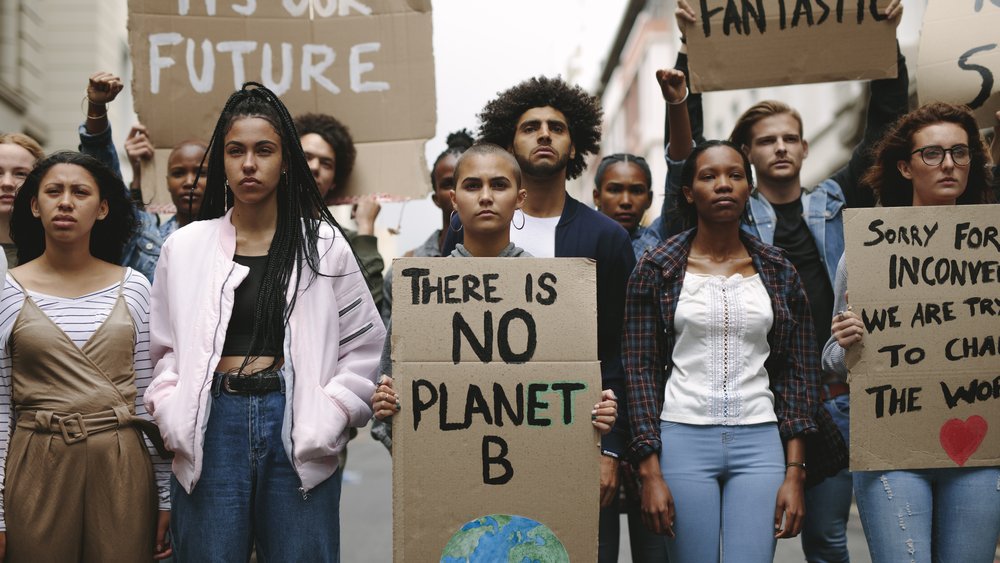
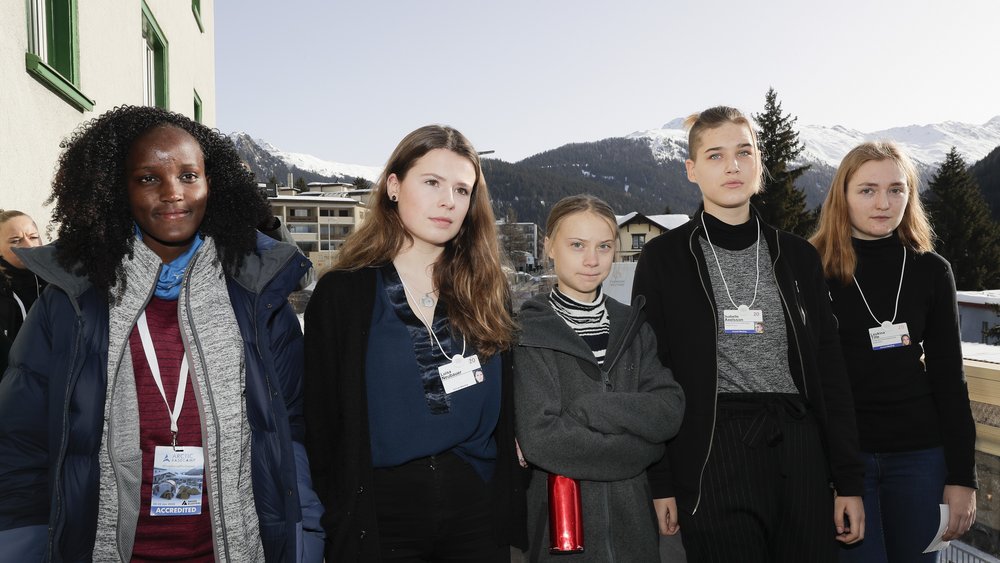
25-year-old Vanessa Nakate is a climate activist from Uganda and founder of the Rise Up movement, which she uses to draw attention to the unequal impact of climate change on women and in the Global South. Here in Germany, however, she became known through a media scandal that sparked a debate about diversity in the German climate movement. The background to this was the 50th World Economic Forum in Davos, to which several activists from Fridays for Future were invited. A joint photo was taken, from which Vanessa Nakate was later cut off. As a result, only "white" activists from Europe could be seen. An opportunity for us to take a critical look at the topic of climate justice, participation and representation.
Those on strike in Germany for a new climate policy
Every Friday, local Fridays for Future groups call on their supporters not to go to school but to take to the streets to campaign loudly for a new climate policy. The school strike has long been part of the protest repertoire of climate activists in Germany. It was started by Swedish schoolgirl Greta Thunberg in 2018. The then 15-year-old began to sit outside the parliament in Stockholm every week and warn of the rapid pace of global warming with a sign she had made herself. She first came to the attention of the media in Sweden, soon followed by international fame and many, primarily young people, who joined her. In the meantime, she gave a highly acclaimed speech at the UN climate summit in New York, which made her famous for her mixture of emotion and scientific objectivity. Within a very short space of time, an individual action has become a transnational movement. In Germany, the first major demonstration took place on 15 March 2019 in Berlin, attended by around 300,000 activists. Just six months later, the climate strike on 20 September marked a new high point, with activists in more than 150 countries demonstrating for a turning point in climate policy. Media representatives were quick to discuss the extent to which we were experiencing a new generation, a "Generation Greta". Greta Thunberg became the symbol of an entire generation and the new face of the environmental and climate movement worldwide.
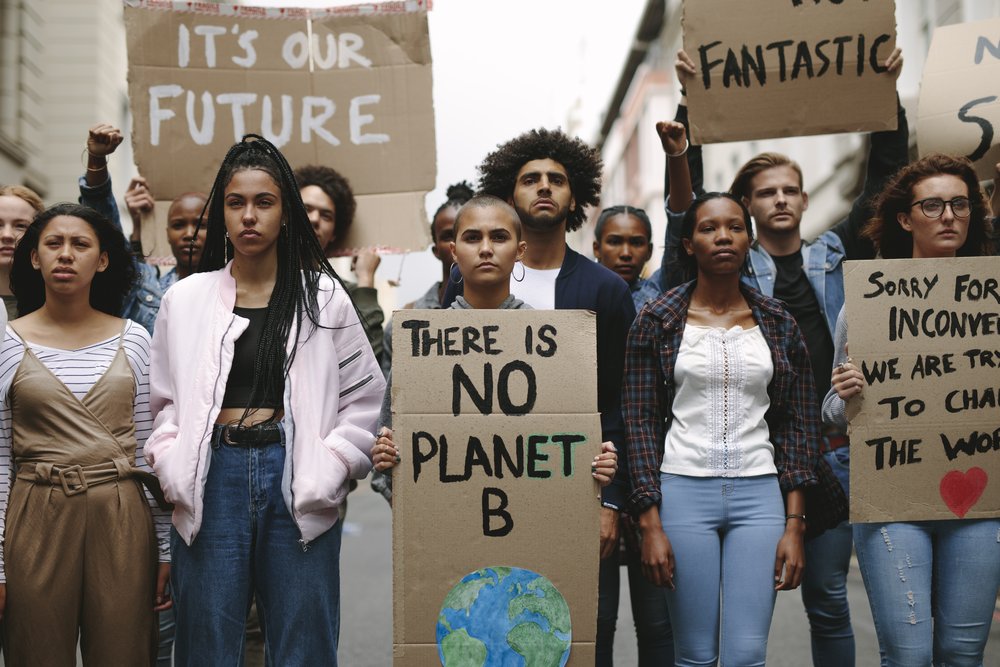
As a young woman, she is representative of the movement in that the large-scale demonstrations of Fridays For Future are characterised by their high proportion of female activists, unlike other protests. In a study conducted by the Institute for Protest and Movement Research (ipb) in 2019, 59.6 per cent of all respondents in Bremen and Berlin stated that they were female. Among school students, the proportion was as high as 64.6 per cent. By comparison, around 40 per cent of respondents at protests against Stuttgart 21 and only 18 per cent at Pegida demonstrations stated that they were female.
White Days for Future?
The same ipb study shows that people with migration biographies were underrepresented at the demonstrations. In particular, those who were not born in Germany made up only a very small proportion of the demonstrators. It is also striking that more than half of the respondents categorised themselves as upper middle class and that just as many stated that they had completed A-levels. Only a very small proportion said they came from the working class. Environmental movements in Germany have a long tradition and are primarily fuelled by the "white" middle class milieu. This applies not only to protest movements, but also to (youth) environmental organisations. In this respect, Fridays for Future is not an exceptional phenomenon, but rather a continuity in climate activism in Germany. But why do climate change campaigns, the effects of which affect us all - to varying degrees - not reflect the diversity of our society?
It's "5 to 12"
Participation in protest campaigns, online or offline, is generally regarded as a low-threshold form of democratic participation with few prerequisites. Compared to involvement in political parties or trade unions, there are no formal barriers to participation or monthly monetary commitments. To become active in Fridays for Future in Germany, for example, all you need to do is send a message via a messenger service to get in touch with the relevant local group and get directly involved. However, even protests and movements are not equally accessible to everyone, but the barriers are often more informal. Volunteering, for example, requires time and, to a lesser extent, money and the ability to get to the place where the protest or movement is taking place. People also need to hear about the actions from their neighbourhood and feel that they are being addressed. The scientific vocabulary surrounding biodiversity and fossil fuels often puts people off environmental and climate engagement.
In addition, Fridays for Future long drew on the "5 to 12" rhetoric, which was intended to draw attention to the future effects of climate change and the urgency of stopping it - but failed to recognise that in large parts of the world, especially in the Global South, these consequences are already being felt on a daily basis. Groups of people with their own or family migration biographies, such as the Black Earth Collective, were quick to point out the unequal impact of climate change. As co-founder and activist Imeh Ituen emphasises, the lack of inclusion of a perspective from the Global South is often a reason for founding such collectives in the first place. These climate injustices are now increasingly being addressed in speeches at demonstrations.
School actions instead of school strikes
In addition to the protest frames, i.e. the way in which demands are formulated and with which local perspective and which cultural practices they are linked to, certain forms of resistance also exclude groups of people. People with a migration background, for example, are far less likely to take part in protests such as large demonstrations. This is even more evident in actions of civil disobedience, such as those used by the environmental groups of Extinction Rebellion as a central means of excluding certain people, which has been criticised. People without German citizenship in particular fear consequences for their residence status and increased exposure to racism and violence from the police.
Furthermore, forms of protest are not equally suitable in every local context and are therefore not transferable one-to-one. Vanessa Nakate recently explained in an interview that school and university strikes do not work in Uganda, where education is a high, hard-to-access commodity and very expensive for families. For this reason, she and her fellow campaigners instead initiated specific projects to expand renewable energies and went to schools to raise awareness about climate impacts. Although Vanessa Nakate sees herself as part of the global Fridays for Future movement, by founding her own movement and adapting the form of protest, she has also shown how different and diverse climate activism can and must be.
Greta, Luisa, Vanessa - faces become role models
For this reason, it is crucial that this diversity is also portrayed in the media. Journalists have been looking for a single face to convey a protest movement in the media even before Fridays for Future. Greta Thunberg, for example, represents Fridays for Future globally, while Luisa Neubauer became the face of the movement in Germany and has been a popular guest on podiums ever since. And indeed, such symbolic figures fulfil a much more far-reaching role than representing the protests to the outside world. Around 65 per cent of those surveyed at the first Fridays for Future demonstrations in Germany said that Greta Thunberg was central to their participation. Although this influence decreases over time, it is particularly important for young people to identify with the people and see their own realities reflected. Then they feel addressed and are more willing to get involved themselves. The discussion about the photo in Davos was about more than representation. Vanessa Nakate is an example of climate activism in the Global South, a region of the world where people are already feeling the effects of climate change on a daily basis. Making her work and her activism visible multiplies our view of the new environmental and climate movements worldwide, draws our attention to the unfair distribution of the consequences of climate change - and not least creates role models for the activists of tomorrow.
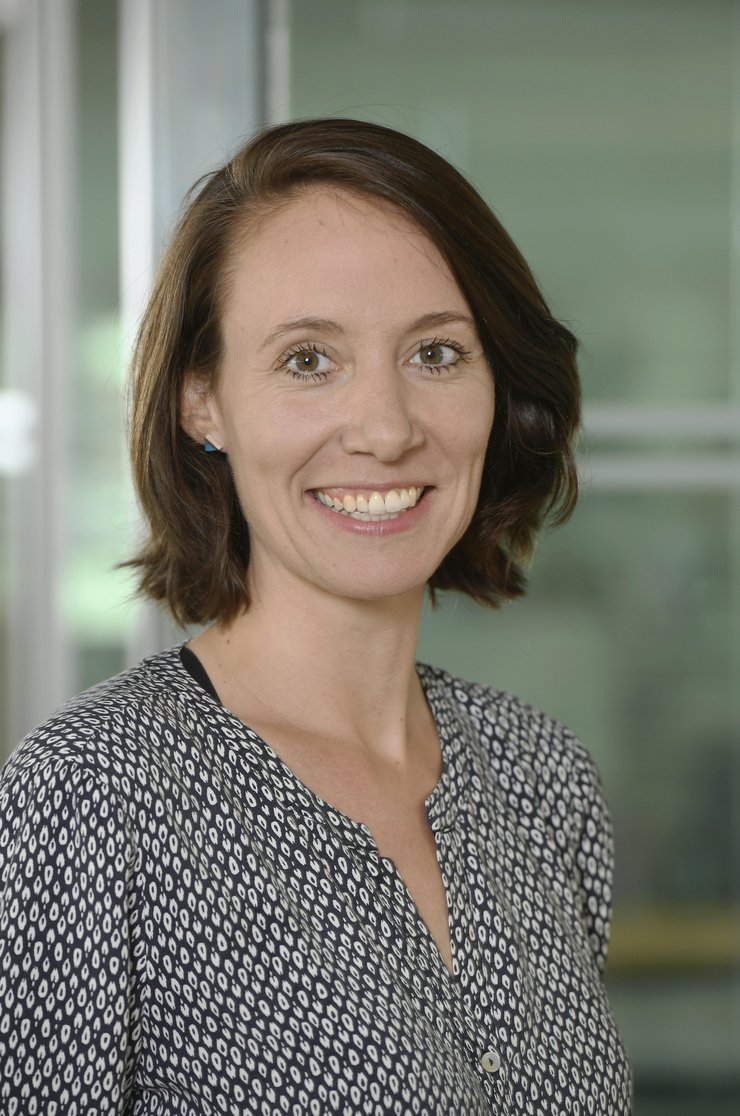
Until August 2022, Dr Nina-Kathrin Wienkoop was head of the "Democracy and Society" programme line. She is associated with the Berlin Institute for Protest and Movement Research and the German Centre for Integration and Migration Research. At the latter, she previously headed a research project on participation in youth engagement. She publishes, advises, researches and teaches on topics such as the resilience of democracies, domestic and international democracy promotion, youth engagement, non-violent resistance, diversity and protests, debate culture and diversity-conscious organisational development in civil society.
More