![[Translate to English:] UN Flagge](/fileadmin/_processed_/8/9/csm_UN_Flagge_copyright_nicht_bekannt_fb0dca0dff.jpg)
The text by Patrick Rosenow and Kirsten Hartmann was first published on the portal of the German Association for the United Nations .
The UN Peacekeeping Ministerial (PKM), held in May, took place in the midst of a deep crisis in UN peacekeeping. Peacekeeping missions are facing increasing challenges in deployment, implementation and withdrawal. A paralysed UN Security Council, changing and intensifying conflict dynamics and tensions with host governments and local populations are just some of the obstacles.
To make matters worse, in its budget proposal to the US Congress, the Trump administration signalled its intention to stop funding UN peacekeeping - even though the US is legally obliged to pay contributions and historically accounts for the largest share of around 27 percent of the peacekeeping budget.
At the same time, the missions are expected to achieve more with fewer resources. In addition, the UN peacekeeping budget is burdened with unpaid arrears totalling $2.7 billion. The result is an unsettling paradox: dwindling international engagement contrasts with a growing need for peacekeeping, political conflict resolution and effective peacebuilding.
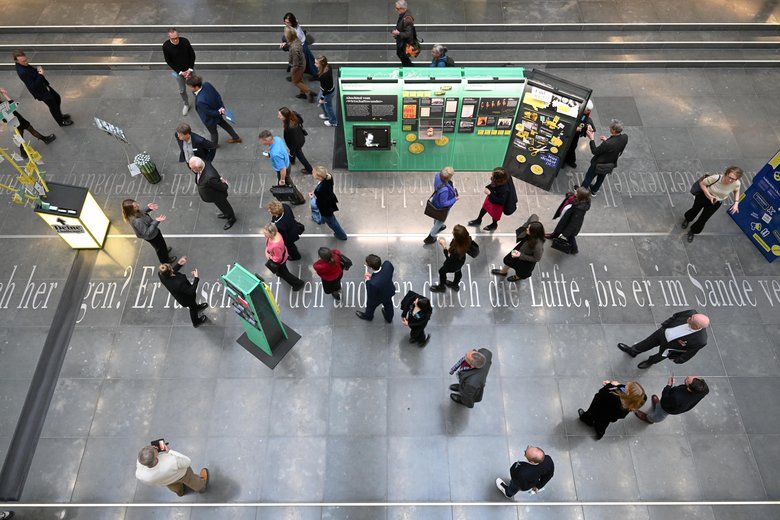
The PKM offered a rare glimmer of hope. Delegations from 134 countries, 51 of them at ministerial level, met together with representatives of the UN Secretariat and 10 regional organisations, making the Ministerial the largest of its kind to date. 74 countries made various contributions (so-called pledges), although the USA - still part of the conference co-chairs - was not among them. For the first time, the UN Secretary-General attended a PKM outside of New York City.
Despite all these successes, expectation management is key. The core mandate of the ministerial format centres on maintaining, if not building, political support for peacekeeping and filling military capability gaps through national contributions. Responsibility for initiating reforms to UN peacekeeping missions, on the other hand, lies with the Special Committee on Peacekeeping Operations (C34).
By organising the conference for the first time, Germany has set important standards. Going beyond the traditional goal of generating pledges, the focus in Berlin was on high-level political discussions on the future of peacekeeping - a precedent that should be built upon. This also allowed for important debates on how peacekeeping operations can be better integrated into holistic peacebuilding processes. All too often - including at the PKM - the conversation centres on improving peace operations "as an end in itself" rather than how they can more effectively support political processes and prevention efforts. Nevertheless, experts warn against confusing the role of peacekeeping in promoting peacebuilding with stabilisation efforts.
Discussing peacebuilding in the context of peacekeeping missions is crucial not only during PKMs and the Secretary-General's ongoing review of all forms of UN peace operations, which was called for by Member States last year in the Compact for the Future, but also in the context of the current review of the UN peacebuilding architecture. As the current chair of the Peacebuilding Commission (PBC), Germany should help shape this important agenda. Furthermore, silos between the different formats of peace operations must be broken down. Future PKMs should also include discussions on special political missions.
In addition to the exchange between governments, the PKM has created space for dialogue with civil society. In coordination with the Federal Foreign Office and the Ministry of Defence, the Centre for International Peace Operations (ZIF), the Global Governance Institute and Amani Africa launched the Global Alliance for Peace Operations (GAPO) in the run-up to the PKM. Over 50 think tanks, research and training institutions, civil society organisations and experts formulated and discussed policy recommendations on the future of peace operations. This model of structured civil society engagement is a promising step towards a more inclusive United Nations dialogue and should be further developed in future ministerials.
The Berlin conference also broke new ground in terms of youth participation. For the first time, two German youth observers took part in the PKM, a programme of the German Association for the United Nations, which is supported by the Federal Foreign Office and the Ministry of Defence. They emphasised how important it is to ensure meaningful engagement of young people in all phases of UN peacekeeping. On the occasion of the 10th anniversary of the Agenda for Youth, Peace and Security this year, this commitment sends a timely message. Germany and other countries should continue to effectively involve young people in future PKMs.
The true measure of the conference's success lies in how the commitments will impact missions on the ground. Member States must continue to support UN peace operations politically, financially and in terms of personnel - both within and outside the United Nations. This includes honouring their financial commitments in full and on time and providing consistent political support to peace processes in host countries.
The significant reforms that Member States are calling for in peacekeeping missions will have to be accomplished by fewer staff in the UN Secretariat: A day before the PCM, the Secretary-General called for a 20 per cent reduction in staff in the Department for Peace Operations (DPO) and the Department of Political and Peacebuilding Affairs (DPPA) in response to the cash crisis. While high-profile events such as the Ministerial or the Future Summit last year send important signals - such as the reaffirmation of broad political support for peace operations - their true value lies in their outcomes. Germany is in a good position and has a duty to maintain this momentum.