
Economic security is at the very top of the agenda in Berlin and Brussels. However, while current debates predominantly focus on technocratic defensive measures and securing supply chains, the very foundation of geoeconomic resilience is at risk of being overlooked: domestic social cohesion. Our latest BKHS Publication highlights why a successful economic security strategy for Germany must inherently be designed to be inclusive.
In our newest BKHS Report, “Economic security starts at home: Introducing an inclusive geoeconomics strategy for Germany”, authors Dr Elisabeth Winter and Lea Holst argue that true resilience goes far beyond competitiveness and mere market protection. In an era where economic dependencies are increasingly weaponised, economic performance, strategic sovereignty, social welfare, and ecological sustainability must be systematically integrated.
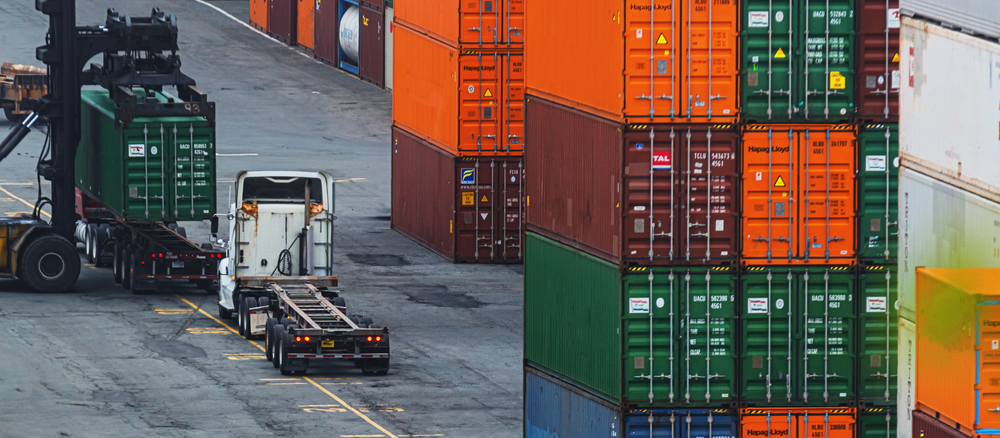
Through two in-depth case studies – the Port of Hamburg as a critical logistics hub and the German automotive sector (EV market) as a decentralised industrial linchpin – the report illustrates the urgent need for a shift in perspective. If the costs of geoeconomic policies are distributed unevenly or unfairly, it risks fuelling domestic polarisation and eroding trust in democratic institutions. Conversely, an inclusive approach yields an invaluable "resilience dividend".
Key Takeaways:
• #1 Economic security is multidimensional: Germany can only achieve long-term resilience if economic, sovereign, societal and ecological dimensions are integrated as equals into the national economic security strategy.
• #2 Social cohesion is a strategic asset: External geoeconomic defence is only as strong as internal societal stability. Fair burden-sharing and the active inclusion of stakeholders like trade unions and civil society are not normative add-ons, but hard security factors.
• #3 A practical framework for policymakers: The report introduces a checklist for inclusive geoeconomics. This five-step tool provides actionable guidance for policymakers at the federal, state and municipal levels to evaluate geoeconomic measures regarding their social sustainability and long-term resilience.
A resilient economic order in Germany and Europe will not be built by protecting markets alone, but by ensuring that the geoeconomic turn strengthens the democratic fabric on which our security ultimately rests.