
The trade war between the US and China, with its protectionist measures such as tariffs and massive industrial subsidies, is hitting long-standing transatlantic partners such as Germany and the EU with full force – both directly, through competitive disadvantages, and indirectly, through the fragmentation of global markets. Actual wars and their economic repercussions are placing an additional strain on them. Against this backdrop, a new paradigm of economic security is currently taking shape in Brussels and Berlin, and a German National Security Strategy is expected this year. So far, the debate surrounding economic security has often been limited to economic interests and technological issues; problems are all too often attributed to other states, and solutions are sought primarily in warding off threats rather than in actively shaping economic relations.
However, “economic security” must not remain a purely outward-looking, defensive project. Germany and the EU must recognise that the global erosion of the international economic and security architecture exposes the internal vulnerability of our own economic model. Those who merely diversify semiconductor supply chains or tighten investment controls are merely treating the symptoms externally and overlooking the fundamental social foundation of economic security. Only through internal strength can the EU – and Germany – hold its own in a changing global order. Economic security begins at home.
Geoeconomics needs a social dimension
Economic security is more than just the protection of domestic industry or critical infrastructure. Anyone who wishes to take it seriously must recognise and take into account its four dimensions: economic competitiveness, strategic sovereignty, environmental sustainability and social cohesion. These four dimensions cannot be separated from one another; they are interdependent and together form the foundation of a resilient economic order. Economic security is only as strong as its weakest dimension.
This is precisely where the blind spot in the current debate lies. Around 21 per cent of the population in Germany is at risk of poverty or social exclusion. Fears about one’s social status are no longer a marginal phenomenon, but run deep within the middle class. Those who feel they are bearing the costs of global change without sharing in the gains in prosperity often turn their backs on institutions, on compromise, and on the liberal economic order itself. The rise of economic nationalism is thus also a political echo of the asymmetrical distribution of the gains from globalisation.
A geo-economic strategy that ignores social costs and distributes the burdens of adjustment unevenly generates precisely those populist centrifugal forces at home that it seeks to ward off externally. At the same time, if acceptance of necessary geo-economic adjustments wanes, the state loses its strategic capacity to act. Inclusive geo-economics is therefore far more than just social policy: as a strategy, it fosters democratic resilience as a prerequisite for economic security.
Economic security in the Port of Hamburg and the automotive sector
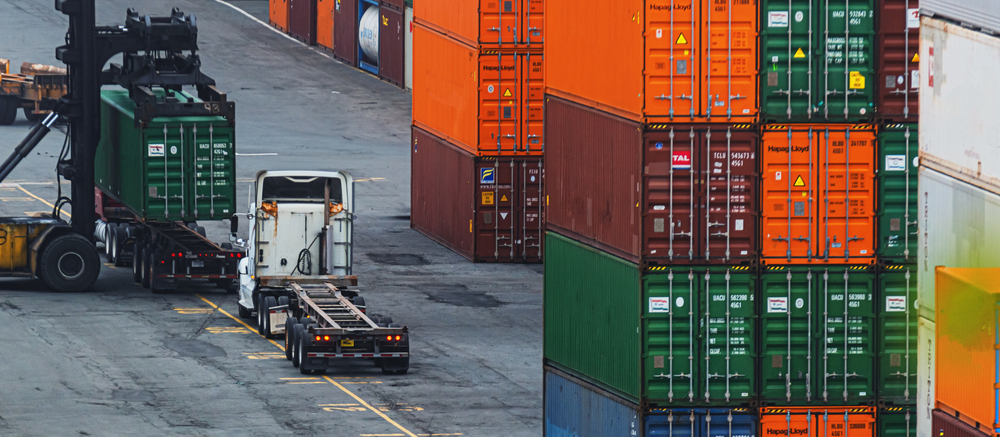
What may sound abstract becomes immediately tangible in two key sectors of the German economy. The Port of Hamburg is Germany’s most important land-sea hub, the backbone of the export economy and, at the same time, an (indirect) employer for hundreds of thousands of people across the country. Given its multidimensional nature, the security of this critical infrastructure is far more than just its physical protection. It depends on digital sovereignty vis-à-vis Chinese system providers, on the ability to adapt to climate change in a riverine location threatened by extreme weather, and on the social stability of a port workforce that is coming under increasing pressure from automation and geopolitical shifts in trade. Anyone who views infrastructure security in a one-dimensional way overlooks the fact that a port without social roots is far more vulnerable to attack – and thus poses a greater risk – than one that is firmly embedded in society.
The same applies to the German automotive industry, which finds itself in a tense geo-economic competition with China. Thanks to state-backed industrial policy for electric mobility, Chinese manufacturers have built up cost advantages of up to 30 per cent and are penetrating the European market with increasing momentum. Dependencies on raw materials such as lithium, cobalt and graphite are creating new strategic vulnerabilities, whilst new systems raise questions of data sovereignty and industrial espionage. The pressure to adapt and structural change are affecting large corporations just as much as regional supply networks, small and medium-sized enterprises and thousands of workers in industrial regions. Both cases demonstrate that where structural change is not accompanied by social measures and is not shaped in collaboration with local stakeholders, the social foundation of economic transformation erodes. Conflicts of interest regarding economic security are a reality in port cities and industrial regions, and it is precisely here that they must be addressed.
The resilience dividend: inclusive geo-economics as a strategy
Reactive crisis management falls short in the face of this complex reality and cannot be sustainably effective. To ensure economic security in the long term in a globalised world, policymakers therefore need a forward-looking compass. This is where the latest BKHS report, “Economic security starts at home: Introducing an inclusive geoeconomics strategy for Germany”, comes in, presenting the concept of inclusive geoeconomics and a concrete checklist for political practice. The report guides decision-makers through the key questions in five steps: Which of the four dimensions of economic security is strengthened by a measure and which is weakened? Were relevant stakeholders involved at an early stage? Who bears the costs and who benefits? Have institutional responsibilities been clarified and coordinated? And does the measure serve a long-term vision rather than merely short-term damage control?
The case studies describe what this means in practice. For the Port of Hamburg, the report proposes the establishment of a permanent “port parliament” – an institutionalised forum in which trade unions, logistics companies, environmental organisations and municipal stakeholders jointly shape strategic decisions. For the automotive sector, the authors recommend establishing a circular battery economy with binding recycling obligations and domestic recovery capacities, which reduces dependence on raw materials, strengthens environmental sustainability and, at the same time, anchors new value creation in Germany.
Both approaches illustrate a central principle of inclusive geo-economics: effective economic security policy is not devised in isolation within a Berlin ministry. It must be conceived and implemented within the EU’s multi-level system, linking European guidelines with their implementation at federal, state and local levels.
Those who conceive of geo-economics as inclusive from the outset do not hold back either the economy or politics. This approach thus creates a “resilience dividend” comprising adaptable workforces, crisis-proof structures and democratic legitimacy that holds up even under pressure. Strategic autonomy and economic capacity for action require the courage to take a comprehensive view of geoeconomics.
The full report, including analysis, a checklist and specific recommendations for Germany’s economic security strategy, the Port of Hamburg and electric mobility, is available online here:
“Economic security starts at home: Introducing an inclusive geoeconomics strategy for Germany”