
The new German Chancellor Friedrich Merz made his inaugural visit to Washington, DC this week. US President Donald Trump did not receive him at the White House until after the editorial deadline, so we are unable to discuss the outcome of their first face-to-face meeting in this Schmidtletter.
However, one thing was already clear in advance: one of Friedrich Merz's key priorities is to settle or at least appease the trade dispute between the USA and the European Union (EU). To the chagrin of almost the rest of the world, Donald Trump is using the entire repertoire of geo-economic instruments - above all tariffs - to ruthlessly assert his political and economic interests. He is cancelling the global economic order and throwing overboard international institutions that have existed for decades and are based on cooperation.
He is not even sparing the EU as an ally and value partner. To ensure its survival in the power struggle between the superpowers USA and China, the EU must find its own role in the international structure and take care of itself. Ensuring economic security is an elementary part of this and Germany, the EU's largest economy, has an important role to play. Many are therefore hoping that the new Federal Chancellor will be able to connect with Donald Trump and breathe some life back into the transatlantic (trade) partnership.
Using geoeconomics positively for economic security
However, a cooperative approach to trade relations is currently the exception rather than the norm. This is particularly true for the USA under President Donald Trump, but also with regard to multilateral cooperation within the World Trade Organisation. The global economic order is changing. Instead of dismantling political hierarchies, economic dependencies have continued to create asymmetries between states and their national economies even after the end of the Cold War. Today, geoeconomic strategies dominate international relations driven by power politics.
However, geoeconomics - neutrally understood as the use of economic instruments for political goals - is better than its reputation. With the help of geoeconomic strategies, state actors not only actively shape their domestic economy and international trade, but also consciously utilise these practices for strategic and security policy purposes. Economic instruments can also be used to realise social and climate policy goals. A whole range of political objectives can often be pursued with a single economic instrument.
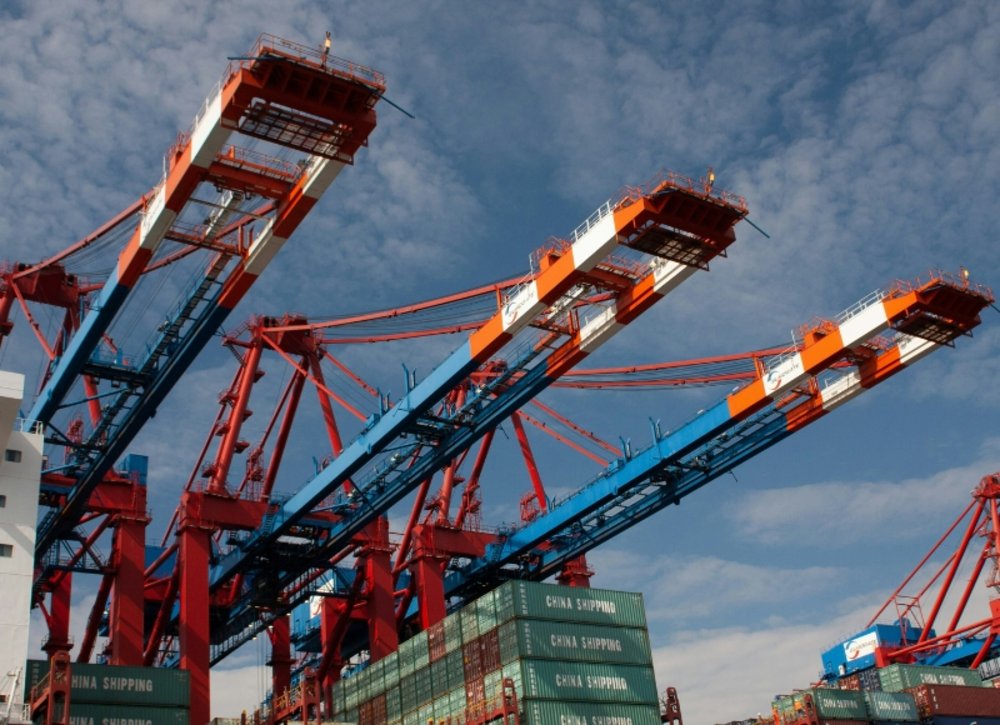
Consequently, geoeconomic practices are central to the realisation of economic security. The EU Commission presented a strategy for EU economic security back in summer 2023, which has since been revised and further expanded and developed with the new Directorate-General for Trade and Economic Security. It is based on three pillars - the 3 Ps "Promote, Protect, Partner". The aim is to promote the EU's competitiveness (to promote), the EU wants to protect itself from economic risks (to protect) and also wants to cooperate with the broadest possible group of countries that share the European understanding of economic security (to partner). To date, the EU Commission has focussed on the "protect" pillar and has primarily used defensive and defensive geo-economic instruments for this purpose, such as the joint review procedure for foreign direct investments. The best-known example in Germany is certainly the port of Hamburg and the intention of the Chinese shipping company Cosco to buy parts of it. As ports are considered critical infrastructure, foreign investments above a certain level are scrutinised both nationally and at EU level to determine whether they pose a threat to national security - a defensive, reactive geoeconomic instrument.
Developing a cooperative geoeconomic approach
Since Mario Draghi's report on EU competitiveness in autumn 2024, there has been an increased focus on the "Promote" pillar. The Union's political and institutional capacity to act as well as a flourishing internal market are essential for this. Logically, this approach must be closely interlinked with the "Partner" pillar. As one of the world's largest economies with a gross domestic product of EUR 17 trillion, the EU is an important player on the global market, accounting for around 14 per cent of international trade in goods. Europe will not be able to realise comprehensive economic security with resilient global supply chains that can guarantee an inclusive economy within the EU, as proposed by the former head of the European Central Bank Draghi, without trustworthy (trading) partners.
Under the heading of de-risking, political efforts are already being made to diversify international trade flows in order to reduce dependencies, particularly towards authoritarian states. The recent movement in the negotiations on EU trade agreements - such as the MERCOSUR agreement that has been in the pipeline for over 20 years - shows that Europe is increasingly focussing on new partnerships and is now prepared to invest more heavily in them. Such trade agreements and other, legally less formalised economic partnerships are geo-economic practices that should be used to achieve economic security. Compared to the previously favoured instruments, they offer the opportunity to approach partners positively and to actively and proactively pursue an independent - and at the same time cooperative - agenda. For this reason, the EU should prioritise such a cooperative geo-economic approach. Even if the EU is already increasingly striving for such instruments, their full implementation is not always guaranteed. Particularly in the case of politically ambitious agreements, all member states must ensure their rapid national implementation.
Even if no one has used the terminology of an active cooperative agenda for the transatlantic trade partnership in recent decades, it describes its character quite well. In their economic co-operation, the US and the EU have always pursued more than pure economic interests. However, their means of choice have generally been positive economic instruments, i.e. geo-economic practices. Thanks to the transatlantic economic partnership, bilateral free trade agreements with numerous other countries and treaties of the multilateral World Trade Organisation, they have been able to help shape the international economic order and thus secure prosperity and economic security. Whether Chancellor Merz will succeed in steering the transatlantic relationship back onto such a co-operative geo-economic path could not be predicted at the time of writing this article. What is certain, however, is that the path to greater economic security for Europe is certainly a long one, but one that should be travelled together with many like-minded partners.
The BKHS project "Inclusive geoeconomics"
At the Bundeskanzler-Helmut-Schmidt-Stiftung (BKHS), we are investigating how co-operative geoeconomic practices can be implemented to ensure resilient trade relations with international partners and at the same time create social justice as part of the "Inclusive Geoeconomics" project. Here you can find more information about our project and the digital event series currently taking place in this context.