Globally, there are more young people than ever before. They are disproportionately affected by current crises and armed conflicts, but are insufficiently involved in their prevention, resolution and long-term peacebuilding. Despite their involvement, many young people are often stereotyped as either active drivers of conflict (especially young men) or passive victims (especially young women). In this context, the UN Security Council recognised the "important and positive contribution that young people make to efforts to maintain and promote peace and security" for the first time in Resolution 2250 in 2015. Divided into the areas of participation, protection, prevention, partnerships and disengagement and reintegration, UN member states - including Germany - should involve young people in peace and security efforts. The now three resolutions create the normative framework of the so-called Youth, Peace and Security (YPS) agenda. Ten years later, however, there is still a lack of comprehensive implementation.
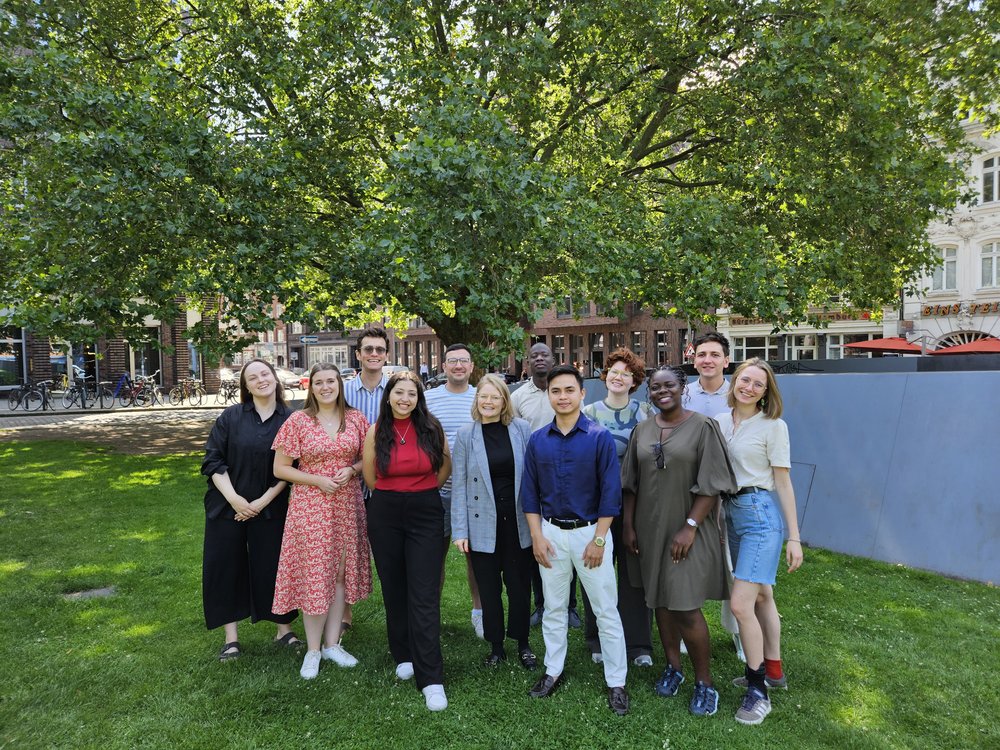
What potential does the YPS agenda offer for peacebuilding and conflict resolution in a changing world order? And how can Germany continue to promote the agenda, both in other countries and regions and at home? To answer these and other questions and formulate recommendations for German decision-makers, we invited eleven young peacebuilders from eight countries to Hamburg.
From the UN resolution to me
In discussions, the YPS experts referred to current challenges on the agenda: from insufficient funding and a lack of capacity to the effects of numerous wars and crises as well as increasing militarisation and polarisation. However, they also emphasised opportunities, such as the growing awareness of the Agenda and the potential of the many young peacebuilders and their networks. The workshop participants also focussed on the implementation of the Agenda. How can a global approach be realised in different contexts?
One of the instruments for this at state level are National Action Plans (NAPs) on YPS, based on the model for promoting the Women, Peace and Security (WPS) agenda. In a NAP, states set out their strategy for implementing the UN agenda. While, in contrast to over 100 NAPs on WPS, only a few states have so far adopted an action plan on YPS, there currently seems to be momentum in the development of NAPs - especially on the African continent. The experts agreed that "process over product" should apply to NAPs. Accordingly, the focus should not only be on the adopted paper, but also on an inclusive process that effectively involves a large number of diverse young people from the outset and provides sufficient time and resources.
Implementing the agenda today and tomorrow
In order to actively shape the future, you have to engage with it. The participants therefore drew up scenarios for how the YPS agenda should be implemented in ten years' time. This was not about utopias, but about desirable but plausible futures. Based on this, the group developed recommendations for implementation, for example through youth quotas in parliaments or regional action plans on YPS.
However, the many concerns of diverse young people should not be postponed to the future - young people need to be effectively involved today. The emphasis here is on effective. After all, they are still involved symbolically and without any decision-making or effective power. The participants emphasised that young people must be involved throughout the entire, transparent process - from planning to evaluation. They should also be treated with respect, receive the information they need well in advance and be informed about the impact of their contributions. Not only do they contribute their perspectives as young people, but their lived experiences make them experts on peace and security issues and they should be addressed as such. Fundamentally, young people are far more than beneficiaries of peace and security efforts: They are partners and help shape them.
Necessary dialogue - with each other and across generations
Dialogue was a central element of the workshop. The focus was on dialogue with each other and across national and regional contexts. The participants came from eight countries from all regions of the world, from Argentina to Gambia and the Philippines, as well as from Germany. Mutual learning through experiences from diverse contexts is of great importance, especially as voices from the so-called "Global South" are still too often underrepresented.
However, discussions did not only take place between the YPS experts: In a public event with the German United Nations Association, we exchanged views with young people in Hamburg on what peace and security mean to them and what their thoughts are on a possible return of compulsory military service. This showed once again that issues relating to youth, peace and security are not only highly relevant in contexts directly affected by armed conflict, but also in our own country.
In addition to exchanges between young people, dialogue across generations is also essential. In many places, cultural norms and existing prejudices against young people stand in the way of their effective participation. While young people are at the centre of the YPS agenda, the responsibility of implementation is not theirs alone: this is an intergenerational task. Therefore, knowledge and capacity must be built among young and older people alike. Carefully prepared and inclusively designed intergenerational dialogue processes(see here) can strengthen mutual trust and understanding.
In addition, dialogue with decision-makers is essential, as political will is crucial for the implementation of the agenda. In dialogue with a member of the German Bundestag and a representative of the Federal Foreign Office, the participants shared their perspectives and discussed their recommendations. They also discussed how political decision-makers and ministries can further strengthen the agenda and bring in the expertise of young peacebuilders.
What happens after the workshop?
The workshop marks a milestone in the project "Gen P(eacebuilder) - Implementing the Youth, Peace and Security Agenda". Contributions from the participants will be published on a virtual YPS topic portal in early 2026. In addition to the results of research interviews and literature research, the findings collected now will be incorporated into concrete recommendations for German decision-makers.
Further information on the project can be found here.