Scenarios for the resolution of international conflicts following the 2024 US presidential election
Russia’s ongoing aggression against Ukraine, the war between Israel and Hamas, or the protracted conflicts in Sudan, Myanmar and Yemen: violence is on the rise in many parts of the world. At the same time, multilateralism is under pressure, limiting opportunities for conflict resolution and rendering traditional methods of peacebuilding ineffective. The 2024 US presidential election is therefore taking place at a crucial juncture for efforts to end wars and establish peace worldwide. Within the US, too, fears of violence persist following the last presidential election, which culminated in the attack on the US Capitol on 6 January. A new approach to conflict resolution and peacebuilding is urgently needed.
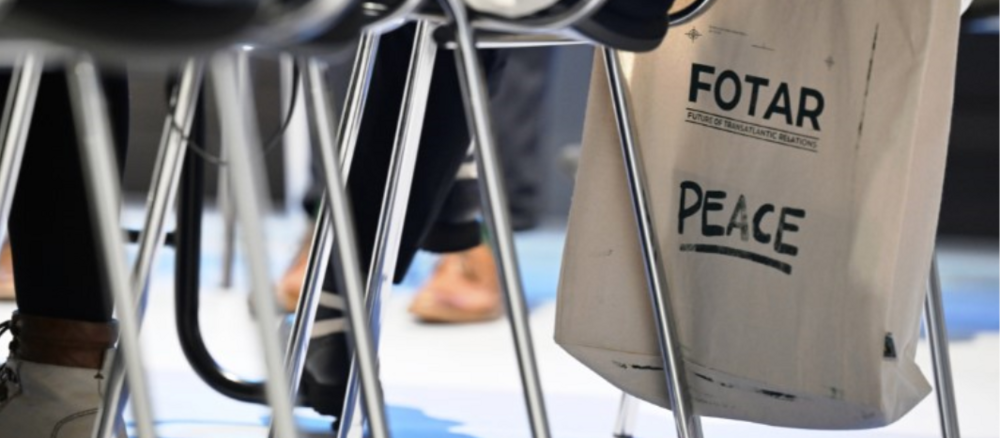
To analyse the potential impact of the 2024 US election on conflict resolution and peacebuilding worldwide, the Europa-Kolleg Hamburg (EKH) and the Federal Chancellor Helmut Schmidt Foundation (BKHS) have invited 13 early-career researchers to take part in a #FOTAR2024 fellowship programme.
Each participant is to draft a 3–4-page policy brief outlining plausible scenarios for international conflict resolution and peacebuilding following the US election, depending on which party takes over the White House. During a two-day in-person workshop in Hamburg, participants will receive in-depth feedback and mentoring on their policy briefs from peers and experienced panellists. Following the workshop, EKH and BKHS will publish the revised policy briefs in the run-up to election day. The policy briefs should focus on one of the following topics:
- Prospects for conflict resolution in 2024 and beyond
- Backlash against gender equality and the future of peacebuilding
- The role of the UN in future crises of international peacekeeping and security
PANEL 1: Prospects for conflict resolution in 2024 and beyond
Democrats and Republicans disagree on many aspects of US foreign policy, and both parties are also internally divided. This is perhaps most evident in relation to the wars in the Gaza Strip or Ukraine, but conflicts in other regions could also be influenced by changes in US foreign policy. As the 2024 US elections take place in a global environment characterised by a return to power politics and a weakening of international institutions, the question arises: what will their outcome mean for the future course of conflicts worldwide and the prospects for their resolution?
PANEL 2: Headwinds for gender equality and the future of peacebuilding
Democrats and Republicans are deeply divided over the reproductive rights of women and girls. Abortion laws will play a key role in the 2024 US elections. This is not merely a domestic issue, but also has international implications, as demonstrated by the watered-down 2019 UN resolution on support for survivors of war-related sexual violence. In light of the growing global threats and attacks against women and LGBTQI* communities, the question arises: what are the consequences of this for states pursuing a feminist foreign policy, and for approaches to peacebuilding?
PANEL 3: The role of the UN in future crises affecting international security and peace
The US elections are taking place against a backdrop of dwindling multilateral cooperation. Within the UN, this trend is linked to increasing geopolitical competition between the major powers, the diverging interests of countries in the Global North and South, and the crisis facing the UN’s traditional instruments, such as peacekeeping missions. A Republican administration is likely to pose a further challenge. How can the UN be made fit to tackle future crises in the field of international peace and security, and what future form of peace operations is both possible and desirable?
Ahead of the 2024 US election: Democratic continuity or a return to MAGA?
With Joe Biden’s withdrawal from the race for the 2024 US presidential election, one of the last great transatlanticists of his generation has stepped down from active politics. In the run-up to the election, relatively little was known about Kamala Harris’s foreign policy views. At the same time, it was expected that she would focus the US’s attention more strongly on global partnerships beyond Europe. Donald Trump, for his part, entered the race with the promise to continue and expand his policies under the slogan “Make America Great Again” (MAGA). Many observers saw this as signalling a renewed intensification of the unilateralist tendencies of his first term in office. The countries of the European Union, in particular, were the focus of his criticism due to their economic and defence policies. The future of NATO and Europe’s role in the face of Russia’s war of aggression against Ukraine were also the subject of intense discussion.
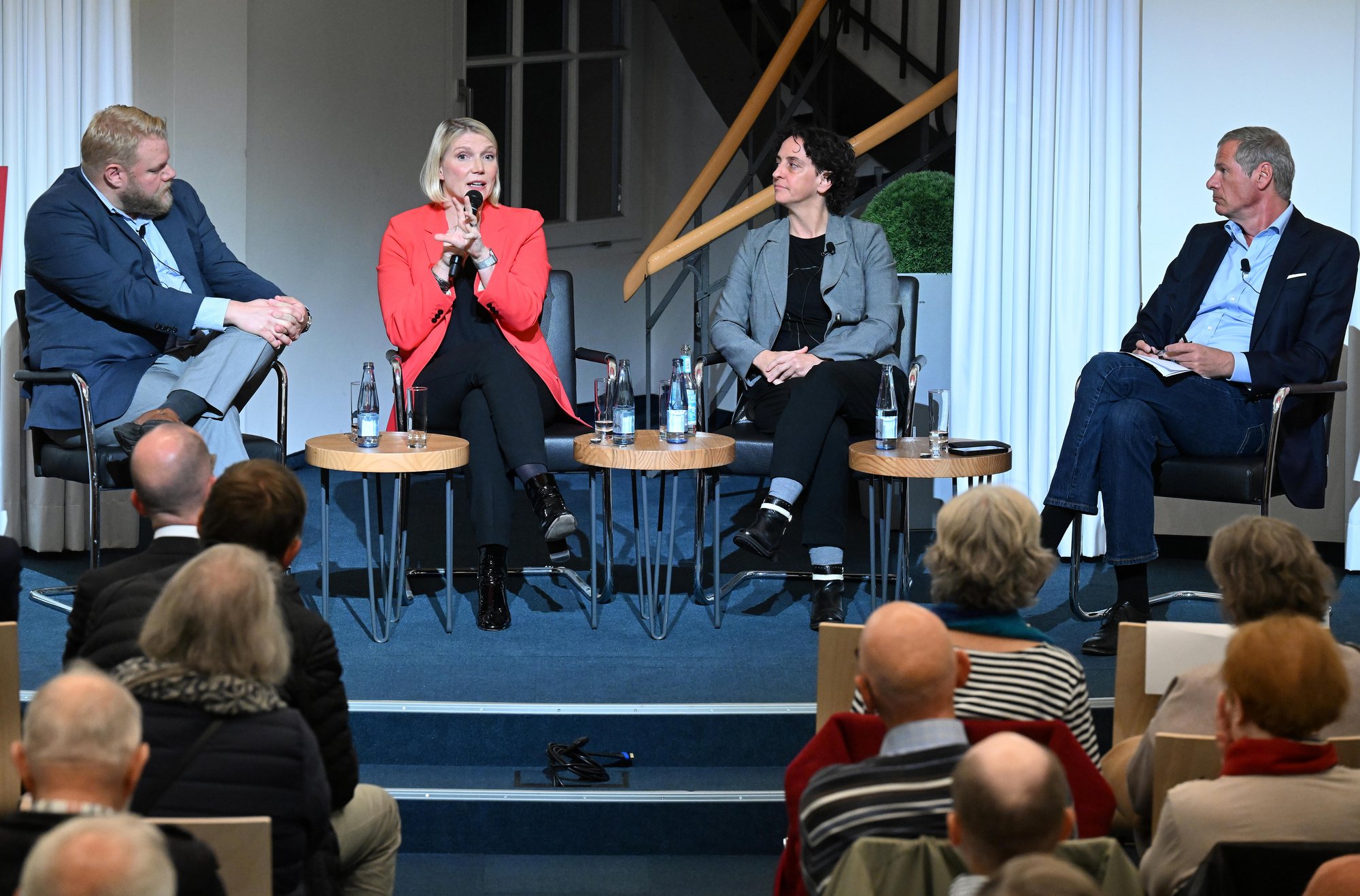
Against this backdrop, the event examined the possible scenarios and consequences of the US election for international politics. Together with renowned experts, the implications for geopolitics, international conflict resolution, transatlantic relations and American domestic policy were analysed and assessed.
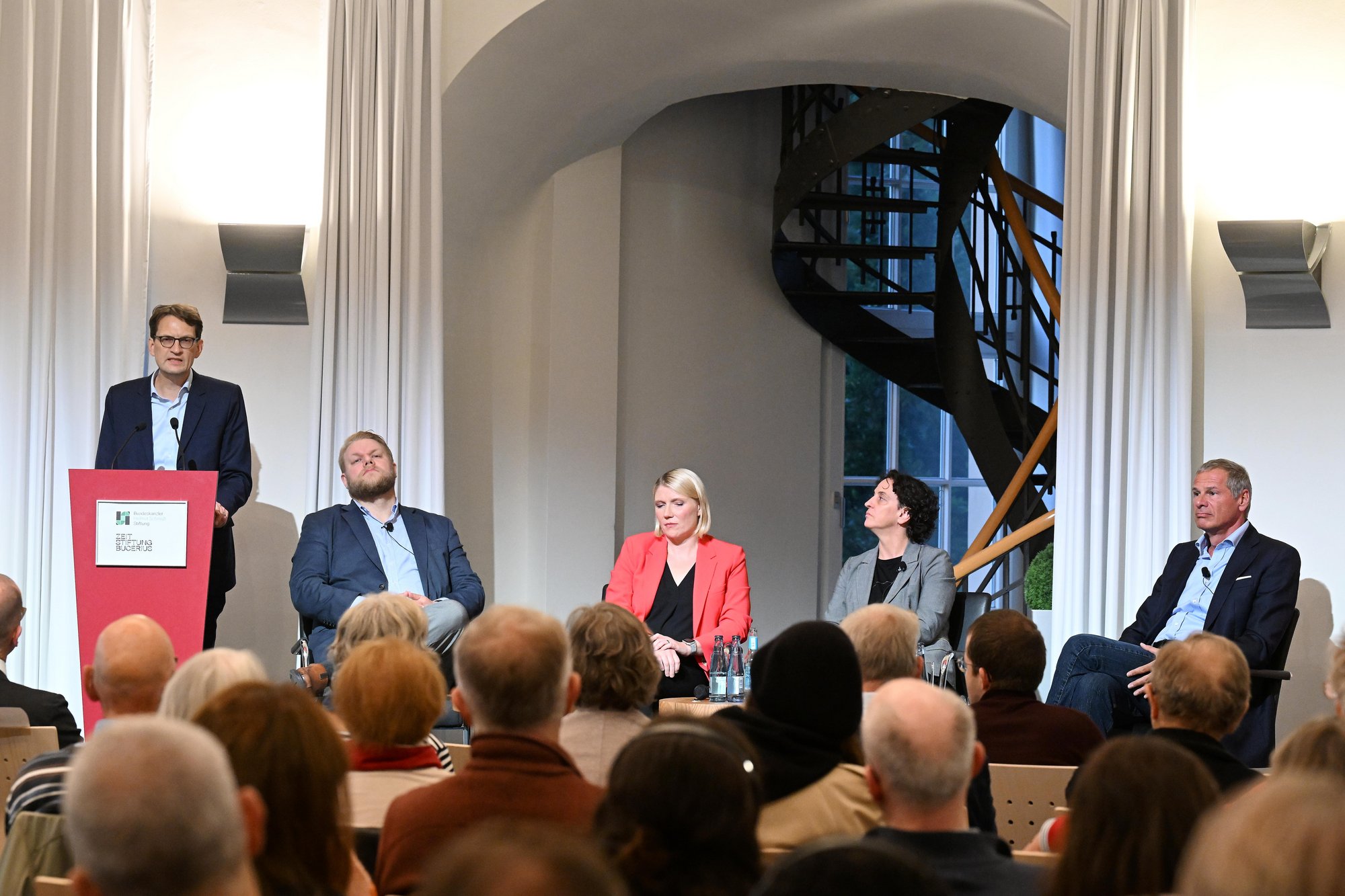
Monday, 30 September 2024 | 7 pm | Panel discussion in the Moot Court at Bucerius Law School Hamburg
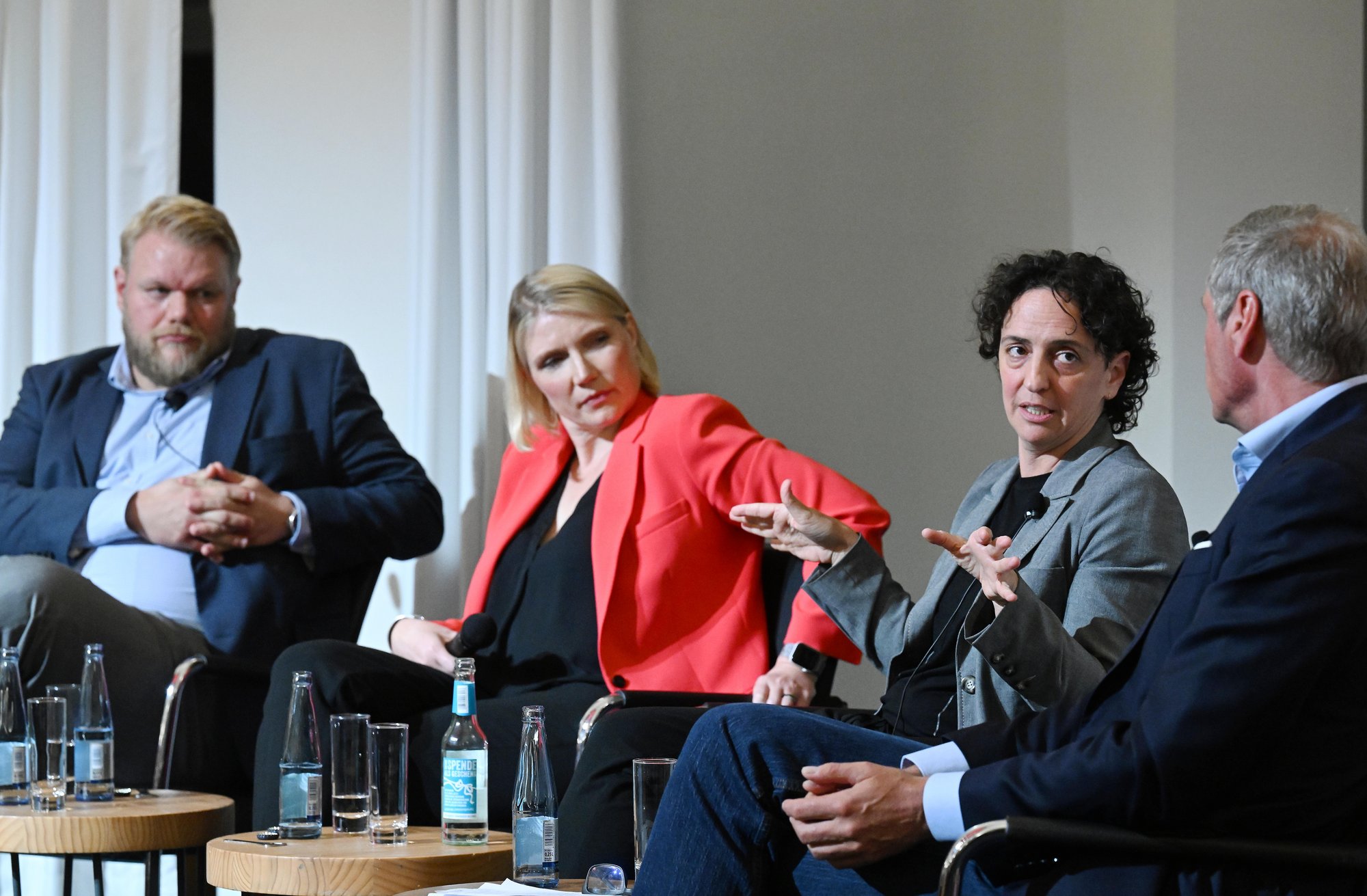
The panellists were:
- Cathryn Clüver Ashbrook, transatlantic expert, Bertelsmann Stiftung
- Peter Sparding, Senior Vice President and Director of Policy, Center for the Study of the Presidency & Congress (CSPC), Washington
- Rachel Tausendfreund, Senior Research Fellow for Transatlantic Relations, German Council on Foreign Relations
- Moderator: Georg Mascolo, journalist and former editor-in-chief of SPIEGEL
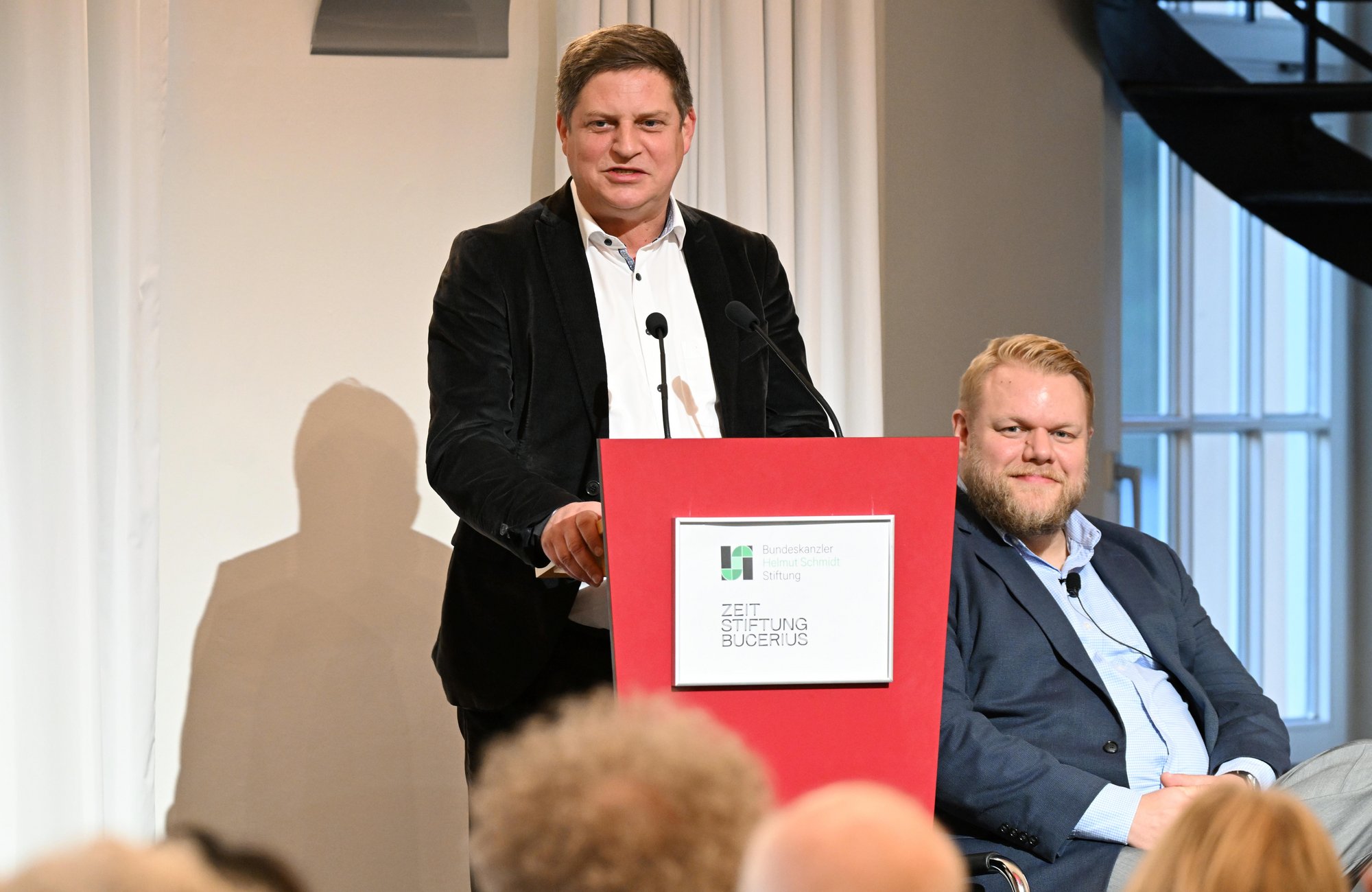
The guests were welcomed by Sascha Suhrke (Head of the ‘Politics and Society’ division at the ZEIT STIFTUNG BUCERIUS) and Meik Woyke (Chairman of the Board and Managing Director of the Federal Chancellor Helmut Schmidt Foundation). The closing remarks were delivered by Markus Kotzur (President of the Europa-Kolleg Hamburg).
Research reports on Panel 1 of our FOTAR 2024
Democrats and Republicans disagree on many aspects of US foreign policy, and both parties are also internally divided. This is perhaps most evident in relation to the wars in the Gaza Strip or Ukraine, but conflicts in other regions could also be affected by changes in US foreign policy. As the 2024 US elections take place in a global environment characterised by a return to power politics and a weakening of international institutions, the question arises: what will their outcome mean for the future course of conflicts worldwide and the prospects for their resolution?
The Arab/Muslim vote in the 2024 US elections
Aleena Khan is a Junior Lecturer at the Institute of Security and Global Affairs (ISGA) of Leiden University.
How does the Democratic Party’s stance on the Israel-Palestine conflict influence the voting behavior of Arab/Muslim voters in swing states during the 2024 presidential elections and future conflict resolution initiatives towards de-escalating this conflict?
The Israel-Palestine conflict resurged in October 2023 after Hamas’s attack on Israeli citizens and, as of October 2024, has now spread to Lebanon and parts of Yemen as well. The conflict has had world-wide ramifications, but this policy brief will only study its impact on the 2024 United States presidential elections. The issue is of great importance to Arab/Muslim voters, a constituency making up a large percentage of swing-states. In order to facilitate a de-escalation of the conflict, it is of utmost importance for American and European heads of state to work quickly towards conflict resolution initiatives. All state leaders should push for the delivery of humanitarian aid to those civilians in Gaza and the occupied West Bank, as well as civilians affected by Israel’s invasion of Lebanon. Additionally, those European state leaders should pressure the US state leader to halt its support to Israel in the form of weapons deliveries to avoid escalation of violence and warfare in all concerned regions.
The Democratic Party’s switch
Before he dropped out, President Biden was actively losing a part of his voter base, specifically Arab/Muslim voters. Voters were vowing to remain ‘uncommitted’ in unprecedented numbers as a public display of opposition to the US’s support of Israel. These voters have three main demands: “achieving an enduring ceasefire, imposing an arms embargo on Israel, and lifting the siege on Gaza” (Harb, 2024). President Biden’s strong stance in support of Israel has kept him alienated from these voters. Although Vice President and Democratic nominee Kamala Harris has been significantly involved in overseeing US policy on the war, her support of Israel and its war seems more tempered than Biden’s (Harb, 2024). Harris becoming the new Democratic nominee has already attracted large swaths of voters. For example, the Black Muslim Leadership Council Fund who had previously declared itself uncommitted to Biden has now publicly endorsed Harris (Alcindor, 2024).
The Arab/Muslim vote in the US
Although Muslims only make up about 1% of the American population, they are concentrated in swing states. In 2020, about 65% of Muslim voters in swing states voted for President Biden – this support was essential to his electoral victory, because he won those states by small margins (Mogahed and Selod, 2024). He won in Georgia by only 12,000 votes, where 61,000 Muslims voted, and in Pennsylvania by 81,000 votes, where 125,000 Muslims voted. Research conducted by the Pew Research Center shows that Muslim Americans are more inclined than other religious groups to be in support of Palestinian sovereignty (Alpher et al. 2024). Muslim Americans are united in support of the Palestinian cause in a way that has not yet been seen in American political history, and this could be costly to the Democrats if policies important to key constituencies are not addressed before the elections.
Harris’s approach towards this conflict
Though Harris has shown some vocal support for both Israel and Palestine, the Palestinian community and their allies feel an air of silencing in regard to support for Palestine. Leaders of the previously mentioned “Uncommitted” movement had long been negotiating for a Palestinian-American to speak at the Democratic National Convention held in August 2024. Their request was denied, and the Harris campaign entirely refused to comment on that decision. Despite that, the parents of a hostage taken by Hamas, Hersh Goldberg-Polin, were allowed to speak at the convention. This decision led to the belief by Arab/Muslim constituents that her administration is wanting to include one side of this issue more than the other, which led to a massive protest outside of the venue hosting the convention (Cappelletti, 2024).
Disclaimer: This policy brief focuses only on possible outcomes where the Democratic candidate is successful in order to explicitly detail those outcomes. The possibility of a Republican electoral victory lies beyond the scope of this brief.
Scenario 1: Harris wins and shifts policy
If Harris takes office in January 2025, she has the ability to shift the US’s current policies and diplomatic relations with Israel. Though this brief touches upon both before and after election night, here the potential aftermath of the election will be detailed.
Firstly, in this scenario, Harris increases the amount of aid given to those communities devastated by the impact of Israel’s strikes in Palestine and Lebanon. The military aid currently being given in the form of weapons to the Israeli military makes up over 300 billion US dollars. Here, a portion of the money being sent would be halted to give humanitarian assistance to civilians, in the form of food, clothes, shelter, and medical care. The US announced an amount of over 300 million US dollars will be given to Palestinians in Gaza and the West Bank (Psaledakis, 2024). In this scenario, Harris pledges more than 500 million US dollars, and this aid continues in increasing increments that match the needs of those communities.
Israel is already the largest cumulative recipient of US aid, both economic and military (Masters and Merrow, 2024). In a policy shift, Harris reconsiders the aid given to Israel in accordance with the Leahy Law, which prohibits US aid from going to foreign military units or individuals suspected of committing gross human rights violations (Lumpe, 2014). Even before October 7, the United States “found five units of the Israel’s security forces responsible for gross violations of human rights”, and yet they did not bar any of those units from continuing to receive US military aid, four of which were able to “remediate” the cases in line with State Department policy (Lewis and Zengerle, 2024). These violations reported by human rights groups included extrajudicial murders, torture, and physical abuse, mostly committed against Palestinians in the Israeli-occupied West Bank (US State Department, 2024).
Lastly, the Harris administration applies enhanced pressure to push the United Nations’ Security Council Resolution 2735 (2024) into acceptance by both the Israeli government and Hamas. The resolution encompasses three phases, including the release of hostages by both sides, return of Palestinian civilians to their homes, safe distribution of humanitarian assistance, an end of hostilities, and a reconstruction plan. The resolution was announced by the US, who claim Israel has accepted it. However, no action has been taken since its proposal in June 2024. Netanyahu is skeptical of the deal, wanting to continue with “destroying Hamas”; while Hamas has said they are ready to negotiate the deal with Israel, but will still “continue its struggle against Israeli occupation” (Lederer, 2024). The Harris administration increases momentum in mediating negotiations between both the Israeli government and Hamas by sending diplomats to the region and facilitating outreach towards Iran, encouraging them to pressure Hezbollah, who have now become a major participant in this conflict, and Hamas.
Scenario 2: Harris wins and sticks with current policy
If Harris is elected and does not shift policy at all, the likelihood of the war continuing with even more devastating impact to more regions in the Middle East is probable. Here, Harris’ actions before the elections will be discussed in order to attempt to understand what her cabinet is planning to do in regard to this issue.
In this scenario, once in office Harris continues a cautious and unclear approach towards the conflict in Gaza. So far, this strategy has allowed her to maintain the support of most of Biden’s supporters as well as bring in some voters who would be considered more progressive or are a part of communities concerned about the conflict.
Vice President Harris hired Nasrina Bargzie as her liason to Arab and Muslims voters. Bargzie’s role will be to lead the outreach initiative to these communities (Lucente, 2024). Harris also appointed Ilan Goldberg as the lead for outreach to the Jewish community. These appointments show that Harris is attempting to include all relevant parties to the conflict in Gaza in her campaign approach. In a muddled scenario, once elected the Harris administration loses focus on these outreach efforts, while divisions between the two groups grow.
In the scenario in which Harris follows in the footsteps of her predecessor, she will face a lot of opposition from his constituents and possibly also people working with her. For example, Tariq Habash quit his position within the US Department of Education in January 2024 since “he could no longer represent an administration that does not value all human life equally” (Al Jazeera, 2024).
Post-election policy
If the Democratic Party keeps the White House American and European state leaders must work to emphasize the importance of working towards conflict resolution initiatives in regard to the ongoing conflict in Gaza, the occupied West Bank, and Lebanon. Until after the election is complete, it will remain in the interest of Harris to please all constituents with varying views on the direction needed to be taken. After her inauguration, Harris will have room to amend policy decisions. This is where the proposed policy recommendations come into action.
Firstly, it is crucial for interest groups, US governors and congress members, and European leaders to apply diplomatic pressure towards Harris to reconsider US aid to the specific units of the Israeli military, in accordance with the Leahy Law. To uphold its own credibility, the US must stand in accordance with the Leahy Law in the context of this conflict. If the Israeli military is accused of gross violations of human rights, it is the responsibility of the Harris administration to halt military aid to them or their subsections.
Secondly, American and European state leaders must ensure humanitarian assistance is delivered to those communities devastated by conflict. This conflict has now spread to other regions of the Middle East, including Lebanon. It is pertinent to ensure an adequate humanitarian response goes to all affected communities. This should be done by working with NGOs in the communities themselves, ensuring them an adequate amount of financial assistance to carry out their work. The advice of international humanitarian organizations must be heeded when deciding how to deliver aid. The UN and other humanitarian organizations have advised that the aid given by the US is a small fraction of what is needed and that they must use land routes to get resources to Gaza. Additionally, the American government must ensure the financial aid they administer is received by its target, especially since the US-built pier proved ineffective (Gritten, 2024). It is pertinent for American and European policymakers to lobby with Israeli military officials to lift restrictions on delivering aid to civilians in accordance with international humanitarian law.
Lastly, American and European state leaders must push for negotiations between the Israeli government and Hamas in accordance with the UNSC’s resolution 2735 (2024). This initiative should include frequent visits by key figures of the Harris administration, especially the Secretary of State, to Israel and Palestine in order to emphasise urgency of decision-making. As there is currently no political will from either side to end the conflict, it is pertinent for the US and its allies to create an urgency for them both. The European Council of the EU should also be involved in these negotiations to show transatlantic unity in regard to this conflict.
Note: The respective author is responsible for the content of the article. The contributions do not necessarily reflect the opinion of the Bundeskanzler-Helmut-Schmidt-Stiftung and the Europa-Kolleg Hamburg.
References
Alcindor, Yamiche (2024): Black Muslim group endorses Harris after its ‘uncommitted’ stance on Biden, NBC News, Muslim group endorses Harris after 'uncommitted' stance on Biden (nbcnews.com) (accessed on 04/09/2024).
Al Jazeera (2024): Q&A: Former Biden appointee says US policy is ‘dehumanising’ Palestinians, www.aljazeera.com/news/2024/1/9/qa-former-biden-appointee-says-us-policy-is-dehumanising-palestinians (accessed on 05/10/2024).
Alper, Becka; Keeter, Scott; Lippert, Jordan; Mohamed, Besheer; Silver, Laura (2024): Majority in U.S. Say Israel Has Valid Reasons for Fighting; Fewers Say the Same about Hamas, Majority in US Say Israel's Reasons for Fighting Hamas Are Valid | Pew Research Center (accessed on 12/09/2024).
Cappelletti (2024): ‘The answer is no’: Pro-Palestinian delegates say their request for a speaker at DNC was shut down, Pro-Palestinian delegates say their request for a speaker at DNC was shut down | AP News (accessed on 11/09/2024).
Data for Progress (2024): Voters Support the U.S. Calling for Permanent Ceasefire in Gaza and Conditioning Military Aid to Israel, Voters Support the U.S. Calling for Permanent Ceasefire in Gaza and Conditioning Military Aid to Israel (dataforprogress.org) (accessed on 11/09/2024).
Gritten, David (2024): US military ends Gaza floating aid pier mission, www.bbc.com/news/articles/c728337zy1lo (accessed on 13/09/2024).
Harb, Ali (2024): Kamala Harris shifts tone on Gaza, but advocates say US voters want more, Al Jazeera, Kamala Harris shifts tone on Gaza, but advocates say US voters want more | US Election 2024 News | Al Jazeera (accessed on 04/09/2024).
Lederer, Edith (2024): UN Security Council adopts a cease-fire resolution aimed at ending Israel-Hamas war in Gaza, apnews.com/article/un-us-security-council-israel-hamas-ceasefire-834734f606a5245cc46a2487a70ae3fa (accessed on 05/10/2024).
Lewis, Simon; Zengerle, Patricia (2024): US Implicates 5 Israeli units in rights violations before Gaza war, no restrictions on assistance, www.reuters.com/world/middle-east/us-found-five-israeli-military-units-committed-gross-human-rights-violations-2024-04-29/ (accessed on 04/10/2024).
Lucente, Adam (2024): Who is Nasrina Bargzie, Kamala Harris’ liaison to Arab and Muslim voters?,https://www.al-monitor.com/originals/2024/08/who-nasrina-bargzie-kamala-harris-liaison-arab-and-muslim-voters (accessed on 08/09/2024).
Lumpe, Lora (2014): What the Leahy Law Means for Human Rights, www.opensocietyfoundations.org/voices/what-leahy-law-means-human-rights (accessed on 21/10/2024).
Masters, Jonathan; Merrow, Will (2024): U.S. Aid to Israel in Four Charts, www.cfr.org/article/us-aid-israel-four-charts (accessed on 04/10/2024).
Psaledakis, Daphne (2024): US to announce over $300 million in aid for Palestinians in Gaza, West Bank, www.reuters.com/world/us-announce-over-300-million-aid-palestinians-gaza-west-bank-2024-09-30/ (accessed on 04/10/2024).
US State Department (2024): 2023 Country Reports on Human Rights Practices: Israel, West Bank and Gaza, www.state.gov/reports/2023-country-reports-on-human-rights-practices/israel-west-bank-and-gaza/ (accessed on 25/10/2024).
The US elections and peace and security in West Africa and the Sahel
Isabell Kump is a policy advisor with the Munich Security Conference
The US elections come at a time when US policy towards West Africa and the Sahel is at a critical juncture. Regardless of who wins the presidency, the US and its European partners will need to improve coordination, the lack of which has long characterised collaboration in the region.
The US presidential elections on 5 November come at a time when the US finds itself in a position of waning influence in West Africa and the Sahel. Authorities in Niger and Chad ordered US troops to leave, calling years of US engagement in question. The withdrawal from Niger is particularly consequential because the country has been a linchpin for the US in the region. Since 2013, the US has relied on Niger as a strategic location from which to monitor terrorist activity. Consequently, the US is now reviewing its strategy and partnerships with countries in the region.
However, any change in regional strategy by the current administration under President Joe Biden could be reversed by either presidential candidate. For most of the campaign thus far, neither Donald Trump nor Kamala Harris have addressed foreign policy towards West Africa and the Sahel as a prominent issue. But the new president will inevitably need to address the future of US engagement in the region and respond to developments on the ground.
As there are only a few hints as to which direction US policy towards the region may take, the building of scenarios can help anticipate what the presidential candidates may do after taking office. This policy brief presents two scenarios to illustrate possible consequences and implications of either Kamala Harris or Donald Trump winning the election. This exercise will also deal with the effects for European countries, which are reviewing their regional policies, too.
The situation in West Africa and the Sahel
In recent years, the Sahel, which is in part located in West Africa, has become a global hotspot of terrorism. In 2022, 43 per cent of all global terrorism deaths were recorded in the Sahel, with Burkina Faso witnessing the largest increase in terrorism deaths from 759 in 2021 to 1,135 deaths in 2022 (Institute for Economics & Peace 2023).
Once Africa’s democratic poster child, West Africa has faced the repercussions of an insurgency that started in 2012 and has plunged the region into uncertainty. After the fall of the Gaddafi regime in Libya in 2011, ethnic Tuareg people who had been fighting alongside then-dictator Muammar Gaddafi returned to northern Mali and joined a separatist rebellion against the Malian state. The insurgency resulted in a coup against then-President Amadou Toumani Touré. Whilst the insurgency was ended with the help of a Frenchled coalition and the conclusion of a peace accord in 2015, Mali has since remained divided. In the following years, numerous actors, including the UN, the EU, the African Union, the US and France, enhanced their support not only for Mali but also for neighbouring Burkina Faso and Niger; their aim was to restore stability through a mix of humanitarian assistance and development, military and security cooperation. Despite the increasing engagement from outside actors, the security situation deteriorated further. It has worsened not only in Mali, Burkina Faso and Niger, but also in Benin, Côte d’Ivoire and Togo.
US policy towards West Africa and the Sahel
US engagement in West Africa and the Sahel is in line with the overall US strategy towards Sub-Saharan Africa, which has been fairly consistent over the past decades. Since 9/11, the US has largely focused on counterterrorism in various parts of Africa. To combat terrorist groups like Boko Haram in the Lake Chad Basin or al Qaeda and ISIS affiliates in the Sahel, it established a network of military bases. In addition, the US has expanded its partnerships with African militaries and advised, trained and assisted them via the US Africa Command (AFRICOM). Seeing underdevelopment as a driver of terrorism, insecurity and state failure, the US has complemented its military efforts with development and humanitarian assistance. But despite the goal of balancing diplomacy, defence and development, development has taken the back seat.
During Trump’s presidency, US policy towards the region largely stayed on course. At the outset, concerns were high that his administration would roll back military and development assistance. His statements towards these countries did not bode well. In 2013, he tweeted about then-President Barack Obama’s Power Africa project: “Every penny of the $7 billion going to Africa as per Obama will be stolen – corruption is rampant!” (Trump 2013). Five years later, during his presidency, he dubbed African states “shithole countries” (Watkins and Phillip 2018). Yet, despite Trump’s harsh rhetoric and threats to downsize the UN mission MINUSMA in Mali, US support continued unabated. Development cooperation also remained unaltered, not least because the US Congress, with the help of Republican votes, prevented the administration from cutting USAID’s budget by almost a third (von Soest 2021).
President Biden sought to reframe the region’s importance. He stressed the need to renew US Africa policy and promised to prioritise democracy promotion, including in West Africa. In 2022, his administration added five West African countries, including Benin and Togo, to its 2019 Global Fragility Act and added the prevention of violent conflict in unstable regions as a new component of its strategy. The choice of countries signalled that West African stability was a US interest.
However, Biden’s plans were overtaken by developments in the Sahel, where military coups took place in Mali, Guinea, Chad, Burkina Faso and Niger. The coup in Niger in particular has put the US in a tight spot between its commitment to promoting democracy and its interest-based foreign policy. The trade-off became obvious when it took the US weeks to call the overthrow a coup. Doing so would have meant cutting off military assistance and part of its development cooperation. After a while, the US called it a coup but pronounced that it would keep communications open. According to AFRICOM’s Commander General Michael E. Langley, the US aimed to continue dialogue to get the juntas “on a roadmap back to democracy” (Akinyemi and Ewokor 2024).
Eventually, it was the Nigerien junta that ended its military partnership with the US. Among the reasons given by Nigerien officials was that the US had pursued a one-sided security relationship and pressured Niger to limit ties with Russia and Iran (Kupemba 2024). While the US decided to maintain its Niamey embassy and its engagement in other policy areas, it agreed to withdraw its troops by 15 September (U.S. Department of Defense 2024). Authorities on both sides are still trying to underscore their commitment to ongoing diplomatic dialogue. The question now is how the US will remain engaged in West Africa and the Sahel.
Scenarios: “America first” or “America is back again”
Regardless of who assumes the presidency in 2025, the new administration will have to grapple with declining US influence in the region. To anticipate possible consequences and implications for the region, the two scenarios are set one year after each candidate has taken office.
Harris I: America is still back
On 5 November 2024, Kamala Harris won the US presidential election by a slim margin. While her election campaign did not disclose many hints about her vision for future relations between the US and West African countries, her election brought a sense of relief and optimism to the region; finally, a president was in office who had visited African countries, such as Ghana, after the last presidential visit to the continent occurred under Barack Obama in 2013.
One year after President Kamala Harris took office, optimism among West African actors has largely remained. As many experts predicted, Harris embarked on a similar foreign policy course to her predecessor, implementing the 2022 Africa Strategy and the 10-year plan to encourage stability and prevent conflicts that the Biden administration launched in 2023. The plan moves away from prioritising military approaches and instead aims to foster social cohesion and government responsiveness. Nevertheless, to maintain a military footprint in the region, the Harris administration has just concluded an agreement with Ghana that will allow the US to station reconnaissance drones at the country’s airfields to continue surveillance of terrorists. Negotiations took two years but were eventually successful because Ghana has seen rising insecurity on its northern border with Burkina Faso and considers coordinated US intelligence operations as a way to maintain security in the region. To demonstrate that it is a partnership on equal footing and high-level support for a strengthened relationship, Vice President Tim Walz also travelled to Accra to sign the agreement.
But the optimism among West African policymakers may soon fade. For one thing, President Harris has inherited the challenge that US ambitions to promote democracy and development have not been matched by sufficient funding. Leaving this issue unaddressed threatens the credibility of President Harris and US support in general, but it also leaves funding gaps in promised climate finance, financial resources the region desperately needs. Moreover, the Harris administration has been unable to find common ground with Sahel countries, especially Niger. Talks are still ongoing, but since the coup in Niger in July 2023, the US has remained in an observer position, watching Russia’s Africa Corps strengthen its foothold in the region and contribute to even higher levels of human rights abuses and insecurity than in the years before. Developments point to further destabilisation of the region rather than the opposite.
Trump II: America first again?
The re-election of Donald Trump in November 2024 heightened concerns and fears in West Africa and the Sahel. However, one year into Trump’s presidency, there are cautious hopes in West Africa and the Sahel that he may not follow through on his earlier announcements after all. So far, his administration has not cut military and security assistance, has extended the African Growth and Opportunities Act (AGOA), which was due to expire in 2025, and, surprisingly, he has not announced the reduction of USAID’s budget for climate policies; funding that Project 2025, a blueprint for the next conservative presidency by the Heritage Foundation, proposed to rescind altogether (Primorac 2023). Nor has he questioned established partnerships with countries in the region. However, he has not addressed future relations with Niger, Mali, Burkina Faso and Chad either after the US had to withdraw troops from the region in the summer of 2024.
Nevertheless, decision-makers in the region remain vigilant because changes in regional policy could come up at any time during his presidency. Much of his administration’s “inactivity” can be attributed to the fact that, contrary to expectations, his administration needed significant time to get sorted out and fill many key positions. It is now being reported that representatives from Mauritania and Morocco are expected to pay a state visit to Washington in the coming months to discuss the explosion in the number of terrorist attacks in the Sahel, a development which concerns both countries. Since the US left its base in Niger in September 2024, terrorist groups have expanded their strongholds across the region. However, the crises in the Sahel do not seem to be of interest to Donald Trump, not even the fact of a greater rivalry between the US and Russia in the region. Authorities in Mali, Burkina Faso and Niger have already realised that cooperation with Russia’s Africa Corps is not yielding the expected progress in counterterrorism in their countries, but they do not expect any better kind of security and military partnership from the current US administration.
Implications for transatlantic partners and policy recommendations
The implications of the US presidential elections for US policy towards West Africa and the Sahel are relevant not only for the African region, but also for European countries. Over the past decade, European countries, especially France and Germany, have been supporting the region through various forms of assistance alongside the US. After the coups in Mali, Burkina Faso and Niger, the authorities ended military and security cooperation with European partners, too, and, in the case of France, cut diplomatic ties. Against this background, it is vital for European countries to anticipate the trajectory of US regional policy under a new administration. With regard to the scenarios described in this policy brief, the following recommendations can be derived for US and European policymakers:
If Kamala Harris becomes president, the US and its European partners should improve coordination of their respective development and humanitarian assistance to maximise their impact. Although several international partners launched the Sahel Alliance in 2017, coordination among them has never been ideal, struggling with incoherence and missing effectiveness of the multiple programmes. In addition, the EU should ensure that its activities under the new Gulf of Guinea Security Defence Initiative mission, which it has launched in countries such as Ghana and Benin, are coordinated with the US security and defence partnerships with these countries. They should also align their approaches and streamline their objectives with regard to engaging with the military juntas. This could increase their joint credibility vis-à-vis the military juntas and convince them that they are more reliable and stronger partners in fighting terrorism than Russia.
If Donald Trump becomes president again, European policymakers should coordinate activities with the US in development cooperation, diplomacy and military and security assistance, too. But they should be cautious and make contingency plans in case Trump changes the course of US policy after all. European countries should develop their own policies in the region and not, for instance, rely on US regional assets. Donald Trump demonstrated in his previous term in office that Europe cannot rely on him. Yet, European countries should still try to convince a possible Trump administration that engaging with the Sahel countries is in the US interest. His administration, for its part, should be careful not to underestimate how Russia’s activities in the Sahel also threaten US national security.
Note: The respective author is responsible for the content of the article. The contributions do not necessarily reflect the opinion of the Bundeskanzler-Helmut-Schmidt-Stiftung and the Europa-Kolleg Hamburg.
References
Akinyemi, Aaron/Ewokor, Chris (2024): “We Are Still Engaged With West African Juntas” – US Africom Head Gen Michael Langley, BBC, perma.cc/G83J-4JBT (accessed on August 26, 2024).
Institute for Economics & Peace (2023): Global Terrorism Index 2023: Measuring the Impact of Terrorism, Sydney, Institute for Economics & Peace, 4, 13.
Kupemba, Danai Nesta (2024): US Troops to Leave Niger by Mid-September, BBC, perma.cc/BE6N-RFTA (accessed on August 26, 2024).
Primorac, Max (2023): Agency for International Development, in: Roberts, Kevin/Dans, Paul (eds.): Mandate for Leadership: The Conservative Promise, Washington, DC: The Heritage Foundation, 257.
Trump, Donald (2013): "Every Penny of the $7 Billion Going to Africa as Per Obama Will be Stolen - Corruption is Rampant!", X, perma.cc/RUS2-ZG4H (accessed on August 26, 2024).
US Department of Defense (2024): Senior Defense Official and Senior Military Official Hold a Background Briefing on Niger, perma.cc/62Y8-C5WA (accessed on August 26, 2024).
von Soest, Christian (2021): The End of Apathy: The New Africa Policy Under Joe Biden, Hamburg: GI-GA, GIGA Focus 2, March, 4–5.
Watkins, Eli/Phillip, Abby (2018): “Trump Decries Immigrants From "Shithole Countries" Coming to US,” CNN, perma.cc/2864-YMYW (accessed on August 26, 2024).
The US strategic approach to the South China Sea after the 2024 US elections
Anta Maulana Nasution is a Researcher at the National Research and Innovation Agency of the Republic of Indonesia (NRIA)
The United States plays a pivotal role in the evolving dynamics of the South China Sea. US foreign policy, from President Obama's administration to that of President Biden, has positioned the country as a counterbalance to China's expanding influence in the region. In the wake of the 2024 elections, it is essential that the US formulates a more constructive foreign policy to mitigate the risk of escalating tensions or conflict with China in the region. A key priority should be the settlement of maritime boundary disputes between ASEAN member states (the Philippines, Vietnam, Brunei Darussalam and Malaysia) and China. Efforts must focus on preventing these disputes from escalating into conflicts that could undermine the security and stability of the region.
Introduction
This policy brief aims to provide recommendations to US policymakers following the 2024 US presidential election, focusing on formulating constructive policies to address issues in the South China Sea (SCS) and to prevent further deterioration of security and stability in the region.
The SCS conflict is frequently described as the “mother of all territorial disputes” (Beukel 2010), involving multiple nations, including China, the Philippines, Vietnam, Brunei Darussalam and Malaysia (all except China are members of the Association of Southeast Asian Nations (ASEAN)). These countries have overlapping territorial claims concerning sovereignty and sovereign rights in the SCS (Raharjo et al. 2021). China contends that the entire SCS falls under its jurisdiction, based on the so-called “nine-dash line”, a claim widely regarded as lacking a basis in international law.
The parties involved in the dispute have attempted various measures to find a resolution, including approaches through international law and bilateral discussions, as undertaken by Vietnam and the Philippines through several bilateral talks with China (Amer 2014; Fravel 2011). However, to date, there has been no agreement on the boundaries of each country’s sovereignty. The Philippines also pursued a legal approach by submitting the case to the International Arbitration Court (Permanent Court of Arbitration). The ruling issued on 12 July 2016 determined that China's historical claims were inconsistent with the United Nations Convention on the Law of the Sea (UNCLOS) 1982, a decision China rejected. Similarly, the US has consistently dismissed China’s claims as lacking legal basis and has dismissed them. As a non-ASEAN country, the US has strongly supported the 2016 Arbitration Court’s ruling in favour of the Philippines against China's claims.
For the states involved in the SCS dispute, the US is considered as a balancing power against China in the region. The US also has a vested interest in maintaining a presence in the SCS, driven by three key factors. Firstly, safeguarding the security of trade routes in Asia is crucial, as one-third of global shipping and 14 per cent of US maritime trade passes through the SCS (China Power Team 2021). Secondly, the US is seeking to preserve its influence in Southeast Asia, particularly as China’s Belt and Road Initiative (BRI) has steadily increased its regional presence. Thirdly, the US firmly upholds the principle of freedom of navigation and operations throughout countries’ Exclusive Economic Zones (EEZ), as enshrined in the UNCLOS 1982, given that US civilian and military vessels operate in nearly all international waters.
The ongoing dispute in the SCS increasingly resembles a strategic battleground between the US and China in their pursuit of hegemony within the Southeast Asian region. Prior to China’s rise as a superpower, the US already wielded considerable influence over ASEAN member states. In terms of trade in goods and services, the US is ASEAN's second-largest trading partner after China (Medina 2023). In its efforts to maintain dominance in Southeast Asia, the US is likely to support ASEAN member states involved in disputes with China in the SCS while simultaneously advancing its own strategic interests. On multiple occasions, however, the presence of US military in the SCS has exacerbated tensions with China with negative implications for regional stability.
The US’s policy track record in the South China Sea
It is important to recognise that China has consistently undertaken assertive actions in the SCS, including the construction of artificial islands and military installations, particularly in the Paracel and Spratly Islands. Furthermore, according to Asia Maritime Transparency Initiative (AMTI), China has stationed coast guard vessels to assert control over these areas.
During President Obama's administration, US foreign policy shifted its focus in a strategic reorientation termed the “Pivot to Asia”. One of the primary objectives of this policy was to promote stability and security in the Indo-Pacific region, with particular emphasis on the US playing a more prominent role in addressing the SCS conflict. President Obama's successor, President Trump, pursued a similar approach in the SCS. Though with differences in style, the approach from Obama through Trump and Biden has been largely consistent.
The future stability and peace of the Indo-Pacific region, particularly in the SCS, will be significantly influenced by US foreign policy after the 2024 presidential election. An inappropriate shift in US policy could potentially escalate the dispute into a broader conflict and diminish US influence in the region, thereby directly altering the geopolitical and geostrategic landscape of the Indo-Pacific. Therefore, a non-aggressive approach is required to minimise violence and reduce the militarisation of US foreign policy towards the SCS dispute.
Expectations in the South China Sea post-US election 2024
A Kamala Harris victory is expected to largely continue the policies of the Biden administration, particularly concerning issues in the SCS. On multiple occasions, Harris has represented President Biden in formal meetings with ASEAN countries, such as at the 2023 ASEAN Summit. Moreover, it is anticipated that Harris will actively engage US allies and strategic partners to address ongoing issues in the SCS. For instance, in 2022, as part of its strategy for the SCS, the US announced initiatives to enhance maritime domain awareness across the Indo-Pacific through joint patrols and exercises in the SCS in collaboration with Australia, Japan and India—collectively known as the “Quad” (Dolven et al. 2023). This group is also planning a series of naval drills in the SCS scheduled for 2024. Such actions are likely to escalate tensions between the US and China in the region.
A Donald Trump victory is expected to further escalate tensions in the SCS, particularly with China. Although the US has maintained a consistent policy on the SCS since the Obama administration, Trump’s approach is significantly more assertive and relies on a stronger military presence in the region. During his previous term in office, the US strategically sought to counter China's increasingly assertive behaviour in the SCS, notably by enhancing its own military presence (Hutagalung 2024). This approach contributed to heightened tensions between the US and China in the SCS, as exemplified in 2020 when both nations showcased their military capabilities. Although these actions did not escalate into armed conflict, the risk was there.
Strategic policy recommendations for US engagement in the South China Sea post-2024
Recommendations if Harris wins
If Harris wins the 2024 US presidential election, US policymakers should prioritise two key actions:
1. Fostering constructive dialogue on South China Sea issues within regional forums
The US frequently engages in official forums or meetings involving member states of ASEAN and China, such as the ASEAN-US Summit, East Asia Summit, ASEAN-US Dialogue, ASEAN Regional Forum, ASEAN Defence Ministers’ Meeting Plus (ADMM-Plus) and Indo-Pacific regional forums. In these forums, the US has the opportunity to shape the dialogue agenda by raising issues related to the SCS dispute. These platforms enable the US to reaffirm its strategic interests and its stance regarding the situation in the SCS.
Dialogue within official regional forums is essential for managing disputes and preventing their escalation into conflict. Moreover, such discussions serve to underscore the significance of developments in the SCS to all parties involved. The US should prioritise fostering constructive dialogue, avoid the pursuit of unilateral interests and support nations engaged in regional disputes with China. It is equally important that the US exercises caution by refraining from introducing sensitive issues that may provoke China, thereby maintaining a balanced and diplomatic approach.
2. Excluding non-ASEAN member states from military activities in the region.
The actions of the US, in collaboration with its partners and allies (e.g. in the Quad formation), such as conducting patrols or joint exercises in the vicinity of the SCS, may be interpreted in various ways. China could perceive these activities as provocations, potentially escalating tensions and prolonging the settlements of maritime boundary disputes in the SCS. Instead of involving Quad countries in military contexts (such as patrols and exercises), it would be more beneficial to encourage these nations to enhance economic cooperation with ASEAN members. It is crucial to emphasise that disputes can only be resolved by the parties directly involved. Countries not directly involved can only serve as external actors in the dispute settlement process. For example, the US could advocate for its partner countries to provide diplomatic support to ASEAN member states engaged in disputes with China in the SCS.
Recommendations if Trump wins
If Trump wins the 2024 US presidential election, US policymakers should focus on:
1. Enhancing military confidence through capacity building instead of deploying military means
It is crucial to acknowledge that China's military capabilities exceed those of the ASEAN member states engaged in disputes with China over the SCS (Global Fire Power 2024). Rather than adopting an assertive stance through military activities in the SCS, which could heighten tensions, the US should pursue a more diplomatic approach by military capacity building initiatives, such as joint exercises, with countries involved in territorial disputes with China. These exercises must be conducted within the territories of the respective countries and not in the disputed areas of the SCS.
The enhancement of the military capacity and capabilities of these ASEAN countries will serve to bolster their confidence in their ability to defend themselves against China's assertive actions in the SCS. The US has historically contributed to this capacity building by conducting joint exercises with ASEAN countries, such as Balikatan (with the Philippines), Komodo and Garuda Shield (with Indonesia), Keris Strike (with Malaysia), Cobra Gold (with Vietnam), Tiger Balm (with Singapore), Naval Engagement Activity (with Vietnam) and Carat (with several ASEAN countries). It would be prudent for future US policy to aim not only to sustain but also to expand these programmes by enhancing naval training capacity. Such capacity building not only benefits the ASEAN member states, but also aids the US in maintaining a balance of power against China in the Southeast Asian region.
2. Minimise independent US naval military activities in the South China Sea.
In the context of growing geopolitical tensions, particularly in the SCS, military propaganda can intensify existing conflicts. Therefore, it is essential for US policymakers to exercise prudence by avoiding any actions that could provoke or escalate aggression from China. A key measure in this regard is the reduction of excessive military activities, especially in the SCS. While the US may view initiatives such as freedom of navigation operations as part of its role as a “guardian of the region”, these actions carry the potential to heighten tensions. Ultimately, it is the countries within the region that will bear the most severe negative consequences of any potential escalation.
The 2024 US presidential election will not only shape the future direction of the US, but will also impact security and stability in the SCS, particularly concerning maritime boundary disputes. Although these disputes need to be resolved by the nations directly involved, the US can play a pivotal role and potentially accelerate the settlement of disputes in the SCS depending on how the US formulates its strategic approach in the region.
Note: The respective author is responsible for the content of the article. The contributions do not necessarily reflect the opinion of the Bundeskanzler-Helmut-Schmidt-Stiftung and the Europa-Kolleg Hamburg.
References
Amer, Ramses (2014): China, Vietnam, and the South China Sea: Disputes and Dispute Management,in: Ocean Development & International Law, 45, 1, 17-40.
Asian Maritime Transparency Initiative: China Island Tracker, AMTI Center for Strategic & International Studies, amti.csis.org/island-tracker/china/ (accessed on August 19, 2024)
Beukel, Erik (2010): China and the South China Sea: Two faces of power in the rising China’s neighborhood policy, DIIS Working Paper 2010: 07. Danish Institute for International Studies.
China Power Team (2021): How Much Trade Transits the South China Sea? China Power. chinapower.csis.org/much-trade-transits-south-china-sea/ (accessed on March 28, 2024)
Dolven, Ben, Campbell, Caitlin, O’Rourke, Ronald (2023): China Primer: South China Sea Disputes, Congressional Research Service, crsreports.congress.gov/product/pdf/IF/IF10607 (accessed on March 27, 2024)
Fravel, Taylor (2011): China’s Strategy in the South China Sea, in: Contemporary Southeast Asia: A Journal of International and Strategic Affairs, 33, 3: 292-319.
Global Fire Power (2024): Asian Military Strength 2024, Global Fire Power, www.globalfirepower.com/countries-listing-asia.php (accessed on August 21, 2024)
Hutagalung, Simon (2024): Would Trump go soft on the South China Sea?, Asia Times, asiatimes.com/2024/03/would-trump-go-soft-on-the-south-china-sea/ (accessed on August 19, 2024)
Medina, Ayman Falak (2023): An Overview of US Trade and Investment in ASEAN, ASEAN Briefing, www.aseanbriefing.com/news/an-overview-of-us-trade-and-investment-in-asean/ (accessed on August 12, 2024)
Raharjo, Sandy Nur Ikfal, Maulana, Anta and Nufus, Hayati (2021): Indonesia’s third party role in the South China Sea conflict Management: Assesing Interests, effectiveness, and chance of cross-border cooperation in: Indonesian Journal of Political Research, Volume 2,1, 1-16.
Battle beyond the ballot: Will US support for Ukraine hold?
By Polina Murygina, Lawyer and Investigator, Center for Transparency and Accountability (Lithuania)
As the 2024 US presidential election approaches, the fate of Ukraine hangs in the balance. With Democratic nominee Kamala Harris likely to uphold the Biden administration's strong support for Ukraine, the potential return of Donald Trump could dramatically reshape US foreign policy, putting at risk vital aid for Ukraine and sanctions against Russia. This pivotal election not only impacts Ukraine's struggle for sovereignty, but could also redefine global alliances and security dynamics. Will transatlantic unity withstand the storm of political change, or will the world witness a shift that emboldens aggression and undermines stability?
Context and relevance
The current global landscape is marked by severe geopolitical instability: Russia’s invasion of Ukraine, Hamasled violence in Israel extending into Lebanon, civil wars and terrorist attacks threaten global peace more than ever. Among these, Russia’s invasion of Ukraine is particularly alarming for global foreign policy, as it involves Russia – a nuclear great power – facing off against Ukraine, backed by NATO, the strongest military alliance. This precarious situation raises fears of escalation into a third world war.
While it is clear that Russia must be stopped and Ukraine supported, the conflict presents a delicate balancing act: Escalation must be avoided, particularly given Vladimir Putin’s nuclear threats (Gabuev 2024), yet Ukraine cannot fall, as it is fighting Russia on behalf of the broader international community and shielding Europe from Putin's imperialistic ambitions. The international community thus faces the challenge of aiding Ukraine without provoking further aggression from Russia, carefully navigating the fine line between firm pressure and avoiding overreach.
The US has played a leading role in the international response to the war in Ukraine through the provision of extensive military assistance, humanitarian aid and budgetary support, alongside enacting sanctions on Russia. US aid is the largest among Ukraine's allies, with over 56.8€ billion in military assistance between 2022 and 2024, compared to Germany’s 10.63€ billion and the UK’s 9.42€ billion. Overall, US and EU institutions are the top two donors, with the EU contributing over 118.23€ billion in total aid and the US providing more than 84.73€ billion (Trebesch et al. 2024). Should US support wane, it is questionable whether the European allies alone can sustain the same level of assistance to Ukraine. However, US support for Ukraine has historically received bipartisan backing, which may provide stability in US foreign policy amid electoral changes. Nevertheless, the election outcome is immensely important for the future of Ukraine, European security and the broader balance of global power.
Given these high stakes, the election initially appeared unusually chaotic, with two of the oldest candidates in US history – Joe Biden and Donald Trump – facing off against each other. Biden’s eventual withdrawal due to health issues paved the way for Kamala Harris, presenting a clearer choice between continuity and unpredictability.
Plausible scenarios and current policy options
Scenario 1: Continuity under Kamala Harris
Kamala Harris, continuing in the footsteps of the Biden administration, would likely maintain the current US strategy of robust support for Ukraine, including sustained military aid, humanitarian assistance to Ukraine and stringent sanctions against Russia. Harris’s election would likely reassure European partners, reinforcing a unified front against Russian aggression and enhancing aid effectiveness. In the best case, it would also advance the control and investigation of export sanction violations involving critical military components sent to Russia. Agencies such as the Bureau of Industry and Security (BIS), Office of Foreign Assets Control (OFAC), Directorate of Defense Trade Controls (DDTC), US Customs and Border Protection (CBP), Department of Justice (DOJ) and Federal Bureau of Investigation (FBI) would play a key role. Enhanced efforts could significantly reduce Russia's access to Western military-grade components and systems that fuel its war machine (Byrne et al. 2022), potentially leading to negotiations or a cessation of hostilities.
Currently, US authorities investigate military smuggling, but these cases remain rare. Investigations require examining the entire supply chain to prove that dual-use goods from the US end up in Russian defence enterprises like Rostec and Almaz-Antey (see e.g. United States District Court Eastern District of New York 2023, United States Magistrate Judge Southern District of New York 2023, United States Magistrate Judge Southern District of New York 2023). Although there are about 20 ongoing smuggling cases, the actual number of violations is much higher. Exports from the Common High Priority (CHP) list – covering sensitive dual-use technologies – often go unpunished due to the difficulty of proving military use, which takes time to establish. Consequently, dual-use goods worth hundreds of millions of dollars continue to enter Russia despite the sanction regime's absolute prohibition (Zayakin and Lyndell 2024).
Scenario 2: Uncertainty under Donald Trump
Donald Trump's candidacy creates uncertainty for US support of Ukraine. His past statements, including praise for Putin and scepticism toward NATO, raise concerns about reduced US aid to Ukraine and a rollback of sanctions. Trump has expressed a desire to negotiate a settlement between Ukraine and Russia immediately after being elected, claiming he could "end the war within 24 hours". Yet his reluctance to clearly support Ukraine’s victory suggests he may not challenge Russia’s expansionism. Instead, he might push Ukraine to cede occupied territories to Russia while reducing US support. This approach risks repeating the 2014 scenario, when concessions to Putin emboldened further aggression.
In this scenario, strategic planning is essential to mitigate reductions in aid and adjust transatlantic policies while upholding key non-negotiables. For the EU, this could be a turning point, allowing it to shift from being a passive follower of US policy to a global power that shapes its own course – possibly standing with Ukraine even if Trump attempts to pressure Ukraine to relinquish its territory. Independent aid to Ukraine is crucial. The prospect of diminished US leadership may seem daunting; however, Russia poses a direct threat to Europe, not to the United States. As empires fall, it may be time to embrace a new global leader in the face of the EU. Even if Trump lifted all US sanctions in one day, it might inspire the EU and its Member States to stand united, tightening controls on military component exports to Russia and preventing violations. This approach would increase the impact of aid to Ukraine – not simply by providing Ukraine with more weapons, but also by ensuring that Russia does not gain access to additional arms. At present, these measures are ineffective, allowing European companies to send dual-use goods to Russia with impunity (Juknevičiūtė 2024). The flow of critical military technology to Russia enables it to sustain and escalate the conflict. This arms flow to both sides diminishes the overall impact of international actors' support for Ukraine.
Policy recommendations
To ensure the continuity of support for Ukraine regardless of the US election outcome, transatlantic policymakers must prepare now to secure a stable, long-term framework for aiding Ukraine.
Recommendation 1: Enhance transatlantic cooperation and aid effectiveness
If Kamala Harris wins, transatlantic policymakers should continue coordinating with the US administration to bolster sanctions, increase military, humanitarian and financial aid to Ukraine and focus on halting Russia’s aggression.
- Increase financial commitments to Ukraine: Transatlantic policymakers must ensure the EU and other international actors take on a larger share of the burden, especially if US support falters due to a potential Republican-controlled Congress that might block aid packages to Ukraine. One avenue for the EU could involve expanding the use of frozen Russian state and sanctioned individuals' assets. While the Council of the EU has approved using proceeds from the Russian Central Bank’s frozen assets to aid Ukraine, this could include funds from sanctioned entities and individuals, making Russia’s wealth part of the solution to its own aggression without straining the European budget.
Recommendation 2: Prepare contingency plans for a potential Trump presidency
If Donald Trump wins, international actors should develop strategies to mitigate potential reductions in US support and ensure continuity in aid and sanctions enforcement.
- Reduce reliance on US leadership and increase commitments to Ukraine: European allies should collaborate through the European Defence Agency with NATO to build independent defence capabilities. Currently, 63 per cent of EU defence orders go to US companies, undermining Europe’s strategic autonomy. Europe must prioritise joint military projects and increase investment in its defence industry, which currently spends only €10.7 billion (4.5 per cent of total expenditures) on defence research and development compared to the US's €130 billion (Draghi 2024). This underinvestment limits Europe's ability to support Ukraine amid Russian aggression. Additionally, leveraging frozen Russian assets for Ukraine’s aid and post-war recovery should be a key EU strategy.
- Strengthen EU leadership: Reducing reliance on the US may necessitate more assertive actions from key EU leaders, including President of the European Commission Ursula von der Leyen, Commissioner for Defence and Space Andrius Kubilius, High Representative for Foreign Affairs and Security Policy Kaja Kallas and European Council President António Costa. Engaging with both Republican and Democratic legislators is essential for fostering a unified approach to support Ukraine, especially if Trump advocates for withdrawal or reduced aid. Additionally, establishing structured dialogues with non-EU Eastern European countries and the Caucasus region will enhance regional security and facilitate the creation of collective defence mechanisms against Russian aggression, promoting stability in areas directly threatened by Russia.
Recommendation 3: Promote a unified front and regional stabilisation
Irrespective of who wins:
- Coordination on sanctions enforcement: Transatlantic allies should strengthen cooperation to improve the enforcement of sanctions, particularly regarding the export of critical military components to Russia. This would involve enhanced intelligence sharing, harmonising sanctions policies, prosecuting violators and closing existing loopholes. Establishing a proactive EU authority dedicated to monitoring sanctions enforcement could improve coordination with US agencies like the BIS, OFAC, DDTC, CBP, etc. Such an authority would also compel Member States to act when necessary, preventing reliance on US agencies to lead enforcement efforts in Europe, as has occurred when the FBI seized Russian assets in Spain (Jolly 2022) or when US sanctions prompted Cyprus to act against Russian oli-garch enablers (Klein 2023).
- Develop a long-term strategy for Ukraine: Regardless of the election outcome, the EU Council for Foreign Affairs and Security Policy and the European External Action Service should engage with Ukraine’s government – specifically the Office of the President and the Ministry of Foreign Affairs – alongside international partners such as the US Secretary of State and the National Security Council to explore avenues for negotiating peace with Russia while clearly defining Ukraine's key non-negotiables that are to be respected, including possibly the restoration of its borders to their internationally recognised status from the 1990s. By adhering to these principles and involving key diplomatic actors, the prospect of achieving a lasting ceasefire and the possibility of waking up in a peaceful world becomes more attainable.
Ultimately, the 2024 US election will do more than just determine the next president – it will set the trajectory for global policy on Ukraine and significantly influence the broader quest for stability and peace. Whether there is a steady continuation of support under Kamala Harris or a wildcard shift in strategy under Donald Trump, the stakes are high, and the decisions made will resonate far beyond America’s borders. In this battle beyond the ballot, only time will tell if US support for Ukraine will stay the course or take an unpredictable turn – and whether the EU will rise to fill any potential leadership void. The outcome will not only impact the ongoing conflict but also shape global stability and peace-building efforts for years to come.
Note: The respective author is responsible for the content of the article. The contributions do not necessarily reflect the opinion of the Bundeskanzler-Helmut-Schmidt-Stiftung and the Europa-Kolleg Hamburg.
References
Bomprezzi,Pietro; Kharitonov, Ivan, Trebesch, Christoph (2024): Ukraine Support Tracker A Data-base of Military, Financial and Humanitarian Aid to Ukraine Update October 10, 2024: Data until August 31st 2024, Kiel Institute for the World Economy, www.ifw-kiel.de/topics/war-against-ukraine/ukraine-support-tracker/ (accessed on October 23, 2024).
Byrne, James; Somerville, Gary; Byrne, Joe; Watling, Jack; Reynolds, Nick, and Baker, Jane (2022). (August, 2022) Silicon Lifeline: Western Electronics at the Heart of Russia’s War Machine. RUSI. static.rusi.org/RUSI-Silicon-Lifeline-final-updated-web_1.pdf (accessed on October 23, 2024).
Draghi, Mario (2024): Report: The future of European competitiveness. A competitiveness strategy for Europe, European Commision, commission.europa.eu/document/download/97e481fd-2dc3-412d-be4c-f152a8232961_en (accessed on October 23, 2024).
Gabuev, Alexander (2024): How Serious a Threat Is Russia’s New Nuclear Doctrine?, CARNEGIE POLITIKA,https://carnegieendowment.org/russia-eurasia/politika/2024/09/russia-nuclear-doctrine-blackmail?lang=en (accessed on October 3, 2024)
Jolly, Jasper (2022): Spanish police and FBI seize superyacht in Mallorca linked to Putin ally, The Guardian, www.theguardian.com/world/2022/apr/04/spanish-police-and-fbi-seize-superyacht-in-mallorca-linked-to-putin-ally (accessed on October 23, 2024).
Juknevičiūtė, Rūta (2024): Lithuania is a gateway for sanctioned shipments to Russia – LRT Inves-tigation, LRT/.It english, www.lrt.lt/en/news-in-english/19/2263805/lithuania-is-a-gateway-for-sanctioned-shipments-to-russia-lrt-investigation (accessed on October 23, 2024).
Klein, David (2023): Cyprus Bracing for More Sanctions in Response to Enforcement Failures, OCCRP. www.occrp.org/en/news/cyprus-bracing-for-more-sanctions-in-response-to-enforcement-failures (accessed on October 23, 2024).
United States District Court Eastern District of New York (2023): United States of America against Nikolay Goltsev, Salimdzhon Nasriddinov and Kristina Puzyreva, www.justice.gov/opa/media/1322456/dl= (accessed on October 23, 2024).
United States District Court for the District of Columbia (2024): United States v. Denis Postovoy, www.justice.gov/d9/2024-09/postovoy_indictment.pdf (accessed on October 23, 2024).
United States Magistrate Judge Southern District of New York (2023): United States of America v. Maxim Marchenko, www.justice.gov/opa/file/1314751/dl (accessed on October 23, 2024)
Zayakin, Andrey, and Lyndell, Dada (2024): Poor man’s lend-lease: Russia continues to import U.S. microchips needed for missile navigation and Internet censorship despite sanctions, The In-sider, theins.ru/en/society/274083 (accessed on October 23, 2024)..
Prospects for an end to the Russian-Ukrainian war post-US elections 2024
Dr. Alina Nychyk – Researcher at Zurich University of Applied Sciences
The Russian-Ukrainian war has been deteriorating security on the European continent for over 10 years. Russia cannot be allowed to win, since this would irreversibly damage international law and give incentives for other aggressors. The 2024 US presidential elections could lead to tougher policy against Russia and more support for Ukraine or an appeasement of Putin. Yet both Trump’s and Harris’s attitudes toward the war are not fully clear. With the uncertainty surrounding future US policy, European policymakers should develop closer cooperation in security, increase their own military production, increase financial and military support to Ukraine (provide weapons from its own stocks) and give full permission to Ukraine to use any weapons on Russian territory.
In this policy paper, I discuss the prospects for peace in the Russian-Ukrainian war after the 2024 US presidential elections. I examine the current discussions within US political parties and build scenarios for what the victory of each of the candidates would mean for the possibility of peace. In conclusion, I offer several policy recommendations on how Ukraine’s victory may be achieved.
Introduction
Over the last decades, the US as the perceived “policeman of the world” has had a substantial impact on world politics. More than two and a half years of the Russian-Ukrainian full-scale war has shown that the US position – punishment of Russia and support for Ukraine – is crucial both for the development of the war and other countries’ attitudes towards it. For instance, the US had provided 38 per cent of the overall assistance to Ukraine (including almost 50 per cent of military aid) during two and a half years of the invasion (Trebesch, Bomprezzi, and Kharitonov 2024). It can be said, then, that if European countries are not able to hugely increase their assistance to Ukraine and/or Russia’s supporters, mainly China, India, Iran and North Korea, do not cease their help for Russia, the US position will stay crucial for the outcome of the war.
Ukraine’s victory and Russia’s defeat is of crucial importance both for stability in Europe and the triumph of international law, which Russia flagrantly broke in a number of ways. A Russian victory would give incentives for other countries to abuse their power and to disregard international rules as well. For example, China is closely following the Western response to Russian aggression and may take lessons for its future actions toward Taiwan.
To be able to win against a stronger Russia, Ukraine requires even more support from its partners. The months-long delay of support from the United States, which was held up in Congress, deteriorated the situation on the frontline and cost thousands of Ukrainian lives. The US could have helped Ukraine even more, e.g. via more financial assistance, delivery of different kinds of weapons and the lifting of restrictions on attacking Russian territory. The change in power after the US presidential election will have an impact on the amount of US support for Ukraine and on how fast peace can be achieved.
Anticipated scenario in the case of a Harris victory
Since Democratic presidential candidate Kamala Harris has been vice president to Joe Biden and has confirmed her favourable stance towards Ukraine, Harris is expected to continue US support for Ukraine. Yet Biden’s involvement in this war was widely criticised as being too slow and indecisive. Some even argue that the US “gives the Ukrainian people just enough military aid not to lose their war but not enough to win it” (Marlantes and Ackerman 2024). In her speeches, Harris promises “to stand strong with Ukraine and NATO allies” (Powell 2024), she met with Zelensky on a number of occasions and represented the US during the Ukraine Peace Summit in Switzerland. Analyst Anders Åslund argues that Harris has an opportunity to take a stronger position on the war and support for Ukraine by providing much more financial (by also using frozen Russian reserves) and military assistance (via more sophisticated weapons) and by allowing Ukraine to use US weapons to strike Russian territory (Åslund 2024). On the other hand, having a Republican Congress during a Harris presidency may also complicate US support for Ukraine. Thus, the one scenario is that a Harris administration continues the US’s previous stance on the Russian-Ukrainian war and possibly even increases US support, despite Republican opposition in Congress.
Anticipated scenario in the case of a Trump victory
Many see Trump’s possible victory as a major challenge for the transatlantic partnership. Although there are many speculations about Trump’s policy towards the Russian-Ukrainian war, Trump has not laid out any consistent strategy “to end the war in 24 hours” (as he promised on a number of occasions). The plan that was given to Trump by his senior advisors included forcing both the Ukrainian and the Russian side to peace talks: if Ukraine refuses, US help would be stopped; if Russia refuses, the US would give Ukraine even more military support to resist Russia (Slattery and Lewis 2024). Ukrainian officials have assessed that Trump may want to reboot relations with Russia first, but later would realise the impossibility of trusting Putin. Additionally, Trump’s voters would also understand that the weapons production for Ukraine is beneficial to the US (Podat’ 2024). In one of his latest interviews, Trump guaranteed to end the war quickly, but refused to share any concrete plans, since that might undermine his plan’s success (Fridman 2024). Furthermore, he also suggested that he would decrease oil prices by two times or more and “Putin would not be able to fight this war with oil for $50” (Karbunar 2024).
In one possible scenario, Trump pushes Ukraine to hold talks with Russia and to painful compromises, e.g. to abandon its occupied territories to Russia and to forget about its aspirations for NATO membership. In another possible scenario, Trump is less cautious and bureaucratic than Biden, allowing Ukraine to attack Russia on its territory and deliver all the needed weapons quicker. He also uses his relationship to put pressure on Putin to end the war.
In a scenario in which Trump stops all support for Ukraine on the first day of his presidency, Ukraine will be faced with a lack of weapons, ammunition and finances to fight against Russia. The situation will become critical after several weeks or months. Seeing the US withdraw from the war, Russia will feel empowered. The outcome could be either Ukraine’s total mobilisation (more soldiers, more military production – all of this will just buy them a bit more time) and/or full European involvement (more financial and military support, possibly more diplomatic pressure on Putin) or Russian victory in one way or another (occupation of parts or the whole of the country). What speaks against this scenario is that the US still feels a certain responsibility for peace in Europe, the American public is still in favour of supporting Ukraine and Ukrainians are still determined to resist Russia. Thus, withdrawal from Ukraine as from Afghanistan is not currently a viable option for the US.
Recommendations if Harris wins
Harris’s victory would probably continue the US commitment to security in Europe and to supporting Ukraine against Russia. In this vein, transatlantic policymakers should invest in building mutual trust, cooperation and a common peaceful vision of the future. The US will most likely remain a leader in supporting Ukraine, but each country could still implement individual policies, e.g. regarding the permission to Ukraine to attack Russian territory. However, the Republican-controlled Congress may decrease or delay US support for Ukraine. In this case, Democrats should look for compromises with Republicans to maintain US support. During this process, European policymakers should take up a bigger role in providing for security in Europe. The below recommendations in case of a Trump victory can also be implemented by European decision-makers with Harris in office – even with the presence of the US as “big brother”, there is no harm in building a stronger, more self-reliant Europe.
Recommendations if Trump wins
Trump’s possible victory is often viewed as a threat to transatlantic unity. Yet, this may be a chance as well – a chance for Europe to become more self-reliant and united. The European defence industry needs to increase its production to sustain security in Europe and this security starts with Ukraine. Yet, the effects of an increase in military production will only be felt in the years to come. Currently, European countries should provide Ukraine with weapons that they already have in their stockpiles. Secondly, European countries should permit Ukraine to use the delivered weapons on Russian territory.
The third thing European decision-makers should implement is the total economic isolation of Russia. Last year, all EU countries’ imports from Russia amounted to around €50 billion (Eurostat 2024). The EU received 15 per cent of its gas supplies from Russia (Sullivan 2024). The EU has managed to decrease this amount after Russia’s attack on Ukraine, but there is no need to wait until the target year of 2027 to end all gas imports from Russia. Since the EU Energy Commissioner recently said the EU could manage without Russian gas (Fox 2024), it should do so. The EU can get everything from its more reliable and friendly partners and Russia will have less money for its war against Ukraine. Let us remember that one of the core reasons for the USSR’s collapse was its economic isolation. Thus, Euro-Atlantic decision-makers should do everything to stop their own countries’ trade with Russia and to convince others, e.g. China (though unlikely to be persuaded), Brazil and India, to do so as well.
Apart from the above, the EU countries bordering Ukraine could start protecting Ukrainian civilians and shooting down Russian drones and missiles over Ukraine either from their own territory or via entering Ukrainian airspace with their planes. Such discussions have been ongoing for quite a while and recently Poland offered to do this if Russia was to attack Ukraine’s nuclear plants (Shevko 2024). Western countries shoot missiles and drones over Israel and can do this over Ukraine (they would be shooting the same Iranian Shahed drones).
With future US policy towards Europe remaining uncertain, Europe should get prepared for any scenario and become a guardian of its own security. There may be certain opposition within the EU, e.g. from Hungary, which would require EU policymakers to search for new approaches in its foreign policy decision-making. When Putin feels Europe’s and Ukraine’s strength and understands that his blackmail does not work, he will be forced to end his unjust war rather sooner than later.
Note: The respective author is responsible for the content of the article. The contributions do not necessarily reflect the opinion of the Bundeskanzler-Helmut-Schmidt-Stiftung and the Europa-Kolleg Hamburg.
References
Åslund, Anders (2024): Kamala Harris Must Correct US Ukraine Policy, Project Syndicate, www.project-syndicate.org/commentary/kamala-harris-ukraine-war-policy-correcting-biden-administration-mistakes-by-anders-aslund-2024-08 (accessed on September 6, 2024).
Fridman, Lex (2024): Transcript for Donald Trump Interview | Lex Fridman Podcast #442, lexfridman.com, lexfridman.com/donald-trump-transcript/ (accessed on September 6, 2024)
Eurostat (2024): EU trade with Russia - latest developments, eurostat Statistics explained, ec.europa.eu/eurostat/statistics-explained/index.php (accessed on September 7, 2024).
Fox, Benjamin (2024): Europe “No Longer at Mercy of Putin’s Pipelines”, Says Energy Commissioner, EUobserver, euobserver.com/eu-and-the-world/ar36fa49c8 (accessed on September 12, 2024).
Karbunar, Nadiia (2024): Trump told how exactly he will end the war in Ukraine, Glavkom, glavcom.ua/world/world-politics/tramp-rozpoviv-jak-same-vin-zakinchit-vijnu-v-ukrajini-1019331.html (accessed on September 7, 2024).
Marlantes, Karl and Ackerman,Elliot (2024): The Abandonment of Ukraine, The Atlantic, www.theatlantic.com/ideas/archive/2024/09/ukraine-losing-war/680078/ (accessed on October 7, 2024).
Podat’, Oleksii (2024): Trump can incline Ukraine to peace in the interests of the Russian Federation, Informator UA, informator.ua/uk/tramp-mozhe-shilyati-ukrajinu-do-miru-v-interesah-rf-time (accessed on September 6, 2024).
Powell, Anita (2024): Trump, Harris Offer Different Futures for Ukraine as They Vie for US Presidency; Voice of America, www.voanews.com/a/trump-harris-offer-different-futures-for-ukraine-as-they-vie-for-us-presidency/7771723.html (accessed on September 6, 2024).
Shevko, Demian (2024): Poland Claims Right to Shoot down Russian Drones Threatening Ukraine’s Nuclear Plants, The new voice of Ukraine, english.nv.ua/nation/poland-claims-right-to-shoot-down-russian-drones-over-ukraine-to-protect-nuclear-plants-50449015.html (accessed on September 7, 2024).
Slattery, Gram and Lewis, Simon (2024): Exclusive: Trump Handed Plan to Halt US Military Aid to Kyiv Unless It Talks Peace with Moscow, Reuters, www.reuters.com/world/us/trump-reviews-plan-halt-us-military-aid-ukraine-unless-it-negotiates-peace-with-2024-06-25/ (accessed on September 6, 2024).
Sullivan, Arthur (2024): War in Ukraine: Why Is the EU Still Buying Russian Gas?, Deutsche Welle, www.dw.com/en/war-in-ukraine-why-is-the-eu-still-buying-russian-gas/a-68925869 (accessed on September 7, 2024).
Trebesch, Christoph, Pietro Bomprezzi, and Ivan Kharitonov (2024): Ukraine Support Tracker Data, Kiel Institute, www.ifw-kiel.de/publications/ukraine-support-tracker-data-20758/ (accessed on October 20, 2024).
Research reports on Panel 2 of our FOTAR 2024
Democrats and Republicans are deeply divided over the reproductive rights of women and girls. Abortion laws will play a key role in the 2024 US elections. This is not merely a domestic issue, but also has international implications, as demonstrated by the watered-down 2019 UN resolution on support for survivors of war-related sexual violence. Given the increasing threats and attacks against women and LGBTQI* communities worldwide, the question arises as to what consequences this has for states pursuing a feminist foreign policy and for approaches to peacebuilding.
How an intergenerational approach and meaningful youth participation can help conflict resolution
Luisa Kern is a Mercator Fellow at the United Nations University Centre for Policy Research (UNU-CPR) working on youth, peace and security.
Adopting an intergenerational, intersectional and postcolonial approach to peacebuilding is key in order to meet the current security challenges and protracted conflicts head-on. Combining the efforts of the Women as well as the Youth, Peace and Security Agendas (WPS and YPS) and utilizing their synergies would be a progressive way to future proof against the gender backlash on both sides of the Atlantic. This may be especially crucial in the event of a more isolationist United States and decreasing financial and non-material contributions to the United Nations and the multilateral system as a whole as well as an increasingly militarized security environment.
1. Peacebuilding in the context of a backlash against gender equality
We are currently witnessing a strong backlash against gender equality and diversity (and the mere term of gender) across the globe (United Nations Office of the High Commissioner for Human Rights 2024). It is a prominent topic in the current US election campaigns, most visible in discussions around limiting the reproductive rights of women and in the weaponization of gender-affirming care. It shows up in the ongoing criminalisation of LGBTQI+ communities (such as Uganda’s 2023 anti-LGBTQ bill (The Republic of Uganda 2023)), the rollback of feminist (foreign) policies (such as in Sweden in 2022) and laws protecting women or gender minorities (e.g. this year’s attempt to repeal the ban on female genital mutilation in The Gambia). This backlash, which often accompanies rising nationalism, authoritarianism and democratic backsliding, also affects gendered and feminist norms or approaches to peacebuilding, and Women and LGBTQI+ Human Rights Defenders, (feminist) peacebuilders and other allies face constant attack.
Throughout the past years, it has become clearer that adopting a gendered, inclusive and intersectional approach to peacebuilding and conflict resolution is crucial. Within that context, the Women and later the Youth, Peace and Security Agendas were agreed upon or further developed. Both argue that increasing the meaningful participation as well as ensuring the protection of previously excluded and marginalized groups such as women and youth and recognizing their ability as peacebuilders is key to better conflict resolution and more peaceful societies. In fact, the WPS agenda, established by UN Security Council Resolution 1325 in 2000 (and developed in subsequent resolutions), laid the groundwork for the YPS agenda, established by UNSCR 2250 in 2015 (United Nations Security Council 2000, United Nations Security Council 2015). Despite progress, there continues to be a lack of funding and engagement with these agendas and their supporters, even as they will soon celebrate their 25th and 10th anniversaries, respectively. This rings especially true for the inclusion of young people in peacebuilding, despite the disproportionate impact conflict has upon them. They also face structural barriers to their participation, such as pervasive stereotypes, a lack of financial resources, political buy-in and willingness to consider youth as legitimate political actors, as well as a tendency to see youth as a monolithic group. This is further exacerbated for youth who are discriminated based on their gender, sexual orientation, ethnic or religious identity or disability, which highlights the need to take these overlapping and intersecting identities (or identity markers) into account and adopt an intersectional approach. WPS and YPS efforts do not yet figure into any transatlantic agendas and while regional bodies such as the African Union (AU) have shown great YPS leadership with a Youth Ambassador for Peace program and a Continental Framework on YPS, the EU, for instance, is lagging behind. So far, only four countries have National Action Plans on YPS, with Finland as the only Euro-Atlantic country.
This policy brief argues that combining the efforts of WPS and YPS actors and joining the forces of the two agendas, thereby harnessing specific powers, can help withstand or counter the current anti-gender backlash and address the rise in sexual- and gender-based and anti-LGTBQ+ violence and the general shrinking of civic space for women, youth and other groups. While WPS has higher political buy-in and is more advanced in regard to its progress on institutionalization and implementation (with a much higher number of National Action Plans), YPS has flexibility and considerable mobilization and collective action power. Nevertheless, YPS and WPS actors have so far often chosen siloed approaches, both due to the scarcity of resources and attention, but also due to the lack of a proven track record working together. This is also due to a well-founded worry of “lumping” youth and women together and not considering their specific or distinct needs, which the Independent Progress Study on YPS as well as experts such as Helen Berents point out (Simpson 2018).
Both frameworks, however, are crucial for fostering inclusive and effective peacebuilding efforts and offer roadmaps for more meaningful inclusion and for the protection of the most marginalised groups. Amplifying efforts to address gendered and generational dimensions of conflict necessitates using the synergies of both agendas. Collaborative strategies between YPS and WPS can lead to more holistic solutions, recognize and address intersecting challenges and overlapping layers of vulnerability, enhance the effectiveness of peacebuilding initiatives and benefit from young people’s and women’s unique perspectives. They can further optimize resource allocation by avoiding the duplication of efforts and ensuring that investments in peacebuilding are more strategically targeted.
2. Intergenerational and intersectional approaches to peacebuilding and the US elections
The impact that a more or less supportive international environment and especially (less than) favourable next US administration could have on peacebuilding efforts is significant. The WPS and especially the YPS agenda remain underfunded and given the already existing UN liquidity crisis, this situation risks becoming even worse and making synergies harder. Former President Trump has repeatedly criticised the United Nations, and in a second Trump term scenario, a drastic cut in American contributions is highly likely, especially in areas deemed as unimportant or with little return on investment according to his or his team’s views (Klingebiel and Baumann 2024). Moreover, his more “hard security”-focused approach will leave little room for WPS or YPS considerations, with youth only targeted in the context of Prevention of Violent Extremism (PVE) approaches, adding to their stigmatization and ongoing securitization. Given Trump and the GOP’s position on abortion and reproductive healthcare, the UN Population Fund (UN-FPA) will see their US funding (completely) cut or withdrawn, as occurred during Trump’s previous term in office (Klingenbiel and Baumann 2024). In addition to offering family planning services (and working on infant and maternal health), UNFPA is however also one of the key actors of youth and women in peacebuilding and humanitarian action and has been involved in many key YPS developments, both in regard to policy and programming. For instance, there are currently numerous developments underway regarding YPS National Action Plans, especially in the West African region, supported by UNFPA and other UN actors. Curtailing this work would significantly hamper youth inclusion given the current lack of WPS and YPS champions. A new Trump presidency may also impede further progress on WPS or YPS resolutions or institutionalization, given the precedent of his first administration’s resistance and threatened veto to UNSCR 2467, a WPS resolution, due to language pertaining to sexual and reproductive health (United Nations Security Council 2019).
While a Harris administration is not likely to further cut contributions to the multilateral system and may even be more attentive to progressive peacebuilding, WPS and YPS will still probably not figure high on their agenda, despite a dire need. In fact, in one possible scenario, despite, or rather because of, the symbolism of a President Harris being the first woman elected US president, she would face even more public scrutiny for pursuing openly feminist or even human-centred security approaches in a generally conservative security environment, curtailing her administration’s focus on these issues.
3. Policy recommendations:
The following policy recommendations are relevant in both election outcome cases, with some caveats.
- Policymakers on both sides of the Atlantic should pay more attention to the WPS and YPS agendas and their possible interlinkages and work on institutionalizing and enshrining existing achievements and making commitments that they can be held accountable to. This can include (urging the) funding, developing and implementing National Action Plans or National Policies with concrete and actionable goals, demanding national Special Representatives for both Agen-das, and holding summits or transatlantic events on these topics, as well as committing to funding YPS and WPS efforts, especially if they are affected by future cuts in funding. It is also crucial to foster cooperation with other regional actors on these topics such as the African Union, which has been a key leader on YPS. Creating and fostering more alliances may also be important in the face of unpredictable US actions in the future.
- Key stakeholders such as youth- and women-led civil society organizations in the EU and the US should increase and strengthen their partnerships and cross-cooperation and champion each other’s causes, following a “strength in numbers approach” that will give them more collective bar-gaining power. This could include, for example, the different national coalitions on YPS and WPS working together. Concerted efforts are especially crucial if a US administration takes pow-er that fuels the anti-gender movement and curtails US investments into multilateral efforts or de-velopment/peace funding and pursues a more isolationist approach.
This policy brief outlined the synergies between YPS and WPS, presented the rationale for their combined focus and provided recommendations for policy integration. Both agendas underscore the importance of inclusive approaches to peacebuilding and the need to integrate marginalized groups into decision-making processes. Through the adoption of an intersectional and intergenerational approach to peacebuilding, transatlantic policymakers could help find tangible resolutions to current protracted conflicts.
Note: The respective author is responsible for the content of the article. The contributions do not necessarily reflect the opinion of the Bundeskanzler-Helmut-Schmidt-Stiftung and the Europa-Kolleg Hamburg.
References
Klingebiel, S. and Baumann M. (2024): Trump 2.0 in Times of Political Upheaval?, IDOS, www.idos-research.de/fileadmin/user_upload/pdfs/publikationen/Policy_Brief/2024/PB_24.2024.pdf (ac-cessed on October 24, 2024).
Simpson, Graeme (2018): The missing peace: Independent progress study on youth, peace and security.
The Republic of Uganda (2023): The Anti-Homosexuality Act, 2023, www.parliament.go.ug/sites/default/files/The%20Anti-Homosexuality%20Act%2C%202023.pdf (accessed on October 24, 2024).
United Nations Office of the High Commissioner for Human Rights (2024): Gender equality and gender backlash, ohchr.org, www.ohchr.org/sites/default/files/Documents/Issues/Women/WG/Gender-equality-and-gender-backlash.pdf (accessed on September 12, 2024).
United Nations Security Council (2000): Resolution 1325 (2000) / adopted by the Security Council at its 4213th meeting, on 31 October 2000, United Nations Digital Library, digitallibrary.un.org/record/426075 (accessed on October 24, 2024).
United Nations Security Council (2015): Resolution 2250 (2015) / adopted by the Security Council at its 7573rd meeting, on 9 December 2015, United Nations Digital Library, digitallibrary.un.org/record/814032 (accessed on October 24, 2024).
United Nations Security Council (2019): Resolution 2467 (2019) / adopted by the Security Council at its 8514th meeting, on 23 April 2019, United Nations Digital Library, digitallibrary.un.org/record/3800938 (accessed on October 24, 2024).
Ines Meyer: How could the 2024 U.S. Presidential elections affect global strategies for preventing and prosecuting conflict-related sexual violence (CRSV) and the implications for states committed to implementing feminist foreign policies?
Ending impunity: Prosecuting conflict-related sexual violence after the 2024 US presidential election
Ines Meyer holds an M.Sc. in Peace and Conflict from University College Dublin and a B.A. in International Relations and International Organization from the University of Groningen.
The outcome of the 2024 US presidential election will profoundly impact global strategies to prevent and prosecute conflict-related sexual violence (CRSV). A Harris administration can be expected to focus on legal prosecution of perpetrators and continuing US support for multilateral efforts addressing CRSV. In this case, European policymakers should use the momentum to promote the UN and the ICC as core institutions to prevent and prosecute CRSV, adopting a survivor-centred and intersectional approach. Conversely, a Trump administration may impede CRSV policies, particularly concerning sexual and reproductive health. In this scenario, European policymakers should identify areas for joint action and form core groups on issues likely to face US vetoes.
Introduction
Gender has become a key fault line in the 2024 US presidential campaign, with significant consequences not only for the outcome of the election, but also for global efforts to address gender-based crimes in conflict-affected areas. Recent conflicts, such as the Russian invasion of Ukraine and the Hamas attacks on 7 October 2023, have once more made visible the pervasive use of conflict-related sexual violence (CRSV) as a strategy of war. If left unaddressed, CRSV can lead to an escalation of violence, exacerbate conflicts, undermine peace efforts and inflict long-lasting trauma on harmed individuals and communities.
The US presidential election will impact strategies to prevent and respond to CRSV, as the government’s position on sexual and reproductive health (SRH) tends to shift with the party in power – generally supported by Democrats and opposed by Republicans. Given the US’s political and financial influence in key international institutions, European policymakers should prepare distinct policies to fill the gap potentially left by the US. This policy brief explores future scenarios on how the US election will shape global efforts to address CRSV and provide policy recommendations for its prevention and prosecution.
Global efforts to prosecute CRSV
The 1998 Rome Statute, which established the International Criminal Court (ICC), first recognised CRSV and granted the ICC jurisdiction over serious gender-based crimes. The Statute defines crimes like rape, sexual slavery, forced prostitution, forced pregnancy, enforced sterilisation and other forms of sexual violence as crimes against humanity and war crimes in both international and non-international conflicts. While women and girls are disproportionately affected, men, boys and LGBTQIA+ individuals are also targeted, with many cases going unreported due to fears of reprisal, stigma and limited access to justice.
CRSV may be used as a war strategy to humiliate and dehumanise populations or as a practice tolerated by armed groups without sanction. During the Russian-Ukrainian war, Pramila Patten, the UN Special Representative of the Secretary-General on Sexual Violence in Conflict, stated that CRSV was being used as a military strategy and cited reports of Russian soldiers being supplied with Viagra (Wang et al. 2022). However, CRSV is not an inevitable outcome of conflict; it can be prevented (Wood 2012).
CRSV is increasingly prosecuted in international and domestic courts. The International Criminal Tribunal for the Former Yugoslavia was the first to recognise CRSV as a war strategy and its use against men. The ICC has prosecuted cases involving forced pregnancy and marriage (for instance, in the Ongwen Case). Additionally, some European countries have used command responsibility to hold perpetrators accountable, such as in Germany’s conviction of the Syrian colonel Anwar Raslan for crimes against humanity, including rape. Yet, children born from CRSV are often overlooked in legal processes and seen as “evidence of atrocities” rather than victims in their own right (Mionki 2024).
Scenarios for CRSV policies after the US election
The 2024 US presidential election will significantly impact global efforts to combat CRSV. Harris, a former prosecutor, can be expected to continue Biden-era policies, emphasising prosecution and multilateral action. Trump, who has questioned the ICC’s legitimacy, is expected to block survivor-centred CRSV policies.
What if Harris wins? Momentum for CRSV prosecution
If Harris wins, her administration is expected to prioritise prosecuting perpetrators through unilateral sanctions and support multilateral efforts to address CRSV. The Biden-Harris administration has made significant progress in addressing these crimes. The US Strategy to Prevent and Respond to Gender-Based Violence Globally explicitly rejects CRSV as an “inevitable by-product of war” and affirms that prevention is fundamental to peacebuilding (US Department of State 2022, p. 28).
Key policy actions include President Biden’s 2022 Presidential Memorandum on Promoting Accountability for Conflict-Related Sexual Violence, which authorises US agencies to use sanctions, visa restrictions and diplomatic measures to hold perpetrators accountable. This is the first time the US has imposed sanctions based on CRSV. Harris also launched the Dignity in Documentation Initiative, which supports UN efforts to end CRSV and promotes women’s leadership (White House 2024a). Additionally, the US, EU and UK established the Atrocities Crimes Advisory Group (ACA) to assist Ukraine in prosecuting atrocity crimes. To be effective, these initiatives should become systematic and institutionalised, ensuring consistent support, coordination and progress beyond immediate crises.
However, the Democratic Party faces internal divisions regarding CRSV. Some House Democrats withdrew their support for a resolution condemning sexual violence in conflict, fearing that it equated sexual violence by Hamas with that committed by Israeli forces against Palestinians (Giorno 2024). This case raises concerns that a Harris administration may selectively prosecute CRSV based on political alliances. While Harris has condemned sexual violence by Hamas, she has remained silent on sexual violence against Palestinians (White House 2024b).
A Harris administration would thus be expected to prioritise the prosecution of perpetrators through the Presidential Memorandum and the Dignity in Documentation Initiative and by providing funding for multilateral initiatives such as the UN Action against Sexual Violence in Conflict, the ACA and international tribunals. However, policies may be conflict-specific.
What if Trump returns? A backlash against CRSV policies
If Trump wins, his administration is expected to block or weaken comprehensive policies and initiatives addressing CRSV, particularly with regard to SRH. However, specific policies will depend on personnel decisions and the influence of particular advisors at any given time. During his first term, Trump led an alliance that blocked UN Security Council Resolution 2467 (2019) from including references to SRH, reflecting a hard-line stance against abortion and limiting the rights of CRSV survivors. CRSV policies that address safe and timely abortion, emergency contraception, obstetric violence and the rights of children born of CRSV are integral to survivor-centred approaches.
Under Trump, US relations with the ICC deteriorated when he imposed sanctions on ICC officials in 2020 after they opened an investigation into US war crimes in Afghanistan. President Biden lifted these sanctions in 2021 and ordered the US government to share evidence of Russian atrocities in Ukraine with the ICC for the first time, marking a major shift in US policy (Savage 2023). A Trump administration is expected to reverse this policy.
While Trump has not explicitly opposed abortion in this year’s election campaign, he appointed anti-abortion justices in his first term. This stance is in line with Project 2025, which calls on the next conservative administration to remove terms such as “gender equality”, “abortion” and “reproductive rights” and claims that USAID is using SRH and intersectionality to promote “woke extremism” (Dans and Groves, 2023, p. 8; 259).
It follows that a Trump administration can be expected to block and reverse US policies to prosecute CRSV, such as revoking the Presidential Memorandum and disbanding the Dignity in Documentation initiative. Multilateral action will also be curtailed through US vetoes or reduced financial support.
Recommendations
If Harris wins, policymakers should adopt a multilateral approach, promoting the UN and ICC as key institutions for CRSV policies and prosecution.
1. Broaden mandates of existing initiatives and secure funding
Policymakers should institutionalise and expand the mandates of existing CRSV initiatives to cover multiple conflict zones. For example, the ACA initiative should be broadened to assist prosecutions in conflict-affected areas beyond Ukraine. Legal assistance should not only be provided to prosecutors but also to individuals seeking legal aid. To ensure long-term planning and large-scale prosecutions, secure and increased funding is needed, particularly for EU institutions coordinating these efforts, such as the European External Action Service. A good example of targeted funding is the UN Action’s multi-partner trust fund, allowing for thematically delineated contributions for member states.
2. Adopt resolutions and promote the ICC as a key institution
Policymakers should advance the Women, Peace and Security (WPS) Agenda by fully integrating CRSV into all stages of peacebuilding. Another UN Security Council Resolution should be adopted that contains a survivor-centred approach to CRSV, including SRH, and recognises children born of CRSV as a special category of victimhood. This would expand the scope of CRSV beyond immediate violence and secure funding for SRH care. Additionally, the ICC should be promoted as the key institution for prosecuting gender-based crimes. While it would be desirable for the US to join the ICC, policymakers could push for increased funding by European member states and set up national tribunals with US technical expertise and funding (for instance, for Ukraine). Though costly, permanent tribunals increase accountability and raise the perceived cost of committing these crimes.
3. Conduct transparent and inclusive evaluations
Policymakers should conduct transparent and inclusive evaluations of initiatives addressing CRSV to identify effective strategies and lessons learned. These evaluations should involve key stakeholders, including prosecutors, trauma experts, peacebuilders, civil society organisations and government officials. Jointly synthesising the findings can help deter CRSV and improve efforts to anticipate and prevent it. The results should be made publicly accessible, covering national and multilateral initiatives.
If Trump wins, policymakers should adopt a cohesive European approach to address CRSV and form core coalitions on issues opposed by a Republican administration.
1. Use existing frameworks to call for CRSV action
Policymakers should leverage existing resolutions and guidelines to urge states to fulfil their obligations to prosecute CRSV. For SRH, they can refer to UN Security Council Resolution 2106 (2013), which calls for non-discriminatory, comprehensive healthcare for survivors. Key documents for guiding state action on CRSV include the UN Framework for the Prevention of Conflict-Related Sexual Violence and the Murad Code, both of which promote ethical, survivor-centred investigations. To adopt an intersectional approach, policymakers can use the UN’s Intersectionality Resource Guide and Toolkit.
2. Develop a cohesive EU approach to CRSV
Given the uncertainty of Republican policies, policymakers should adopt a unified European approach vis-à-vis an incoming Trump administration. The EU should formulate a clear strategy for CRSV prevention and prosecution that goes beyond providing funding to external initiatives. For instance, the EU could denominate an EU Special Representative for Sexual Violence in Conflict, collaborating closely with the corresponding UN Office. This representative would serve as a rapporteur, expert and political advocate for CRSV policies and explore options to prosecute CRSV on an EU level.
3. Form core groups for policies opposed by the Trump administration
European policymakers should engage with key US policymakers to identify areas for collaboration, clarifying where joint action is feasible and which organisations will continue to receive US support. On issues likely to face a US veto, policymakers should form core groups with willing countries. For example, the UK and France have generally supported SRH initiatives. Additionally, countries with feminist foreign policies, such as Germany and Spain, could advocate for an intersectional, survivor-centred approach within these core groups, producing reports on best practices, funding mechanisms and capacity building.
Summary
The 2024 US presidential election will significantly shape global efforts to prevent and prosecute CRSV. A Harris administration offers an opportunity for European policymakers to upscale prosecutions and multilateral initiatives focused on holding perpetrators accountable through intersectional and survivor-centred approaches. In contrast, a Trump administration may weaken these efforts, and policymakers should prioritise European initiatives and networks in anticipation of declining US support.
Note: The respective author is responsible for the content of the article. The contributions do not necessarily reflect the opinion of the Bundeskanzler-Helmut-Schmidt-Stiftung and the Europa-Kolleg Hamburg.
References
Dans, Paul and Groves, Steven (2023): Mandate for Leadership: The Conservative Promise. The Heritage Foundation.
Giorno, Taylor (2024). Israeli Politics Trigger Democrats to Withdraw Support from Sexual Violence Bill in: The Hill, March 28, thehill.com/homenews/house/4560147-israel-politics-trigger-democrats-to-withdraw-support-from-sexual-violence-bill/.
Mionki, Judy (2024): Symposium on Reproductive Violence in International Law: Legal Recognition of Children Born of Conflict-Related Sexual Violence in International Criminal Law, Opinio Juris, opiniojuris.org/2024/06/05/symposium-on-reproductive-violence-in-international-law-legal-recognition-of-children-born-of-conflict-related-sexual-violence-in-international-criminal-law/ (accessed on October 9, 2024).
Savage, Charlie (2023): Biden Orders U.S. to Share Evidence of Russian War Crimes with Hague Court, in: The New York Times, 26 June https://www.nytimes.com/2023/07/26/us/politics/biden-russia-war-crimes-hague.html?smtyp=cur&smid=tw-nytimes.
US Department of State (2022): United States Strategy to Prevent and Respond to Gender-Based Violence Globally, www.state.gov/reports/united-states-strategy-to-prevent-and-respond-to-gender-based-violence-globally-2022/ (accessed on September 7, 2024).
Wang, Philip, Tim Lister, Jost Pennington, and Heather Chen (2022): Russia Using Rape as ‘Military Strategy’ in Ukraine: UN Envoy, CNN, edition.cnn.com/2022/10/15/europe/russia-ukraine-rape-sexual-violence-military-intl-hnk/index.html (accessed on October 9, 2024).
White House (2024a): Fact Sheet: The Biden-Harris Administration’s Actions to Address Conflict-Related Sexual Violence, www.whitehouse.gov/briefing-room/statements-releases/2024/06/17/fact-sheet-the-biden-harris-administrations-actions-to-address-conflict-related-sexual-violence/ (accessed on September 8, 2024).
White House (2024b): Remarks by President Harris on Conflict-Related Sexual Violence, www.whitehouse.gov/briefing-room/speeches-remarks/2024/06/17/remarks-by-vice-president-harris-on-conflict-related-sexual-violence/ (accessed on October 9, 2024).
Wood, Elisabeth J. (2012): Rape During War is Not Inevitable: Variation in Wartime Sexual Violence, 389-420, in: Bergsmo, M., Skre, A. B., & Wood, E. J. (Eds.). Understanding and Proving International Sex Crimes, Beijing: Torkel Opsahl Academic EPublisher.
Integrating masculinities into the WPS agenda for better peacebuilding
Matthias Rétel is a Research Assistant for the Group for Research and Information on Peace and Security (GRIP).
Traditional masculinities must be recognised as key factors contributing to violence and conflict. The gender analysis in the Women, Peace and Security (WPS) agenda should be expanded to incorporate a nuanced understanding of masculinity. There are opportunities to include masculinities into the political debate, such as including masculinity in the UN’s Youth, Peace and Security (YPS) agenda, positioning youth as agents of change to disrupt cycles of violent masculinity and promoting positive role models.
The integration of masculinities within the Women, Peace and Security (WPS) agenda is a critical yet underexplored aspect of peacebuilding. This is symbolically highlighted in the few references to men and boys in the ten resolutions adopted by the United Nations Security Council (UNSC) in the context of the WPS agenda. Critics argue that, while the fact that men and boys can be victims of sexual violence is not mentioned enough in UNSC resolutions, there is also a lack of recognition of masculinity as a conveyor of violence. Hence, integrating masculinities into the WPS means examining how certain forms of masculinities relate to violence and can be harmful to peacebuilding processes. As for the US’s 2023 WPS Strategy and National Action Plan, the only three mentions of men and boys promote their potential positive contributions to peace and security. The next US administration has the opportunity to either engage in tackling harmful masculinities or reinforce militarised masculinity. Therefore, the general elections are crucial for addressing masculinities in a world experiencing a rise in violence.
Times of war and conflict are usually accompanied by a resurgence of traditional masculinity, which generally leads to the militarisation of masculinities and poses significant challenges to peacebuilding efforts. For instance, Ukraine enforced a conscription law and banned adult men from leaving the country. The United States, which has been called “a leading exporter of white supremacist terrorism” (Hoffman and Ware 2023), is also witnessing a resurgence of traditional masculinity within far-right ideologies, evident through the Capitol attack led mostly by male figures. The militarisation of masculinities and its intertwining of domestic and international space also plays out in the domain of foreign policy. In Afghanistan, for example, gender norms and expectations have been profoundly shaped by decades of war and foreign intervention, leading to the reinforcement of rigid gender norms (Myrttinen 2018). Ultimately, the US’s military power, alongside its role as a permanent member of the UNSC, underscores the necessity of reevaluating the US approach to masculinities with a feminist approach.
Demilitarising masculinities is all the more critical given that Democrats and Republicans are divided at their core on gender-related issues, such as reproductive rights. Although they might not explicitly address masculinity, each party’s political orientation towards women’s rights reflects their stance on masculinity. This policy brief adopts a radical feminist perspective and outlines plausible scenarios for how the next US administration could approach masculinities in formulating its (foreign) policies and how this would impact peacebuilding efforts. It then makes recommendations accordingly. The next US administration's approach to these issues may either uphold or challenge established gender norms. On one side, there the potential for the US to follow the UK’s WPS National Action Plan steps, which explicitly recognises masculinity as contributing to insecurity, thus offering a positive direction for peacebuilding. Conversely, neglecting to acknowledge masculinity’s link to violence, alongside the absence of frameworks that embrace intersectional identities—like LGBTQ+ men and men from the Global South—poses serious risks for global peace and security.
Plausible scenarios: Masculinities after the 2024 election on the WPS agenda
Both candidates have released a WPS national action plan during their terms. The 2019 action plan was published under Trump’s presidency, and the 2023 version came under Biden’s presidency while Harris was vice president. To make the scenarios more evidence-based, I will briefly summarise the two WPS national action plans, assuming that the next president’s policy toward masculinities will resemble the ones they have already implemented.
Scenario 1: Trump wins the 2024 election
If Donald Trump wins the 2024 US presidential election, the policy of minimal engagement with masculinities within the WPS agenda seen during his first administration will continue. The 2019 WPS Strategy published during his presidency emphasises women’s leadership in peacebuilding but only briefly mentions men and boys, focusing primarily on their positive contributions without addressing harmful masculinity norms. This lack of attention paid to masculinities reflects a broader disinterest in gender-sensitive policies under Trump’s leadership.
Hence, a likely scenario for a second Trump administration is that it will prioritise military strength and traditional security approaches and exclude progressive gender policies. Trump's penchant for misogyny and homophobia, hypermasculinity ideals—strength, dominance and control—will be further entrenched in policy, reflecting the Trump administration’s focus on hard power. Therefore, programs tackling the role of masculinities in perpetuating violence will continue to be overlooked, which will undermine comprehensive peacebuilding efforts that seek to transform harmful masculinities.
Additionally, Trump’s nationalistic and isolationist tendencies will lead to a diminished role for the US in promoting global gender equality, including within the WPS framework. His administration will certainly also disregard intersectional gender concerns, such as the roles of LGBTQ+ men and men from marginalised racial groups in peacebuilding efforts.
Recommendation
Under a Trump administration, US policymakers may need to work discreetly, perhaps focusing on internal working documents that are not publicly accessible and are less likely to attract attention from the administration. Keeping discussions on masculinities low-key while waiting for a more favourable political climate could help preserve the issue for future administrations that are more open to engaging with gender dynamics. Civil society organisations should focus on maintaining resilience in the face of expected funding cuts.
Given the expected reduction in US federal support, finding creative ways to engage with existing frameworks will be necessary. One possible approach is to address masculinity through alternative agendas, such as the UN’s Youth, Peace and Security (YPS) agenda. As Kern’s policy brief (Kern 2024) argues, combining the WPS and YPS agendas can offer more holistic solutions. Building on this idea, addressing traditional masculinities as drivers of violence within the YPS agenda could be strategic. It can include promoting alternative forms of masculinity, particularly among young people, and positioning them as agents of change to break the cycle of violent masculine socialisation. It can also be part of Disarmament, Demobilisation and Reintegration (DDR) programmes. Furthermore, addressing masculinities in the YPS context can help to counter the stigma that portrays young non-white men as inherently dangerous.
Scenario 2: Harris wins the 2024 election
If Kamala Harris wins the 2024 US presidential election, the WPS agenda will build on the progressive, intersectional approach seen under the Biden-Harris administration. Although the 2023 WPS Strategy does not address masculinity as contributing to insecurity, it emphasises engaging men and boys to address harmful social norms, and this approach will be expanded under a Harris administration.
Thus, a scenario for a Harris administration is that it will prioritise a transformative approach to gender relations in conflict and peacebuilding, addressing the complex roles of masculinities in both perpetuating and resolving violence. Programs aimed at transforming harmful masculinities will be strengthened, particularly focusing on the intersection of militarised masculinities and their impacts on both domestic violence and international conflict, as this was already one objective of the 2023 WPS National Action Plan. Harris’s administration will probably push for policies that engage men as partners in peace and gender equality, focusing on the desecuritization of masculinities as part of broader peacebuilding efforts.
Furthermore, Harris will support more inclusive policies that consider the roles of LGBTQ+ men and men from marginalised racial backgrounds in peace processes. Drawing from previous work, such as LGBTQ+ sensitivity training for police officers and prosecutors from African countries, her administration could advocate for US foreign policies that incorporate how specific visions of masculinities can contribute to violence and fuel conflict. However, even though Harris worked as a prosecutor of sexual violence, she has never adopted a radical feminist stance, nor has the majority of the Democratic Party that will comprise her administration. Hence, Harris’s national action plan will not go as far as the UK’s by explicitly presenting masculinity as a conveyor of violence that can undermine peacebuilding.
Recommendation
While a Harris administration may be more open to addressing issues of masculinity, it remains part of the broader patriarchal system in the US. The challenge is then to seize the opportunity provided by a Democratic administration’s progressive stance on gender issues to achieve concrete progress on masculinity-related policies, even though tackling harmful masculinities is somewhat controversial within the Democrat party.
Civil society and policymakers should aim to advocate for a "Masculinity and Peace" agenda. Although such an agenda may seem unrealistic in the immediate term, initiating these discussions could yield long-term results, even if they do not materialise under a Harris presidency. Another inconceivable yet impactful possibility would be pushing for a UN resolution that addresses masculinity within peacebuilding efforts. It would require significant coordination among international policymakers and, while challenging, could provide a lasting platform for action on masculinities.
More realistically, policymakers should expand the gender analysis in the WPS to include a comprehensive gender-relational framework that explicitly includes masculinities. This approach would highlight how militarised masculinity drives violence and marginalises both men and women in conflict zones. This framework incorporates insights from the study on Somalia, showing how unachievable masculine ideals contribute to instability (El-Bushra and Gardner 2016). It can also acknowledge and address how societal expectations of men contribute to both conflict and peace.
In addition, Harris’s involvement in efforts to prevent conflict-related sexual violence (CRSV), as highlighted in Meyer’s policy brief (Meyer 2024), could be a practical entry point. Since harmful masculinities are often at the root of violence, including CRSV, addressing masculinities could become a vital element of the next “US strategy to prevent and respond to gender-based violence globally”. It could involve promoting caring masculinities within peacebuilding, hence fostering more compassionate forms of male leadership in conflict resolution.
Conclusion
Incorporating masculinities into the WPS agenda and expanding inclusive peacebuilding programs are essential for addressing the root causes of violence and fostering sustainable peace. Policymakers can build more inclusive and effective peace efforts by broadening the gender-relational framework to account for masculinities and engaging all men, including those from marginalised communities, as active agents of change. Without these critical changes, global peace initiatives will continue to overlook the powerful role gender dynamics play in both perpetuating and resolving conflict.
Note: The respective author is responsible for the content of the article. The contributions do not necessarily reflect the opinion of the Bundeskanzler-Helmut-Schmidt-Stiftung and the Europa-Kolleg Hamburg.
References
Allen, Joshua E; Baekgaard Kristine and Nagel, Robert U (2023): Beyond Engaging Men: Masculinity, (Non)Violence, and Peacebuilding, Georgetown Institute for Women, Peace, and Security & Sasakawa Peace Foundation.
Baldwin, Gretchen and Hynes, Taylor (2022): The Securitization of Gender: A Primer, The International Peace Institute Global Observatory, theglobalobservatory.org/2022/10/the-securitization-of-gender-a-primer/ (accessed on October 22, 2024).
Carpentier, Simon (2023): The Missing Piece: Lessons from Ukraine for Integrating Masculinities in Women, Peace and Security, The International Peace Institute Global Observatory, theglobalobservatory.org/2023/11/the-missing-piece-lessons-from-ukraine-for-integrating-masculinities-in-women-peace-and-security/ (accessed on October 22,2024).
Christensen, Ann-Dorte and Kyed, Morten (2022): From military to militarizing masculinities, International Journal for Masculinity Studies, NORMA, 17,1, 1–4.
Cohn, Carol (1987): Sex and Death in the Rational World of Defense Intellectuals, Signs, 12, 4, 687-718.
Duriesmith, David (2023): How to Meaningfully Address Men in the Women, Peace and Security Agenda, United States Institute of Peace, www.usip.org/publications/2023/06/how-meaningfully-address-men-women-peace-and-security-agenda (accessed on October 22, 2024).
El-Bushra, Judy and Gardner, Judith (2016): The impact of war on Somali men: feminist analysis of masculinities and gender relations in a fragile context, Gender & Development, 24, 3, 443–458.
Grey, Rosemary and Shepherd, Laura J. (2012): “Stop Rape Now?”: Masculinity, Responsibility, and Conflict-related Sexual Violence, Men and Masculinities, 16,1, 115-135.
Harland Ken, Ashe Fidelma (2014): Troubling Masculinities: Changing Patterns of Violent Masculinities in a Society Emerging from Political Conflict, Studies in Conflict & Terrorism, 37, 9, 747–762.
Myrttinen, Henri (2018): Navigating Norms and Insecurity: Men, Masculinities, Conflict and Peacebuilding in Afghanistan, International Alerthttps://www.international-alert.org/app/uploads/2021/08/Afghanistan-Masculinities-Conflict-Peacebuilding-EN-2018.pdf (accessed on October 24, 2024).
Hoffman Bruce, Ware Jacob (2023): American Hatred Goes Global, Foreign Affairs, www.foreignaffairs.com/united-states/american-hatred-goes-global (accessed on October 22, 2024).
Kern Luisa (2024): How an intergenerational approach and proper, meaningful youth participation can help drive conflict resolution forward in the face of persistent crises and unchecked violence, Europa-Kolleg Hamburg and Bundeskanzler-Helmut-Schmidt-Stiftung.
Meyer Ines (2024): How the 2024 US Election Could Impact the Prevention of Conflict-Related Sexual Violence, Europa-Kolleg Hamburg and Bundeskanzler-Helmut-Schmidt-Stiftung.
Millender, Michaela (2023): The Exploitation of Gender and Masculinities on the Far-Right, The International Peace Institute Global Observatory, theglobalobservatory.org/2023/10/the-exploitation-of-gender-and-masculinities-on-the-far-right/ (accessed on October 22, 2024).
Stoltz Pauline (2019): Masculinities, postcolonialism and transnational memories of violent conflicts, International Journal for Masculinity Studies, NORMA, 14,3, 152–167.
Watson, Callum (2022): Militarizing Gender or Humanizing Small Arms Control?, The International Peace Institute Global Observatory, theglobalobservatory.org/2022/10/militarizing-gender-or-humanizing-small-arms-control/ (accessed on October 22, 2024).
Election crossroads: Harris vs. Trump and the future of the WPS agenda in transatlantic cooperation
Hayriye Simay Tunçkılıç is an Advanced Master’s Graduate of the College of Europe in Natolin and works at the Union of Chambers and Commodity Exchanges of Türkiye as a Public Policy Specialist.
The future of the Women, Peace and Security (WPS) agenda depends on the outcome of the US elections, with Kamala Harris likely to support international cooperation and WPS principles, in contrast to the previous administration of Donald Trump, which reduced support for gender equality efforts. Effective implementation of the WPS agenda requires coordinated efforts between US agencies, EU institutions, NATO, UN entities and civil society, prioritizing inclusive gender analysis and diversity in women's participation in peacebuilding and security operations. Transatlantic actors must mandate comprehensive gender analysis across all departments and support regional initiatives, such as the WPS centres in Kosovo, Colombia and Indonesia, to foster collaboration and promote the WPS agenda on a global scale.
UN Resolution 1325 & US Action Plans in history explained
In 2000, the UN Security Council unanimously adopted Resolution 1325 on Women, Peace, and Security (WPS), urging member states to enhance women’s participation in peace processes and protect them from sexual and gender-based violence (SGBV). Alongside nine subsequent resolutions, it established a robust framework to promote women's involvement in achieving peace and security. Resolution 1820 (2008) was pivotal in recognizing sexual violence as a weapon of war and a potential war crime (Congressional Research Service 2023). UN Security Council Resolution 1325 highlights key priorities, including increasing women’s participation in peace mechanisms, safeguarding against SGBV, strengthening women’s legal rights and supporting local women-led peace initiatives (United Nations Security Council 2000).
The US played a significant role in advancing WPS, introducing its first National Action Plan in 2011 under the Obama administration, updated in 2016, to align with UNSCR 1325 by promoting women's participation in conflict prevention and access to humanitarian aid (Kinsella 2021).
In 2017, the WPS Act mandated the creation of national strategies to advance the WPS agenda, marking a distinct shift from the global framework. In 2020, the Trump administration released a WPS Strategy, followed by President Biden's 2023 strategy, reaffirming WPS as “a cornerstone of U.S. efforts to prevent conflict” (Congressional Research Service 2023).
US National Action Plans: Trump administration vs. Biden administration
The approach of the Trump administration to the WPS agenda seemed to be one of neglect, characterised by indifference to women’s issues, incompetence in diplomacy and an infatuation with the military. Trump’s drifting away from diplomacy and toward militant rhetoric threatened the critical space for WPS. The lack of diplomatic personnel and policy direction on WPS had a harmful effect. In Trump’s world, protecting women has been the job of strong men (Frey 2017).
Whereas the Trump administration had set out so-called “constructive” objectives within its WPS Strategy for sustaining peace and security, the administration was notorious for undermining the rights of women and girls and LGBTQ+ individuals, especially in multilateral forums. Their actions have been generally in direct conflict with and positioned in contrast to the twisted positions structured within the strategy. Although the language in the WPS Strategy seemed promising at first glance, it came at odds with the actions of the administration (Dennis 2019).
To give a couple of examples, within the Strategy’s Line of Effort 2, it is indicated that the US should be “supporting multilateral efforts, including at the UN, to address violence in conflict, including sexual violence…” And called for equal access to “… medical care and psycho-social support for survivors of violence, exploitation and abuse”. Yet, the Trump administration’s manners and actions at the UN conclusively demonstrated that the administration supported no such thing (Dennis 2019).
Secondly, one of the most disheartening aspects of the WPS Strategy was the lack of inclusive language. Trump’s strategy included no language emphasising the principle of inclusion, for instance of marginalised groups, consisting of those with disabilities, ethnic, racial and religious minorities, indigenous groups and LGBTQ+ individuals. The strategy did not contain any mention of LGBTQ+ people and underpinned a strict gender binary (Dennis 2019).
The strategy also consisted of many references to rights. However, the Trump administration’s record on human rights, especially on women’s rights, were wretched. One of the administration’s initial actions was to strengthen and vastly expand the Global Gag Rule, restraining the ability of women and girls to practice their right to access sexual and reproductive health care. The Global Gag Rule constrains the ability of organisations to support comprehensive reproductive rights within society (Dennis 2019).
Trump’s 2018 budget proposal for the Department of State and USAID— core entities within the WPS Agenda—proposed to cut 30 per cent of the budget for the State Department and USAID. The budget request was almost completely silent on women. Instead, the priorities were covered with phrases such as “defeating terrorism”, “improving cybersecurity”, and “strengthening economic imperatives” (Frey 2017).
Despite the actions of the Trump administration, the Biden-Harris administration has made historic advances in strengthening the rights and representation of women, and supporting the WPS agenda. WPS is also the main priority within the US National Strategy on Gender Equity and Equality, enshrining the improvement of gender equity and equality as a strategic imperative within US domestic and foreign policy (The White House 2023).
For instance, in March 2021, the Biden administration publicly announced the formation of the first ever White House Gender Policy Council that focuses on advancing gender equity and equality through collaborating with civil society, governmental agencies and the White House to present policy recommendations and program support on gender-related matters. In October 2021, the administration published another first – a new national gender strategy drafted by the Council, explicitly indicating it would develop an intersectional approach to comprehending gender issues, containing economic security, climate change and gender-based violence (Kinsella 2019).
In 2022, the United States announced an additional $400,000 for the Office of the UN Special Representative to the Secretary General (SRSG) on Sexual Violence in Conflict, backing efforts to promote justice and accountability and get to the root causes of conflict-related sexual violence. Through the Women, Peace and Security Incentive Fund, USAID has supported the implementation of the WPS Strategy by investing in programs that support women's participation in peacebuilding and decision-making, increasing access to justice for GBV survivors (The American Presidency Project 2024).
The Biden-Harris administration has taken a comprehensive approach to enhance women’s participation, protection and leadership across various sectors. In the military, the administration has prioritised women’s safety and inclusion, implemented historic justice reforms and expanded support for survivors of gender-based violence as recommended by the Independent Review Commission on Sexual Assault in the Military. The Department of Homeland Security’s Women in Law Enforcement Mentoring Program offers mentorship and career guidance to women in federal agencies (The White House 2023).
To strengthen women’s roles in conflict prevention and resolution, USAID’s WPS Incentive Fund invests in leadership development to break cycles of violence, counter extremism and build peace. Since 2017, the fund has provided over $70 million to 17 countries, including $6.5 million in 2022 for countries like Haiti, Burundi and Libya. The administration has also advanced women’s civic and political leadership through initiatives launched at the Summits for Democracy. The USAID-led program targets barriers to women’s participation in politics, peacebuilding and transitional processes, with $15 million invested in countries like Nigeria, Tanzania and Yemen. Additionally, the Transform Digital Spaces Initiative addresses technology-facilitated violence against women in politics, with a $6 million investment aimed at fostering safer digital environments (The White House 2023).
The institutionalisation of WPS principles is central to the administration’s strategy. The Department of Defence has established a Gender Advisor workforce to integrate gender considerations across its operations. The administration also incorporates WPS principles within the Global Fragility Act implementation, focusing on gender-responsive strategies in partner countries to build sustainable peace and prevent conflicts. Addressing the gendered impacts of climate change is another priority. The US government has launched initiatives to elevate women as leaders in climate adaptation, response and policymaking. Programs like the US Strategy to Respond to the Effects of Climate Change on Women ensure that gender-sensitive approaches are embedded in environmental justice efforts (The White House 2023).
In its promotion of global partnerships, the US co-chaired the UN Women WPS-Focal Points Network in 2023 with Romania. The partnership brought together representatives from various countries to discuss strategies for strengthening WPS initiatives and bridging the gap between policy and practice. The administration also launched international initiatives to combat online harassment and technology-facilitated gender-based violence, prioritizing the protection of women leaders, journalists and activists (The White House 2023).
The future of equal peacekeeping: Trump vs. Harris
Based on the different perspectives and approaches of the Trump-Pence administration and Biden-Harris administration, the future of UN Resolution 1325 and the WPS Agenda is in the hands of two candidates: Donald Trump and Kamala Harris.
His contradictory WPS agenda aside, Trump’s discriminatory discourse towards women and marginalised groups will most likely make his second term threatening not only for American women, but it will also adversely affect the future of transatlantic cooperation with the European Union and EU-related institutions.
On the other hand, Kamala Harris may be a hope for continuation on peacekeeping by sustaining WPS and UN Resolution 1325. Harris spent a significant portion of her career as a prosecutor working to protect women and girls from violence. As vice president, she has continued this leadership globally, working to assure that CRSV—and promoting the status of women and girls—remained at the forefront of her national security policymaking (The American Presidency Project 2024).
Accordingly, Harris has launched the Dignity in Documentation Initiative, aimed at offering support for survivor and civil society-led efforts to monitor and document CRSV with respect to the Murad Code, named after Nobel Laureate and survivor Nadia Murad. This program, supported with a $10 million investment from the US Department of State, backs justice for survivors through promoting accountability for crimes punishable under international law (The American Presidency Project 2024).
Recommendations
Transatlantic actors, including the US, EU institutions (such as the European Commission, the EEAS and European Parliament), NATO, UN agencies, EU member states and EU-based civil society organizations like the European Women’s Lobby (EWL) and Women’s International League for Peace and Freedom (WILPF), must adapt their strategies based on the US election outcome to effectively advance the WPS agenda.
If Kamala Harris wins, transatlantic actors should capitalize on her administration’s alignment with WPS principles. Under the leadership of Ursula von der Leyen, the European Commission, along with NATO, should collaborate closely with the US to implement a unified approach to gender analysis, integrating WPS principles into all programming. EU institutions like the EEAS and the European Institute for Gender Equality (EIGE) can coordinate with Harris’s administration to establish transatlantic training programs that empower women in security and peacebuilding. NATO’s partnership with the US can focus on expanding women’s roles in defence operations, while cooperation with the White House Gender Policy Council can align policies with support from organizations such as EWL and the European Network of Migrant Women.
On an international level, with Harris’s backing, NATO, the European Commission and UN entities should collaborate to implement WPS resolutions, ensuring that gender equality is integrated into defence policies and women are involved in decision-making roles. Regional WPS centres in Kosovo, Colombia and Indonesia can be expanded through joint investments, leveraging expertise from both sides of the Atlantic.
If Donald Trump wins, transatlantic actors will need to act more independently. The European Commission, along with NATO and UN agencies, should uphold comprehensive gender analysis without relying on US support. Collaboration with like-minded agencies in the US that remain committed to WPS principles will be crucial. Much can still be done at a working level, without leadership involvement. The EU and NATO must lead efforts to train women for key security roles, engaging civil society organizations such as GAPS to maintain progress. EU member states and institutions should strengthen and fund gender councils to ensure robust WPS strategies.
If the US disengages from the UN under Trump, the European Commission, NATO and UN entities must take a more assertive role, ensuring WPS resolutions are effectively implemented. EU member states should collaborate with international allies like Canada and Norway to diversify funding and continue advancing the WPS agenda, even with diminished US participation.
By adjusting their strategies based on the US election outcome, transatlantic actors can either deepen collaboration with a Harris administration or sustain and expand WPS principles independently if Trump wins, ensuring that global peace and security initiatives remain inclusive and impactful.
References
Blanchfield, Luisa, (2023): Women, Peace, and Security: Global Context and US Policy, Congressional Research Service, crsreports.congress.gov/product/pdf/IF/IF12346 (accessed on October 8, 2024)
Dennis, Rebecca (2019): Will Trump’s Women, Peace and Security Strategy Actually Advance Women, Peace or Security?, PAI, pai.org/resources/will-trumps-women-peace-and-security-strategy-actually-advance-women-peace-or-security/ (accessed October 6, 2024)
Frey, Barbara (2017, September 27): The Women, Peace and Security Agenda Under the Trump Administration: Undercutting Advances with a Return to Masculine Militarism, University of Minnsota,, genderpolicyreport.umn.edu/the-women-peace-and-security-agenda-under-the-trump-administration-undercutting-advances-with-a-return-to-masculine-militarism/ (accessed on October 8, 2024)
Huve, Sophie (2018): 2018: The Year to Implement the Women, Peace and Security Act, Georgetown Institute for Women, Peace and Security, https://giwps.georgetown.edu/2018-the-year-to-implement-the-women-peace-and-security-act/ (accessed on October 7, 2024)
Kinsella, Caroline. (2021): The US Needs a Revised Strategy on Women, Peace and Security post Trump, securitywomen, www.securitywomen.org/post/the-us-needs-a-revised-strategy-on-women-peace-and-security-post-trump (accessed on October 5, 2024)
The American Presidency Project (2024): FACT SHEET: The Biden-Harris Administration's Actions to Address Conflict-Related Sexual Violence, www.presidency.ucsb.edu/documents/fact-sheet-the-biden-harris-administrations-actions-address-conflict-related-sexual (accessed on October 5, 2024)
The White House (2023): FACT SHEET: Release of the 2023 Women, Peace and Security Strategy and National Action Plan, www.whitehouse.gov/briefing-room/statements-releases/2023/10/31/fact-sheet-release-of-the-2023-women-peace-and-security-strategy-and-national-action-plan/ (accessed on October 7, 2024)
United Nations Security Council (2000): Resolution 1325 (2000) / adopted by the Security Council at its 4213th meeting, on 31 October 2000, United Nations Digital Library, digitallibrary.un.org/record/426075 (accessed on October 23, 2024).
Research reports on Panel 3 of our FOTAR 2024
The US election is taking place against a backdrop of dwindling multilateral cooperation. Within the UN, this trend is linked to increasing geopolitical competition between the major powers, the diverging interests of countries in the Global North and South, and the crisis facing the UN’s traditional instruments, such as peacekeeping missions. A Republican administration is likely to pose a further challenge. How can the UN be made fit to tackle future crises of international peace and security, and what future form of peace operations is both possible and desirable?
Luisa Kern: Can an intersectional approach to peacebuilding and the pooling of resources from the WPS and YPS agendas help to advance conflict resolution in the face of ongoing crises?
The original text was published in English
How a cross-generational approach and meaningful youth participation can contribute to conflict resolution
Luisa Kern is a Mercator Fellow at the Centre for Policy Research at the United Nations University (UNU-CPR) and focuses on issues relating to youth, peace and security.
A cross-generational, intersectional and postcolonial approach to peacebuilding is crucial to tackling current security challenges and protracted conflicts head-on. Pooling the efforts of the agendas for women and for youth, peace and security (WPS and YPS) and harnessing their synergies would be a progressive way to prepare for the future in the face of setbacks on gender equality on both sides of the Atlantic. This could be particularly crucial in light of an increasingly isolationist stance on the part of the United States, declining financial and non-financial contributions to the United Nations and the multilateral system as a whole, and an increasingly militarised security environment.
1. Peacebuilding in the context of a backlash against gender equality
We are currently witnessing a major global backlash against gender equality and diversity (and the very concept of ‘gender’) (Office of the United Nations High Commissioner for Human Rights 2024). This is a prominent issue in the current US election campaign, most clearly visible in discussions about restricting women’s reproductive rights and in the instrumentalisation of gender-affirming healthcare. It is evident in the ongoing criminalisation of LGBTQI+ communities (such as the 2023 anti-LGBTQ bill in Uganda (Republic of Uganda 2023)), the rollback of feminist (foreign) policies (such as in Sweden in 2022) and of laws protecting women or gender minorities (e.g. this year’s attempt to repeal the ban on female genital mutilation in The Gambia). This backlash, which often goes hand in hand with rising nationalism, authoritarianism and democratic regression, also affects gender-specific and feminist norms or approaches to peacebuilding, and human rights defenders for women and LGBTQI+ people, (feminist) peacemakers and other allies are under constant attack.
In recent years, it has become increasingly clear that a gender-responsive, inclusive and intersectional approach to peacebuilding and conflict resolution is of crucial importance. In this context, the ‘Women, Peace and Security’ agenda and, later, the ‘Youth, Peace and Security’ agenda were agreed and further developed. Both are based on the premise that strengthening meaningful participation, ensuring the protection of previously excluded and marginalised groups such as women and young people, and recognising their capabilities as peacemakers are key to better conflict resolution and more peaceful societies. In fact, the WPS Agenda, which was launched by UN Security Council Resolution 1325 in 2000 (and further developed in subsequent resolutions) , laid the foundation for the YPS Agenda, which was established by UN Security Council Resolution 2250 in 2015 (United Nations Security Council 2000, United Nations Security Council 2015). Despite the progress made, there remains a lack of funding and commitment to these agendas and their advocates, even though they will soon be celebrating their 25th and 10th anniversaries respectively. This is particularly true of the involvement of young people in peacebuilding, even though conflicts affect them disproportionately. They also face structural barriers to their participation, such as widespread stereotypes, a lack of financial resources, political acceptance and the willingness to recognise young people as legitimate political actors, as well as the tendency to view young people as a monolithic group. This is exacerbated for young people who face discrimination on the basis of their gender, sexual orientation, ethnic or religious identity, or disability, which underscores the need to take these intersecting and intertwined identities (or identity markers) into account and adopt an intersectional approach. Efforts in the field of WPS and YPS have so far not been included in any transatlantic agenda, and whilst regional bodies such as the African Union (AU) have shown great leadership in the field of YPS through a Youth Ambassador Programme for Peace and a continental framework on YPS, the EU, for example, is lagging behind. To date, only four countries have national action plans on YPS, with Finland being the only Euro-Atlantic country.
This policy brief argues that pooling the efforts of WPS and YPS actors and combining the strengths of both agendas, thereby harnessing specific potential, can help to withstand or counteract the current anti-gender backlash and address the rise in sexual and gender-based violence, as well as anti-LGBTQ+ violence, and the general restriction of civil society space for women, young people and other groups. Whilst WPS enjoys greater political acceptance and is more advanced in terms of institutionalisation and implementation (with a significantly higher number of national action plans), YPS offers flexibility as well as considerable capacity for mobilisation and collective action. Nevertheless, YPS and WPS actors have so far often opted for isolated approaches, due both to scarce resources and a lack of attention, as well as a lack of demonstrable success in collaboration. This is also due to the legitimate concern that young people and women might be ‘lumped together’ and their specific or differing needs overlooked, as highlighted by both the independent progress study on YPS and experts such as Helen Berents (Simpson 2018).
However, both frameworks are crucial for promoting inclusive and effective peace efforts and offer roadmaps for more meaningful engagement and for the protection of the most marginalised groups. Strengthening efforts to address gender-specific and generational dimensions of conflict requires harnessing the synergies of both agendas. Cooperative strategies between YPS and WPS can lead to more holistic solutions, identify and address intersecting challenges and overlapping levels of vulnerability, improve the effectiveness of peace initiatives, and benefit from the unique perspectives of young people and women. They can further optimise resource allocation by avoiding duplication of effort and ensuring that investments in peacebuilding are deployed in a more strategically targeted manner.
2. Intergenerational and intersectional approaches to peacebuilding and the US elections
The potential impact of a more or less supportive international environment – and in particular a (less than) favourable future US administration – on peacebuilding efforts is significant. The WPS and, in particular, the YPS agendas remain underfunded, and given the United Nations’ existing liquidity crisis, this situation threatens to worsen further and hinder synergies. Former President Trump has repeatedly criticised the United Nations, and in the event of a second Trump term, a drastic cut in US contributions is highly likely, particularly in areas deemed unimportant or unprofitable by him or his team (Klingebiel and Baumann 2024). Furthermore, his approach, which is more focused on ‘hard security’, will leave little room for WPS or YPS considerations, with young people being considered only within the framework of approaches to the prevention of violent extremism (PVE), which further reinforces their stigmatisation and ongoing securitisation. Given the stance of Trump and the Republican Party on abortion and reproductive healthcare, the United Nations Population Fund (UN-FPA) will face a (complete) cut or cancellation of US funding, as was already the case during Trump’s previous term in office (Klingenbiel and Baumann 2024). In addition to providing family planning services (and work in the field of maternal and child health), the UNFPA is also one of the key actors for young people and women in peacebuilding and humanitarian aid and has been involved in many key YPS developments, both in terms of policy and programme design. For instance, numerous initiatives are currently underway in connection with national YPS action plans, particularly in the West African region, which are supported by UNFPA and other UN actors. Any curtailment of this work would significantly hinder youth engagement, given the current lack of advocates for WPS and YPS. A new Trump presidency could also hinder further progress on WPS or YPS resolutions or their institutionalisation, given the precedent of his first administration’s resistance and the threatened vetoes against UNSCR 2467, a WPS resolution, due to language on sexual and reproductive health (United Nations Security Council 2019).
Although it is unlikely that a Harris administration would further cut contributions to the multilateral system, and she might even pay more attention to progressive peacebuilding, WPS and YPS are still unlikely to feature high on her agenda, despite the urgent need. In fact, in a possible scenario, President Harris would, despite – or rather precisely because of – the symbolism associated with her being the first elected US president – face even greater public criticism in a generally conservative security environment if she were to pursue openly feminist or even people-centred security approaches, which would limit her administration’s focus on these issues.
3. Policy recommendations:
The following policy recommendations are – with some caveats – relevant to both election outcomes.
Policy-makers on both sides of the Atlantic should pay greater attention to the ‘Women, Peace and Security’ (WPS) and ‘Youth and Peacebuilding’ (YPS) and their potential linkages, and work to institutionalise and embed existing achievements, as well as to make commitments for which they can be held accountable. This may include (promoting) the funding, development and implementation of national action plans or national strategies with concrete and achievable goals, calling for national special representatives for both agendas, and holding summits or transatlantic events on these topics, as well as a commitment to funding YPS and WPS measures, particularly if these are affected by future budget cuts. It is also crucial to promote cooperation with other regional actors on these issues, such as the African Union, which plays a leading role in YPS. The creation and maintenance of further alliances could also be important in view of unpredictable future actions by the US.
- Key actors, such as youth- and women-led civil society organisations in the EU and the US, should expand and strengthen their partnerships and cooperation, and support one another’s causes by adopting a ‘strength in numbers’ approach that gives them greater collective bargaining power. This could, for example, involve cooperation between the various national coalitions on YPS and WPS. Joint efforts are particularly crucial should a US administration come to power that fuels the anti-gender movement, curtails US investment in multilateral efforts or development/peace funding, and pursues a more isolationist approach.
This policy brief outlined the synergies between YPS and WPS, set out the reasons for their shared focus, and provided recommendations for policy integration. Both agendas underscore the importance of inclusive approaches to peacebuilding and the need to involve marginalised groups in decision-making processes. By adopting an intersectional and intergenerational approach to peacebuilding, transatlantic decision-makers could help to find concrete solutions to current protracted conflicts.
Note: The respective author is responsible for the content of the article. The contributions do not necessarily reflect the views of the Federal Chancellor Helmut Schmidt Foundation and the Europa-Kolleg Hamburg.
References
Klingebiel, S. and Baumann M. (2024): Trump 2.0 in Times of Political Upheaval?, IDOS, www.idos-research.de/fileadmin/user_upload/pdfs/publikationen/Policy_Brief/2024/PB_24.2024.pdf (accessed on 24 October 2024).
Simpson, Graeme (2018): The missing peace: Independent progress study on youth, peace and security.
The Republic of Uganda (2023): The Anti-Homosexuality Act, 2023, www.parliament.go.ug/sites/default/files/The%20Anti-Homosexuality%20Act%2C%202023.pdf (accessed on 24 October 2024).
United Nations Office of the High Commissioner for Human Rights (2024): Gender equality and gender backlash, ohchr.org, www.ohchr.org/sites/default/files/Documents/Issues/Women/WG/Gender-equality-and-gender-backlash.pdf (accessed on 12 September 2024).
United Nations Security Council (2000): Resolution 1325 (2000) / adopted by the Security Council at its 4213th meeting, on 31 October 2000, United Nations Digital Library, digitallibrary.un.org/record/426075 (accessed on 24 October 2024).
United Nations Security Council (2015): Resolution 2250 (2015) / adopted by the Security Council at its 7573rd meeting, on 9 December 2015, United Nations Digital Library, digitallibrary.un.org/record/814032 (accessed on 24 October 2024).
United Nations Security Council (2019): Resolution 2467 (2019) / adopted by the Security Council at its 8514th meeting, on 23 April 2019, United Nations Digital Library, digitallibrary.un.org/record/3800938 (accessed on 24 October 2024).
Prithvi Gupta: On which UN reforms is there cross-party consensus in the US?
UNSC reformation: Leveraging the Summit of the Future outcomes
Prithvi Gupta is a Junior Fellow with the Strategic Studies Programme at the Observer Research Foundation, India.
In 2024, close to 49 per cent of the world’s population will head to the polls in over 60 countries (and the EU), the results of which will be consequential for years to come (Ewe 2023). These votes come amidst global economic strife, geopolitical contestation, increased cost of living and global defence expenditure, and rising tensions in international security, all of which threaten to upend the post-1945 liberal international order.
While elections across all 64 countries are vital to the international community, the elections in the US can be touted as being “first among equals” as far as multilateralism, global politics and international security are concerned. The 2024 US presidential election, which will elect the 48th President of the US, has captured much of the imagination of policymakers across the world, ranging from the Indo-Pacific to the Med-Atlantic.
Setting the stage
Policymakers across the world have deliberated about what a second Trump presidency might bring to the global high table or what an administration led by Kamala Harris may look like (Subramanian and Debusmann 2024).
For most countries around the globe, the possible Republican and Democratic administrations bring distinct futures. The Democratic Party believes in the US-led international order and the US’s continued role in preserving and upholding the post-1945 liberal world order (Pike et al. 2024). Biden's internationalism in the past four years shifted American foreign policy from international military interventions to active diplomacy backed by American strength. Kamala Harris intends to continue the US’s leadership role by “standing with allies, standing up to dictators, and leading on the world stage” in a “New Way Forward” for American foreign policy in a multipolar world (The New York Times 2024).
On the other hand, the Republican agenda leans heavily towards American isolationism, pragmatic realism and a reductionist version of erstwhile Republican president Ronald Reagan’s “peace through strength” doctrine. In their election bid this year, the Republican ticket championed more realist foreign policy principles through espousing protectionist trade policies, negligence of the US’s transatlantic security partnership and open criticism of the UN’s functionality in the international community and the alleged benefits of globalism and globalisation (Walt 2021; O’Brien 2024; Nagy and Nagao 2024).
The US, the UN and the Summit of the Future
The US has been the mainstay of the UN ever since its establishment in 1945 (Whineray 2020). Consequently, policy toward the UN has also been a cornerstone of American foreign policy. The US has greatly benefitted from exercising soft power diplomacy at the UN in building international consensus for its many international interventions—military and economic. Ratified UNSC resolutions command the respect of governments and citizens worldwide. UNSC resolutions are legally enforceable on all member states under Chapter VII of the UN Charter. As the preeminent institution of multilateralism, there is also legitimacy that the UN confers on any UNSC decree passed or resolution adopted because of its wide membership and inclusivity. For instance, the US pursued the First Gulf War with UN support, rallying nations to its cause in the UN General Assembly and the UNSC. A more recent instance is the adoption of Resolution 2702 in 2023 , which extended the UNSMIL by a year in Libya (United Nations Security Council 2023).
However, four fundamental factors are driving changes in this partnership—the Russia-Ukraine war, the Israel-Hamas war, the US presidential elections and the Russia-China axis in the UN. As the US Ambassador to the UN rallies nations to alienate Russia for its war on Ukraine, she stands almost alone in defending Israel against condemnations of its onslaught on civilians and destruction of social infrastructure in the Gaza Strip. In the UNSC, the Russia-China axis has ossified the UN's power centre for maintaining international security. The US-UN relationship also faces uncertainty stemming from the US’s upcoming presidential election.
In the case of a Republican victory, were the US to turn into a great power that is isolationist and protectionist, it would serve the UN and the global multilateral architecture disastrously, for the US has been the mainstay of the modern global multilateral architecture.
In this pivotal moment, the UN held its Summit of the Future between 21-23 September 2024. The overarching agenda of the Summit was to reform multilateralism and global governance architecture, as well as reaffirm the international community’s commitment to the Sustainable Development Goals. The Pact for the Future, adopted by the UN General Assembly in its 79th session during the Summit, was passed by a record vote of 143 in favour to 7 against (Belarus, Democratic People's Republic of Korea, Iran, Nicaragua, Russian Federation, Sudan, Syria), with 15 abstentions (Wintour 2024). Actions 39 and 40 therein cover UNSC reforms, which, while ambitious, fall short of actionable steps on UNSC reforms. The Pact does little more than lip service to expanding regional and sub-regional representation, the UNSC’s permanent and non-permanent seats and the Global South’s role in multilateral decision-making. Lack of clarity on text-based negotiations, timeframes for UNSC reforms and disagreement among member states over the desired degree of reforms to the current system were major hurdles. Yet it was a step in the right direction because the Pact recognised the historical injustices against Africa, the need for veto reform (a first) and the inclusion of a “review” clause on UNSC decisions.
Future-proofing the UN in 2024
For transatlantic policymakers, the UNSC reforms have regained relevance since the war in Ukraine and the Israel-Hamas conflict, especially now that the Iran-Israel rivalry threatens to destabilise a region critical for transatlantic energy security and trade. The US elections may bring an administration that will not view the US’s role in the UN favourably and isolate Washington from the UN’s international peace and security initiatives and reforms. Yet there is bipartisan consensus in the US pertaining to certain UNSC reforms that favour US foreign policy. European and US policymakers should be focusing on these consensus reforms while coordinating reform, as they serve the US and Europe’s own interests and foreign policy goals.
- India’s inclusion as a Permanent Member of the UNSC: India has emerged as a pivotal partner to the US and the European Union. Historically, New Delhi has always subscribed to preventive diplomacy and the principles of peace-orientated conflict resolution. Additionally, of the G4, India is the only nuclear power. During the Summit, the US, the United Kingdom and France also backed India’s permanent member bid, and Russia has historically supported India’s aspirations for UNSC permanent membership (De 2024). India also shares a democratic tradition, values and common goals for a rules-based order and free and open global commons with the West, among other alignments. New Delhi is also a strong representative of the Global South, as demonstrated during its G20 Presidency and New Delhi’s successful push to include the African Union in the G20 at the 2023 New Delhi Leaders’ Summit (Bhomick 2023). Additionally, there is bipartisan consensus in the US about India’s role in US foreign policy in the Indo-Pacific and Asia as a constructive, pivotal and increasingly important partner. For transatlantic policymakers, to back India and support New Delhi through backchannel diplomacy and further public endorsements will bode well for their pivot to Asia and restoring the Global South’s trust in the Med-Atlantic’s policymakers at a pivotal time when China and Russia are expanding their influence across Asia and Africa—increasingly important geographies for transatlantic policymakers. The challenge will be that China opposes a seat for India.
- Expanded regional representation and tenure of elected members of the UNSC: The only true reform of the UNSC took place in 1965 when the UNSC membership was expanded to the “Elected 10” from 5 rotating non-permanent seats with expanded regional representation (Council on Foreign Relations 2024). However, the world has evolved since. Today’s complex realpolitik and geopolitical realities demand a more diverse and comprehensive geographical and regional representation within the UNSC. Ten elected members do not adequately represent global diversity and geography. Similarly, non-consecutive, rotating seats with 2-year terms and a 1-month presidency are not adequate timelines for debates as wide-ranging, layered, nuanced and international as those taking place in the UNSC (Council on Foreign Relations 2024). Terms, representation and tenure of members of the UNSC need urgent overhaul. Tenure should be allowed to be consecutive and expanded from two to three years; a 2-month presidency should be installed; and action should be taken to diversify and deepen geographical representation for a more inclusive security dialogue that includes those who are most adversely impacted and those middle powers whose voices can no longer be ignored at the global high table. This does not mean that any of the P5 should be removed, but expansion to include more permanent members and E10 is essential.
Conclusion
The two reforms mentioned above have bipartisan consensus in the US, as African countries and India have become major partners of the US for different reasons. The EU and Europe’s permanent members in the UNSC have also thrown their weight behind India’s inclusion in the UNSC and Africa’s increased permanent representation in the UNSC (which was also mentioned in the Pact for the Future). Seeing these reforms through would serve many purposes for Med-Atlantic policymakers: countering the China-Russia axis in the UN and their burgeoning influence in the Global South, consolidating the transatlantic pivot to Asia (which Europe has been failing at compared with the US) and shedding the burden of colonialism which many Western countries bear and which has hindered East-West cooperation to varying degrees in the 21st century. More importantly, the expansion of the UNSC membership would maintain the relevance of the UN and restore faith globally in the UNSC and the international peace and security functions of the UN by making it more representative and adapting it to the current realities of the international community—economically and geopolitically. These reforms can be a major step in reversing the ongoing ossification of the UNSC and UN system at large which the world is currently witnessing.
Note: The respective author is responsible for the content of the article. The contributions do not necessarily reflect the opinion of the Bundeskanzler-Helmut-Schmidt-Stiftung and the Europa-Kolleg Hamburg.
References
Bhomick, Soumya (2023): Margins to centre: AU in the G20 (+1), Observer Research Foundation, www.orfonline.org/expert-speak/margins-to-centre-au-in-the-g20-1, (Accessed October 9, 2024).
Council on Foreign Relations (2024): The UN Security Council, www.cfr.org/backgrounder/un-security-council, (Accessed on “September 13, 2024’).
De, Abhishek (2024): 'Composition out of date': Bhutan, Portugal back India's UN Security Council bid, India Today, www.indiatoday.in/india/story/india-united-nations-security-council-seat-bhutan-portugal-us-uk-france-2607941-2024-09-28, (accessed October 9, 2024).
Ewe, Koh (2023): The Ultimate Election Year: All the Elections Around the World in 2024, TIME, time.com/6550920/world-elections-2024/, (accessed on September 1, 2024).
Nagy, Stephen and Nagao, Satoru (2024): Debating the Merits and Demerits of Trump’s Foreign Policy Unpredictability, Australian Institute of International Affairs, www.internationalaffairs.org.au/australianoutlook/debating-the-merits-and-demerits-of-trumps-foreign-policy-unpredictability/, (accessed on September 8, 2024).
O’Brien, Robert C. (2024): The Return of Peace Through Strength, Foreign Affairs, www.foreignaffairs.com/united-states/return-peace-strength-trump-obrien, (accessed on September 7, 2024).
Pike, Lilly; Iyengar, Rishi; Johnson, Keith; Detsch, Jack; Mackinnon, Amy; Gramer, Robbie; Lu, Christina (2024): The Kamala Harris Doctrine, Foreign Policy, foreignpolicy.com/2024/07/26/kamala-harris-policy-china-russia-trade-immigration-israel-gaza-india/, (accessed on September 5, 2024).
Subramanian, Courtney and Debusmann Jr., Bernd (2024): Kamala Harris pledges 'new way forward' in historic convention speech, BBC, www.bbc.com/news/articles/c5y58l08082o, (accessed on September 3, 2024).
The New York Times (2024): Full Transcript of Kamala Harris’s Democratic Convention Speech, www.nytimes.com/2024/08/23/us/politics/kamala-harris-speech-transcript.html (accessed on October 24, 2024).
United Nations Security Council (2023): Resolution 2702 (2023) / adopted by the Security Council at its 9458th meeting, on 30 October 2023, United Nations Digital Library, digitallibrary.un.org/record/4025721 (accessed on October 24, 2024).
Walt, Stephen M. (2021): Trump’s Final Foreign-Policy Report Card, Foreign Policy, foreignpolicy.com/2021/01/05/trumps-final-foreign-policy-report-card/, (accessed on September 7, 2024).
Whineray, David (2020): The United States’ Current and Future Relationship with the United Nations, United Nations University, collections.unu.edu/eserv/UNU:7591/UNU_US_Relations_Whineray.pdf (Accessed on October 5, 2024).
Wintour, Patrick (2024): Russia isolated at UN summit after surprise bid to derail pact, The Guardian, www.theguardian.com/world/2024/sep/22/russia-isolated-at-un-summit-after-surprise-bid-to-derail-pact (accessed October 7, 2024).
Crisis catalysts? – US elections and UN peacekeeping missions
Crisis amplifier? – US elections and UN peace operations
Kirsten Hartmann is a Research Assistant at the Bundeskanzler-Helmut-Schmidt-Stiftung (BKHS)
The 2024 US election will intensify the crisis of UN peace operations. Under both administrations, European policymakers should no longer rely on the US in UN missions, but develop a more strategic approach to strengthen peace operations. If Trump wins, political disengagement and funding cuts will undermine existing missions and weaken UN peace operations in the future. If Harris wins, her constructive approach will be jeopardised by congressional opposition which will feed into the gradual decline of US leadership on UN missions.
Irrespective of the outcome, the 2024 US presidential election will have global repercussions. It will crucially affect the UN as the central multilateral forum as well as its most visible tool: peace operations (UN peacekeeping operations and special political missions). US engagement in UN missions is wide-ranging: it is the largest financial contributor to UN peacekeeping with a budget share of 26.94 per cent, has political influence as a permanent UN Security Council (UNSC) member and provides support to missions as well as training and equipment to troop and police contributing countries (T/PCCs). UN peace operations are currently in crisis and face several challenges, including liquidity shortfalls, a gridlocked UNSC and a changing conflict and security actor landscape. In the face of increasing conflicts worldwide, they must adapt to a shifting environment. Given the major role of the US in UN missions, the election will significantly shape their development.
This policy brief introduces two scenarios of how the next US administration under Republican Donald Trump or Democrat Kamala Harris will affect the trajectory of UN peace operations and offers recommendations for European and US policymakers. It builds on extensive literature research and 24 qualitative research interviews and background conversations with a diverse range of international stakeholders that took place between June and September 2024.
Trump 2.0: “Unmitigated disaster” (INT-08)?
During his first term, Trump pushed for budget reductions of UN peace operations and withheld approved funds. Since 2017, after years of waivers, Congress has enforced the 25 per cent cap on UN peacekeeping funding, resulting in over $1.1 billion in arrears that hamper missions’ work (Blanchfield 2024; Williams 2018). This contributes to a vicious cycle weakening missions’ relevance: less funding leads to less effective operations, which backs the argument that they are overall less effective and should be downsized or withdrawn (INT-11). European states have failed to call out the US for its underpayment or to counter the questioning of missions’ effectiveness aimed at cutting their budgets during the Trump administration. The strong rhetorical support for UN peace operations among UN member states does not translate into implementing necessary reforms and providing sufficient resources. Since Trump’s last term, the Russian war against Ukraine and the war in the Middle East have increased UNSC tensions and have led to more non-unanimous mandate renewals, which jeopardise mandate implementation (INT-06).
Under a Trump 2.0 scenario, his anti-multilateral “America First” policy will undermine UN peace operations financially and politically. Alongside rising Republican anti-UN sentiment, he will call for cutting (or even eliminating) funding to UN peacekeeping and related US measures (INT-11; INT-21). His close relationship with Putin and decreasing Ukraine support could (setting aside the severe effects for Ukraine) improve US-Russian Council relations (Gowan 2024). Yet, his Middle East policy and aggressive stance against China could increase UNSC tensions that prevent agreement on existing or new missions. Costly and longstanding missions will face growing pressure, for instance to reduce expensive items like aviation, and the US will prevent any increases of the peacekeeping budget (INT-19; INT-20). Yet, a pragmatic Trump administration would not veto existing missions, as they are low on the agenda, relatively cost-effective and contribute to US global standing (INT-18; INT-21). But increasing efforts to streamline missions could lead to rapid downsizing or transitions. While overinflated missions do exist, withdrawal procedures need to be in place to not risk undoing the successes of previous measures (INT-11). Tasks that are cut in missions would also be shifted to parts of the UN system that mainly depend on voluntary funding. A lack of US political backing for missions under Trump 2.0 could jeopardise mandate implementation. Rhetorical attacks on human rights and gender would strengthen China’s and Russia’s pushback on these topics and result in watered-down language in mandates (INT-21; INT-22).
US (dis-)engagement on UN missions under Trump 2.0 is determined by people in key positions (INT-21). He will rely on loyalists to avoid building up someone like Nikki Haley who ended up running against him for the Republican presidential nomination (INT-11). UN peace operations will not be of interest for Trumpists installed in the National Security Council, the State Department and as UN ambassador, which could lead to US political disengagement from existing missions and reform efforts. The US will work less closely with partners and be more isolated in mandate discussions.
With the declining relevance of UN missions, UN partnerships with (sub-)regional actors have become more important, particularly on the African continent. African states claim more national and regional ownership in peace and security issues. US support to implement Resolution 2719 – adopted in 2023 after long US opposition to financing African Union (AU)-led peace support operations with UN money – will diminish as Trump is unwilling to fund the UN, “let alone give money to the UN to give to somebody else” (INT-08). As congressional approval is necessary for each case the Resolution applies to, Congress could delay (or even halt) the process (INT-15). This would damage US relations with African UNSC members and weaken the UN-AU peace and security partnership. In sum, Trump 2.0 would undermine existing UN peace operations and weaken the tool in the future.
Harris 1.0: Continued support despite internal backlash?
While her multilateral priorities are still unclear, Harris built up her foreign policy profile during her vice presidency and expressed support for multilateralism, including at multiple Munich Security Conferences. A Harris 1.0 scenario will largely mean a continuation of Biden’s approach to UN missions. She will propose to fully finance them and pay back US arrears. However, if Congress withholds money – particularly when under Republican control but also possibly under Democratic control –, the US will fail to meet its peacekeeping obligations (INT-21). Given her focus on domestic priorities, Harris will be unable to push through the money and continued US underpayments will undermine missions’ work.
Harris will continue Biden’s non-engagement-policy with Russia (Bazail-Eimil et al. 2024). While publicly pursuing a hard stance against China, Harris could pursue a “nuanced and sophisticated approach” on the working level and seek consensus with China on certain missions (INT-21; INT-22). The US will continue to support the multidimensional mission model despite increasing pushback. The Harris administration will act as a constructive partner in, but not lead, discussions on future UN missions. Harris will build on Biden’s outreach to Africa to counter Russian and Chinese influence and seek stronger alliances with African UNSC members (also to receive their support in mandate negotiations). She will support Resolution 2719 politically, but Congress could delay its implementation. Harris’s foreign policy advisors and the new UN ambassador could shift the US focus from an African emphasis in UN peace operations under the current ambassador to other regions, such as the Middle East. This would weaken US relations to African UNSC members and the AU. In sum, Harris’s constructive approach could be jeopardised by Congress, which adds to the gradual decline of US leadership on UN peace operations.
Continuity in US-UN policy
Some elements are similar in each scenario. US underpayment to peacekeeping will remain. While Trump and Harris will differ in rhetoric, both will push for more cost-effective missions. This feeds into overall shifts from large multidimensional peacekeeping operations to smaller, cheaper missions, including special political missions. Their approach to missions in contexts that are less geopolitically contested or less important for US security interests, such as Cyprus, will be similar. While countering growing Chinese influence in peacekeeping – China is the P5’s largest troop contributor and second largest donor – unites both parties, the “need for consensus with China will grow” (INT-22) for any future US president.
How to prepare for US disengagement?
In both scenarios, European policymakers must prepare for (different levels of) US disengagement from UN peace operations and develop a more strategic approach to support the tool. As US underpayment continues, European states must pay their full dues on time and intensify public and diplomatic pressure on the US to do the same. They must identify ways to better balance mission funding, explore accountability measures for underpayment and revive previous efforts to reform the financing of peace operations, including in the C34 Committee. European policymakers must critically reflect on their role and responsibility in UN peace operations. Most peacekeepers are currently deployed by states from the Global South (and partly lack adequate equipment and training) (UN Peacekeeping 2024). European states like Germany should deploy more personnel, provide more needed material contributions (e.g. technological) to missions and equipment to other T/PCCs, and ensure that trainings provide relevant capacities (INT-08; Boutellis and Beary 2020). European policymakers need to walk the talk on their rhetorical commitments to UN missions. They must shift their approach from offering background support to proactively shaping the future of UN peace operations. More effective UN missions are in Europe’s selfinterest: national and regional security in Europe is connected with security and stability abroad.
European policymakers should fill the gap left by declining US political leadership on UN missions. If Trump wins, European permanent and elected council members must push for the implementation of Resolution 2719 – ensuring African agency and addressing existing pitfalls. Diplomats should avoid making the resolution palatable to Trump by “pitching” militarised AU operations as a counterterrorism tool “to reduce the US burden in Africa” (INT-15). European policymakers should support the ca-pacity-building of (sub-)regional actors in the field of peace operations at the UN and bilateral level. They must increase confidence in UN missions, including through communicating current successes. Improving the political and public perception of missions is also important at home to legitimise increased support while the focus shifts to national and territorial defence. Ahead of the 2025 Peace-keeping Ministerial organised by Germany, European policymakers must facilitate consensus across broad North-South alliances on the role of UN peace operations and provide new impetus for feasible mission models and reform implementation – with US support under Harris and without it under Trump. They could also promote a stronger role for the General Assembly in peace and security issues.
To counter increased Republican pushes to defund the UN, US policymakers need to underscore UN missions’ importance and the costs of disengagement for US national security interests. American funding of UN missions is a relatively small sum compared to total US defence spending and it is cost-effective: financing UN missions is eight times cheaper for American taxpayers than deploying US forces (Better World Campaign 2024; US GAO 2018). US withdrawal from UN peace operations reduces its influence and encourages other powers, particularly China, to fill the vacuum. Yet, rather than escalating UNSC tensions, US diplomats should seek constructive discussions with China on future UN missions – there is simply “no way around China” (INT-21). They should not confuse simply cheaper with more efficient and effective missions and ensure that context-specific needs determine the UN’s response to conflicts. US policymakers must support African agency in peace operations in the UNSC and by strengthening the relevant capacities of (sub-)regional organisations. In the context of the highest number of active conflicts since the Second World War, European and US policymakers must strengthen UN missions to prevent their further loss of relevance.
Note: The respective author is responsible for the content of the article. The contributions do not necessarily reflect the opinion of the Bundeskanzler-Helmut-Schmidt-Stiftung and the Europa-Kolleg Hamburg.
References
Bazail-Eimil, Eric; Gould, Joe; Herszenhorn, Miles J. and Kine, Phelim (2024): What a Kamala Harris foreign policy could look like, Politico, www.politico.com/news/2024/07/21/kamala-harris-foreign-policy-00170143 (accessed on September 5, 2024 ).
Better World Campaign (2024): U.S. Funding for the UN, betterworldcampaign.org/us-funding-for-the-un (accessed on September 11, 2024).
Blanchfield, Luisa (2024): United Nations Issues: U.S. Funding of U.N. Peacekeeping, Congressional Research Service, crsreports.congress.gov/product/pdf/IF/IF10354 (accessed on September 6, 2024).
Boutellis, Arthur and Beary, Michael (2020): Sharing the Burden: Lessons from the European Return to Multi-dimensional Peacekeeping, International Peace Institute.
Gowan, Richard (2024): The UN Security Council in the New Era of Great Power Competition, International Crisis Group, www.crisisgroup.org/global/un-security-council-new-era-great-power-competition (accessed on August 22, 2024).
United Nations Peacekeeping (2024): Troop and Police Contributors, peacekeeping.un.org/en/troop-and-police-contributors (accessed on October 21, 2024).
United States Government Accountability Office (US GAO) (2018): UN Peacekeeping: Cost Estimate for Hypo-thetical U.S. Operation Exceeds Actual Costs for Comparable UN Operation.
Williams, Paul D. (2018): In US Failure to Pay Peacekeeping Bills, Larger UN Financing Questions Raised, IPI Global Observatory, theglobalobservatory.org/2018/10/in-us-failure-pay-peacekeeping-bills-larger-financing-questions-raised/ (accessed on September 10, 2024).
Interview references used in the text:
Interview with INT-06, researcher at a think tank, 27.06.2024.
Interview with INT-08, researcher, 28.06.2024.
Interview with INT-10, researcher, 02.07.2024.
Interview with INT-11, policy analyst at a think tank, 03.07.2024.
Interview with INT-15, expert at an international NGO, 12.07.2024.
Interview with INT-18, researcher, 01.08.2024.
Interview with INT-19, expert at an NGO, 12.08.2024.
Interview with INT-20, researcher, 22.08.2024.
Interview with INT-21, president of an advocacy organisation, 10.09.2024.
Interview with INT-22, programme director at an advocacy organisation, 10.09.2024.
The future of the United Nations’ migration policy following the 2024 US elections
The future of UN migration policy after the 2024 US elections
Flávia Oliveira Ribeiro is a Research Assistant and PhD Candidate at the Academy for European Human Rights Protection at the University of Cologne, Germany.
The outcome of the election is critical for global migration governance and the UN's ability to protect migrants. The US plays a key role through its financial support and influence on others countries’ migration policies. In the event of a Democratic victory, transatlantic policymakers should focus on strengthening EU-US relations through concrete policy coordination and working with UNHCR and IOM to reform aspects of migration. In the case of a Republican victory, they should focus on strengthening EU regional cooperation on migration, while ensuring stronger cooperation with the UN and creating contingency funds to support UNHCR and IOM.
Introduction
This policy brief addresses the need to increase humanitarian assistance, end harmful practices and ensure adequate funding and resources to protect migrants. For the purpose of this policy brief, “migrants” includes refugees, asylum seekers, stateless persons, economic migrants and those displaced by climate change. This brief explores how transatlantic policymakers can enhance the UN’s ability to protect these populations dependant on the outcome of the 2024 US presidential election.
The UN’s effectiveness in protecting migrants has historically been influenced by US politics given its status as the largest financial contributor. The outcome of the upcoming elections could lead to significantly different approaches to the UN’s work.
The challenges facing the UN and migration stem from the erosion of multilateral cooperation (International Crisis Group 2024). In the US, migration has emerged as a key electoral theme, with citizens consistently ranking it as a top concern. With migration policy central to the election, the US-UN relationship could shift depending on its outcome. The Office of the United Nations High Commissioner for Refugees (UNHCR), heavily reliant on voluntary funding, faces financial challenges due to unprecedented displacement, increasing its dependence on fundraising campaigns.
Transatlantic policymakers must collaborate to ensure that the UN can continue to protect people of concern within the UNHCR and the International Organisation for Migration (IOM), regardless of the election’s outcome. These actors include US and EU government institutions, migration agencies such as the Department of Homeland Security and the European Union Agency for Asylum, think tanks such as the Migration Policy Institute, and NGOs.
Past and current policy approaches and post-election scenarios
The Trump administration consistently undermined multilateralism and international human rights institutions, withdrawing from key forums such as the UN Human Rights Council and pulling out of negotiations on the Global Compact for Migration (GCM) and the Global Compact for Refugees.
While overall contributions to the UN remained stable, the Trump administration sought to cut voluntary funding for several UN programmes, significantly affecting bodies such as the UNHCR (CFR.org Editors 2024). Trump’s tenure was also marked by hard-line immigration policies at home, including accelerated deportations, investment in the construction of a border wall, travel bans targeting Muslims and family separation policies aimed at deterring asylum seekers (Verea and Tigau 2022).
In contrast, the Biden administration reversed many of Trump’s immigration policies and protected long-term undocumented migrants by granting them temporary residence and shielding them from deportation (Angelos 2024; Ward and Schultheis 2024). However, by the end of 2023 with border crossings on the rise (Le Monde, 2024), Biden introduced policies that restricted the right to seek asylum (UNHCR 2024). The shift raised concerns over violations of Article 14 of the Universal Declaration of Human Rights which guarantees the right to seek asylum (United Nations 1948).
On the international front, Biden reaffirmed the US’s commitment to multilateralism, supporting the GCM and re-joining the UN Human Rights Council (Pletka and Schaeffer 2022; US Department of State 2021). As vice president, Harris was tasked with addressing the root causes of migration from the Northern Triangle of Central America. However, her message during a visit to Guatemala in June 2021 urging migrants not to cross into the US reflected a dual approach. The Biden-Harris administration oscillated between protective measures for migrants and policies aimed at deterring migration (Blitzer 2024).
Looking ahead, if Harris wins the US election, she is expected to pursue a multilateral policy that supports funding for the UN. While this may include a focus on cooperation, it could also coincide with stricter border controls and restrictions on asylum claims. Her previous role as vice president and her involvement with the UN Commission on the Status of Women indicate a likely continuation of Biden’s engagement with the UN (Goldberg 2024).
Conversely, a Trump victory could lead to an isolationist “America First” approach with less support for the UN. His proposals on migration include a significant deportation operation and the possible end of birthright citizenship (Narea 2024). Should Trump take office, a critical consideration for the UN would be the possibility of the US withdrawing from the organisation, a notion supported by previous Republican initiatives (Rosand 2017).
While the US is a key player in shaping global migration policy, it is also important to consider the UN’s approach to migration. UN bodies such as the Human Rights Council and the General Assembly address migration-related matters through a human rights lens. Sessions of the Human Rights Council have discussed the human rights implications of migrant pushbacks, the vulnerability of migrant women and children and broader themes of migration.
As this evolving landscape within the UN unfolds, future US policy on migration will not only affect domestic and global outcomes but could also reshape multilateral cooperation, depending on whether the US continues to engage in or withdraw from these global dialogues.
Policy recommendations
If Harris wins the 2024 US elections, transatlantic policymakers should prioritise two main areas: 1) enhancing the EU-US transatlantic relationship through concrete policy coordination, such as sharing best practices, and 2) collaborating with UNHCR and IOM to reform migration systems on both sides of the Atlantic by securing more resources and humanitarian support.
First, transatlantic relations, particularly in migration policy, should be reinforced by improving coordination among established bodies. For example, in June 2021, the US and EU leaders issued a joint statement launching the US-EU Platform on Migration and Asylum (White House 2021, European Parliament 2022). The platform is intended to facilitate biannual meetings to exchange perspectives on migration and asylum policies. Years after its creation, the platform has failed to produce meaningful results. The initiative must deliver tangible results, such as the establishment of common operational guidelines that respect international refugee, human rights and humanitarian law, through increased political commitment and transparent reporting on its outcomes.
Sharing best practices or, even more critically, sharing lessons learned from unsuccessful policies should be a key focus. For example, especially since 2010, both the EU and the US have framed migration as a security threat (Rivera 2024). They have externalised their migration challenges to neighbouring countries (Mexico and Central America for the US and Turkey and North Africa for the EU) and implemented measures to prevent migrants from entering their territories (Rivera 2024). In contrast, at the UN level, discussions on migration tend to focus more on humanitarian aspects and international cooperation, avoiding the security lens that often dominates regional and national debates, particularly in the Global North.
Migration intersects with a range of complex factors, including different economic realities, climate change, disasters and persecution, all of which give rise to different types of migration flows, each with its own set of challenges. Policies must therefore address underlying structural inequalities, including neo-colonial dynamics, which often shape migration patterns and exacerbate tensions between regions. A key component of this enhanced transatlantic partnership is the development of cooperative migration policies between the Global North and South. However, this must differ from the agreement between the US and Mexico, where the number of people crossing the border fell sharply in late 2023, largely due to Mexico’s efforts to detain migrants before they reach the US (Blitzer 2024).
Second, transatlantic policymakers should work with UNHCR and IOM to expand migration systems in both the US and the EU, especially by funding humanitarian solutions. But this also includes reforming some policies, such as ending the detention of migrants, especially children, and moving away from mass deportations in favour of more humane regularisation policies.
To support these reforms, increased funding for UNHCR and IOM is essential. Both organisations have extensive global operations and regularly launch fundraising campaigns for specific projects, targeting governments, corporations and individual donors. The aim is to ensure that attention is not monopolised by high-profile humanitarian crises while protracted displacement situations are neglected.
If Trump wins the upcoming elections, transatlantic policymakers should focus on two key areas: 1) reinforcing EU regional cooperation on migration while expanding collaboration with the UN and Global South countries through UN-led initiatives; and 2) developing alternative funding mechanisms to ensure that UNHCR and IOM can continue their work even with reduced US contributions.
Given the high likelihood that international tensions could disrupt US-UN relations and based on the actions of Trump’s first administration and his campaign promises (Gowan 2017), transatlantic policymakers must prepare for limits to multilateral cooperation. This may require a shift in strategy with a greater focus placed on expanding regional alliances within the EU and increasing cooperation with Global South countries in coordination with the UN.
Policymakers must also initiate discussions on the creation of a contingency and rapid response fund within the EU specifically designed to support UNHCR and IOM in the event of reduced US contributions. This proposal could be led by the European Commission’s Directorate-General for Migration and Home Affairs in coordination with the Directorate-General for Budget to ensure that the necessary financial structures are in place. The European Parliament’s Committee on Budgets and the Committee on Civil Liberties, Justice and Home Affairs (LIBE) could also play a key role in taking this agenda forward.
For example, UNHCR has called for a significant increase in EU funding as part of the discussions on the Multiannual Financial Framework (MFF) for 2021-2027 (Rivera 2024). However, some EU Member States have shown reluctance, expressing interest in a more modest increase in the MFF than that proposed by the European Commission (Rivera 2024). This underlines the continuing struggle to secure greater financial commitment to ensure that UNHCR and IOM can effectively address both immediate and long-term migration challenges.
Given these financial constraints, a more feasible solution may be to integrate migration and humanitarian emergencies into the existing European Civil Protection Mechanism (ECPM). Although the ECPM is typically used for environmental emergencies, extending this mechanism to provide financial support to UN bodies such as UNHCR and IOM would allow for a coordinated and effective response to migration and humanitarian crises should US funding be reduced.
Looking beyond the 2024 elections, both the EU and the US need to take concrete steps to create a stable and resilient migration framework that can withstand political changes. To achieve financial independence for UN bodies such as UNHCR and IOM, EU Member States should diversify funding sources, for example by establishing partnerships with the private sector. In addition, cooperation with countries of the Global South should focus on equitable and sustainable partnerships that strengthen local capacities in migratory management. These actions will ensure that a more adaptable and effective migration system is in place to meet future challenges.
Note: The respective author is responsible for the content of the article. The contributions do not necessarily reflect the opinion of the Bundeskanzler-Helmut-Schmidt-Stiftung and the Europa-Kolleg Hamburg.
References
Angelos, James; Ward, Myah; Schultheis, Emily (2024): Immigration fears are pushing centrists to the right in the US and Europe, Politico, www.politico.com/news/2024/06/20/centrists-immigration-policy-us-europe-00164151 (accessed on July 15, 2024).
Blitzer, Jonathan (2024): The Real Story of Kamala Harris’s Record on Immigration, The New Yorker, www.newyorker.com/news/daily-comment/the-real-story-of-kamala-harriss-record-on-immigration (accessed on August 25, 2024).
CFR.org Editors (2024): Funding the United Nations: How Much Does the U.S. Pay?, Council on Foreign Relations, www.cfr.org/article/funding-united-nations-what-impact-do-us-contributions-have-un-agencies-and-programs (accessed on August 25, 2024).
European Parliament (2022): Relaunch of the EU-US Migration Platform, www.europarl.europa.eu/doceo/document/E-9-2022-000240_EN.html (accessed on August 25, 2024).
Goldberg, Mark Leon (2024): What Kamala Harris Thinks About the United Nations, UN Dispatch, undispatch.com/what-kamala-harris-thinks-about-the-united-nations/ (accessed on August 25, 2024).
Gowan, Richard (2017): Can Trump and the United Nations Just Get Along?, The Century Foundation, www.brookings.edu/articles/why-trump-needs-the-united-nations/ (accessed on August 25, 2024).
International Crisis Group (2023): Ten Challenges for the UN in 2023-2024 - Special Briefing 11 / Global, www.crisisgroup.org/global/sb11-ten-challenges-un-2023-2024 (accessed on August 25, 2024).
Le Monde, (2024): Biden orders temporary Mexico border closure for asylum seekers, Le Monde, www.lemonde.fr/en/united-states/article/2024/06/04/biden-orders-temporary-mexico-border-closure-for-asylum-seekers_6673770_133.html (accessed on July 15, 2024).
Narea, Nicole (2024): What immigration policies do Americans actually want?, Vox, www.vox.com/policy/368889/immigration-border-polls-election-2024-trump-harris (accessed on July, 30 2024).
Pletka, Danielle; Schaefer, Brett D. (2022): Why Is the Biden Administration so in Love with the United Nations?, AEI, www.aei.org/op-eds/why-is-the-biden-administration-so-in-love-with-the-united-nations/ (accessed on August 25, 2024).
Rivera, Tim (2024): Building a Shared Approach to a Global Challenge: Outlining a Transatlantic Agenda for Migration, American University, www.american.edu/sis/centers/transatlantic-policy/policy-briefs/20240129-transatlantic-migration-agenda.cfm (accessed on August 25, 2024).
Rosand, Eric (2017): Why Trump needs the United Nations, Brookings, www.brookings.edu/articles/why-trump-needs-the-united-nations/ (accessed on August 25, 2024).
United Nations (1948): Universal Declaration of Human Rights, www.un.org/sites/un2.un.org/files/2021/03/udhr.pdf (accessed on August 25, 2024).
UNHCR (2024): News comment: UNHCR expresses concern over new asylum restrictions in the United States, UNHCR, www.unhcr.org/news/press-releases/news-comment-unhcr-expresses-concern-over-new-asylum-restrictions-united-states (accessed on 25 August 2024).
US Department of State (2021): Revised National Statement of the United States of America on the Adoption of the Global Compact for Safe, Orderly, and Regular Migration, www.state.gov/wp-content/uploads/2021/12/gcm-Accessible_12212021.pdf (accessed on August 25, 2024).
Verea, Mónica; Tigau, Camelia (2022): Trump’s Legacy in Migration Policy and Postpandemic Challenges for Biden, Universidad Nacional Autónoma de México and Centro de Investigaciones sobre América del Norte (CISAN), www.cisan.unam.mx/assets/novedades/preliminares/Prel_indice_presentacion_Trumps_Legacy.pdf (accessed on August 25, 2024).
White House (2021): U.S.-EU Summit Statement, www.whitehouse.gov/briefing-room/statements-releases/2021/06/15/u-s-eu-summit-statement/ (accessed on August 25, 2024).
The US elections call for a review of the United Nations’ finances
US elections necessitate a review of UN finances
Maya Ungar is the UN Analyst at the International Crisis Group.
The impact of the United States election may be existential for the UN. The next American president and Congress will not only set policy that impacts the work of the organization, but will play a determining role in the severity of the current liquidity crisis. Regardless of who is elected, US policymakers should increase efforts to pay dues to the UN in full and on time, and the UN should consider serious reforms to its budgetary structure.
Why is the UN in a liquidity crisis?
The United Nations entered a full-blown liquidity crisis in 2024, its second in the past decade. In a January letter to member states, Secretary-General António Guterres outlined the dire situation; without immediate conservation measures, the UN was projected to run out of all cash by August. To prevent this, Guterres immediately implemented economising measures, from hiring freezes to limiting official travel.
These measures are not a sustainable solution. The core of the issue remains – member states are not paying their assessed dues in full or on time. Assessed contributions refer to the amount of money that the General Assembly determines each member state to pay; the number is determined through a complex formula measuring economic indicators such as gross national income, meaning different countries pay vastly different amounts. Despite the alarm bell letter from the Secretary-General, August ended with only 128 member states having paid dues in full – five states less than the same time last year (United Nations 2024a).
The problem is compounded by unpredictable payment patterns. Member states are obligated to pay their full financial assessments within 30 days. In 2024, only 26 per cent of member states did so (United Nations 2024a). Assessed contributions include payments to the regular budget (which finances core operational and staff costs for the Secretariat), international tribunals, the capital master plan and peacekeeping operations. When payment patterns are unpredictable, it makes it difficult for the UN to ensure the functioning of key services.
Why is the US so important to the UN budget?
The responsibility for the UN’s budget crisis should not be placed entirely on one member state, but one state in particular has a bigger impact. The United States is the biggest financial contributor to the UN, giving $18 billion to the UN in 2022 (UNCEB 2024). The US was assessed to pay $3.1 billion; the remaining $14.9 billion of US investment in the UN came from voluntary contributions.
Voluntary contributions are provided to the UN without obligation. The majority of agencies, funds and programmes – from the World Health Organisation to UN Women – are heavily reliant on voluntary contributions. These contributions are often earmarked for specific projects or priorities that align with the donor country’s interests. In 2022, the US gave over seven billion dollars to the World Food Programme alone, for example.
Despite robust voluntary contributions, the US is not paying its assessed contributions in full or on time. This is not new. The US has deferred payment of assessed contributions since the 1980s. By taking advantage of the fact that the US fiscal year begins in October while the UN fiscal year begins in January, the Reagan administration was able to meet a political commitment to save on government spending. This one-time “savings” led to a four-decade-old practice.
The US also regularly retains high arrears, or money owed, to the UN. The US currently owes $1.1 billion to the regular budget alone (Charbonneau 2024). This number is strategic; the US is careful to not allow their arrears to reach more than the contributions due for the preceding two years. Doing so would trigger Article 19 of the UN charter, resulting in the US losing its vote in the General Assembly. The US walks a thin tightrope, paying late and not in full while stopping short of accruing enough debt to face formal reprimand.
How does this impact the UN’s ability to fulfil its mandate for international peace and security?
The liquidity crisis does not mean that member states are asking less of the UN. Instead, it just results in a discrepancy between what member states mandate the UN to do, and what they end up funding. Without adequate resourcing, the UN is not able to live up to its obligations. This has a direct impact on the people the UN serves – often some of the world’s most vulnerable.
A lack of adequate funding also places undue financial burden on select member states. In peacekeeping operations, the standard practice during a financial crunch is to delay payment to the troop contributing countries (TCCs). This allows for the operation to still function, but it places the burden of financing the operation on the TCCs, who are most often developing countries. The UN does eventually reimburse the TCCs, but often has to dip into contributions collected for future budget periods to do so. This reduces future resources, and disincentives states from providing troops in the first place.
Finally, inadequate funding also threatens the legitimacy of the UN. If the UN is unable to fulfil its mandates, states will turn to other entities, but the standards and values that dictate UN operations are not always present in outside mechanisms. The use of private military companies instead of UN peacekeeping operations, for example, reduces human rights obligations for the security forces.
How will the outcome of the US elections impact UN funding?
As November creeps closer, diplomats in New York are increasingly antsy about the election’s implications for US funding to the UN. Neither candidate will solve the structural issues around US contributions, but there are particular concerns about a second Trump presidency. In his first term, Trump loudly criticized the UN, pushing back against “unfair” funding responsibilities placed on the US and reinstating a cap of 25 per cent on US commitments to the UN peacekeeping budget.
Trump also tended to use the UN as a platform to promote domestic priorities. Criticising anti-Israel bias, he withdrew from key UN institutions such as the Human Rights Council and UNESCO and defunded the UN Relief and Works Agency for Palestinian Refugees in the Near East (UNRWA). Over abortion concerns, he cut funding to the UN Populations Fund (UNFPA) – a practice started by President Reagan in 1985 and which has been put in place by every Republican president since.
UN policy in a second Trump term would likely echo many elements from his first, including defunding and withdrawing from the above-mentioned entities. He will presumably continue to promote a policy which emphasizes American sovereignty over international cooperation. The main question is whether Trump would go farther in a second term.
A plausible scenario is that Trump increases the number of entities he defunds or withdraws from, targeting bodies he has previously criticized such as the Office of the UN High Commissioner for Human Rights. There would also be a more general policy shift to cut funding to the international affairs budget, something high-level Trump allies have foreshadowed (Congress 2024). Some diplomats have expressed concern that Trump will attempt to completely withdraw from or defund the UN. While not impossible, this is unlikely. The rhetoric from his allies has centred on reforming the UN to better align with American interests, rather than a complete disentanglement.
The UN would likely find a stronger ally in Kamala Harris as president, although it is difficult to predict her exact positions. Harris has rarely engaged with the UN, save for an appearance at the 2021 Commission on the Status of Women and a rare meeting with the Secretary-General. She will likely follow the main positions of the 2024 Democratic Party Platform, which calls for leveraging multilateral institutions for American interests.
In terms of UN funding, there is no indication that Harris will differ significantly from Biden. Biden tried to introduce a proposal to move forward the timing of US payments, but abandoned this priority after Congressional pushback. It is unlikely that Harris will resurrect this fight. One point of interest will be Harris’s actions regarding UNRWA. D.C. insiders have speculated that Harris would be softer on UNRWA than Biden, but even if true, it is unclear if she would be willing to use her political capital in D.C. to refund the beleaguered institution.
The bulk of attention in this election cycle is on the presidential race. Yet, the parallel Congressional races are also critical. Congress appropriates lump sums for many of the UN-related accounts, meaning the president has more agency to designate to specific agencies. However, Congress could choose to have more oversight by appropriating funding for specific UN entities. Some budget watchers in NY and D.C. are concerned that could soon be a reality as the UN has picked up steam as a partisan issue.
There is a clear partisan divide in views on the UN. Democrats typically see the value in the UN as an entity to promote American leadership and values while strengthening international cooperation. Republicans are often more pessimistic about the UN’s benefits, criticizing “mismanagement” of resources and support for abortion. This rhetoric has only strengthened since 7 October as American lawmakers – most ardently Republicans – have lobbed accusations of anti-Israel bias, even introducing legislation to cut funding to the General Assembly after a vote extending Palestine’s privileges at the UN.
What should be done?
Regardless of the results of the US elections, the UN is still in a liquidity crisis. Even though a Harris presidency would likely be better for the financial situation of the UN than a Trump presidency, it does not fundamentally change the issues around US contributions.
If Harris wins, the UN should see those four years as time to plan for how to operate with more limited US contributions in the future. If Trump wins, the UN should meet regularly with the administration to underscore the cost of American disengagement in terms of influence and power and provide clarity on elements fuelling anti-UN sentiment. In parallel to both, supportive US policymakers should continue to push for full and on-time funding to the UN, focusing on demonstrating in Congress the value of continued American involvement in the UN. Either way, the UN should attempt to diversify funding sources – courting private entities and individuals, potentially issuing bonds to meet the budget shortfall and considering implementing fees and levies to generate revenue (Chen 2024).
The US may not remain the top contributor forever. Every three years, the General Assembly reconsiders assessed contributions. Based on UN Secretariat models from June 2024, China will be set to pay around 20 per cent of the UN’s regular budget starting next year (United Nations 2024b). This number will continue to rise as China’s economy strengthens, which will likely result in increased Chinese influence at the UN through senior leadership positions and policy initiatives. Over the past few years, China has adopted the American practice of deferring payments, worsening the unpredictability issue. If nothing else, this should give the US further pause about playing games with the organisation’s financial health.
Member states should seriously consider reforms to the UN budgetary structure. In 2019, the Secretary-General provided a set of recommendations on how best to reform the system, from suspending the repayment of unspent appropriations back to member states, to increasing incentives for timely payment. These recommendations should be refreshed to reflect the current financial situation. The UN is not a perfect system by any means, but it is still a lifeline for millions of people, and member states should ensure it is adequately funded.
References
Charbonneau, Louis (2024): UN’s Financial Troubles Jeopardize Critical Human Rights Work, Human
Rights Watch, www.hrw.org/news/2024/02/13/uns-financial-troubles-jeopardize-critical-human-rightswork (accessed on September 12, 2024)
Chen, Eugene (2024): The Liquidity Crisis at the United Nations: How We Got Here and Possible Ways
Out, New York University Center for International Cooperation. cic.nyu.edu/resources/the-liquidity-crisis-at-the-united-nations-how-we-got-here-and-possible-ways-out/ (accessed on September 14, 2024).
Congress (2020): Congressional Testimony -- Accountable Assistance: Reviewing Controls to Prevent
Mismanagement of Foreign Aid, House of Representatives. oversight.house.gov/wp-content/uploads/2024/03/Richardson-Testimony.pdf (accessed on September 12, 2024).
United Nations (2024a): Contributions received for 2024 for the United Nations Regular Budget, United
Nations, www.un.org/en/ga/contributions/honourroll.shtml (accessed on September 10, 2024).
United Nations (2024b): Report of the Committee on Contributions, Eight-fourth session, United Nations, documents.un.org/doc/undoc/gen/n24/208/46/pdf/n2420846.pdf (accessed on September 9, 2024).
United Nations Chief Executives Board for Coordination, UNCEB (2024): Revenue by Government
donor, United Nations, unsceb.org/fs-revenue-government-donor (accessed on September 11, 2024).
Ines Meyer: The implications of the 2024 US election for CRSV prevention and feminist foreign policy
The original text was published in English
Ending impunity: Prosecution of conflict-related sexual violence following the 2024 US presidential election
Ines Meyer holds an MSc in Peace and Conflict Studies from University College Dublin and a BA in International Relations and International Organisations from the University of Groningen.
The outcome of the 2024 US presidential election will have far-reaching implications for global strategies on the prevention and prosecution of conflict-related sexual violence (CRSV). It is expected that a Harris administration will prioritise the prosecution of perpetrators and continued US support for multilateral efforts to combat CRSV. In this case, European policymakers should seize the opportunity to promote the UN and the ICC as key institutions for the prevention and prosecution of CRSV, whilst adopting a survivor-centred and intersectional approach. Conversely, a Trump administration could hinder action against CRSV, particularly in the area of sexual and reproductive health. In this scenario, European policymakers should identify areas for joint action and form core groups on issues where a US veto is likely.
Introduction
Gender issues have become a central point of contention in the 2024 US presidential election campaign, with significant consequences not only for the outcome of the election but also for global efforts to combat gender-based crimes in conflict zones. Recent conflicts, such as the Russian invasion of Ukraine and the Hamas attacks on 7 October 2023, have once again highlighted how widespread the use of conflict-related sexual violence (CRSV) as a strategy of war is. If CRSV remains unaddressed, it can lead to an escalation of violence, exacerbate conflicts, undermine peace efforts and inflict long-lasting trauma on the individuals and communities affected.
The US presidential election will have an impact on strategies to prevent and combat CRSV, as the government’s stance on sexual and reproductive health (SRH) tends to shift with the ruling party – generally, it is supported by the Democrats and opposed by the Republicans. Given the US’s political and financial influence in key international institutions, European policymakers should develop concrete strategies to fill the gap that the US may leave behind. This policy brief explores future scenarios regarding how the US election will shape global efforts to combat CRSV and provides policy recommendations for its prevention and criminal prosecution.
Global efforts to prosecute CRSV
The 1998 Rome Statute, which established the International Criminal Court (ICC), recognised CRSV for the first time and conferred jurisdiction on the ICC over serious gender-based crimes. The Statute defines crimes such as rape, sexual slavery, forced prostitution, forced pregnancy, forced sterilisation and other forms of sexual violence as crimes against humanity and war crimes in both international and non-international conflicts. Whilst women and girls are disproportionately affected, men, boys and LGBTQIA+ individuals are also targeted by such crimes, with many cases going unreported due to fear of reprisals, stigmatisation and limited access to justice.
CRSV can be used as a strategy of war to humiliate and dehumanise population groups, or as a practice tolerated by armed groups without sanction. During the Russia-Ukraine war, Pramila Patten, the UN Secretary-General’s Special Representative on Sexual Violence in Conflict, stated that CRSV was being used as a military strategy, citing reports that Russian soldiers were being supplied with Viagra (Wang et al. 2022). However, CRSV is not an inevitable consequence of conflict; it can be prevented (Wood 2012).
CRSV is increasingly being prosecuted in international and national courts. The International Criminal Tribunal for the Former Yugoslavia was the first to recognise CRSV as a strategy of war and its use against men. The ICC has prosecuted cases involving forced pregnancies and marriages (for example, in the Ongwen case). Furthermore, some European countries have invoked command responsibility to hold perpetrators to account, as in the conviction in Germany of Syrian Colonel Anwar Raslan for crimes against humanity, including rape. Nevertheless, children who have been subjected to CRSV are often overlooked in court proceedings and viewed more as ‘evidence of atrocities’ than as victims in their own right (Mionki 2024).
Policy scenarios for CRSV following the US elections
The 2024 US presidential election will have a significant impact on global efforts to combat CRSV. Harris, a former prosecutor, is expected to continue the policies of the Biden era, with a focus on law enforcement and multilateral action. Trump, who has questioned the legitimacy of the ICC, is expected to block survivor-centred CRSV policies.
What happens if Harris wins? Momentum in the criminal prosecution of CRSV
Should Harris win, her administration is expected to prioritise the criminal prosecution of perpetrators through unilateral sanctions and to support multilateral efforts to combat CRSV. The Biden-Harris administration has made significant progress in combating these crimes. The US Strategy to Prevent and Address Gender-Based Violence Globally explicitly rejects CRSV as an “inevitable by-product of war” and reaffirms that prevention is fundamental to peacebuilding (US Department of State 2022, p. 28).
Key policy measures include President Biden’s 2022 Presidential Memorandum on Promoting Accountability for Conflict-Related Sexual Violence, which authorises US authorities to use sanctions, visa restrictions and diplomatic measures to hold perpetrators to account. This marks the first time the US has imposed sanctions in response to CRSV. Harris also launched the ‘Dignity in Documentation Initiative’, which supports the UN’s efforts to end CRSV and promotes women’s leadership (White House 2024a). Furthermore, the US, the EU and the UK established the “Atrocities Crimes Advisory Group” (ACA) to support Ukraine in prosecuting atrocities. To be effective, these initiatives should be systematised and institutionalised to ensure sustained support, coordination and progress beyond immediate crises.
However, the Democratic Party faces internal divisions regarding CRSV. Some Democrats in the House of Representatives withdrew their support for a resolution condemning sexual violence in conflict, as they feared it equated sexual violence committed by Hamas with that committed by Israeli forces against Palestinians (Giorno 2024). This case raises concerns that a Harris administration might pursue CRSV selectively on the basis of political alliances. Whilst Harris has condemned sexual violence by Hamas, she has not commented on sexual violence against Palestinians (White House 2024b).
A Harris administration would therefore be expected to prioritise the prosecution of perpetrators through the presidential memorandum and the ‘Dignity in Documentation Initiative’ , as well as by providing funding for multilateral initiatives such as the UN Action against Sexual Violence in Conflict, the ACA and international tribunals. However, policy could be conflict-specific.
What if Trump returns? A backlash against measures against gender-based violence
Should Trump win, it is to be expected that his administration will block or weaken comprehensive measures and initiatives to combat gender-based violence, particularly in the area of sexual and reproductive health. The specific measures will, however, depend on staffing decisions and the influence of certain advisers at any given time. During his first term, Trump led an alliance that prevented UN Security Council Resolution 2467 (2019) from containing references to sexual and reproductive health (SRH), reflecting a hardline stance against abortion and restricting the rights of survivors of CRSV. CRSV measures addressing safe and timely abortion, emergency contraception, obstetric violence and the rights of children resulting from CRSV are an integral part of survivor-centred approaches.
Under Trump, US relations with the ICC deteriorated when he imposed sanctions on ICC officials in 2020 after they launched an investigation into US war crimes in Afghanistan. President Biden lifted these sanctions in 2021 and instructed the US government to share evidence of Russian atrocities in Ukraine with the ICC for the first time, marking a significant shift in US policy (Savage 2023). A Trump administration is expected to reverse this policy.
Although Trump has not explicitly spoken out against abortion in this year’s election campaign, he appointed anti-abortion judges during his first term in office. This stance is in line with ‘Project 2025’, which calls on the next conservative administration to remove terms such as ‘gender equality’, ‘abortion’ and ‘reproductive rights’, and claims that USAID uses sexual and reproductive health (SRH) and intersectionality to promote ‘woke extremism’ (Dans and Groves, 2023, p. 8; 259).
It follows that a Trump administration can be expected to block and reverse US measures to combat CRSV, for example by rescinding the presidential memorandum and disbanding the ‘Dignity in Documentation’ initiative. Multilateral measures will also be curtailed by US vetoes or reduced financial support.
Recommendations
Should Harris win, policymakers should pursue a multilateral approach and promote the UN and the ICC as key institutions for action and prosecution in the area of conflict- and sexually motivated violence (CRSV).
1. Expand the mandates of existing initiatives and secure funding
Policy-makers should institutionalise and expand the mandates of existing CRSV initiatives to cover multiple conflict zones. For example, the ACA initiative should be expanded to support prosecution efforts in conflict zones beyond Ukraine. Legal assistance should be provided not only to prosecutors but also to individuals seeking legal aid. To ensure long-term planning and large-scale prosecutions, secure and increased funding is required, particularly for EU institutions coordinating these efforts, such as the European External Action Service. A good example of targeted funding is the UN Action Multi-Partner Trust Fund, which enables Member States to make contributions for specific thematic areas.
2. Adopting resolutions and promoting the ICC as a key institution
Policy-makers should advance the Women, Peace and Security (WPS) agenda by fully integrating CRSV into all phases of peacebuilding. A further UN Security Council resolution should be adopted that includes a survivor-centred approach to CRSV, including sexual and reproductive health (SRH), and recognises children who have survived CRSV as a specific group of victims. This would expand the scope of CRSV beyond immediate violence and secure funding for SRH provision. Furthermore, the ICC should be promoted as the central institution for the prosecution of gender-based crimes. Whilst US accession to the ICC would be desirable, policymakers could press for increased funding from European member states and establish national tribunals with technical expertise and financial support from the US (for example, for Ukraine). Although permanent tribunals are costly, they increase accountability and the perceived costs of committing these crimes.
3. Conduct transparent and inclusive evaluations
Policy-makers should conduct transparent and inclusive evaluations of initiatives to combat CRSV in order to identify effective strategies and lessons learnt. Key stakeholders should be involved in these evaluations, including prosecutors, trauma experts, peacebuilders, civil society organisations and government officials. A joint summary of the findings can help to curb CRSV and improve efforts to predict and prevent it. The findings should be made publicly available and cover both national and multilateral initiatives.
Should Trump win, policymakers should pursue a unified European approach to combating CRSV and form core coalitions on issues opposed by a Republican administration.
1. Using existing frameworks to call for action against CRSV
Policy-makers should use existing resolutions and guidelines to urge states to fulfil their obligations regarding the criminal prosecution of CRSV. In the area of sexual and reproductive health (SRH), they can refer to UN Security Council Resolution 2106 (2013), which calls for non-discriminatory, comprehensive healthcare for survivors. Key documents guiding state action on CRSV include the UN Framework for the Prevention of Conflict-Related Sexual Violence and the Murad Code, both of which promote ethical, survivor-centred investigations. To adopt an intersectional approach, policymakers can use the UN’s guide and toolkit on intersectionality.
2. Developing a coherent EU approach to CRSV
Given the uncertainty surrounding Republican policy, policymakers should adopt a unified European approach towards a future Trump administration. The EU should formulate a clear strategy for the prevention and prosecution of CRSV that goes beyond the provision of funding for external initiatives. For example, the EU could appoint an EU Special Representative on Sexual Violence in Conflict, who would work closely with the relevant UN office. This representative would act as a rapporteur, expert and political advocate for CSDV measures and explore options for prosecuting CSDV at EU level.
3. Forming core groups for measures rejected by the Trump administration
European decision-makers should engage with key US policymakers to identify areas for cooperation and clarify where joint action is possible and which organisations will continue to receive US support. On issues where a US veto is likely, decision-makers should form core groups with willing countries. For example, the United Kingdom and France have generally supported initiatives in the field of sexual and reproductive health (SRH). Furthermore, countries with feminist foreign policies, such as Germany and Spain, could advocate within these core groups for an intersectional, survivor-centred approach and produce reports on best practices, funding mechanisms and capacity building.
Summary
The 2024 US presidential election will significantly shape global efforts to prevent and prosecute CRSV. A Harris administration offers European policymakers the opportunity to strengthen law enforcement measures and multilateral initiatives aimed at holding perpetrators to account through intersectional and survivor-centred approaches. In contrast, a Trump administration could undermine these efforts, which is why policymakers should prioritise European initiatives and networks in anticipation of waning support from the US.
Note: The respective author is responsible for the content of the article. The contributions do not necessarily reflect the views of the Federal Chancellor Helmut Schmidt Foundation and the Europa-Kolleg Hamburg.
References
- Dans, Paul and Groves, Steven (2023): Mandate for Leadership: The Conservative Promise. The Heritage Foundation.
- Giorno, Taylor (2024). Israeli Politics Trigger Democrats to Withdraw Support from Sexual Violence Bill in: The Hill, 28 March, thehill.com/homenews/house/4560147-israel-politics-trigger-democrats-to-withdraw-support-from-sexual-violence-bill/.
- Mionki, Judy (2024): Symposium on Reproductive Violence in International Law: Legal Recognition of Children Born of Conflict-Related Sexual Violence in International Criminal Law, Opinio Juris, opiniojuris.org/2024/06/05/symposium-on-reproductive-violence-in-international-law-legal-recognition-of-children-born-of-conflict-related-sexual-violence-in-international-criminal-law/ (accessed on 9 October 2024).
- Savage, Charlie (2023): Biden Orders U.S. to Share Evidence of Russian War Crimes with Hague Court, in: The New York Times, 26 June www.nytimes.com/2023/07/26/us/politics/biden-russia-war-crimes-hague.html.
- US Department of State (2022): United States Strategy to Prevent and Respond to Gender-Based Violence Globally, www.state.gov/reports/united-states-strategy-to-prevent-and-respond-to-gender-based-violence-globally-2022/ (accessed on 7 September 2024).
- Wang, Philip, Tim Lister, Jost Pennington, and Heather Chen (2022): Russia Using Rape as ‘Military Strategy’ in Ukraine: UN Envoy, CNN, edition.cnn.com/2022/10/15/europe/russia-ukraine-rape-sexual-violence-military-intl-hnk/index.html (accessed on 9 October 2024).
- White House (2024a): Fact Sheet: The Biden-Harris Administration’s Actions to Address Conflict-Related Sexual Violence, www.whitehouse.gov/briefing-room/statements-releases/2024/06/17/fact-sheet-the-biden-harris-administrations-actions-to-address-conflict-related-sexual-violence/ (accessed on 8 September 2024).
- White House (2024b): Remarks by President Harris on Conflict-Related Sexual Violence, www.whitehouse.gov/briefing-room/speeches-remarks/2024/06/17/remarks-by-vice-president-harris-on-conflict-related-sexual-violence/ (accessed on 9 October 2024).
- Wood, Elisabeth J. (2012): Rape During War is Not Inevitable: Variation in Wartime Sexual Violence, 389–420, in: Bergsmo, M., Skre, A. B., & Wood, E. J. (Eds.). Understanding and Proving International Sex Crimes, Beijing: Torkel Opsahl Academic EPublisher.
Matthias Rétel: Constructions of masculinity in US foreign policy and their implications for peace efforts
Integrating masculinities into the WPS agenda for better peacebuilding
Matthias Rétel is a Research Assistant for the Group for Research and Information on Peace and Security (GRIP).
Traditional masculinities must be recognised as key factors contributing to violence and conflict. The gender analysis in the Women, Peace and Security (WPS) agenda should be expanded to incorporate a nuanced understanding of masculinity. There are opportunities to include masculinities into the political debate, such as including masculinity in the UN’s Youth, Peace and Security (YPS) agenda, positioning youth as agents of change to disrupt cycles of violent masculinity and promoting positive role models.
The integration of masculinities within the Women, Peace and Security (WPS) agenda is a critical yet underexplored aspect of peacebuilding. This is symbolically highlighted in the few references to men and boys in the ten resolutions adopted by the United Nations Security Council (UNSC) in the context of the WPS agenda. Critics argue that, while the fact that men and boys can be victims of sexual violence is not mentioned enough in UNSC resolutions, there is also a lack of recognition of masculinity as a conveyor of violence. Hence, integrating masculinities into the WPS means examining how certain forms of masculinities relate to violence and can be harmful to peacebuilding processes. As for the US’s 2023 WPS Strategy and National Action Plan, the only three mentions of men and boys promote their potential positive contributions to peace and security. The next US administration has the opportunity to either engage in tackling harmful masculinities or reinforce militarised masculinity. Therefore, the general elections are crucial for addressing masculinities in a world experiencing a rise in violence.
Times of war and conflict are usually accompanied by a resurgence of traditional masculinity, which generally leads to the militarisation of masculinities and poses significant challenges to peacebuilding efforts. For instance, Ukraine enforced a conscription law and banned adult men from leaving the country. The United States, which has been called “a leading exporter of white supremacist terrorism” (Hoffman and Ware 2023), is also witnessing a resurgence of traditional masculinity within far-right ideologies, evident through the Capitol attack led mostly by male figures. The militarisation of masculinities and its intertwining of domestic and international space also plays out in the domain of foreign policy. In Afghanistan, for example, gender norms and expectations have been profoundly shaped by decades of war and foreign intervention, leading to the reinforcement of rigid gender norms (Myrttinen 2018). Ultimately, the US’s military power, alongside its role as a permanent member of the UNSC, underscores the necessity of reevaluating the US approach to masculinities with a feminist approach.
Demilitarising masculinities is all the more critical given that Democrats and Republicans are divided at their core on gender-related issues, such as reproductive rights. Although they might not explicitly address masculinity, each party’s political orientation towards women’s rights reflects their stance on masculinity. This policy brief adopts a radical feminist perspective and outlines plausible scenarios for how the next US administration could approach masculinities in formulating its (foreign) policies and how this would impact peacebuilding efforts. It then makes recommendations accordingly. The next US administration's approach to these issues may either uphold or challenge established gender norms. On one side, there the potential for the US to follow the UK’s WPS National Action Plan steps, which explicitly recognises masculinity as contributing to insecurity, thus offering a positive direction for peacebuilding. Conversely, neglecting to acknowledge masculinity’s link to violence, alongside the absence of frameworks that embrace intersectional identities—like LGBTQ+ men and men from the Global South—poses serious risks for global peace and security.
Plausible scenarios: Masculinities after the 2024 election on the WPS agenda
Both candidates have released a WPS national action plan during their terms. The 2019 action plan was published under Trump’s presidency, and the 2023 version came under Biden’s presidency while Harris was vice president. To make the scenarios more evidence-based, I will briefly summarise the two WPS national action plans, assuming that the next president’s policy toward masculinities will resemble the ones they have already implemented.
Scenario 1: Trump wins the 2024 election
If Donald Trump wins the 2024 US presidential election, the policy of minimal engagement with masculinities within the WPS agenda seen during his first administration will continue. The 2019 WPS Strategy published during his presidency emphasises women’s leadership in peacebuilding but only briefly mentions men and boys, focusing primarily on their positive contributions without addressing harmful masculinity norms. This lack of attention paid to masculinities reflects a broader disinterest in gender-sensitive policies under Trump’s leadership.
Hence, a likely scenario for a second Trump administration is that it will prioritise military strength and traditional security approaches and exclude progressive gender policies. Trump's penchant for misogyny and homophobia, hypermasculinity ideals—strength, dominance and control—will be further entrenched in policy, reflecting the Trump administration’s focus on hard power. Therefore, programs tackling the role of masculinities in perpetuating violence will continue to be overlooked, which will undermine comprehensive peacebuilding efforts that seek to transform harmful masculinities.
Additionally, Trump’s nationalistic and isolationist tendencies will lead to a diminished role for the US in promoting global gender equality, including within the WPS framework. His administration will certainly also disregard intersectional gender concerns, such as the roles of LGBTQ+ men and men from marginalised racial groups in peacebuilding efforts.
Recommendation
Under a Trump administration, US policymakers may need to work discreetly, perhaps focusing on internal working documents that are not publicly accessible and are less likely to attract attention from the administration. Keeping discussions on masculinities low-key while waiting for a more favourable political climate could help preserve the issue for future administrations that are more open to engaging with gender dynamics. Civil society organisations should focus on maintaining resilience in the face of expected funding cuts.
Given the expected reduction in US federal support, finding creative ways to engage with existing frameworks will be necessary. One possible approach is to address masculinity through alternative agendas, such as the UN’s Youth, Peace and Security (YPS) agenda. As Kern’s policy brief (Kern 2024) argues, combining the WPS and YPS agendas can offer more holistic solutions. Building on this idea, addressing traditional masculinities as drivers of violence within the YPS agenda could be strategic. It can include promoting alternative forms of masculinity, particularly among young people, and positioning them as agents of change to break the cycle of violent masculine socialisation. It can also be part of Disarmament, Demobilisation and Reintegration (DDR) programmes. Furthermore, addressing masculinities in the YPS context can help to counter the stigma that portrays young non-white men as inherently dangerous.
Scenario 2: Harris wins the 2024 election
If Kamala Harris wins the 2024 US presidential election, the WPS agenda will build on the progressive, intersectional approach seen under the Biden-Harris administration. Although the 2023 WPS Strategy does not address masculinity as contributing to insecurity, it emphasises engaging men and boys to address harmful social norms, and this approach will be expanded under a Harris administration.
Thus, a scenario for a Harris administration is that it will prioritise a transformative approach to gender relations in conflict and peacebuilding, addressing the complex roles of masculinities in both perpetuating and resolving violence. Programs aimed at transforming harmful masculinities will be strengthened, particularly focusing on the intersection of militarised masculinities and their impacts on both domestic violence and international conflict, as this was already one objective of the 2023 WPS National Action Plan. Harris’s administration will probably push for policies that engage men as partners in peace and gender equality, focusing on the desecuritization of masculinities as part of broader peacebuilding efforts.
Furthermore, Harris will support more inclusive policies that consider the roles of LGBTQ+ men and men from marginalised racial backgrounds in peace processes. Drawing from previous work, such as LGBTQ+ sensitivity training for police officers and prosecutors from African countries, her administration could advocate for US foreign policies that incorporate how specific visions of masculinities can contribute to violence and fuel conflict. However, even though Harris worked as a prosecutor of sexual violence, she has never adopted a radical feminist stance, nor has the majority of the Democratic Party that will comprise her administration. Hence, Harris’s national action plan will not go as far as the UK’s by explicitly presenting masculinity as a conveyor of violence that can undermine peacebuilding.
Recommendation
While a Harris administration may be more open to addressing issues of masculinity, it remains part of the broader patriarchal system in the US. The challenge is then to seize the opportunity provided by a Democratic administration’s progressive stance on gender issues to achieve concrete progress on masculinity-related policies, even though tackling harmful masculinities is somewhat controversial within the Democrat party.
Civil society and policymakers should aim to advocate for a "Masculinity and Peace" agenda. Although such an agenda may seem unrealistic in the immediate term, initiating these discussions could yield long-term results, even if they do not materialise under a Harris presidency. Another inconceivable yet impactful possibility would be pushing for a UN resolution that addresses masculinity within peacebuilding efforts. It would require significant coordination among international policymakers and, while challenging, could provide a lasting platform for action on masculinities.
More realistically, policymakers should expand the gender analysis in the WPS to include a comprehensive gender-relational framework that explicitly includes masculinities. This approach would highlight how militarised masculinity drives violence and marginalises both men and women in conflict zones. This framework incorporates insights from the study on Somalia, showing how unachievable masculine ideals contribute to instability (El-Bushra and Gardner 2016). It can also acknowledge and address how societal expectations of men contribute to both conflict and peace.
In addition, Harris’s involvement in efforts to prevent conflict-related sexual violence (CRSV), as highlighted in Meyer’s policy brief (Meyer 2024), could be a practical entry point. Since harmful masculinities are often at the root of violence, including CRSV, addressing masculinities could become a vital element of the next “US strategy to prevent and respond to gender-based violence globally”. It could involve promoting caring masculinities within peacebuilding, hence fostering more compassionate forms of male leadership in conflict resolution.
Conclusion
Incorporating masculinities into the WPS agenda and expanding inclusive peacebuilding programs are essential for addressing the root causes of violence and fostering sustainable peace. Policymakers can build more inclusive and effective peace efforts by broadening the gender-relational framework to account for masculinities and engaging all men, including those from marginalised communities, as active agents of change. Without these critical changes, global peace initiatives will continue to overlook the powerful role gender dynamics play in both perpetuating and resolving conflict.
Note: The respective author is responsible for the content of the article. The contributions do not necessarily reflect the opinion of the Bundeskanzler-Helmut-Schmidt-Stiftung and the Europa-Kolleg Hamburg.
References
Allen, Joshua E; Baekgaard Kristine and Nagel, Robert U (2023): Beyond Engaging Men: Masculinity, (Non)Violence, and Peacebuilding, Georgetown Institute for Women, Peace, and Security & Sasakawa Peace Foundation.
Baldwin, Gretchen and Hynes, Taylor (2022): The Securitization of Gender: A Primer, The International Peace Institute Global Observatory, theglobalobservatory.org/2022/10/the-securitization-of-gender-a-primer/ (accessed on October 22, 2024).
Carpentier, Simon (2023): The Missing Piece: Lessons from Ukraine for Integrating Masculinities in Women, Peace and Security, The International Peace Institute Global Observatory, theglobalobservatory.org/2023/11/the-missing-piece-lessons-from-ukraine-for-integrating-masculinities-in-women-peace-and-security/ (accessed on October 22,2024).
Christensen, Ann-Dorte and Kyed, Morten (2022): From military to militarizing masculinities, International Journal for Masculinity Studies, NORMA, 17,1, 1–4.
Cohn, Carol (1987): Sex and Death in the Rational World of Defense Intellectuals, Signs, 12, 4, 687-718.
Duriesmith, David (2023): How to Meaningfully Address Men in the Women, Peace and Security Agenda, United States Institute of Peace, www.usip.org/publications/2023/06/how-meaningfully-address-men-women-peace-and-security-agenda (accessed on October 22, 2024).
El-Bushra, Judy and Gardner, Judith (2016): The impact of war on Somali men: feminist analysis of masculinities and gender relations in a fragile context, Gender & Development, 24, 3, 443–458.
Grey, Rosemary and Shepherd, Laura J. (2012): “Stop Rape Now?”: Masculinity, Responsibility, and Conflict-related Sexual Violence, Men and Masculinities, 16,1, 115-135.
Harland Ken, Ashe Fidelma (2014): Troubling Masculinities: Changing Patterns of Violent Masculinities in a Society Emerging from Political Conflict, Studies in Conflict & Terrorism, 37, 9, 747–762.
Myrttinen, Henri (2018): Navigating Norms and Insecurity: Men, Masculinities, Conflict and Peacebuilding in Afghanistan, International Alerthttps://www.international-alert.org/app/uploads/2021/08/Afghanistan-Masculinities-Conflict-Peacebuilding-EN-2018.pdf (accessed on October 24, 2024).
Hoffman Bruce, Ware Jacob (2023): American Hatred Goes Global, Foreign Affairs, www.foreignaffairs.com/united-states/american-hatred-goes-global (accessed on October 22, 2024).
Kern Luisa (2024): How an intergenerational approach and proper, meaningful youth participation can help drive conflict resolution forward in the face of persistent crises and unchecked violence, Europa-Kolleg Hamburg and Bundeskanzler-Helmut-Schmidt-Stiftung.
Meyer Ines (2024): How the 2024 US Election Could Impact the Prevention of Conflict-Related Sexual Violence, Europa-Kolleg Hamburg and Bundeskanzler-Helmut-Schmidt-Stiftung.
Millender, Michaela (2023): The Exploitation of Gender and Masculinities on the Far-Right, The International Peace Institute Global Observatory, theglobalobservatory.org/2023/10/the-exploitation-of-gender-and-masculinities-on-the-far-right/ (accessed on October 22, 2024).
Stoltz Pauline (2019): Masculinities, postcolonialism and transnational memories of violent conflicts, International Journal for Masculinity Studies, NORMA, 14,3, 152–167.
Watson, Callum (2022): Militarizing Gender or Humanizing Small Arms Control?, The International Peace Institute Global Observatory, theglobalobservatory.org/2022/10/militarizing-gender-or-humanizing-small-arms-control/ (accessed on October 22, 2024).
Hayriye Simay Tunçkiliç: Jugendbeteiligung, US-Politik und feministische Außenpolitik
Election crossroads: Harris vs. Trump and the future of the WPS agenda in transatlantic cooperation
Hayriye Simay Tunçkılıç is an Advanced Master’s Graduate of the College of Europe in Natolin and works at the Union of Chambers and Commodity Exchanges of Türkiye as a Public Policy Specialist.
The future of the Women, Peace and Security (WPS) agenda depends on the outcome of the US elections, with Kamala Harris likely to support international cooperation and WPS principles, in contrast to the previous administration of Donald Trump, which reduced support for gender equality efforts. Effective implementation of the WPS agenda requires coordinated efforts between US agencies, EU institutions, NATO, UN entities and civil society, prioritizing inclusive gender analysis and diversity in women's participation in peacebuilding and security operations. Transatlantic actors must mandate comprehensive gender analysis across all departments and support regional initiatives, such as the WPS centres in Kosovo, Colombia and Indonesia, to foster collaboration and promote the WPS agenda on a global scale.
UN Resolution 1325 & US Action Plans in history explained
In 2000, the UN Security Council unanimously adopted Resolution 1325 on Women, Peace, and Security (WPS), urging member states to enhance women’s participation in peace processes and protect them from sexual and gender-based violence (SGBV). Alongside nine subsequent resolutions, it established a robust framework to promote women's involvement in achieving peace and security. Resolution 1820 (2008) was pivotal in recognizing sexual violence as a weapon of war and a potential war crime (Congressional Research Service 2023). UN Security Council Resolution 1325 highlights key priorities, including increasing women’s participation in peace mechanisms, safeguarding against SGBV, strengthening women’s legal rights and supporting local women-led peace initiatives (United Nations Security Council 2000).
The US played a significant role in advancing WPS, introducing its first National Action Plan in 2011 under the Obama administration, updated in 2016, to align with UNSCR 1325 by promoting women's participation in conflict prevention and access to humanitarian aid (Kinsella 2021).
In 2017, the WPS Act mandated the creation of national strategies to advance the WPS agenda, marking a distinct shift from the global framework. In 2020, the Trump administration released a WPS Strategy, followed by President Biden's 2023 strategy, reaffirming WPS as “a cornerstone of U.S. efforts to prevent conflict” (Congressional Research Service 2023).
US National Action Plans: Trump administration vs. Biden administration
The approach of the Trump administration to the WPS agenda seemed to be one of neglect, characterised by indifference to women’s issues, incompetence in diplomacy and an infatuation with the military. Trump’s drifting away from diplomacy and toward militant rhetoric threatened the critical space for WPS. The lack of diplomatic personnel and policy direction on WPS had a harmful effect. In Trump’s world, protecting women has been the job of strong men (Frey 2017).
Whereas the Trump administration had set out so-called “constructive” objectives within its WPS Strategy for sustaining peace and security, the administration was notorious for undermining the rights of women and girls and LGBTQ+ individuals, especially in multilateral forums. Their actions have been generally in direct conflict with and positioned in contrast to the twisted positions structured within the strategy. Although the language in the WPS Strategy seemed promising at first glance, it came at odds with the actions of the administration (Dennis 2019).
To give a couple of examples, within the Strategy’s Line of Effort 2, it is indicated that the US should be “supporting multilateral efforts, including at the UN, to address violence in conflict, including sexual violence…” And called for equal access to “… medical care and psycho-social support for survivors of violence, exploitation and abuse”. Yet, the Trump administration’s manners and actions at the UN conclusively demonstrated that the administration supported no such thing (Dennis 2019).
Secondly, one of the most disheartening aspects of the WPS Strategy was the lack of inclusive language. Trump’s strategy included no language emphasising the principle of inclusion, for instance of marginalised groups, consisting of those with disabilities, ethnic, racial and religious minorities, indigenous groups and LGBTQ+ individuals. The strategy did not contain any mention of LGBTQ+ people and underpinned a strict gender binary (Dennis 2019).
The strategy also consisted of many references to rights. However, the Trump administration’s record on human rights, especially on women’s rights, were wretched. One of the administration’s initial actions was to strengthen and vastly expand the Global Gag Rule, restraining the ability of women and girls to practice their right to access sexual and reproductive health care. The Global Gag Rule constrains the ability of organisations to support comprehensive reproductive rights within society (Dennis 2019).
Trump’s 2018 budget proposal for the Department of State and USAID— core entities within the WPS Agenda—proposed to cut 30 per cent of the budget for the State Department and USAID. The budget request was almost completely silent on women. Instead, the priorities were covered with phrases such as “defeating terrorism”, “improving cybersecurity”, and “strengthening economic imperatives” (Frey 2017).
Despite the actions of the Trump administration, the Biden-Harris administration has made historic advances in strengthening the rights and representation of women, and supporting the WPS agenda. WPS is also the main priority within the US National Strategy on Gender Equity and Equality, enshrining the improvement of gender equity and equality as a strategic imperative within US domestic and foreign policy (The White House 2023).
For instance, in March 2021, the Biden administration publicly announced the formation of the first ever White House Gender Policy Council that focuses on advancing gender equity and equality through collaborating with civil society, governmental agencies and the White House to present policy recommendations and program support on gender-related matters. In October 2021, the administration published another first – a new national gender strategy drafted by the Council, explicitly indicating it would develop an intersectional approach to comprehending gender issues, containing economic security, climate change and gender-based violence (Kinsella 2019).
In 2022, the United States announced an additional $400,000 for the Office of the UN Special Representative to the Secretary General (SRSG) on Sexual Violence in Conflict, backing efforts to promote justice and accountability and get to the root causes of conflict-related sexual violence. Through the Women, Peace and Security Incentive Fund, USAID has supported the implementation of the WPS Strategy by investing in programs that support women's participation in peacebuilding and decision-making, increasing access to justice for GBV survivors (The American Presidency Project 2024).
The Biden-Harris administration has taken a comprehensive approach to enhance women’s participation, protection and leadership across various sectors. In the military, the administration has prioritised women’s safety and inclusion, implemented historic justice reforms and expanded support for survivors of gender-based violence as recommended by the Independent Review Commission on Sexual Assault in the Military. The Department of Homeland Security’s Women in Law Enforcement Mentoring Program offers mentorship and career guidance to women in federal agencies (The White House 2023).
To strengthen women’s roles in conflict prevention and resolution, USAID’s WPS Incentive Fund invests in leadership development to break cycles of violence, counter extremism and build peace. Since 2017, the fund has provided over $70 million to 17 countries, including $6.5 million in 2022 for countries like Haiti, Burundi and Libya. The administration has also advanced women’s civic and political leadership through initiatives launched at the Summits for Democracy. The USAID-led program targets barriers to women’s participation in politics, peacebuilding and transitional processes, with $15 million invested in countries like Nigeria, Tanzania and Yemen. Additionally, the Transform Digital Spaces Initiative addresses technology-facilitated violence against women in politics, with a $6 million investment aimed at fostering safer digital environments (The White House 2023).
The institutionalisation of WPS principles is central to the administration’s strategy. The Department of Defence has established a Gender Advisor workforce to integrate gender considerations across its operations. The administration also incorporates WPS principles within the Global Fragility Act implementation, focusing on gender-responsive strategies in partner countries to build sustainable peace and prevent conflicts. Addressing the gendered impacts of climate change is another priority. The US government has launched initiatives to elevate women as leaders in climate adaptation, response and policymaking. Programs like the US Strategy to Respond to the Effects of Climate Change on Women ensure that gender-sensitive approaches are embedded in environmental justice efforts (The White House 2023).
In its promotion of global partnerships, the US co-chaired the UN Women WPS-Focal Points Network in 2023 with Romania. The partnership brought together representatives from various countries to discuss strategies for strengthening WPS initiatives and bridging the gap between policy and practice. The administration also launched international initiatives to combat online harassment and technology-facilitated gender-based violence, prioritizing the protection of women leaders, journalists and activists (The White House 2023).
The future of equal peacekeeping: Trump vs. Harris
Based on the different perspectives and approaches of the Trump-Pence administration and Biden-Harris administration, the future of UN Resolution 1325 and the WPS Agenda is in the hands of two candidates: Donald Trump and Kamala Harris.
His contradictory WPS agenda aside, Trump’s discriminatory discourse towards women and marginalised groups will most likely make his second term threatening not only for American women, but it will also adversely affect the future of transatlantic cooperation with the European Union and EU-related institutions.
On the other hand, Kamala Harris may be a hope for continuation on peacekeeping by sustaining WPS and UN Resolution 1325. Harris spent a significant portion of her career as a prosecutor working to protect women and girls from violence. As vice president, she has continued this leadership globally, working to assure that CRSV—and promoting the status of women and girls—remained at the forefront of her national security policymaking (The American Presidency Project 2024).
Accordingly, Harris has launched the Dignity in Documentation Initiative, aimed at offering support for survivor and civil society-led efforts to monitor and document CRSV with respect to the Murad Code, named after Nobel Laureate and survivor Nadia Murad. This program, supported with a $10 million investment from the US Department of State, backs justice for survivors through promoting accountability for crimes punishable under international law (The American Presidency Project 2024).
Recommendations
Transatlantic actors, including the US, EU institutions (such as the European Commission, the EEAS and European Parliament), NATO, UN agencies, EU member states and EU-based civil society organizations like the European Women’s Lobby (EWL) and Women’s International League for Peace and Freedom (WILPF), must adapt their strategies based on the US election outcome to effectively advance the WPS agenda.
If Kamala Harris wins, transatlantic actors should capitalize on her administration’s alignment with WPS principles. Under the leadership of Ursula von der Leyen, the European Commission, along with NATO, should collaborate closely with the US to implement a unified approach to gender analysis, integrating WPS principles into all programming. EU institutions like the EEAS and the European Institute for Gender Equality (EIGE) can coordinate with Harris’s administration to establish transatlantic training programs that empower women in security and peacebuilding. NATO’s partnership with the US can focus on expanding women’s roles in defence operations, while cooperation with the White House Gender Policy Council can align policies with support from organizations such as EWL and the European Network of Migrant Women.
On an international level, with Harris’s backing, NATO, the European Commission and UN entities should collaborate to implement WPS resolutions, ensuring that gender equality is integrated into defence policies and women are involved in decision-making roles. Regional WPS centres in Kosovo, Colombia and Indonesia can be expanded through joint investments, leveraging expertise from both sides of the Atlantic.
If Donald Trump wins, transatlantic actors will need to act more independently. The European Commission, along with NATO and UN agencies, should uphold comprehensive gender analysis without relying on US support. Collaboration with like-minded agencies in the US that remain committed to WPS principles will be crucial. Much can still be done at a working level, without leadership involvement. The EU and NATO must lead efforts to train women for key security roles, engaging civil society organizations such as GAPS to maintain progress. EU member states and institutions should strengthen and fund gender councils to ensure robust WPS strategies.
If the US disengages from the UN under Trump, the European Commission, NATO and UN entities must take a more assertive role, ensuring WPS resolutions are effectively implemented. EU member states should collaborate with international allies like Canada and Norway to diversify funding and continue advancing the WPS agenda, even with diminished US participation.
By adjusting their strategies based on the US election outcome, transatlantic actors can either deepen collaboration with a Harris administration or sustain and expand WPS principles independently if Trump wins, ensuring that global peace and security initiatives remain inclusive and impactful.
References
Blanchfield, Luisa, (2023): Women, Peace, and Security: Global Context and US Policy, Congressional Research Service, crsreports.congress.gov/product/pdf/IF/IF12346 (accessed on October 8, 2024)
Dennis, Rebecca (2019): Will Trump’s Women, Peace and Security Strategy Actually Advance Women, Peace or Security?, PAI, pai.org/resources/will-trumps-women-peace-and-security-strategy-actually-advance-women-peace-or-security/ (accessed October 6, 2024)
Frey, Barbara (2017, September 27): The Women, Peace and Security Agenda Under the Trump Administration: Undercutting Advances with a Return to Masculine Militarism, University of Minnsota,, genderpolicyreport.umn.edu/the-women-peace-and-security-agenda-under-the-trump-administration-undercutting-advances-with-a-return-to-masculine-militarism/ (accessed on October 8, 2024)
Huve, Sophie (2018): 2018: The Year to Implement the Women, Peace and Security Act, Georgetown Institute for Women, Peace and Security, https://giwps.georgetown.edu/2018-the-year-to-implement-the-women-peace-and-security-act/ (accessed on October 7, 2024)
Kinsella, Caroline. (2021): The US Needs a Revised Strategy on Women, Peace and Security post Trump, securitywomen, www.securitywomen.org/post/the-us-needs-a-revised-strategy-on-women-peace-and-security-post-trump (accessed on October 5, 2024)
The American Presidency Project (2024): FACT SHEET: The Biden-Harris Administration's Actions to Address Conflict-Related Sexual Violence, www.presidency.ucsb.edu/documents/fact-sheet-the-biden-harris-administrations-actions-address-conflict-related-sexual (accessed on October 5, 2024)
The White House (2023): FACT SHEET: Release of the 2023 Women, Peace and Security Strategy and National Action Plan, www.whitehouse.gov/briefing-room/statements-releases/2023/10/31/fact-sheet-release-of-the-2023-women-peace-and-security-strategy-and-national-action-plan/ (accessed on October 7, 2024)
United Nations Security Council (2000): Resolution 1325 (2000) / adopted by the Security Council at its 4213th meeting, on 31 October 2000, United Nations Digital Library, digitallibrary.un.org/record/426075 (accessed on October 23, 2024).