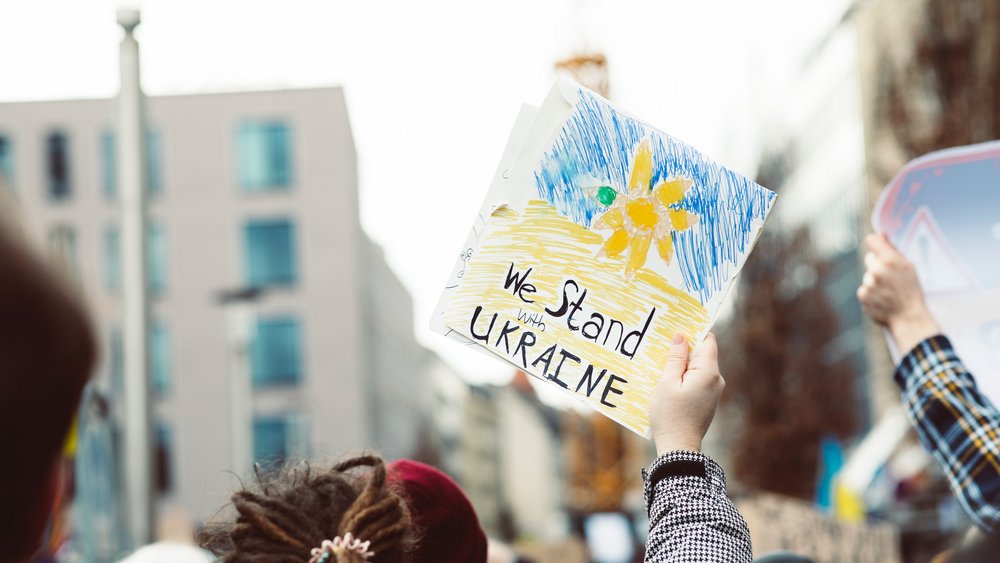
Russia’s war against Ukraine is already one of the worst outbreaks of violence on the European continent since 1945 and has called established basic assumptions of German and European foreign policy into question. Its consequences primarily affect people in Ukraine. The Russian war crimes that human rights organisations have documented since 24 February 2022 include executions, torture, sexualised violence, targeted attacks on residential areas, schools, kindergartens, hospitals and civilian water and electricity supplies, as well as the use of particularly brutal and internationally banned weapons such as cluster munitions and anti-personnel mines. According to World Bank estimates, the poverty rate in Ukraine – i.e. the proportion of people living on an income below the poverty line of 5.50 US dollars a day – has risen from 1.8 to 19.8 per cent as a result of the war. The United Nations (UN) even assumes that up to 90 per cent of Ukrainians will be affected by poverty as the war continues.
However, the war also has serious consequences beyond Ukraine – especially for the global conflict situation.
Multiple crises hit conflict and post-conflict countries particularly hard
In Germany too, worries about inflation, rising energy prices and food shortages as a result of the war have recently dominated our everyday lives. However, such crises hit people in conflict and post-conflict countries particularly hard. These countries are already affected by their own violent conflicts, political instability and the consequences of the pandemic and climate change. In Syria, the earthquake on 6 February 2023 is one of the worst natural disasters of the last hundred years. The combined effects of simultaneous and complex crises are exacerbating existing humanitarian grievances and cancelling out progress in human development.
This can be seen in the example of Yemen. The country has been suffering from severe food shortages since the civil war escalated in 2015. The Ukraine war has exacerbated this crisis due to the collapse of the global grain market and the rise in food prices. Yemen imports around 95 per cent of its wheat requirements from abroad – 30 per cent of which comes from Russia or Ukraine. This even more difficult access to essential foodstuffs as a result of the war in Ukraine is having an impact on the security of the local population. According to the UN World Food Programme, the number of people suffering from hunger in Yemen has risen from just over 16 million in 2021 to 19 million by the end of 2022.
Experience shows: In the long term, these crises can contribute to the further escalation of existing conflicts or the outbreak of new wars. Wars are one of the main causes of hunger and malnutrition, as warring parties destroy crops, kill livestock or render agricultural land unusable for decades with landmines. Conversely, a lack of access to food can also be the cause of new violence. The "bread riots" in 2008 in countries such as Egypt and Burkina Faso are examples of this connection.
Global and local conflict dynamics are changing
Initial estimates from Uppsala University’s Conflict Data Programme show that The Russian war in Ukraine – together with the war in Ethiopia, which receives much less attention from the German public – dominated global conflict events in terms of numbers in 2022. In Ethiopia, around 100,000 people lost their lives in fighting last year, in Ukraine the figure was 70,000. This means that these two wars alone claimed more victims in 2022 than all wars and armed conflicts combined in the previous year: 119,000 people died in combat worldwide in 2021.
The effects of Russia’s war of aggression are not only visible on a global scale. The war is also changing local conflict dynamics in other regions of the world. In Syria, tactical changes in Russia’s military presence – for example through the redeployment of troops or air defence systems – can enable regional powers such as Iran or Turkey to expand their political influence. A power vacuum can also be filled by non-state actors, including private military companies. Non-governmental organisations have documented, for example, that the number of mercenaries from the Russian Wagner Group deployed in Mali in 2022 has risen dramatically – as have serious human rights violations. The Wagner Group is also active in Sudan and the Central African Republic and is increasingly involved in lucrative profits from the commodities trade – not least in the mining of gold and diamonds.
This does not necessarily mean that Russia is using the profits from other conflict regions to finance the war in Ukraine. However, the profits can support the Russian state in the midst of Western sanctions. In addition, the trade in raw materials can itself change the sources of financing for hostilities in conflict countries. This can increase the risk of escalation for existing conflicts, for example by private military companies supplying rebel groups or military forces with weapons in return for raw materials.
How conflicts can be managed and peace secured in the future
Ultimately, Russia’s war against Ukraine has the potential to change international conflict management and peacebuilding strategies in the long term. Russia’s actions have not only intensified decades-old calls for reform of the United Nations and its Security Council and highlighted the dissatisfaction of countries in the “Global South” with the moral double standards of Western countries. Instead, experts expect Russia’s war to further exacerbate the existing crisis of “liberal interventionism”. This refers to the standard recipe of multilateral peacekeeping missions that has been used since the early 1990s in countries such as Bosnia, Afghanistan and Liberia to permanently end wars and promote sustainable peace through democratic and market-economy reforms.
Not only since the fall of Kabul in August 2021 has the disillusionment with the limited success of these ambitious peacekeeping missions contributed to the fact that international interventions have recently increasingly focused on goals such as stabilisation and counter-terrorism. The last new UN peacekeeping mission was decided in 2014. International democracy promotion in post-conflict countries is on a downward trend. And authoritarian states such as China are becoming increasingly active in international conflict resolution, but are focussing on poverty reduction and infrastructure development rather than democratic reforms.
If trust in international conflict management and peacebuilding strategies has been declining for years, Russia’s war has further diminished it. Experts suspect that the strengthening of Europe’s own military capabilities will have a lasting negative impact on the global commitment to conflict resolution and doubt that the UN will still have a mandate for robust peacekeeping missions in the future. As a consequence, they could focus more on humanitarian efforts in the future. This is important, but falls far short of sustainable conflict resolution strategies, which require effective multilateral mechanisms in addition to context-specific measures.
What could this look like? In order to investigate this question, the Bundeskanzler-Helmut-Schmidt-Stiftung, together with the Friedrich Ebert Foundation, is establishing a network of experts from conflict and post-conflict countries this year to analyse the impact of the Russian war of aggression on conflict dynamics worldwide and to develop policy recommendations for dealing with the global consequences of the war. The core of the project is therefore the expertise of people from conflict contexts who bring experience-based knowledge about promising measures for conflict resolution and peacebuilding.
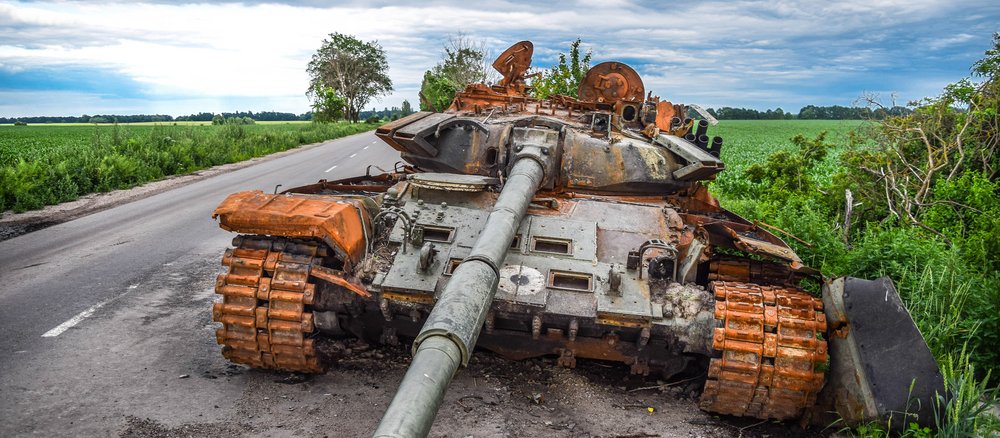
![[Translate to English:] Demolierter Panzer](/fileadmin/_processed_/9/9/csm_Schmidtletter_Krieg_Ukraine_Panzer_c_dmitry_bukhantsov_unsplash_0935611aa1.jpg)