
Transatlantic relations under Biden: On the right track?
29. Jan 2022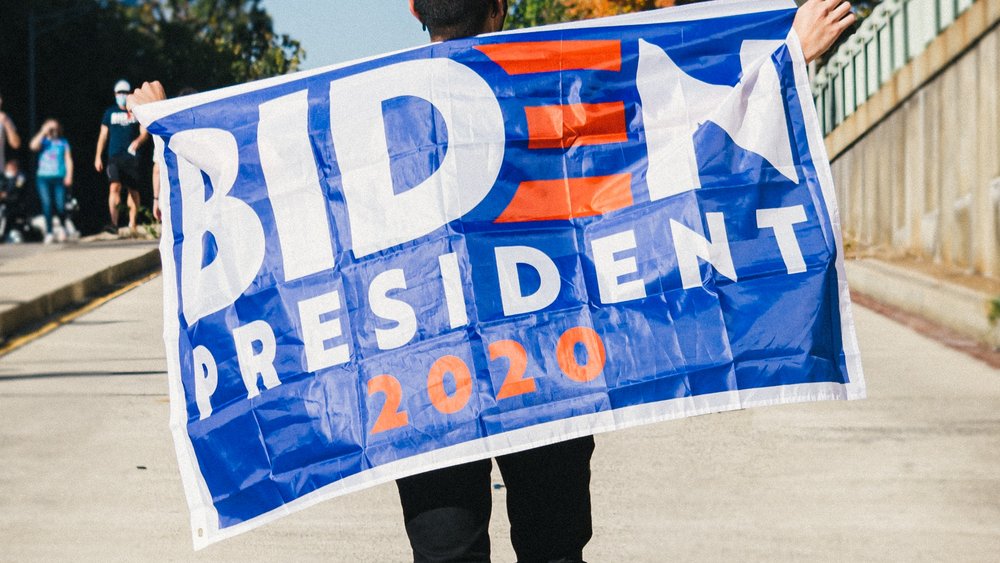
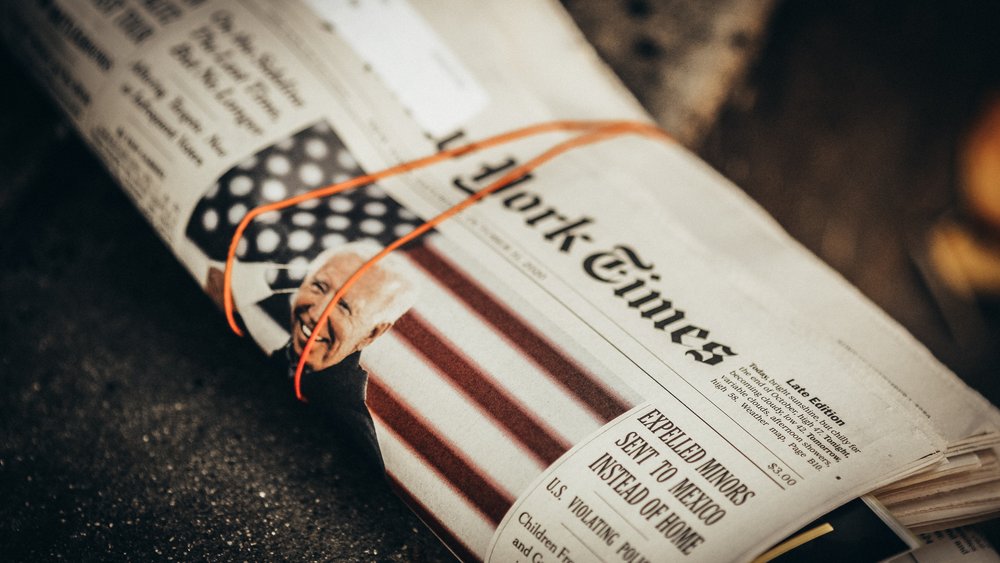

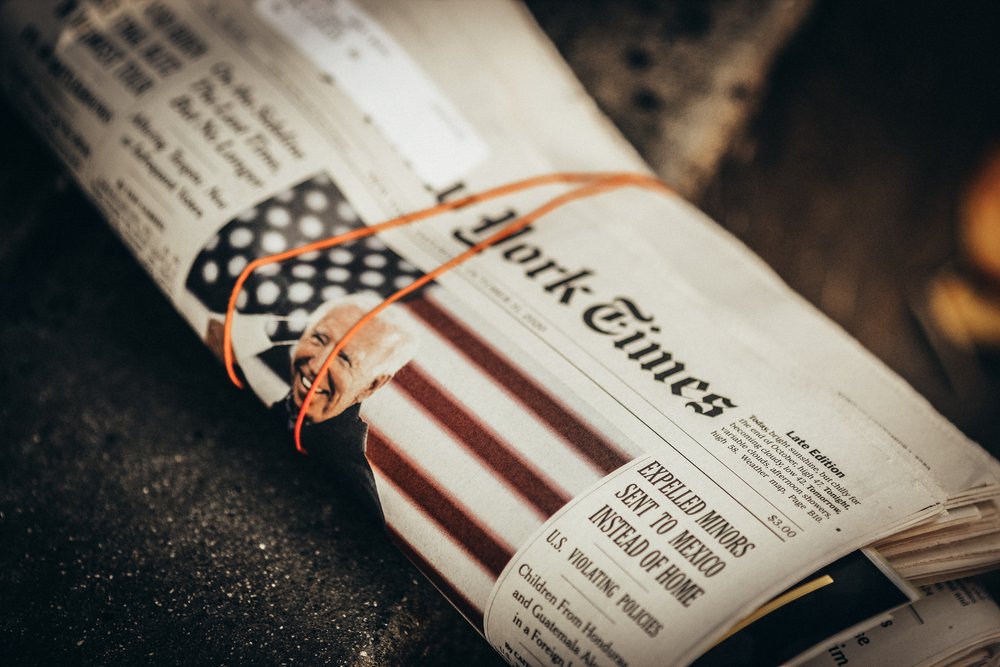
US President Joe Biden has now been in office for just over a year. The anniversary was almost lost in the face of the escalating crisis on the Russian-Ukrainian border and its impact on the European peace order. At a press conference on the anniversary of his swearing-in, Joe Biden himself made headlines not with the successes of his time in office, but with a misleading statement. It sounded as if he wanted to make potential sanctions against Russia dependent on the extent of the troop invasion in Ukraine - his spokeswoman later had to clarify the US President's position.
Despite or perhaps because of the current crisis, it is worth taking a look back at Biden's first year as president these days. For some, he was a beacon of hope after Donald Trump's term in office - both as a centrist and compromise candidate in the US and for the revitalisation of the European-American partnership and NATO as a transatlantic security alliance. After just one month in office, Biden also announced directly at the virtual edition of the Munich Security Conference in February 2021: "America is back." In this speech - after four years of "America first" rhetoric from Donald Trump - "together" was one of the most frequently used words, as the Tagesspiegel's US correspondent Juliane Schäuble noted at the time.
Biden's first year in office was characterised by highs and lows. I spoke about these with Bruce Stokes, Director of the transatlantic task force set up jointly by the German Chancellor Helmut Schmidt Foundation and the German Marshall Fund in autumn 2019. To mark the anniversary of Biden taking office, this project has produced a "score card" that takes a closer look at the successes and failures of the first year. In our conversation, Bruce Stokes and I wanted to focus on transatlantic relations rather than US domestic policy, but we also automatically touched on the threats to American democracy.
Highs and lows of the first year in office
For Bruce Stokes, one of the most important successes of the past twelve months is that "Biden is not Trump". Although his inauguration did not mean a return to the status quo of the transatlantic partnership "before Trump", the change in Europe and the USA was nevertheless associated with many hopes for an improvement in conditions. After all, for Biden, the transatlantic partnership has always been a cornerstone of US foreign policy.
From a transatlantic perspective, Bruce Stokes lists what he sees as the most important concrete achievements of the first year. These include the settlement of the disputes over steel and aluminium tariffs and subsidies for Airbus and Boeing, the agreement on a global minimum tax for companies, the establishment of a Trade and Technology Council (TTC) agreed at a summit between the EU and the US in June 2021, greater agreement between the transatlantic partners in their dealings with China and progress in the fight against climate change. Bruce Stokes also sees successes in security policy. For example, Biden has stopped Trump's planned partial withdrawal of US troops from Germany and reaffirmed the USA's commitment to NATO. In the current crisis with Russia, Biden emphasised close cooperation with Europe, after Asia had been the focus of American foreign policy in recent years.
For Bruce Stokes, the low points of his first year in office include the circumstances surrounding the withdrawal of American troops from Afghanistan and the dealings with European partners around the trilateral defence pact "AUCUS" between Australia, the United Kingdom and the USA.
I was immediately reminded of the results of two recently published surveys. The results of "The Berlin Pulse", published by the Körber Foundation in November 2021, show that after Biden's election victory, 71 per cent of Germans rated relations with the USA as "good" or "very good" again. In comparison: a year earlier and during Donald Trump's presidency, this figure was only 18 per cent. This confirms Bruce Stokes' statement that "not being Trump" was initially enough for Biden and the public assessment of his policies.
However, recent domestic political surveys, such as those conducted by the US data project "FiveThirtyEight", demonstrate a different trend: one year after taking office, Biden is more unpopular among Americans than almost any of his predecessors. Only 42 per cent of those surveyed in January 2022 are still satisfied with his work. Only Donald Trump has achieved a worse result at this point in his presidency. For this reason, I expressed doubts as to whether the list of transatlantic successes is really that significant. It could also be argued that the achievements he lists are mainly recognised by experts, but are hardly noticed or judged differently by the wider population (in the USA and Europe). One example of this is the way climate change is dealt with. Young people in particular had high hopes for the USA after Biden's election promises to combat climate change - and have been disappointed by the tangible results. As climate activist Greta Thunberg put it, referring to Biden's reform package for infrastructure, welfare and climate protection: "Build back better, blah blah blah".
The future of US democracy as a transatlantic challenge
Despite differing assessments of the successes, we agreed that the state of US democracy is and will remain perhaps the greatest challenge for transatlantic relations. Shortly before the anniversary of Biden's inauguration, another anniversary was commemorated in Washington D.C.: the violent storming of the US Capitol on 6 January 2021 by supporters of Donald Trump, who wanted to prevent the certification of Biden's election victory and whose political reappraisal is still marked by the deep division between Trump's supporters and opponents. Since Trump's inauguration, scholars have also argued that the Republican Party's policy of tightening voting rights, which makes it more difficult for minorities in particular to vote, poses a major threat to US democracy.
In this context, I reminded Bruce Stokes that strengthening democracy on both sides of the Atlantic was not one of the policy areas that we had made the focus of our cooperation in the Transatlantic Task Force in autumn 2019 - and wanted to know from him whether we were wrong in this decision. Bruce Stokes replied that one of Joe Biden's political convictions was that the best way to defend democracy against its enemies was to let it deliver concrete results that make people's lives better. This could also be used to argue in favour of cooperation between Europe and the USA: If an effective partnership brings clear successes, then this could reaffirm people's trust in the democratic values and institutions underlying the partnership. However, he added that current developments in the USA made him doubt whether democracy could really be defended in this way. For example, he pointed to studies that show that the majority of Republican voters - and 43 per cent of Democratic Party supporters - say that their own party would be better off sticking to its positions instead of compromising, even if this means that nothing gets done. The big challenge in the coming years will therefore be to bring people back into a common dialogue in the face of growing social polarisation and a dwindling willingness to compromise politically.

Dr Julia Strasheim is Head of International Affairs at the Berlin Police Headquarters. Until May 2024, she was Deputy Managing Director of our foundation and held the position of Programme Director for Europe and International Politics at the Bundeskanzler-Helmut-Schmidt-Stiftung. She is also an associate researcher at the German Institute for Global and Area Studies (GIGA) and regularly lectures in the field of peace and conflict research. Her work focuses on peacebuilding, peace negotiations and the transformation of post-war societies in Europe and Asia.
More