To this day, the experience and expertise of people from conflict contexts are often neglected in international conflict resolution and peacebuilding measures. This is an obstacle to sustainable peace: for example, peace research shows us that the legitimacy and effectiveness of multilateral peace missions repeatedly suffer from a lack of local participation. So if we want to develop new ideas for options for action, such as how to deal with the direct and indirect consequences of the Russian war of aggression on Ukraine in conflict contexts or what works well or less well in the reconstruction process of conflicts and wars, then we can learn first-hand from experts from conflict countries. However, this is not about finding a universal solution strategy for conflicts: Peace has no blueprints and every conflict has its own context-specific causes and dynamics.
The importance of diverse perspectives from conflict contexts
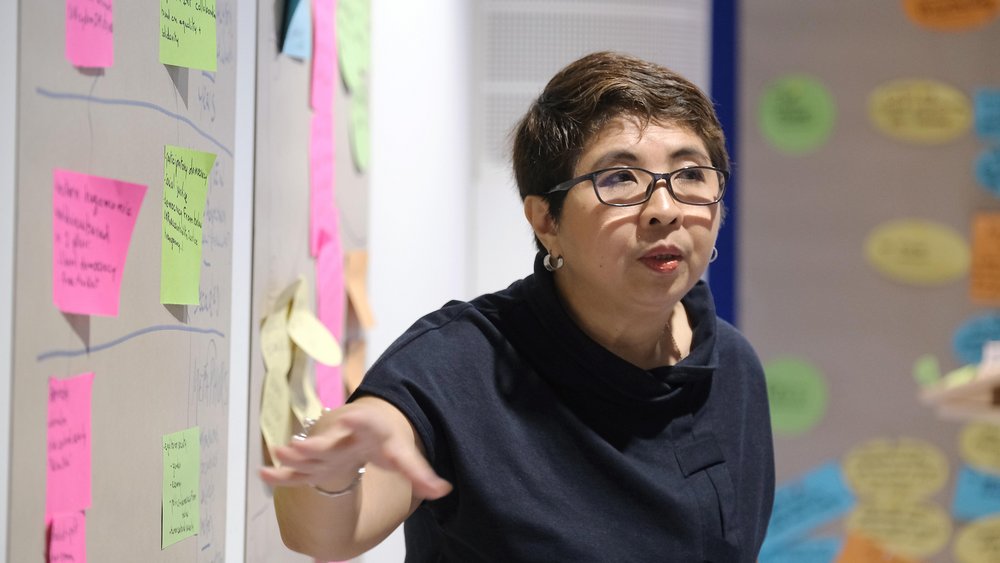
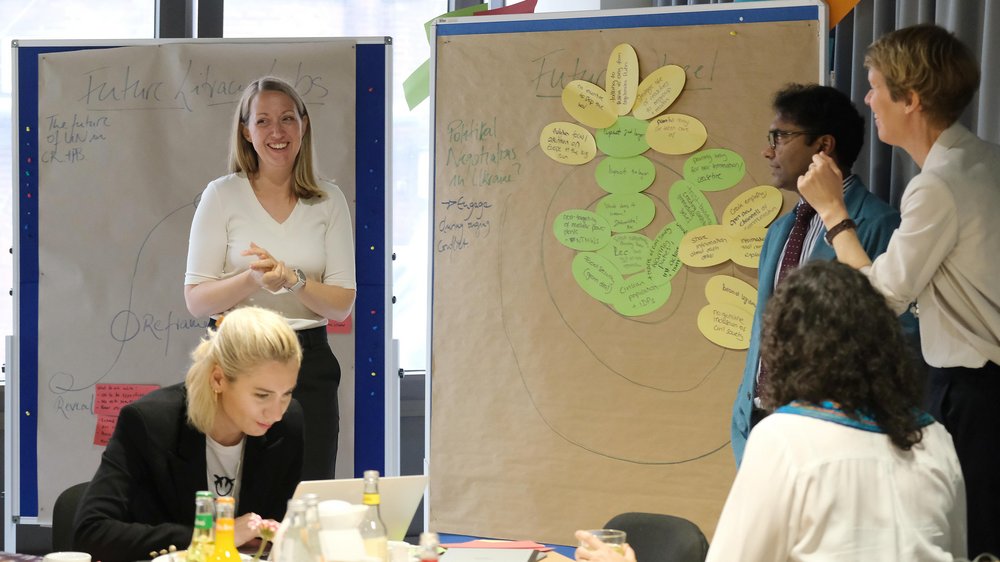
The Global Expert Group focuses on this diversity. During our kick-off workshop, participants from four continents and eight countries, including Afghanistan, Ethiopia, Colombia, Kosovo and the Philippines, discussed the future of international conflict management and peacebuilding in a changing world order. The network brings together experts from civil society, academia and politics to bring in different perspectives and realities of life from these countries. For example, an activist, a professor and a deputy foreign minister exchanged views during the meeting. Syrian-Swiss academic Joseph Daher emphasised that the diverse composition of the group is also very enriching for the experts themselves, as it allows them to exchange ideas with people from other specialist areas and thus learn from other experiences and dynamics. For Donika Emini, head of the CiviKos Platform, which brings together around 290 civil society organisations in Kosovo, the workshop was particularly notable for the fact that it brought together people with different backgrounds, extensive knowledge in peacebuilding and significant practical experience, thus enabling a very effective bottom-up approach.
From Western double standards to context-specific approaches
In several interactive discussion formats, the workshop participants identified overarching topics and issues that are of particular relevance from their country, regional or thematic expertise. Based on the discussion, three broad topics could be identified which, in the view of the participants, should be at the centre of political and scientific attention in the future.
Firstly, these include the direct and indirect consequences of the Russian war against Ukraine in other conflict countries – for example in terms of food insecurity, energy supply or the shifting of international attention and resources away from other conflicts – as well as the structural underpinnings of these consequences and the complexity of possible “side effects”. For example, the participants discussed the fact that energy diversification has become more important for many countries, particularly in Europe, as a result of the Russian war against Ukraine. Although it is often emphasised that energy exporters benefit economically when Europe reduces its energy dependency on Russia and seeks alternative sources of gas and oil, the participants pointed out the complexity of this dynamic. For example, when local conflicts are exacerbated in exporting nations such as Colombia, environmental activists are threatened or the indigenous population is displaced. Economic considerations must therefore be increasingly considered together with social aspects and questions of democracy, peace and the energy transition.
Secondly, the participants discussed the structural and geostrategic consequences of the war against Ukraine for the global order, for the future organisation of peacebuilding and conflict resolution and for the relationship between the “West” and the “Global South”. During the discussion, it became clear that Russia's war against Ukraine is perceived in a much more differentiated way in countries of the “global South” and that the consequences are much more complex than the public debate in Europe often portrays. The participants particularly problematised the double standards in the reaction of “the West” in comparison to other conflicts and wars, particularly visible in the different treatment of refugees.
Thirdly, based on their own experiences and expertise, the participants also collected “lessons learned”, i.e. positive and negative lessons from peacebuilding and conflict resolution. Here, they emphasised the need for a qualified examination of the needs and concerns of the local, conflict-affected population and the development of context-specific, coherent, long-term and all-encompassing approaches. It is crucial to start peacebuilding during a war – “We need to start building peace amidst a war” – and to bear in mind that peace efforts should not end with a ceasefire and focus solely on infrastructural reconstruction, but should also include mental and psychosocial support.
After the workshop is before the workshop
The members of the network will meet again in autumn 2023. The results of their workshops, as well as interviews with numerous other international experts from research and practice, will be incorporated into a report that will be published in several languages in early 2024 and contain concrete policy recommendations.
Further information on the Global Expert Group can be found here.